Are you tired of sweating through hot days and nights? A portable air conditioner might be the perfect solution for your space, but have you ever wondered how it actually works?
Understanding how these compact coolers function can help you choose the right one and use it more effectively. You’ll discover the simple science behind portable air conditioners and learn how they keep your room comfortable without the hassle of permanent installation.
Keep reading—you’re about to unlock the secret to staying cool wherever you need it most.
Credit: www.portacool.com
Basic Principles Of Portable Acs
Portable air conditioners cool indoor air by removing heat and moisture. They work like small refrigeration units you can move from room to room.
These devices take warm air from the room, cool it, and then send the cooled air back inside. The heat they remove is pushed outside through a hose.
Cooling Cycle Explained
Portable ACs use a cooling cycle to lower room temperature. This cycle moves heat out of the room and cools the air inside.
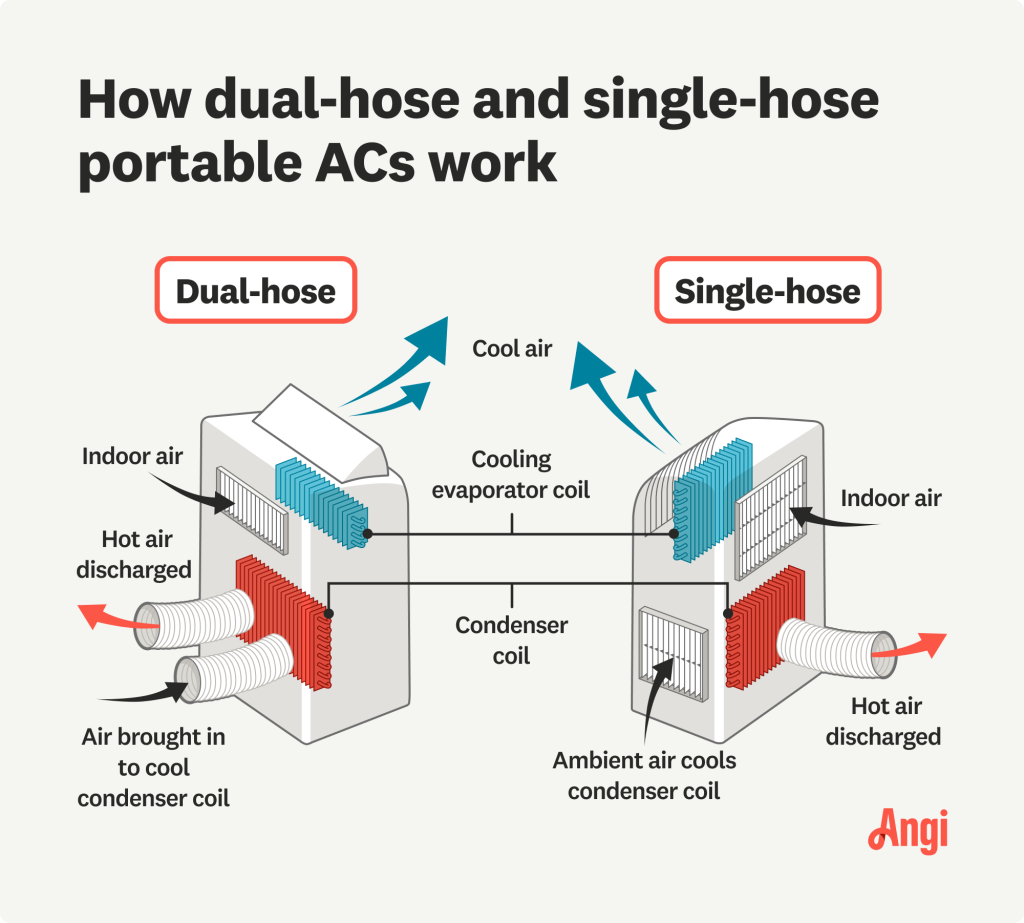
The cycle starts when warm air enters the AC unit. The air passes over cold coils filled with refrigerant. The refrigerant absorbs heat from the air.
- Warm air is pulled in by a fan.
- Air passes over cold evaporator coils.
- Refrigerant absorbs heat and cools the air.
- Cool air blows back into the room.
- Heat is pushed outside through the exhaust hose.
Key Components
Portable air conditioners have several main parts that help them cool the air. Each part plays an important role in the cooling process.
- Compressor:Compresses the refrigerant and moves it through the system.
- Evaporator Coil:Absorbs heat from indoor air and cools it.
- Condenser Coil:Releases heat from the refrigerant to the outside air.
- Fan:Moves air over the coils and circulates cooled air inside.
- Exhaust Hose:Sends hot air and moisture outside the room.
Heat Exchange Process
Portable air conditioners cool your room by moving heat outside. They use a heat exchange process to do this.
The process involves removing heat from inside air and releasing it outside. This keeps your room cool and comfortable.
Evaporator And Condenser Roles
The evaporator cools the air inside your room. It absorbs heat from the warm air, making the air cooler.
The condenser releases the heat outside. It moves the heat absorbed by the evaporator to the outdoor air.
- The evaporator cools indoor air by absorbing heat.
- The condenser pushes heat outside to keep the room cool.
Refrigerant Functionality
The refrigerant carries heat between the evaporator and condenser. It changes from liquid to gas and back again.
As the refrigerant evaporates, it absorbs heat inside. When it condenses, it releases heat outside.
- Refrigerant absorbs heat inside as it evaporates.
- It releases heat outside as it condenses.
- This cycle moves heat out of the room.
Airflow Mechanism
Portable air conditioners cool a room by moving air through the device. They use fans and vents to direct airflow.
The airflow system helps remove warm air and bring in cooler air. This process keeps the room comfortable.
Intake And Exhaust Dynamics
The intake pulls warm air from the room into the air conditioner. Inside, the air passes over cold coils to cool down.
The exhaust pushes hot air outside through a vent or hose. This stops the warm air from returning to the room.
- Intake draws room air into the unit
- Air cools as it passes through cold coils
- Exhaust releases hot air outside via hose
- Continuous cycle keeps room cool
Ventilation Requirements
Portable air conditioners need proper ventilation for the exhaust air. Without it, the unit cannot cool the room well.
The exhaust hose must vent hot air outside a window or wall. This keeps heat from building up indoors.
- Use exhaust hose to vent air outdoors
- Seal gaps around the hose to prevent leaks
- Ensure the hose is not kinked or blocked
- Good ventilation improves cooling efficiency
Credit: www.dreo.com
Types Of Portable Air Conditioners
Portable air conditioners help cool rooms without permanent installation. They come in different types that work in unique ways.
Understanding each type can help you choose the best unit for your space and needs.
Single-hose Models
Single-hose portable air conditioners use one hose to push hot air outside. They pull air from the room to cool and release heat outdoors through the hose.
- They are easier to install and usually cost less.
- They can lower air pressure in the room, causing warm air to enter from other places.
- Best for smaller rooms or spaces with good window access.
Dual-hose Models
Dual-hose portable air conditioners have two hoses. One draws air from outside to cool the unit. The other pushes hot air outside.
| Feature | Dual-Hose Model |
| Air Source for Cooling | Outside air |
| Exhaust Method | Separate hose for hot air |
| Room Pressure | Balanced, no negative pressure |
| Efficiency | Better for larger rooms |
Energy Efficiency Factors
Portable air conditioners use electricity to cool a room. Their energy efficiency depends on several factors. Understanding these helps save power and reduce costs.
Two main factors are power consumption and cooling capacity. Both affect how well the unit works and how much energy it uses.
Power Consumption
Power consumption shows how much electricity the air conditioner uses. Lower power means less energy and lower bills. The efficiency depends on the compressor, fan, and other parts.
- Compressor size affects energy use
- Fan speed can increase power needs
- Older models often consume more electricity
- Proper maintenance keeps power use low
Cooling Capacity
Cooling capacity measures the air conditioner’s ability to cool a space. It is shown in BTUs (British Thermal Units). A higher BTU means more cooling power but may use more energy.
| BTU Rating | Room Size (Square Feet) | Estimated Power Use (Watts) |
| 8,000 | 250 – 350 | 900 |
| 10,000 | 350 – 450 | 1,100 |
| 12,000 | 450 – 550 | 1,300 |
| 14,000 | 550 – 700 | 1,500 |

Credit: www.cnet.com
Maintenance Tips For Optimal Performance
Portable air conditioners need regular care to work well. Proper maintenance keeps your unit efficient and lasting longer.
Two key areas to focus on are filter cleaning and drainage management. Both help the air conditioner run smoothly.
Filter Cleaning
Cleaning the filter often improves air flow and cooling power. A dirty filter can block air and reduce performance.
- Remove the filter from your unit carefully.
- Use a vacuum or wash it with warm water.
- Let the filter dry completely before placing it back.
- Clean the filter every two weeks during heavy use.
- Replace the filter if it becomes damaged or worn out.
Drainage Management
Portable air conditioners collect water that must be drained to avoid leaks and damage. Managing drainage prevents problems.
| Drainage Tip | Reason |
| Check the water tank often | Prevents overflow and spills |
| Empty the tank when full | Keeps unit working without interruption |
| Use a drainage hose if available | Allows continuous water removal |
| Keep drainage ports clear | Prevents blockages and leaks |
Common Issues And Troubleshooting
Portable air conditioners can face problems that reduce their performance. Knowing common issues helps you fix them quickly.
This guide covers two frequent problems: insufficient cooling and noise problems. Learn how to spot and solve them.
Insufficient Cooling
When a portable air conditioner does not cool well, it may have simple causes. Dirt or blockages can stop airflow.
Check if the filter is clean. A dirty filter blocks air and lowers cooling power. Also, make sure the exhaust hose is not bent or clogged.
- Clean or replace the air filter regularly
- Ensure the exhaust hose is straight and free of obstructions
- Close windows and doors to keep cool air inside
- Check the thermostat setting and adjust it lower if needed
Noise Problems
Portable air conditioners can make noise, which may be annoying. Some noise is normal, but loud sounds need attention.
Noise often comes from loose parts or a blocked fan. The unit should be on a flat surface to avoid vibrations. Also, check if the exhaust hose is properly connected.
- Place the unit on a level, stable surface
- Tighten any loose screws or parts
- Remove blockages near the fan or vents
- Secure the exhaust hose firmly to the window kit
Frequently Asked Questions
How Do Portable Air Conditioners Cool A Room?
Portable air conditioners remove heat from indoor air and expel it outside. They use a refrigerant cycle to absorb heat, then release it through an exhaust hose. This process lowers room temperature efficiently and quickly.
Can Portable Air Conditioners Dehumidify The Air?
Yes, portable air conditioners reduce humidity by extracting moisture from the air during cooling. This improves comfort by making the room feel cooler and less sticky, especially in humid climates.
Do Portable Air Conditioners Need Venting?
Yes, portable air conditioners require venting to expel hot air outside. They use an exhaust hose connected to a window or vent opening. Proper venting is essential for effective cooling and preventing heat buildup.
Are Portable Air Conditioners Energy Efficient?
Portable air conditioners are moderately energy efficient. They consume less power than central AC but more than window units. Efficiency depends on size, model, and usage. Look for Energy Star ratings for optimal energy savings.
Conclusion
Portable air conditioners offer cool relief during hot days. They work by extracting heat and releasing cool air. These units are easy to move and install. No complex setup needed. Just plug in and enjoy. Maintenance is simple too. Regular cleaning keeps them efficient.
Consider the room size before choosing one. A perfect fit ensures optimal cooling. Remember, portable ACs are a great option for temporary cooling. They provide comfort without permanent installation. Ideal for renters or small spaces. Stay cool and comfortable with this convenient solution.