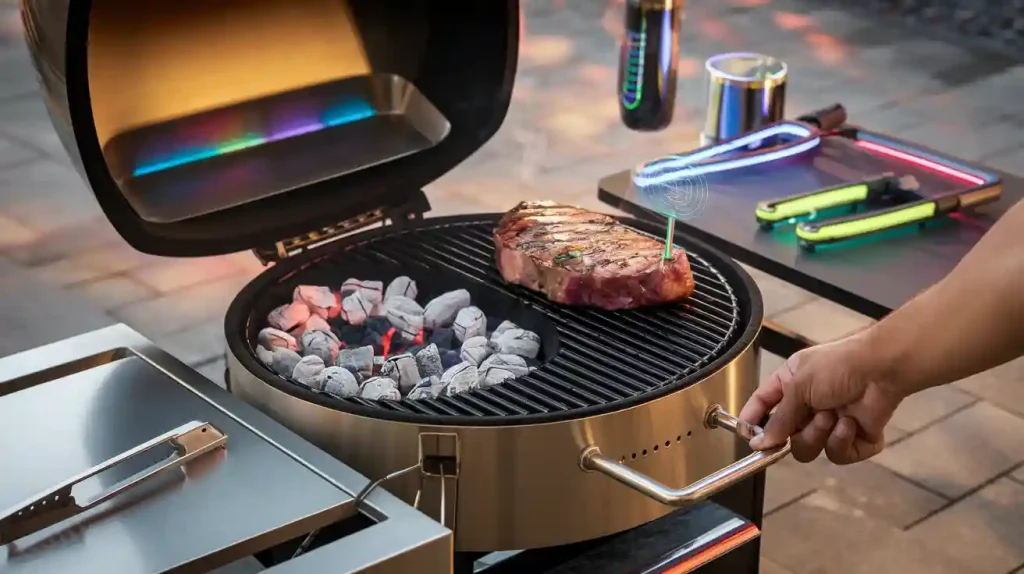
Are you tired of guessing when to flip your food on the charcoal grill? Controlling the temperature can seem tricky, but once you get the hang of it, your grilling will improve dramatically.
Imagine perfectly cooked steaks, juicy burgers, and tender veggies every time you fire up your grill. You’ll learn simple, effective ways to manage the heat on your charcoal grill so you can cook like a pro. Keep reading, and soon you’ll master the secret to grilling success that makes all the difference.
Choosing The Right Charcoal
Controlling temperature on a charcoal grill starts with choosing the right charcoal. The type you use affects heat and cooking time.
Different charcoals burn differently. Knowing the options helps you cook better and manage the fire easily.
Types Of Charcoal
There are two main types of charcoal for grilling: lump charcoal and briquettes. Each type has unique features that affect heat control.
Lump charcoal comes from wood chunks burned in low oxygen. Briquettes are made from compressed charcoal dust and other materials.
- Lump charcoal lights quickly and burns hotter.
- Briquettes burn longer and give steady heat.
- Lump charcoal leaves less ash behind.
- Briquettes produce more ash, which can block airflow.
Benefits Of Lump Vs. Briquettes
Lump charcoal heats up fast and reaches high temperatures. It is good for quick searing and high-heat cooking.
Briquettes burn evenly for a longer time. They work well for low and slow cooking where stable heat is needed.
- Lump charcoal:Better for high heat and quick cooks.
- Briquettes:Best for long, slow grilling.
- Lump:Less ash, easier to clean.
- Briquettes:More ash, so manage airflow carefully.
Setting Up The Grill
Controlling temperature on a charcoal grill starts with the setup. A good setup helps keep the heat steady and even.
Learn how to assemble your grill properly and arrange charcoal for the best heat control.
Assembling The Grill
Put together your charcoal grill carefully before lighting it. Check that all parts fit well and are clean.
- Attach the legs firmly so the grill stands steady.
- Fit the cooking grate securely to hold food safely.
- Install the charcoal grate in the correct place for air flow.
- Check that vents open and close easily to control air.
- Place the lid so it seals well and traps heat.
Arranging Charcoal For Optimal Heat
Arrange charcoal to create zones of heat. This lets you cook food at different temperatures.
| Charcoal Arrangement | Heat Level | Use |
| Even layer across the grate | Medium to high | Direct grilling of burgers or steaks |
| One side piled higher | Two zones: hot and cool | Searing on hot side, slow cooking on cool side |
| Charcoal ring around edge | Indirect heat in center | Roasting or smoking larger pieces |
Lighting The Charcoal
Controlling temperature on a charcoal grill starts with lighting the charcoal correctly. Good lighting helps the coals burn evenly and reach the right heat.
Choosing the right way to light charcoal can make cooking easier and improve your food’s taste.
Using A Chimney Starter
A chimney starter is a simple tool to light charcoal quickly. It helps the charcoal heat up evenly without using lighter fluid.
Fill the chimney with charcoal, place some crumpled newspaper or fire starters under it, then light the paper. The coals will begin to burn from the bottom up.
- Place the chimney on a safe, heat-resistant surface.
- Light the newspaper or fire starters beneath the chimney.
- Wait 10 to 15 minutes until the top coals are covered with gray ash.
- Carefully pour the hot coals into your grill.
Alternative Lighting Methods
You can also light charcoal using other methods if you don’t have a chimney starter. Some options include lighter fluid or electric charcoal starters.
These methods can work well but need more care to avoid flare-ups or uneven heating.
- Lighter Fluid:Apply fluid carefully and let it soak for a minute before lighting.
- Electric Charcoal Starter:Place the starter in the coals and plug it in until coals glow.
- Charcoal Starter Cubes:Place cubes under the charcoal and light them for a steady burn.
Managing Airflow
Controlling temperature on a charcoal grill depends largely on airflow. Airflow controls how fast the charcoal burns. You can adjust it by changing the vents and dampers on the grill.
Understanding how weather affects airflow can help you keep a steady heat. Wind, humidity, and outside temperature all change how your grill behaves.
Adjusting Vents And Dampers
Vents and dampers let air into the grill. Opening them more increases airflow and raises the temperature. Closing them slows the air and lowers heat.
- Open the bottom vents to let oxygen reach the charcoal.
- Use the top vent to control smoke and heat release.
- Start with vents mostly open for high heat.
- Close vents slightly for lower, steady cooking temperatures.
- Adjust vents slowly to avoid sudden temperature changes.
Impact Of Weather Conditions
| Weather Condition | Effect on Grill Temperature | Tip |
| Windy | Increases airflow, can make grill too hot | Partly close vents to reduce airflow |
| Cold | Slows charcoal burning, lowers temperature | Open vents more to add oxygen |
| Humid | Charcoal burns slower | Keep vents open to improve airflow |
| Rainy | Moisture cools charcoal and grill | Use a lid and cover vents partially |
Direct Vs. Indirect Cooking
Controlling temperature on a charcoal grill is key to cooking great food. You can cook food directly over the coals or away from them. Each way changes how the food cooks and tastes.
Knowing when to use direct or indirect cooking helps you grill meat, vegetables, and other foods perfectly every time.
When To Use Each Method
Direct cooking means placing food right above the hot coals. Use this for foods that cook fast and need a good sear. Indirect cooking places food away from the coals. This is good for slow cooking or large cuts that need gentle heat.
- Use direct cooking for steaks, burgers, and hot dogs.
- Use indirect cooking for whole chickens, ribs, and roasts.
- Direct heat is best for quick grilling and crispy edges.
- Indirect heat helps cook food evenly without burning.
Setting Up Two-zone Cooking
Two-zone cooking means setting up your grill with one hot side and one cooler side. This lets you move food between zones to control cooking speed and temperature.
| Zone | Charcoal Placement | Use For |
| Hot Zone (Direct Heat) | Charcoal piled on one side | Searing, quick cooking |
| Cool Zone (Indirect Heat) | No charcoal, empty side | Slow cooking, finishing |
To set up, light charcoal and push it to one side of the grill. Place food that needs searing over the hot side. Move food to the cool side to cook through without burning.

Credit: www.siuhaau.com
Using A Thermometer
Controlling temperature on a charcoal grill is easier with a thermometer. It helps you cook food safely and evenly.
There are different types of grill thermometers. Each type gives temperature readings in a unique way.
Types Of Grill Thermometers
Here are common types of grill thermometers you can use:
- Analog Dial Thermometer:Has a dial that shows temperature. It fits into the grill lid or food.
- Digital Instant-Read Thermometer:Gives quick temperature reading. Use it to check food inside the grill.
- Probe Thermometer:Has a probe that stays inside the grill or food. Shows temperature on a digital display outside the grill.
- Infrared Thermometer:Measures surface temperature without touching. Useful for checking grill surface heat.
Placement For Accurate Readings
Where you place the thermometer affects its accuracy. Follow these tips for best results.
| Placement | Reason |
| Near the food but not touching | Measures air temperature around food |
| Center of the grill grate | Gives a general idea of grill heat |
| Avoid placing near vents or direct flames | Prevents false high or low readings |
| Insert probe deep into thick meat | Checks internal food temperature safely |
Controlling Temperature Fluctuations
Keeping the heat steady on a charcoal grill is key to cooking food well. Temperature changes can cause uneven cooking or burning.
You can manage temperature swings by adding charcoal carefully and adjusting for weather conditions like wind and humidity.
Adding Charcoal Mid-cook
Adding charcoal during cooking helps keep the fire hot. Use these tips to add charcoal safely and keep the temperature steady.
- Wear heat-resistant gloves to protect your hands.
- Open the grill lid slowly to avoid sudden temperature drops.
- Use a charcoal chimney to light new coals before adding.
- Place new coals on the edges of the existing fire, not directly in the center.
- Close the lid quickly to trap heat and maintain air flow.
Adjusting For Wind And Humidity
Wind and humidity affect how your charcoal burns. You can adjust your grill setup to keep the temperature steady despite weather changes.
| Weather Condition | Effect on Grill | Adjustment |
| Strong Wind | Increases oxygen, raises heat | Partially close air vents |
| Low Wind | Reduces oxygen, lowers heat | Open air vents more |
| High Humidity | Slows charcoal burning | Use dry charcoal and keep lid closed |
| Low Humidity | Faster burning charcoal | Manage air vents to slow fire |

Credit: www.youtube.com
Cleaning And Maintenance
Keeping your charcoal grill clean helps control the temperature better. Dirt and ash can block air vents. This makes the fire burn unevenly.
Regular maintenance also extends your grill’s life. It keeps parts working well and prevents damage.
Removing Ash And Residue
After each use, remove ash and leftover charcoal. Ash buildup lowers airflow. This makes it hard to keep the heat steady.
- Wait until the grill is cool.
- Use a metal scoop or ash tool to clear ash.
- Empty the ash into a metal container for safety.
- Brush the grill grates to remove food residue.
- Clean the bottom of the grill to avoid grease fires.
Checking For Wear And Tear
Check your grill parts often. Look for rust, cracks, or broken vents. These issues affect temperature control.
| Part | What to Check | Why It Matters |
| Grill Grates | Rust and warping | Affects heat distribution |
| Air Vents | Blockage or damage | Controls airflow and temperature |
| Charcoal Bowl | Cracks or holes | Maintains fire safety and heat |
| Lid | Seal and handle condition | Helps keep consistent heat |
Troubleshooting Common Issues
Controlling temperature on a charcoal grill can be tricky. Many grillers face problems like uneven heat and flare-ups.
Knowing how to fix these issues helps you cook better food and enjoy grilling more.
Handling Hot And Cold Spots
Hot and cold spots happen when charcoal burns unevenly. Some parts of the grill get very hot, others stay cool.
You can fix this by spreading the coals evenly and using a two-zone setup. One side has more coals for high heat. The other side has fewer coals for low heat.
- Arrange coals in a single layer for even heat
- Use more coals on one side for direct cooking
- Leave space on the other side for indirect cooking
- Adjust vents to control airflow and temperature
- Move food between hot and cool zones as needed
Dealing With Flare-ups
Flare-ups happen when fat drips onto hot coals. Flames can quickly get too high and burn your food.
To control flare-ups, keep a spray bottle of water nearby. You can also move food away from flames and trim excess fat before grilling.
- Trim fat from meat before grilling
- Use indirect heat to cook fatty foods
- Keep a spray bottle of water to douse small flames
- Close the lid to reduce oxygen and calm flames
- Move food to cooler areas if flames flare up
.jpg)
Credit: www.bbqspitrotisseries.com.au
Frequently Asked Questions
How Do Vents Control Temperature On A Charcoal Grill?
Vents regulate airflow, controlling the grill’s heat. Open vents increase oxygen, boosting the fire’s temperature. Closing vents reduces oxygen, lowering the heat. Proper vent adjustment helps maintain steady cooking temperatures for better grilling results.
What Is The Best Way To Arrange Charcoal For Heat Control?
Arrange charcoal in a single layer for even heat or pile it for concentrated heat. Use a two-zone setup for direct and indirect cooking. Adjusting charcoal placement controls cooking zones and temperature effectively.
How Can You Maintain Consistent Temperature On A Charcoal Grill?
Monitor vents and add charcoal as needed to keep steady heat. Use a grill thermometer to track temperature accurately. Avoid opening the lid frequently to prevent heat loss and temperature fluctuations.
Why Is Controlling Temperature Important When Grilling With Charcoal?
Proper temperature ensures food cooks evenly and safely. It prevents burning or undercooking, enhancing flavor and texture. Controlling heat helps achieve desired doneness for different foods.
Conclusion
Controlling temperature on a charcoal grill is simple with practice. Adjust the air vents to change heat levels. Move the coals closer or farther from the food. Use the grill lid to keep heat steady. Always watch your fire to avoid flare-ups.
With these steps, you can cook food evenly. Enjoy grilling with confidence and tasty results. Keep trying, and your skills will improve quickly. The right temperature makes all the difference.