Are you facing the challenge of cutting concrete board but don’t know where to start? You might think it’s a tough job, but with the right tools and techniques, you can do it yourself quickly and safely.
Imagine saving money, finishing your project faster, and avoiding costly mistakes. In this guide, you’ll discover simple steps that make cutting concrete board easier than you ever expected. Keep reading, and you’ll gain the confidence to handle your project like a pro.

Credit: insulationgo.co.uk
Tools For Cutting Concrete Board
Cutting concrete board requires special tools to get clean and accurate cuts. Using the right equipment helps you work faster and safer.
This guide covers the best saws, safety gear, and extra tools you need for cutting concrete board.
Choosing The Right Saw
A strong, sharp saw makes cutting concrete board easier. Circular saws with diamond blades work well. You can also use a handsaw with carbide tips for small cuts.
- Circular saw with diamond blade
- Carbide-tipped handsaw
- Angle grinder with cutting disc
- Jigsaw with carbide blade (for curves)
Essential Safety Gear
Protect yourself while cutting concrete board. Dust and debris can harm your eyes and lungs. Wear safety gear every time.
| Gear | Purpose |
| Safety goggles | Protect eyes from dust and chips |
| Dust mask | Prevent inhaling fine dust |
| Gloves | Protect hands from sharp edges |
| Ear protection | Reduce noise from power tools |
Additional Cutting Accessories
Other tools help make the job easier and more accurate. Marking tools and clamps keep your work steady.
- Measuring tape for precise cuts
- Pencil or chalk to mark cut lines
- Clamps to hold the board steady
- Straight edge or ruler for guiding saw
Preparing The Workspace
Cutting concrete board needs a safe and clean workspace. Proper preparation helps make the job easier and safer.
Follow these steps to get your area ready before you start cutting the concrete board.
Clearing And Securing The Area
Remove all tools, furniture, and objects from the work area. This prevents accidents and gives you space to move freely.
Make sure the floor is clean and dry to avoid slipping. Use barriers or tape to mark off the workspace and keep others away.
Marking The Cut Lines
Use a pencil or chalk to draw clear lines on the concrete board where you want to cut. Check your measurements twice for accuracy.
- Measure the board length and width carefully
- Mark the cutting lines clearly and straight
- Use a straightedge or ruler for precise lines
- Double-check all marks before cutting
Setting Up Dust Control
Cutting concrete board creates a lot of dust. Control dust to keep your workspace clean and protect your lungs.
- Wear a dust mask or respirator
- Use a vacuum with a dust collection attachment
- Cut near a window or outside if possible
- Wet the board slightly to reduce dust
Cutting Techniques
Cutting concrete board requires careful handling and the right tools. The board is dense and hard, so you need precise methods.
Choosing the correct cutting technique helps you get clean edges and reduces waste. Here are some common ways to cut concrete board.
Scoring And Snap Method
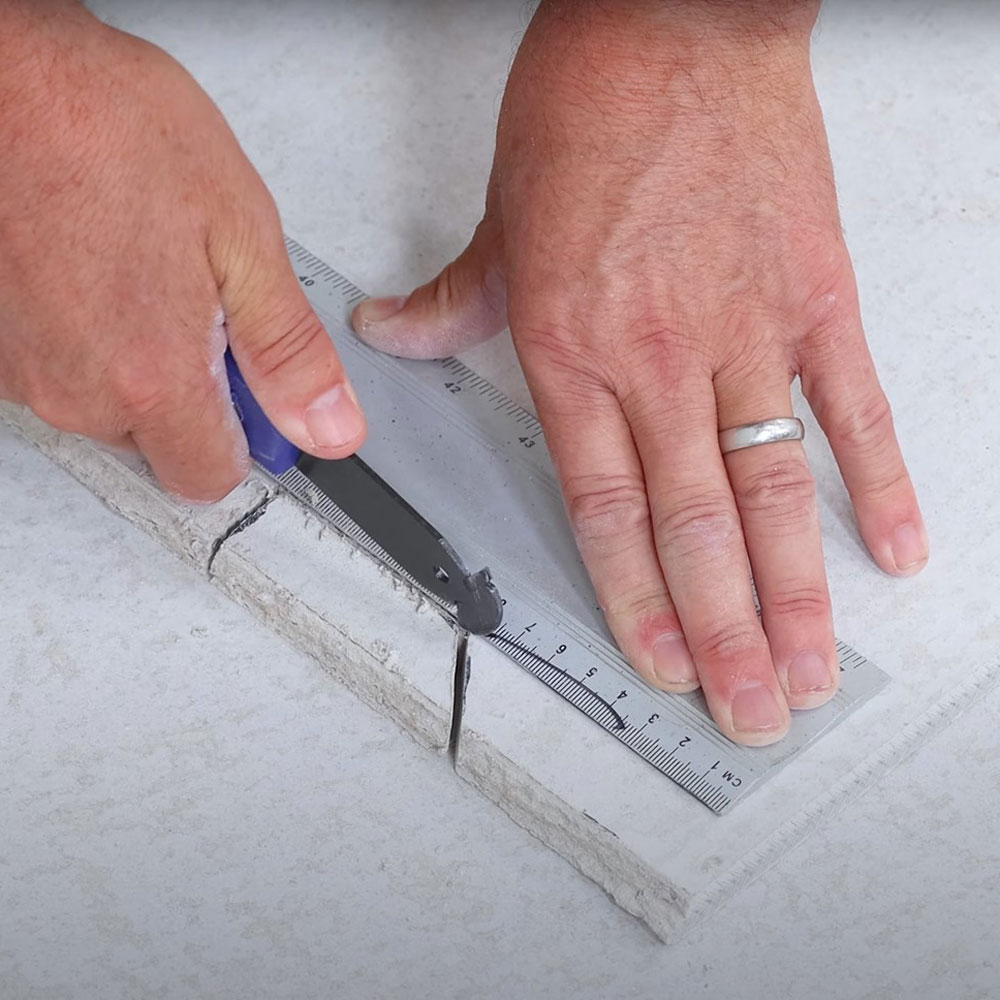
This method works well for thin concrete boards. You score the surface deeply, then snap it along the scored line.
Use a utility knife or a carbide-tipped scoring tool. Score several passes to make a deep groove. Place the board on a flat surface with the scored line over the edge.
- Score the board firmly along the cutting line
- Support the board on the scored line’s edge
- Snap the board downward to break it cleanly
Using A Circular Saw
A circular saw with a diamond blade works well for straight cuts. It cuts faster than scoring and snapping.
Wear safety gear to protect from dust and debris. Make sure the blade is sharp and designed for concrete or masonry materials.
- Set the saw depth slightly deeper than the board thickness
- Mark the cut line clearly before cutting
- Cut slowly and steadily to avoid chipping
- Use a guide to keep straight cuts
Employing A Wet Saw For Precision
A wet saw uses water to cool the blade and reduce dust. It provides smooth and precise cuts on concrete board.
This tool is ideal for detailed or angled cuts. The water helps keep the board from overheating and breaking.
- Fill the water reservoir before cutting
- Use a diamond blade made for wet cutting
- Slowly push the board into the blade for control
- Keep hands clear of the blade and moving parts
Handling And Finishing Cuts
Cutting concrete board requires care to get clean edges and avoid damage. Proper handling helps make the process safer and easier.
Finishing the cuts correctly improves the board’s appearance and performance. This guide explains key steps after cutting concrete board.
Smoothing Rough Edges
Cutting concrete board can leave rough or sharp edges. These edges need smoothing to prevent injuries and help with installation.
Use a sanding block or a rubbing stone to smooth the edges. Move the tool back and forth gently until the surface feels even.
- Wear gloves to protect your hands
- Use medium-grit sandpaper for best results
- Check edges often to avoid over-sanding
Checking For Accuracy
After cutting, check if the board matches your desired measurements. Accurate cuts help parts fit well and avoid gaps.
Use a tape measure or square tool to verify length and angles. Mark any spots that need small adjustments before installation.
- Measure twice to reduce mistakes
- Check corners for straightness
- Compare pieces to your project plan
Safe Disposal Of Offcuts
Concrete board offcuts can be sharp and heavy. Dispose of them safely to avoid injury and keep your work area clean.
Collect scraps in a sturdy container. Follow local rules for disposal or recycling of construction waste.
- Wear gloves when handling offcuts
- Do not leave sharp pieces on the floor
- Use labeled bins for concrete waste
Common Mistakes To Avoid
Cutting concrete board needs care and the right tools. Mistakes can cause damage or injury. Knowing what to avoid helps you do the job well.
Here are common errors when cutting concrete board. Avoid these to keep your work safe and clean.
Cutting Without Proper Support
Concrete boards are heavy and brittle. Cutting without good support makes them break or crack. It also makes cutting harder and less accurate.
Always place the board on a flat, stable surface. Use sawhorses or a strong table. Support the board near the cut line to stop bending.
- Use a sturdy table or sawhorses
- Support both sides of the board
- Keep the board still while cutting
Ignoring Safety Precautions
Concrete boards create dust and sharp edges. Ignoring safety rules can harm your eyes, lungs, and skin. Always protect yourself.
Wear safety goggles, gloves, and a dust mask. Work in a well-ventilated area. Keep your hands clear of the blade. Follow safety steps to avoid accidents.
- Wear goggles to protect eyes
- Use a dust mask for breathing safety
- Wear gloves to protect hands
- Cut in open or ventilated spaces
Using Dull Blades
Dull blades cause rough cuts and can crack the board. They make the saw work harder and increase the risk of accidents.
Use a sharp blade made for cutting concrete board. Check the blade often and replace it if it looks worn. A sharp blade cuts cleanly and safely.
- Choose blades designed for concrete board
- Inspect the blade before each use
- Replace dull or damaged blades promptly
- Keep blades clean and free of debris

Credit: www.youtube.com

Credit: www.youtube.com
Frequently Asked Questions
What Tools Are Best For Cutting Concrete Board?
The best tools include a carbide-tipped scoring knife, utility knife, or circular saw with a diamond blade. Scoring and snapping is common for thin boards. For thicker boards, use a saw to ensure clean, precise cuts. Always wear safety gear.
How Do You Score And Snap Concrete Board?
Score the board along a straight line using a carbide-tipped knife. Apply firm pressure until a groove forms. Then, snap the board by hand or use a straight edge as leverage. This method is effective for boards up to 1/2 inch thick.
Can You Use A Circular Saw On Concrete Board?
Yes, a circular saw with a diamond-tipped blade cuts concrete board efficiently. It creates smooth, straight edges, ideal for larger or thicker boards. Use slow, steady passes, and wear eye and respiratory protection to avoid dust inhalation.
How Do You Reduce Dust When Cutting Concrete Board?
Use a wet saw or attach a vacuum to your saw. Scoring and snapping produces less dust than sawing. Wearing a mask and cutting outdoors or in ventilated areas also minimizes dust exposure for safer work conditions.
Conclusion
Cutting concrete board is easier with the right tools and steps. Score the board carefully and snap it along the line. Use a saw for detailed cuts or thick boards. Always wear safety gear to protect your eyes and hands.
Practice patience and take your time for clean cuts. With these tips, your project will look neat and strong. Keep these methods in mind for any concrete board work ahead. Simple steps lead to great results.