Is your air conditioner freezing up and leaving you stuck in the heat? It’s frustrating when your cool relief suddenly turns into a frozen mess.
But don’t worry—you can stop this from happening. Understanding why your AC freezes and learning simple ways to prevent it will save you time, money, and discomfort. Keep reading to discover easy tips that keep your air conditioner running smoothly and your home comfortably cool all summer long.
Causes Of Air Conditioner Freezing
Air conditioners can freeze for different reasons. This problem stops the AC from working well. Knowing the causes helps you fix it fast.
Frozen ACs can cause cold air to stop and damage parts. Let’s look at common causes of freezing.
Low Refrigerant Levels
Refrigerant is the liquid that cools the air in your AC. If its level is low, the system can freeze up. Low refrigerant means less pressure in the coils.
This low pressure causes the coils to get very cold. Moisture in the air then freezes on the coils. This ice blocks the cooling process.
Dirty Air Filters
Air filters clean the air before it goes into the AC. When filters are dirty, air cannot flow freely. This makes the AC work harder and cool unevenly.
Poor airflow makes the coils too cold and causes ice to form. Changing or cleaning filters often stops freezing problems.
Blocked Airflow
Blocked airflow happens when vents or ducts are closed or covered. The AC cannot get enough warm air to keep coils warm. Cold coils freeze moisture on them.
Check if vents are open and ducts are clear. This helps air move freely and stops freezing.
- Keep vents open and unblocked
- Clean air ducts regularly
- Remove furniture or curtains blocking vents
Thermostat Issues
A broken or wrong thermostat setting can cause freezing. If the thermostat sets the temperature too low, the AC runs too long. This makes coils freeze.
Sometimes the thermostat does not read the temperature right. This causes the AC to keep cooling and ice to build on coils.
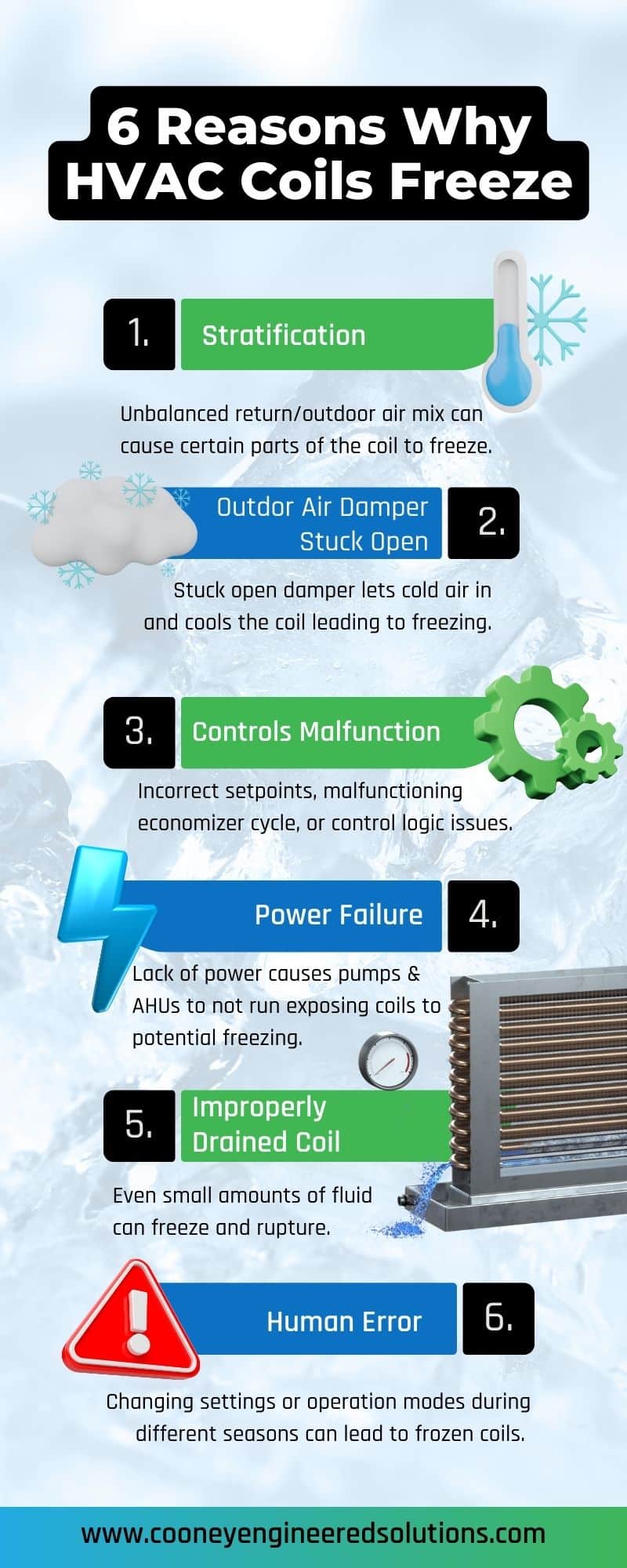
Credit: cooneyengineeredsolutions.com
Signs Your Ac Is Freezing
Your air conditioner can freeze for several reasons. Detecting the signs early helps you avoid bigger problems.
Look out for common signs that show your AC is freezing. Knowing these helps keep your system working well.
Ice Formation On Coils
Ice forms on the evaporator coils when airflow is low or refrigerant is low. This ice blocks normal cooling.
You may see white or bluish ice covering the coils or lines. This is a clear sign your AC is freezing.
Reduced Cooling Efficiency
Your AC will cool less if it freezes. The frozen coils stop heat from moving properly.
Rooms may feel warmer than usual even when the AC is running. This drop in cooling is a warning sign.
Unusual Noises
Freezing can cause strange sounds from your AC. You might hear gurgling, hissing, or banging noises.
These noises happen because ice affects the fan and compressor parts. Listen carefully for changes in sound.
Water Leaks
When the ice melts, water can drip inside or outside your home. This causes leaks near the AC unit.
Check for puddles or wet spots around the AC. Water leaks often mean the system has been freezing.
Preventive Maintenance Steps
Air conditioners can freeze if they are not cared for properly. Preventive maintenance helps keep your AC working well. It stops freezing and saves money on repairs.
Follow simple steps to keep your air conditioner from freezing. These steps improve airflow and system performance.
Regular Filter Cleaning
Dirty filters block airflow and cause your AC to freeze. Clean or replace filters every one to three months. This keeps air flowing freely and prevents ice buildup.
Check filters more often during heavy use or dusty seasons. Clean filters improve air quality and system efficiency.
Check Refrigerant Levels
Low refrigerant makes your AC work harder and freeze up. Check refrigerant levels regularly. If low, have a professional refill it. Do not add refrigerant yourself.
Proper refrigerant levels keep your AC cooling well without freezing pipes or coils.
Clear Air Vents
Blocked vents reduce airflow and cause your air conditioner to freeze. Make sure all vents and registers are open and clear of furniture or debris. Clean vents regularly to keep air flowing.
- Remove dust and dirt from vents
- Keep vents free of obstructions
- Check vents in every room
Schedule Professional Tune-ups
Have a professional inspect your air conditioner each year. They check all parts, clean coils, and fix small issues. This stops freezing before it starts.
Regular tune-ups extend the life of your AC and keep it running smoothly during hot months.
Diy Tips To Avoid Freezing
An air conditioner can freeze if it works too hard or has poor airflow. This causes damage and makes it less effective.
Use simple steps to keep your AC running smoothly and avoid freezing problems.
Keep Thermostat At Optimal Settings
Set your thermostat between 75 and 78 degrees Fahrenheit. This stops the AC from overworking and freezing.
A very low temperature makes the system run longer and causes ice to form on coils.
Ensure Proper Airflow Around Unit
Make sure nothing blocks air vents or the outdoor unit. Good airflow helps keep the system cool and dry.
Clean or replace air filters regularly to prevent dust buildup. Dirty filters reduce airflow and cause freezing.
- Clear leaves and debris near the outdoor unit
- Keep furniture and curtains away from vents
- Check and clean air filters every 1-3 months
Limit Continuous Ac Usage
Turn off your AC for short breaks during very hot days. Continuous use can make the coils freeze.
Use a timer or smart plug to control how long the AC runs. This helps prevent overworking the system.
Use Ceiling Fans For Support
Ceiling fans help spread cool air and reduce the AC load. They make rooms feel cooler without extra AC work.
Run fans along with your AC to keep airflow steady. This lowers the chance of freezing inside the unit.
When To Call A Professional
Air conditioners can freeze for many reasons. Sometimes, it is easy to fix. Other times, you need expert help.
Knowing when to call a professional can save your AC and money. Watch for signs that need expert care.
Persistent Freezing Issues
If your air conditioner freezes often, it shows a deeper problem. You may try to fix it, but it can come back.
Repeated freezing can damage the system. A professional can find the root cause and fix it right.
Refrigerant Recharge Needs
Low refrigerant causes your AC to freeze. You might not see this issue, but it cools less effectively.
Only trained technicians can safely recharge refrigerant. Do not try to add it yourself.
Component Repairs Or Replacements
Frozen AC can mean broken parts like fans or coils. These parts need repair or replacement.
Professionals have tools and skills to fix or replace damaged components. This keeps your AC running well.

Credit: www.lexairconditioning.com

Credit: www.youtube.com
Frequently Asked Questions
Why Does My Air Conditioner Freeze Up?
Your air conditioner freezes due to restricted airflow, low refrigerant, or dirty filters. These issues reduce heat exchange, causing ice buildup on coils and freezing the unit.
How Can I Prevent My Ac From Freezing?
Regularly clean or replace filters, maintain proper refrigerant levels, and ensure unobstructed airflow. Scheduling routine professional maintenance also helps prevent freezing and keeps your AC efficient.
What Role Does Thermostat Setting Play In Freezing?
Setting the thermostat too low forces the AC to run continuously, causing coils to freeze. Keep the thermostat at a moderate level to avoid excessive cooling and freezing.
Can Dirty Air Filters Cause Ac Freezing?
Yes, dirty filters block airflow, reducing heat transfer. This makes the evaporator coil too cold and causes ice buildup, leading to freezing issues in your AC.
Conclusion
Keeping your air conditioner from freezing takes simple steps and regular care. Clean the filters and check the airflow often. Set the thermostat to a comfortable, steady temperature. Watch for any ice buildup and act quickly if you see it.
Small problems can grow if ignored. A well-maintained air conditioner works better and lasts longer. Stay alert and keep your cooling system in good shape all year. Your comfort depends on it.