Do you ever wonder why your garden hose doesn’t fit the connectors or why water flow feels weak? The key to solving these problems often lies in one simple measurement: the diameter of your garden hose.
Knowing this number can save you time, money, and frustration. But how exactly do you measure it? You’ll discover easy, step-by-step ways to find the right diameter for your hose. By the end, you’ll feel confident buying the perfect hose or accessories that work seamlessly with your garden setup.
Keep reading, and let’s make your watering tasks easier and more efficient!
Credit: www.angi.com
Tools Needed
Measuring the diameter of a garden hose needs the right tools. This helps to find the correct size for fittings or replacements.
Here are common tools you can use to measure the hose diameter accurately.
Measuring Tape
A measuring tape is flexible and easy to use. Wrap it around the hose to get the circumference. Then use the tape length to find the diameter with a simple calculation.
Use this formula: Diameter = Circumference ÷ 3.14
Caliper
A caliper gives a direct diameter reading. Place the hose between the jaws and close gently to measure. This tool is very precise for inner and outer diameters.
- Digital calipers show the measurement on a screen.
- Vernier calipers require reading the scale manually.
- Always measure across the widest part for accuracy.
Ruler
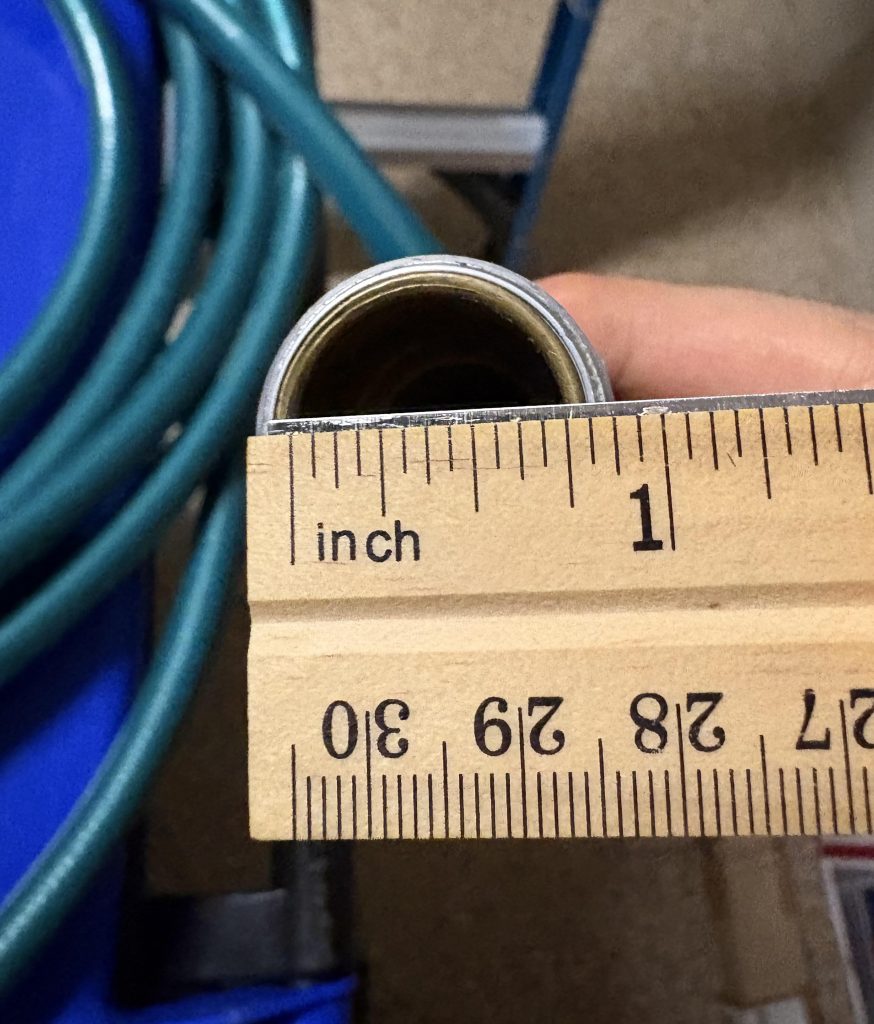
A ruler works for rough diameter checks. Lay it across the hose end and read the width. This works best for hoses with clear edges and no bending.
| Tool | How to Use | Accuracy |
| Measuring Tape | Wrap around hose, measure circumference, divide by 3.14 | Medium |
| Caliper | Place hose between jaws, read diameter directly | High |
| Ruler | Measure hose width across end | Low |
Identify Hose Type
Knowing the type of garden hose you have is important. It helps in measuring the diameter correctly. Different hoses have different features.
Let’s explore the common types of hoses and how they vary in material and size.
Material Variations
Garden hoses come in various materials. Each material has its own benefits and drawbacks. Understanding these helps in choosing the right hose for your garden.
- Rubber: Flexible and durable but heavier.
- Vinyl: Lightweight and affordable but less durable.
- Polyurethane: Lightweight and kink-resistant.
Standard Sizes
The size of a garden hose is typically measured by its diameter. The standard sizes usually available are 1/2 inch, 5/8 inch, and 3/4 inch.
| Size | Common Use |
| 1/2 inch | Light watering |
| 5/8 inch | General gardening |
| 3/4 inch | Heavy-duty tasks |
Measure Outside Diameter
Measuring the outside diameter of a garden hose helps you find the right fittings and connectors. It is simple and requires only a few tools.
This guide shows two easy ways to measure the hose diameter accurately.
Wrap Tape Around Hose
Use a flexible tape to wrap around the hose. This method gives you the hose’s circumference, which you can use to find the diameter.
- Take a soft measuring tape or a piece of string.
- Wrap it tightly around the hose’s outer edge.
- Mark or note the length where the tape meets.
- If using string, measure it with a ruler afterward.
- Divide the circumference by 3.14 to get the diameter.
Direct Diameter Measurement
Measure the hose diameter directly using a ruler or caliper. This method is quick and precise if you have the right tool.
| Tool | How to Use | Accuracy |
| Ruler | Place across hose and read width | Good for rough estimate |
| Caliper | Clamp around hose and read value | Very accurate |
Measure Inside Diameter
Measuring the inside diameter of a garden hose helps you find the right size for fittings. It shows the width of the hollow part where water flows.
You can measure the inside diameter using simple tools. This guide explains how to do it correctly.
Remove Hose End
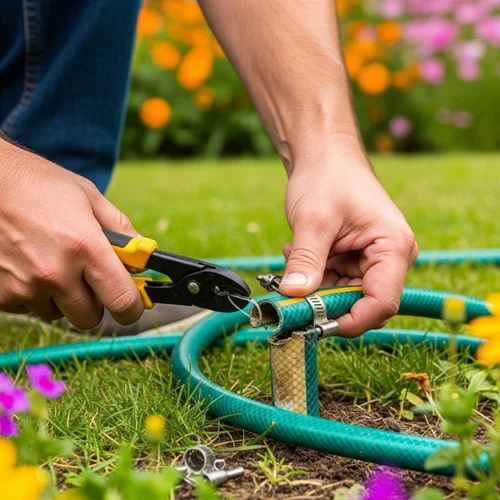
Start by taking off the hose end or connector. This lets you see the hose’s inside edge clearly.
Use a wrench or pliers if the hose end is tight. Be careful not to damage the hose.
Use Caliper For Accuracy
A caliper gives the best measurement of the inside diameter. It measures the exact distance across the hose opening.
Place the caliper tips inside the hose and open them until they touch both sides. Read the number shown on the caliper scale.
- Use a digital or dial caliper for easy reading
- Measure at multiple points for accuracy
- Record the smallest measurement as the inside diameter
Convert Measurements
Measuring the diameter of a garden hose often requires converting units. Most hoses are measured in inches, but some tools use millimeters.
Knowing how to convert between inches and millimeters helps you find the exact size you need for fittings and replacements.
Inches To Millimeters
One inch equals 25.4 millimeters. To convert inches to millimeters, multiply the number of inches by 25.4.
| Inches | Millimeters |
|---|---|
| 1/4 | 6.35 |
| 1/2 | 12.7 |
| 3/4 | 19.05 |
| 1 | 25.4 |
| 1 1/4 | 31.75 |
Rounding Tips
After converting, rounding helps make measurements easier to use. Round to the nearest whole number or to one decimal place.
- If the number is 0.5 or higher, round up.
- If less than 0.5, round down.
- Use one decimal place for more accuracy.
- Check the fitting size to match the rounded measurement.
Common Hose Diameters
Measuring the diameter of a garden hose helps you find the right size for your needs. The diameter affects water flow and fitting size.
Garden hoses come in different diameters. Knowing common sizes makes it easier to choose or replace hoses.
Typical Sizes
Most garden hoses have a diameter of 1/2 inch, 5/8 inch, or 3/4 inch. These sizes suit most home watering tasks.
- 1/2 inch hoses are thinner and lighter. They are easy to carry but carry less water.
- 5/8 inch hoses are the most common. They balance water flow and ease of use.
- 3/4 inch hoses carry more water. They are heavier and used for large gardens or heavy-duty tasks.
Matching Fittings
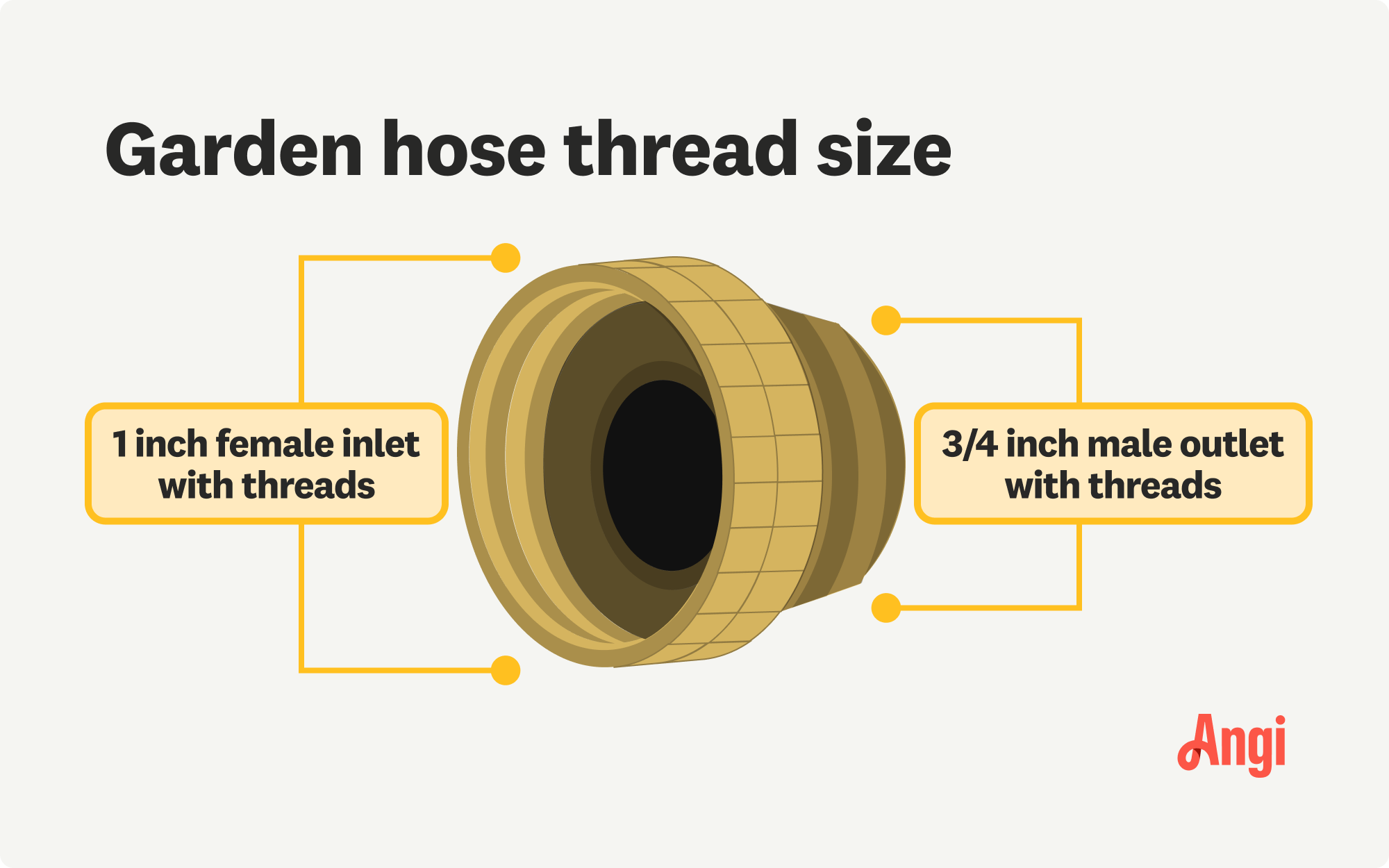
Fittings connect hoses to faucets or other hoses. They must match the hose diameter for a tight fit.
Hose fittings come in sizes that match common hose diameters. Using the right fitting prevents leaks and water loss.
| Hose Diameter | Fitting Size |
|---|---|
| 1/2 inch | 1/2 inch |
| 5/8 inch | 5/8 inch |
| 3/4 inch | 3/4 inch |
Tips For Accurate Measurement
Measuring the diameter of a garden hose is simple but requires care. Accurate measurement helps you find the right fittings and accessories.
Use the right tools and methods to avoid errors. These tips make your measurements more reliable and easy to follow.
Avoid Hose Compression
Do not squeeze or flatten the hose while measuring its diameter. Compression changes the hose’s shape and size.
Hold the hose gently and keep it round. This gives a true diameter measurement without distortion.
Measure Multiple Points
Measure the diameter at several places along the hose. Hoses can be uneven or slightly bent.
Take at least three measurements and use the average. This ensures you get a consistent and accurate size.
- Measure near the hose end
- Measure in the middle section
- Measure near the other end
- Calculate the average diameter

Credit: www.reddit.com
Credit: www.gardeneros.com
Frequently Asked Questions
How Do I Find The Diameter Of My Garden Hose?
To find your garden hose diameter, measure the hose’s inside width using a ruler or caliper. The inside diameter (ID) is key for water flow. Most hoses range from 1/2 inch to 1 inch ID.
Why Is Measuring Garden Hose Diameter Important?
Measuring diameter ensures proper water pressure and flow. It helps select compatible fittings and avoids leaks. Correct size improves gardening efficiency and hose longevity.
Can I Measure Hose Diameter Without Tools?
Yes, use a coin or a known object to estimate diameter. Compare it against the hose opening visually or with a ruler for rough measurement.
What’s The Difference Between Inside And Outside Diameter?
Inside diameter (ID) measures water flow space, while outside diameter (OD) includes hose thickness. ID is crucial for fittings; OD affects hose storage and handling.
Conclusion
Measuring a garden hose diameter is simple and helpful. Use a ruler or tape to find the outside width. Double-check to be sure you get the right size. Knowing the diameter helps you pick the correct fittings. It also improves water flow and hose performance.
Keep your measurements handy when shopping or fixing hoses. This small step saves time and avoids mistakes. Now, you can measure your garden hose with confidence.