Are you wondering how to keep your front wheel drive car running smoothly and extend the life of your tires? One simple yet often overlooked task can save you money and improve your driving safety: rotating your tires.
But how do you rotate tires on a front wheel drive car the right way? If you do it wrong, you might wear your tires unevenly or even damage your car. Don’t worry—this guide will walk you through easy steps you can follow today.
Keep reading to learn the best method to rotate your tires and get the most out of every mile you drive.
Why Tire Rotation Matters
Tire rotation means moving tires from one position to another. This helps all tires wear out evenly.
Rotating tires keeps your car safe and saves money by making tires last longer.
Benefits For Front Wheel Drive Cars
Front wheel drive cars use front tires for steering and power. These tires wear out faster than rear tires.
Rotating tires balances wear between front and rear tires. This helps your car handle better and drives smoothly.
- Prevents front tires from wearing too fast
- Improves traction and handling
- Extends the life of all tires
Impact On Tire Wear And Safety
Uneven tire wear can cause poor grip and longer stopping distances. This can be dangerous on wet or icy roads.
Regular tire rotation helps tires wear evenly. Even tires keep your car stable and safe on the road.
- Reduces risk of blowouts
- Improves braking performance
- Maintains better control in emergencies
Credit: www.autoblog.com
Tools Needed For Rotation
Rotating tires on a front wheel drive car is important. It helps ensure even tire wear and extends tire life.
Having the right tools makes the job easier and safer. Here are the essentials and some optional accessories.
Essential Equipment
You need basic tools for rotating tires. These tools help lift and remove the tires safely.
- Jack: A hydraulic or scissor jack will lift the car.
- Jack stands: These hold the car up while you work.
- Lug wrench: Use this to remove and tighten lug nuts.
Optional Accessories
Some accessories make tire rotation more convenient. They are not required but can be helpful.
- Torque wrench: Ensures lug nuts are tightened properly.
- Gloves: Protect your hands while working.
- Wheel chocks: Prevent the car from rolling.
Preparing Your Car
Rotating tires on a front wheel drive car keeps your tires wearing evenly. This helps your car drive safely and smoothly. Before you start, prepare your car properly to make the job easier and safer.
Getting your car ready means parking it in the right place and loosening the lug nuts correctly. These steps are important for a safe tire rotation process.
Parking And Securing
Park your car on a flat, level surface. Avoid soft or sloped ground that can cause the car to move. Put the gear in park or first gear if your car has a manual transmission.
- Apply the parking brake firmly.
- Place wheel chocks behind the rear tires to stop the car from rolling.
- Turn off the engine and remove the key from the ignition.
Loosening Lug Nuts
Before raising the car, loosen the lug nuts on the front tires. This makes it easier to remove the tires once the car is lifted. Do not remove the lug nuts completely yet.
| Tool Needed | Action |
| Lug wrench or tire iron | Fit over the lug nut firmly |
| Lug nuts | Turn counterclockwise to loosen |
| Amount of force | Use steady pressure; avoid jerking |
| Tip | Loosen nuts while car is still on ground |
Rotation Patterns For Front Wheel Drive
Rotating tires on a front wheel drive car is important for even tire wear. Proper rotation extends tire life and improves safety. This guide explains the best patterns to use.
Knowing the right way to rotate tires helps maintain good traction and handling. It also prevents early tire damage and uneven tread wear.
Recommended Patterns
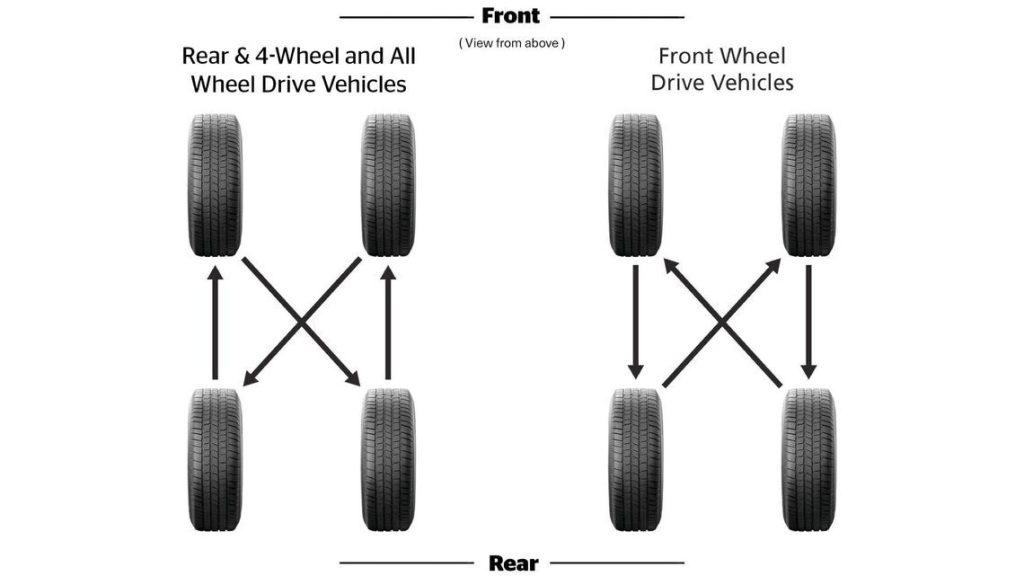
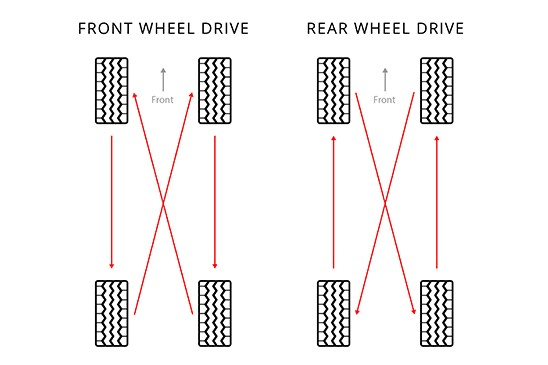
The most common pattern for front wheel drive cars is the forward cross. This means the front tires move straight back, and the rear tires cross to the front.
- Front tires move straight back to the rear axle.
- Rear tires cross to the front, switching sides.
- This pattern balances wear on all tires.
- It works well if the rear tires are the same size as the front.
Another pattern is the X-pattern, where all tires switch sides and axles diagonally. Use this only if your tires are the same size on all wheels.
Avoiding Common Mistakes
Many people rotate tires incorrectly, causing uneven wear or damage. Avoid these mistakes to keep your tires lasting longer.
| Mistake | Problem | Solution |
| Rotating tires without crossing | Uneven wear on front tires | Use the forward cross pattern |
| Ignoring tire size differences | Improper fit and wear | Only rotate tires of the same size |
| Not rotating often enough | Early tire damage | Rotate every 5,000 to 8,000 miles |
| Skipping tire balancing | Vibration and uneven wear | Balance tires after rotation |
Step-by-step Rotation Process
Rotating tires on a front-wheel-drive car helps your tires wear evenly. This keeps your car safe and improves tire life. Follow these steps carefully for the best results.
This guide covers lifting the car, removing and swapping tires, and tightening lug nuts properly.
Lifting The Car
First, park your car on a flat, stable surface. Use the parking brake to stop the car from moving. Place wheel chocks behind the rear tires for extra safety.
Locate the car’s jacking points near each tire. These points are strong enough to hold the car’s weight. Use a jack to lift one front tire off the ground.
Removing And Swapping Tires
Loosen the lug nuts on the tire before fully lifting the car. Remove the front tires and move them to the back on the same side. Move the rear tires to the front, crossing sides. This means the left rear tire goes to the right front position, and the right rear tire goes to the left front.
- Loosen lug nuts on the front tires.
- Lift the front tire with the jack.
- Remove the front tire.
- Move the front tire to the back on the same side.
- Remove the rear tire on the opposite side.
- Move the rear tire to the front on the opposite side.
- Repeat for the other side.
Tightening Lug Nuts Properly
After placing the tires back, tighten the lug nuts by hand. Lower the car so the tire touches the ground but does not carry full weight. Use a lug wrench to tighten nuts in a star pattern. This ensures even pressure on the wheel.
| Step | Action |
| 1 | Tighten the top lug nut. |
| 2 | Tighten the lug nut directly across. |
| 3 | Move to the next lug nut clockwise. |
| 4 | Tighten the lug nut across that one. |
| 5 | Repeat until all lug nuts are tight. |

Credit: www.bfgoodrichtires.com
Post-rotation Checks
After rotating tires on a front wheel drive car, it is important to check some things. These checks help keep your car safe and running well.
Make sure everything is tightened and the tires have the right air pressure. This prevents problems on the road.
Torque Verification
Check the lug nuts to ensure they are tight. Use a torque wrench to tighten them to the car maker’s recommended level.
If lug nuts are too loose, tires can come off. If too tight, they can cause damage. Proper torque is very important.
- Find the torque specs in your owner’s manual
- Tighten lug nuts in a star pattern
- Double-check all lug nuts for correct tightness
Tire Pressure Adjustment
After rotation, check the tire pressure on all tires. Use a reliable tire pressure gauge for accuracy.
Adjust the pressure to match the recommended level found on the driver’s door or in the manual. Proper tire pressure improves fuel efficiency and tire life.
- Check pressure when tires are cold
- Inflate or deflate tires as needed
- Don’t forget to check the spare tire pressure
When To Rotate Tires
Tire rotation helps your tires wear evenly. This keeps your car safe and extends tire life.
Front wheel drive cars wear tires differently. Rotating tires regularly is important for good grip.
Mileage Intervals
Most experts say to rotate tires every 5,000 to 7,500 miles. Check your car’s manual for exact numbers.
Regular rotation at these intervals keeps tire wear balanced. This improves driving safety and fuel efficiency.
- Rotate tires every 5,000 to 7,500 miles
- Follow your car’s owner manual advice
- Rotate more often if you drive on rough roads
- Consider rotation at every oil change
Signs Your Tires Need Rotation
Look for uneven tire wear. Front tires on front wheel drive cars wear faster than rear tires.
Other signs include vibration or noise when driving. These can mean your tires need rotation soon.
- Tires show uneven tread wear
- Steering wheel vibrates at high speeds
- Car pulls to one side while driving
- Noise coming from tires while driving
Credit: www.michelin.ca
Common Questions And Troubleshooting
Rotating tires on a front wheel drive car keeps your tires wearing evenly. This helps you drive safer and saves money. Some common problems can happen during rotation. Knowing how to handle these issues is important.
This guide covers handling uneven tire wear and dealing with stuck lug nuts. It answers key questions and offers easy tips to fix these problems.
Handling Uneven Wear
Uneven tire wear happens when some tires wear faster than others. This can cause poor car handling and reduce tire life. Front wheel drive cars often wear front tires faster. Rotating tires helps balance the wear.
- Check tire tread depth regularly on all tires.
- Rotate front tires to the rear and rear tires to the front, crossing sides.
- Inspect tires for signs of damage or uneven wear patterns.
- Keep tires inflated to the correct pressure listed in your car manual.
- Get wheel alignment checked if wear is severe or uneven.
Following these tips helps your tires last longer and improves driving safety.
Dealing With Stuck Lug Nuts
Stuck lug nuts can slow down tire rotation or make it impossible. They usually get stuck because of rust, dirt, or overtightening. It is important to remove them carefully to avoid damage.
| Cause | Solution |
| Rust or corrosion | Spray penetrating oil and wait 10 minutes |
| Tightened too much | Use a breaker bar or impact wrench |
| Cross-threaded lug nut | Try hand loosening first, then use tools carefully |
| Cold weather | Warm the area with a heat gun or warm cloth |
Always use the right size tools and apply steady force. Avoid using too much force that can break the lug nut or wheel studs.
Frequently Asked Questions
How Often Should I Rotate Tires On A Front-wheel-drive Car?
Tire rotation is recommended every 5,000 to 7,500 miles. Regular rotation ensures even tread wear and extends tire life. Check your car’s manual for specific intervals.
What Is The Correct Tire Rotation Pattern For Front-wheel Drive?
The common pattern is to move front tires straight back and swap rear tires front-to-back. This balances tire wear on front-wheel-drive vehicles effectively.
Can I Rotate Tires Myself On A Front-wheel-drive Car?
Yes, with basic tools and safety measures, you can rotate tires at home. Ensure the car is securely lifted and follow the proper rotation pattern.
Why Is Tire Rotation Important For Front-wheel-drive Cars?
Front tires wear faster due to steering and power delivery. Rotating tires prevents uneven wear, improves handling, and increases tire lifespan, saving money in the long run.
Conclusion
Rotating tires on a front-wheel-drive car keeps them wearing evenly. This helps your car drive safely and last longer. You should rotate tires every 5,000 to 7,000 miles. Use the correct pattern: front tires move straight back, rear tires cross forward.
Check tire pressure and condition during rotation. Doing this simple task saves money on new tires. It also improves fuel efficiency and ride comfort. Regular tire care means fewer problems on the road. Keep your car running smoothly with proper tire rotation.