Are you running out of space for your laundry appliances? Stacking your washer and dryer could be the perfect solution.
But how do you do it safely and correctly? You might be wondering if your machines are compatible or if you need special equipment. Don’t worry—this guide will walk you through every step, making the process simple and stress-free. By the end, you’ll know exactly how to stack your washer and dryer to save space and keep your laundry routine running smoothly.
Keep reading to transform your laundry area today!
Choosing The Right Washer And Dryer
Stacking your washer and dryer saves space in your laundry area. Picking the right models is key for a good fit and easy use.
Consider the type, size, and capacity of each unit. This helps you avoid problems and makes laundry easier.
Front-load Vs Top-load
Front-load washers stack well with dryers. They have doors on the front that open outward. Top-load washers open from the top. They usually cannot be stacked.
Front-load washers use less water and energy. Top-load washers may be easier to load for some people. Choose based on your space and comfort.
Matching Dimensions
Measure your laundry space before buying. The washer and dryer must fit well when stacked. Check the height, width, and depth of each machine.
| Dimension | Washer | Dryer |
| Width | 24-27 inches | 24-27 inches |
| Depth | 24-34 inches | 27-34 inches |
| Height | 33-39 inches | 36-42 inches |
Use a stacking kit if needed. It keeps the dryer stable on top of the washer. Always follow the manufacturer’s instructions.
Capacity Considerations
Choose machines with similar capacity. This helps balance loads and saves time. A mismatch can cause uneven wear or poor drying.
- Match washer and dryer drum sizes
- Consider your household laundry volume
- Think about types of fabrics you wash often
- Check for special cycles for delicates or heavy loads

Credit: www.reddit.com
Preparing The Space
Stacking a washer and dryer saves space and fits small laundry areas. Preparing the space correctly helps avoid problems later.
Before stacking, check the area carefully. Make sure it can hold the weight and size of the machines.
Measuring The Area
Measure the width, depth, and height where you plan to stack the washer and dryer. Leave extra room for ventilation and hookups.
- Measure the floor space width and depth.
- Check ceiling height for stacked units.
- Allow at least 1 inch of space on each side.
- Leave 4 to 6 inches behind for vents and hoses.
Ensuring Proper Ventilation
Good ventilation helps dryers run safely and efficiently. Poor airflow can cause overheating and fire risks.
| Ventilation Tip | Reason |
|---|---|
| Check for vent openings near the stack location | Allows hot air to escape |
| Use rigid metal vents, not plastic | Reduces fire hazards |
| Keep vent ducts short and straight | Improves airflow |
| Clean vents regularly | Prevents lint buildup |
Checking Electrical And Plumbing
Stacked units need correct power and water hookups. Check these before installation.
- Confirm a 240-volt outlet for the dryer
- Make sure a grounded 120-volt outlet is near the washer
- Check water supply valves for hot and cold water
- Inspect drain pipe for washer drainage
- Verify floor can support combined weight
Gathering Necessary Tools And Materials
Stacking your washer and dryer saves space and keeps your laundry area neat. Before you start, gather all the tools and materials you need. This helps the process go smoothly and safely.
Having the right equipment ready makes stacking easier. You will need parts from a stacking kit, safety gear, and some extra supplies. Let’s look at each of these.
Stacking Kit Components
A stacking kit holds your dryer securely on top of the washer. It includes special brackets and screws. These parts keep the machines stable and safe to use.
- Stacking brackets
- Mounting screws and bolts
- Anti-slip pads
- Instruction manual
Make sure the kit fits your washer and dryer models. Using the correct kit is very important for safety.
Safety Gear
Safety gear protects you while stacking the machines. It helps prevent injuries from heavy lifting and sharp tools.
- Work gloves to protect your hands
- Closed-toe shoes for foot safety
- Safety glasses to shield your eyes
- Back support belt if needed for lifting
Wear all safety gear during the entire stacking process. This keeps you safe from accidents.
Additional Supplies
Besides the stacking kit and safety gear, some other supplies help with the job. These items make setup easier and cleaner.
- Screwdriver or drill for mounting screws
- Measuring tape to check space and alignment
- Level tool to make sure machines are even
- Moving straps or extra hands to lift safely
- Cleaning cloth to wipe dust before stacking
Having these supplies ready saves time and reduces frustration. Check your tools before you begin stacking.
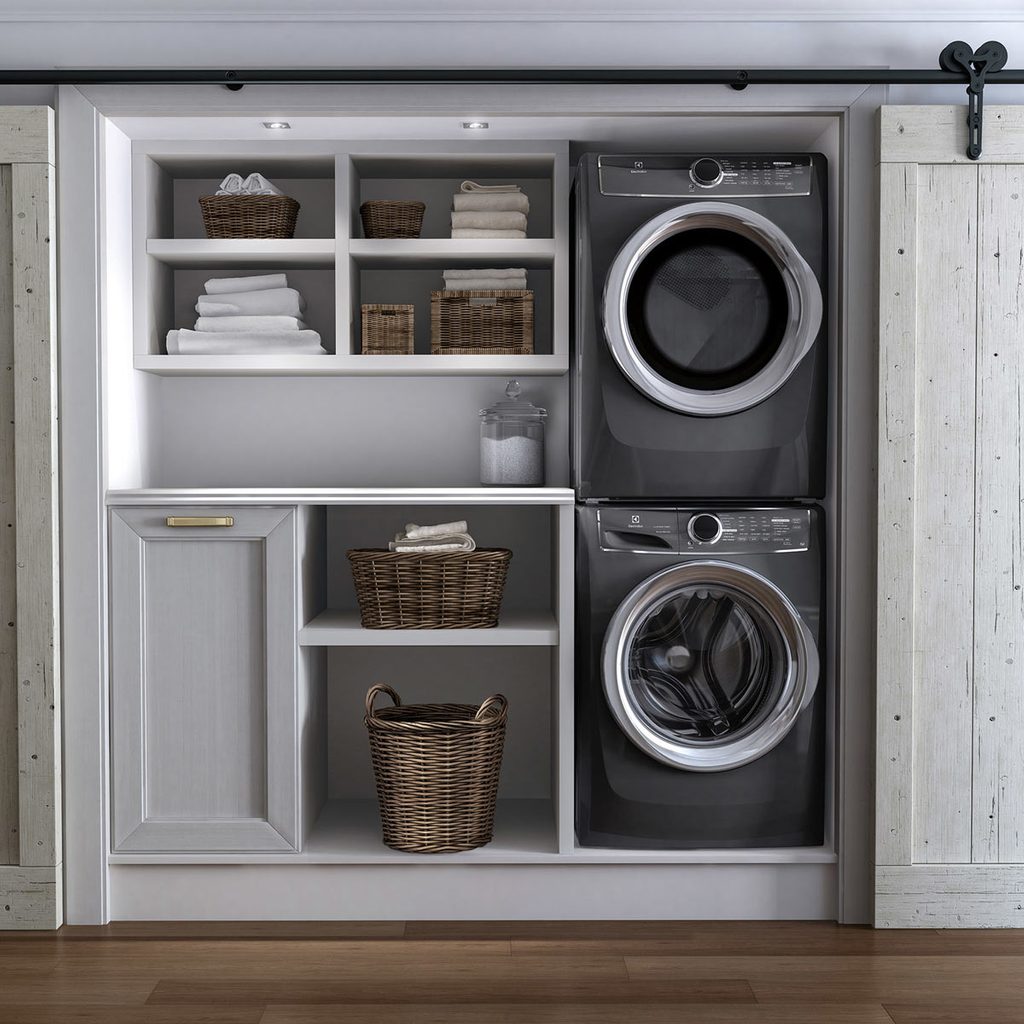
Credit: www.familyhandyman.com
Step-by-step Stacking Process
Stacking your washer and dryer saves space in your laundry area. The process is simple if you follow the right steps carefully.
This guide explains how to stack them safely and securely to avoid damage or accidents.
Securing The Washer
Start by placing the washer on a flat and level surface. Make sure it is stable and does not wobble.
Check the washer’s feet and adjust them if needed to make it steady. This helps prevent shaking during use.
Positioning The Dryer
Carefully lift the dryer and place it on top of the washer. Align the dryer so it sits evenly on the washer’s top surface.
It is best to have a helper for this step to avoid dropping or damaging the units.
Attaching The Stacking Kit
Use a stacking kit designed for your washer and dryer models. This kit usually includes brackets and screws.
Follow the kit instructions to attach the brackets to the dryer and washer. Secure all screws tightly to hold the units together.
- Position brackets as shown in the manual
- Use a screwdriver or drill for tight screws
- Double-check that all parts fit well
Verifying Stability
After stacking, check the whole unit for stability. Push gently to see if it moves or wobbles.
Tighten any loose screws and adjust feet again if needed. Your stacked washer and dryer should feel solid and safe.
Connecting Utilities
Stacking a washer and dryer saves space in your laundry area. Properly connecting the utilities is important for safe use.
This guide explains how to connect water, power, and venting when stacking your washer and dryer.
Hooking Up Water And Drainage
First, connect the washer to the water supply using hoses. Use hot and cold water lines as labeled.
Attach the drain hose to the washer and place it into a drain pipe or utility sink.
- Use new hoses to prevent leaks
- Tighten connections by hand, then a little with pliers
- Secure the drain hose to avoid spills
- Check for leaks before finalizing setup
Connecting Power Supply
Check the power requirements for both washer and dryer. Most washers use a standard 120V outlet.
Dryers often need a 240V outlet for electric models. Gas dryers require a gas line connection instead.
- Plug washer into a grounded outlet
- For electric dryers, use a dedicated 240V outlet
- Gas dryers need a professional to connect gas safely
- Never use an extension cord for the dryer
Setting Up Venting For Dryer
Dryer venting removes hot air and moisture outside. Proper venting improves drying and prevents fire risks.
Use a rigid or semi-rigid metal vent pipe for best airflow. Avoid plastic or foil ducts.
- Connect vent pipe to dryer’s vent outlet
- Secure vent with metal clamps or foil tape
- Keep vent pipe as short and straight as possible
- Clean vent regularly to prevent lint buildup
Testing And Final Adjustments
After stacking your washer and dryer, it’s important to test them. These tests ensure safety and efficiency.
Let’s look at steps to make sure everything runs smoothly.
Running Initial Cycles
Run the washer and dryer on their shortest cycles. This checks basic operation without wasting time or energy.
- Turn on the washer first and select a quick wash.
- Listen for unusual sounds during the spin cycle.
- Next, run the dryer empty for a short period.
- Check if the drum rotates smoothly.
Checking For Leaks And Noise
After initial cycles, check for leaks and odd noises. These could indicate improper stacking or connections.
Listen closely for any rattling or banging sounds. These might suggest alignment issues.
Adjusting Level And Alignment
Proper alignment prevents vibrations and noise. Check the level of both machines using a bubble level tool.
| Tool | Purpose |
| Bubble Level | Ensures machines are flat |
| Wrench | Tightens connections |
| Flashlight | Checks for leaks |
If needed, adjust the feet of the washer and dryer. This will keep them steady during operation.
Safety Tips And Maintenance
Stacking your washer and dryer can save space. It is important to follow safety tips and regular maintenance.
Proper care ensures your machines last long and work efficiently.
Regular Cleaning
Cleaning your washer and dryer keeps them in good condition. It helps avoid mold and lint buildup.
- Wipe the exterior of both machines weekly.
- Clean the lint filter after each dryer use.
- Run a cleaning cycle for your washer monthly.
Avoiding Overloading
Overloading can damage your machines and clothes. Always follow the recommended load size for best results.
| Machine | Max Load (lbs) |
| Washer | 10 |
| Dryer | 12 |
Routine Inspections
Regular inspections help identify issues early. This prevents costly repairs and ensures safe operation.
Inspect hoses and connections for leaks every six months. Replace any worn-out parts promptly.
Maximizing Space Beyond Stacking
Stacking your washer and dryer saves floor space in small laundry rooms. You can create even more room by adding smart storage and organization ideas around them.
Using shelves, cabinets, and creative storage helps keep everything neat. This way, your laundry area stays functional and clutter-free.
Using Shelving And Cabinets
Install shelves above or beside your stacked washer and dryer. Use wall-mounted cabinets to hide laundry supplies and keep the space tidy.
- Choose adjustable shelves for flexible storage
- Use clear containers for easy identification
- Install cabinet doors to hide clutter
- Add hooks under shelves for hanging small items
Organizing Laundry Supplies
Keep detergents, fabric softeners, and other supplies organized to save time. Group similar items and label containers to stay efficient.
| Supply | Storage Tip | Benefit |
| Detergent | Use a dispenser or measuring cup | Easy to measure and pour |
| Stain Remover | Place in a small basket | Quick access and neat storage |
| Dryer Sheets | Store in a wall-mounted container | Saves counter space |
Creative Storage Solutions
Think beyond shelves and cabinets. Use unused spaces creatively to add storage and keep your laundry room organized.
Here are some creative ideas:
- Install a pull-out drying rack behind the washer
- Use magnetic strips on the side of appliances for small tools
- Place a rolling cart between machines for extra storage
- Hang a pegboard for hanging brushes and cloths
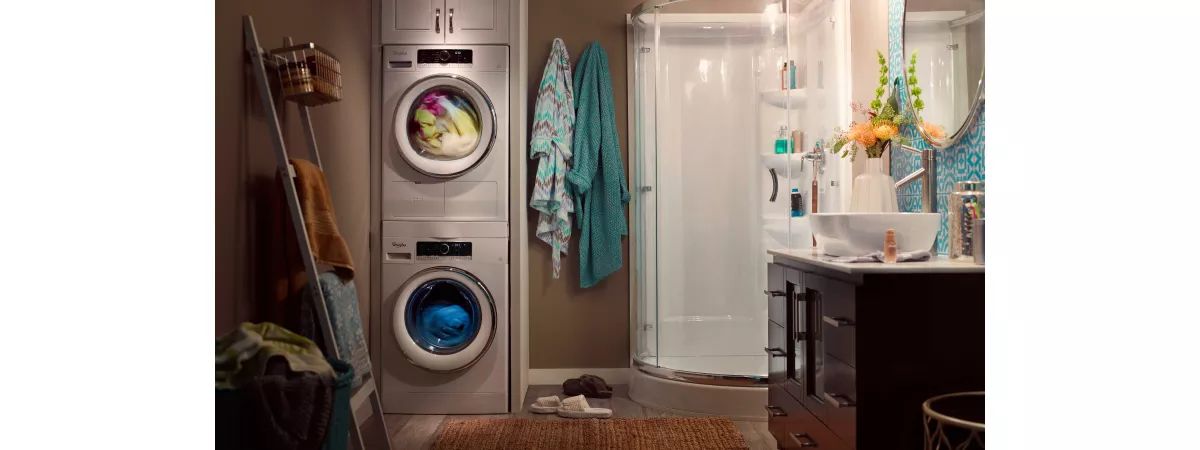
Credit: www.whirlpool.ca
Frequently Asked Questions
How Do You Safely Stack A Washer And Dryer?
Use a stacking kit designed for your models. Securely attach the dryer on top of the washer. Ensure both units are level and stable. Follow manufacturer instructions carefully to prevent accidents or damage.
Can All Washers And Dryers Be Stacked?
No, only specific front-loading washers and dryers are stackable. Check the appliance manual or manufacturer’s website. Ensure the units are compatible for stacking before installation.
What Tools Are Needed To Stack Washer And Dryer?
You’ll need a stacking kit, screwdriver, drill, and possibly a wrench. The kit usually includes brackets and screws. Follow the kit instructions for proper assembly and secure installation.
How Much Space Do Stacked Washer And Dryer Save?
Stacking washers and dryers save significant floor space. They free up room for storage or other uses. Ideal for small laundry rooms or apartments with limited space.
Conclusion
Stacking your washer and dryer saves space and keeps laundry organized. Choose a sturdy stacking kit to secure both machines safely. Measure your area before starting to avoid fitting problems. Follow the steps carefully to prevent damage and ensure stability.
This setup works well for small homes or apartments. Keep your laundry area tidy and efficient with this simple solution. Enjoy the extra floor space and easier laundry routine. Stacking is a smart choice for many households.