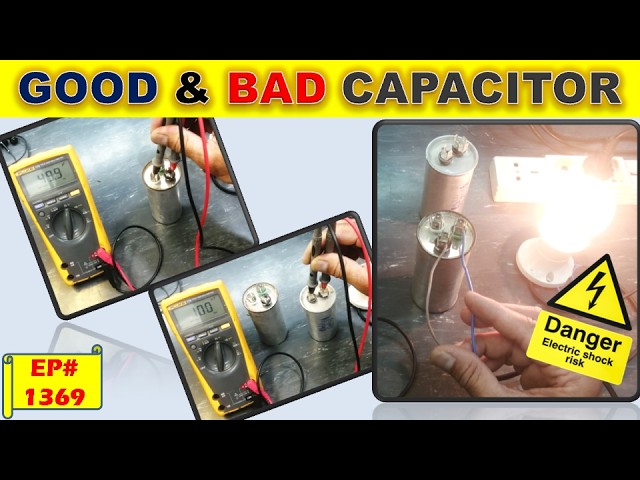
Is your air conditioner acting up or not cooling like it used to? One common culprit could be a faulty capacitor.
But how do you know if your capacitor is the problem? Testing it yourself might sound tricky, but it’s easier than you think. You’ll learn simple, step-by-step ways to test a capacitor on your air conditioner safely and effectively. By the end, you’ll have the confidence to check this important part and decide if it needs replacing—saving you time, money, and hassle.
Let’s dive in and get your AC back to peak performance!

Credit: www.youtube.com
Types Of Capacitors In Air Conditioners
Capacitors help air conditioners start and run smoothly. They store electrical energy for short times.
There are two main types of capacitors in air conditioners. Each has a special job to do.
Start Capacitors
Start capacitors give extra power to the compressor motor when it begins. They work only for a few seconds.
- Help motor overcome initial resistance
- Provide a strong energy boost at startup
- Turn off after the motor reaches full speed
- Usually have higher capacitance than run capacitors
Run Capacitors
Run capacitors keep the motor running efficiently. They stay active as long as the air conditioner is on.
| Feature | Start Capacitors | Run Capacitors |
|---|---|---|
| Function | Boost motor at startup | Help motor run smoothly |
| Duration | Short time only | Continuous while running |
| Capacitance | Higher (usually 70-120 microfarads) | Lower (usually 5-50 microfarads) |
| Location | Connected to start winding | Connected to run winding |
| Common Problems | Fail by short circuit or open circuit | Wear out and lose capacitance |

Credit: www.youtube.com
Tools Needed For Testing
Testing a capacitor on an air conditioner requires the right tools. These tools help you measure the capacitor’s electrical properties safely and accurately.
Using proper tools ensures you get correct readings and avoid damage or injury during testing.
Multimeter
A multimeter is a versatile tool used to measure voltage, resistance, and current. For capacitors, it helps check if the capacitor is charged or open.
- Set the multimeter to the resistance or continuity mode.
- Discharge the capacitor before testing.
- Connect the probes to the capacitor terminals.
- Look for a change in the resistance reading.
Capacitance Meter
A capacitance meter measures the exact capacitance value of the capacitor. This tool helps confirm if the capacitor matches its rated value.
| Capacitance Meter Feature | Purpose |
| Capacitance Measurement | Checks capacitor value in microfarads (µF) |
| Display | Shows numerical reading for easy interpretation |
| Probes | Connects to capacitor terminals for testing |
Safety Gear
Safety gear protects you from electric shock and injuries. Capacitors can hold charge even after power is off.
- Insulated gloves to protect your hands.
- Safety goggles to shield your eyes.
- Non-conductive tools for handling parts.
- A safe workspace with no moisture.
Safety Precautions Before Testing
Testing a capacitor in an air conditioner requires careful safety steps. These steps help prevent shocks and damage.
Always follow safety rules before touching any electrical parts. This guide covers two key precautions.
Power Disconnection
Turn off the air conditioner’s power before testing the capacitor. This stops electricity from flowing and reduces risk.
- Locate the main power switch or circuit breaker.
- Switch off the power supply to the air conditioner.
- Use a voltage tester to confirm no power is present.
- Never test a capacitor with the power on.
Discharging The Capacitor
Capacitors hold electric charge even after power is off. Discharging the capacitor avoids electric shocks.
| Discharging Method | Description |
| Using a Resistor | Connect a resistor across capacitor terminals to safely release charge. |
| Shorting Terminals | Use an insulated screwdriver to connect terminals briefly. This is less safe. |
| Wait Time | Leave capacitor alone for several minutes to self-discharge. |
Step-by-step Testing Process
Testing a capacitor in an air conditioner is important for proper maintenance. A capacitor helps start the motor and keep it running smoothly.
This guide shows how to test a capacitor safely and correctly using simple tools.
Locating The Capacitor
First, find the capacitor inside the air conditioner’s outdoor unit. It is usually near the compressor or fan motor. The capacitor looks like a small metal can with wires connected to it.
Make sure to turn off the power to the unit before opening the cover. This prevents electric shock.
Visual Inspection
Look at the capacitor closely for any signs of damage. Common signs include bulging, leaking, or rust. If you see any of these, the capacitor likely needs replacement.
- Check for cracks or dents on the capacitor body
- Look for oil or residue leaking from the capacitor
- Inspect the terminals for corrosion or loose connections
Testing With A Multimeter
You can test a capacitor with a multimeter set to the resistance or ohm mode. This test checks if the capacitor is shorted or open.
- Turn off power and discharge the capacitor by touching terminals with a screwdriver handle.
- Disconnect wires from the capacitor terminals.
- Set the multimeter to ohms (Ω).
- Touch the probes to the capacitor terminals.
- Watch the reading; it should start low and move to high resistance.
- If the reading stays at zero or infinity, the capacitor is bad.
Using A Capacitance Meter
A capacitance meter gives a precise measurement of the capacitor’s value. Use this tool to compare the reading with the capacitor’s rating.
| Step | Action | Details |
|---|---|---|
| 1 | Power off and discharge | Ensure safety by turning off power and discharging capacitor. |
| 2 | Remove wires | Disconnect all wires from capacitor terminals. |
| 3 | Set meter to capacitance | Turn on meter and select capacitance mode. |
| 4 | Connect probes | Attach meter probes to capacitor terminals. |
| 5 | Read value | Compare meter reading with capacitor label value. |
| 6 | Decide status | If reading is within 5% of label, capacitor is good. |
Interpreting Test Results
Testing a capacitor on an air conditioner helps find out if it works well. You use a multimeter or capacitor tester for this job.
Reading the test results correctly tells you if the capacitor is good or needs replacement.
Normal Readings
A normal capacitor shows a reading close to its rated capacitance. This number is usually written on the capacitor label.
The reading should be within 5% to 10% of the rated value. This means the capacitor still holds the right charge.
- Capacitance value matches the label
- Multimeter shows a steady reading
- No sudden drops or spikes in measurement
- Low or no resistance during charging phase
Signs Of A Faulty Capacitor
A faulty capacitor shows readings far from the rated value. This means it cannot store or release energy properly.
Other signs include no reading at all or a reading of zero or infinity on the meter. This points to a broken capacitor.
- Capacitance is much lower or higher than rated
- Multimeter shows no change or infinite resistance
- Visible bulges or leaks on the capacitor body
- AC system has trouble starting or running smoothly
Replacing A Faulty Capacitor
Capacitors help start the motor in your air conditioner. If the capacitor is bad, the AC may not work right.
Testing a capacitor shows if it needs to be replaced. Changing a faulty one can fix your AC and save money.
Choosing The Right Replacement
Use the exact capacitor size and type as the old one. Check the voltage and microfarad (µF) ratings on the label.
Buying the wrong capacitor can damage your AC. Match all numbers exactly to avoid problems.
- Check voltage rating (usually 370V or 440V)
- Match microfarad value (e.g., 35 µF, 5 µF)
- Pick the same capacitor shape and terminal type
- Buy from a trusted store or supplier
Installation Tips
Turn off power to the AC before starting work. Use a screwdriver to remove the old capacitor carefully.
Discharge the capacitor before touching it. Connect the wires to the new capacitor exactly as they were on the old one.
- Wear safety glasses and gloves
- Use a multimeter to check for power off
- Discharge capacitor by shorting terminals with a screwdriver (use insulated handle)
- Note wire positions or take a photo before removal
- Tighten connections firmly but do not overtighten
- Secure the new capacitor in place
- Turn power back on and test the AC
Common Issues Linked To Capacitor Failure
Capacitors are important parts of air conditioners. They help start the motor and keep it running smoothly. When a capacitor fails, the air conditioner may stop working or have problems running.
Testing the capacitor can show if it is working or if it needs to be replaced. Below, we look at common problems caused by bad capacitors.
Air Conditioner Not Starting
A failed capacitor often causes the air conditioner to not start at all. The capacitor gives the motor the initial push it needs. Without this, the compressor and fans will not turn on.
- The air conditioner makes a humming sound but does not start.
- The unit may try to start but quickly shuts off.
- There is no cool air because the compressor never runs.
- The capacitor may look swollen or have leaks.
Motor Running Problems
If the capacitor is weak, the motor might start but run poorly. This can cause the air conditioner to work less efficiently or stop suddenly.
| Problem | Effect |
| Weak capacitor | Slow motor start, weak cooling |
| Capacitor failure | Motor stops running during operation |
| Short circuit in capacitor | Possible damage to motor or other parts |
| Capacitor leakage | Reduced power, overheating motor |
Maintenance Tips To Extend Capacitor Life
Capacitors are key parts of your air conditioner. They help start the motor and keep it running smoothly. Taking care of capacitors can save you money and avoid breakdowns.
Testing and maintaining capacitors regularly is important. It helps you find problems early and keep your AC working well.
Regular Inspections
Check capacitors often for signs of damage. Look for bulges, leaks, or rust on the capacitor body. These signs mean the capacitor may fail soon.
Use a multimeter to test the capacitor’s electrical charge. This shows if the capacitor holds the right amount of power. Replace it if the reading is low or unstable.
- Turn off power before inspecting
- Look for physical damage
- Test capacitance with a meter
- Clean capacitor terminals
- Replace if readings are off
Environmental Considerations
Heat and moisture can shorten a capacitor’s life. Place the air conditioner where it gets good airflow and is protected from rain.
Keep the area around the capacitor clean and dry. Dirt and water cause corrosion and electrical problems that damage capacitors.
- Avoid direct sunlight on the AC unit
- Ensure proper ventilation around the capacitor
- Keep the unit free of dust and debris
- Use covers or enclosures if needed

Credit: www.youtube.com
Frequently Asked Questions
How Do You Test A Capacitor With A Multimeter?
To test a capacitor with a multimeter, first turn off power to the AC unit. Set the meter to capacitance mode. Disconnect the capacitor and connect the meter probes to its terminals. A reading close to the rated capacitance indicates a good capacitor.
What Are Signs Of A Bad Ac Capacitor?
Signs include the AC not starting, humming noises, or the unit shutting off suddenly. A bulging or leaking capacitor casing is a clear physical sign. Testing with a multimeter confirms if capacitance is below specification.
Can You Test A Capacitor Without Removing It?
Testing without removal is unsafe and inaccurate. Always disconnect power and remove the capacitor before testing. This ensures safety and accurate readings, preventing damage to the multimeter or AC unit.
Why Does A Faulty Capacitor Affect Ac Performance?
A faulty capacitor fails to provide the necessary start or run voltage to the motor. This causes the compressor or fan motor to run inefficiently or not at all, reducing cooling performance and increasing energy consumption.
Conclusion
Testing a capacitor on an air conditioner is essential. It ensures your system runs efficiently. Always turn off power before starting. Use a multimeter for accurate results. A faulty capacitor affects cooling performance. Regular checks prevent unexpected breakdowns. Be cautious and follow safety guidelines.
If unsure, consult a professional for help. Timely maintenance saves money and extends the unit’s life. Understanding these steps helps maintain your air conditioner. Keep your home comfortable and energy-efficient. With these tips, you can easily test and maintain your unit.
Enjoy a cool, worry-free home environment.