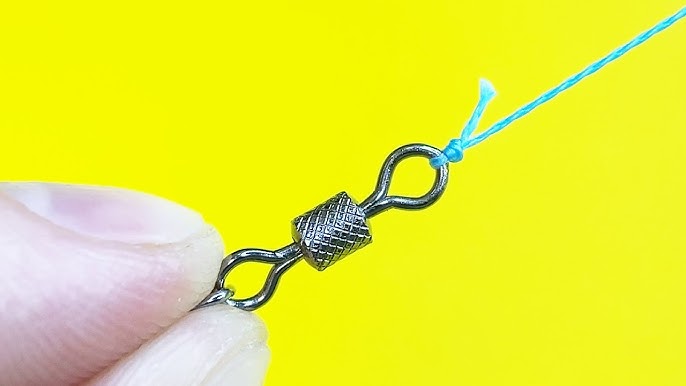
Are you tired of your fishing line twisting and tangling every time you cast? Knowing how to tie a swivel on your fishing line can save you from that frustration and make your fishing experience much smoother.
In this guide, you’ll discover a simple and reliable way to secure a swivel that keeps your line strong and tangle-free. Whether you’re a beginner or just looking to improve your skills, mastering this knot will boost your confidence and help you catch more fish.
Keep reading to learn step-by-step how to tie a swivel that holds fast every time.
Choosing The Right Swivel
Choosing the right swivel is important for fishing success. The swivel keeps your line from twisting and tangling.
Picking the correct swivel type and size helps your fishing line work better and last longer.
Types Of Swivels
There are several types of swivels for fishing. Each type has a special use depending on the fishing style.
- Barrel swivels: Simple and strong, good for general fishing.
- Ball-bearing swivels: Smooth rotation, best for heavy lines and big fish.
- Snap swivels: Have a clip to change lures quickly.
- Three-way swivels: Used to attach multiple lines or baits.
Choose a swivel type that fits your fishing needs and the fish you want to catch.
Matching Swivel To Fishing Line
Match the swivel size to your fishing line strength. A wrong size can cause line breakage or poor action.
Swivels come with a weight rating. Pick one that equals or exceeds your line’s test strength.
- Light lines (2-6 lb): Use small swivels like size 10 or 12.
- Medium lines (8-15 lb): Use medium swivels size 6 or 8.
- Heavy lines (20+ lb): Use large swivels size 1 or 2.
Using the right swivel helps your setup work smoothly and keeps your line safe.

Credit: www.youtube.com
Preparing Your Fishing Line
Before you start fishing, preparing your line is important. A well-prepared line helps you catch fish easily.
Let’s learn how to cut the line and moisten it for strong knots.
Cutting The Line
Use sharp scissors to cut the fishing line. This ensures a clean cut, which makes it easier to tie a swivel.
- Measure the length of line needed.
- Hold the line taut for a straight cut.
- Use scissors to make a clean cut.
Moistening The Line For Knots
Moistening the line helps prevent friction. This makes the knot stronger and reduces line breakage.
To moisten the line, follow these steps:
| Step | Action |
| 1 | Hold the line near the end |
| 2 | Dip it briefly in water |
| 3 | Tie the knot while wet |
Step-by-step Knot Tying
Tying a swivel on a fishing line is easy if you follow the steps carefully. A good knot keeps your line strong and steady.
This guide shows you how to attach a swivel with simple knots anyone can learn.
Attaching The Line To The Swivel
Start by threading the fishing line through the swivel eye. Pull enough line through to make tying easier.
Hold the swivel and line firmly to prepare for the knot. Make sure the line is not twisted.
Common Knots For Swivels
Several knots work well for swivels. Choose one that feels comfortable and strong.
- Improved Clinch Knot
- Palomar Knot
These knots hold the swivel tightly and reduce line slipping.
Securing The Knot
After tying the knot, pull the line slowly to tighten it. Keep the knot close to the swivel eye.
Trim the loose ends of the line, leaving a small tag to prevent the knot from slipping.
Testing The Knot Strength
After tying a swivel on a fishing line, testing the knot is important. It ensures the knot holds well under pressure.
Checking the knot strength helps avoid losing fish or gear. Simple tests show if the knot is secure enough.
Pulling To Check Security
Pull the line hard to feel if the knot slips or loosens. Use steady pressure instead of sudden jerks.
If the knot holds firm and does not move, it is likely secure. Repeat the pull test a few times to be sure.
Signs Of A Weak Knot
A weak knot may slip or slide when pulled. Watch for any visible changes in the knot’s shape.
- Line moves through the knot easily
- Knot looks uneven or loose
- Line shows fraying near the knot
- Knot tightens unevenly under pressure
If any of these signs appear, retie the knot. A strong knot keeps your gear safe and ready to fish.
Tips For Better Knot Tying
Tying a swivel on a fishing line is important for a strong connection. Good knots keep your gear safe and help catch fish.
Using the right methods and tools will make your knots more reliable and easier to tie.
Practicing Regularly
Practice makes your knot tying faster and neater. Try tying knots often before you go fishing.
- Use spare line to practice different knots
- Repeat tying the swivel knot until it feels natural
- Test each knot’s strength by pulling hard
- Watch videos to learn proper finger placement
- Practice in good light and quiet places
Using Knot Tying Tools
Knot tying tools can help you make tighter and cleaner knots. They are especially useful for small swivels and thin lines.
| Tool | Use | Benefit |
| Knot tying pliers | Pull knots tight | Stronger knots without strain |
| Loop turner | Create small loops | Neater knots on tiny swivels |
| Line cutter | Trim excess line | Clean finish, no frays |
| Hook threader | Thread line through swivels | Easier threading on small eyes |

Credit: www.wikihow.com
Troubleshooting Common Issues
Tying a swivel on a fishing line can be tricky. Some problems may cause the knot to fail or damage the line.
Knowing how to fix these issues helps keep your fishing line strong and secure.
Slipping Knots
Slipping knots happen when the knot does not hold tight on the swivel or line. This can cause the swivel to slide off.
To prevent slipping, use knots known for strong holds, like the Improved Clinch Knot or Palomar Knot. Make sure to wet the knot before tightening. This reduces friction and helps the knot close properly.
- Use knots designed for fishing swivels
- Wet the line before tightening
- Tighten the knot slowly and firmly
- Trim the tag end close to the knot
Line Damage Prevention
Line damage can happen if the knot is tied too tightly or if the line rubs on the swivel’s metal edges. Damaged line breaks easily.
To protect the line, avoid over-tightening the knot. Use swivels with smooth edges. Check the line for any cuts or frays before tying the knot.
- Do not pull the knot too hard
- Choose swivels with rounded edges
- Inspect the line for damage before use
- Replace damaged line immediately

Credit: www.youtube.com
Frequently Asked Questions
How Do You Tie A Swivel On A Fishing Line?
To tie a swivel, thread the line through the swivel eye. Make a loop and wrap the tag end around the main line 5-7 times. Pass the tag end back through the loop, then moisten and tighten the knot securely.
What Is The Best Knot For Tying A Swivel?
The Improved Clinch Knot is the best for tying swivels. It provides strong, reliable connection and is simple to tie. This knot prevents line slippage and maintains strength, making it ideal for fishing swivels.
Why Should I Use A Swivel On My Fishing Line?
A swivel prevents line twist and tangling while fishing. It allows the lure or bait to spin freely. Using a swivel improves casting distance and reduces line damage, enhancing your overall fishing experience.
Can I Tie A Swivel Without Special Tools?
Yes, you can tie a swivel using only your hands. No special tools are needed. Just follow the knot-tying steps carefully for a secure and strong connection.
Conclusion
Tying a swivel on a fishing line is simple and effective. It stops the line from twisting and tangling. Practice the steps slowly to get it right. A good knot keeps your fishing gear strong and reliable. Try it next time you go fishing.
Enjoy smoother casting and better catches. Fishing becomes more fun with the right skills. Keep your knots tight and check them often. This small skill makes a big difference on the water.