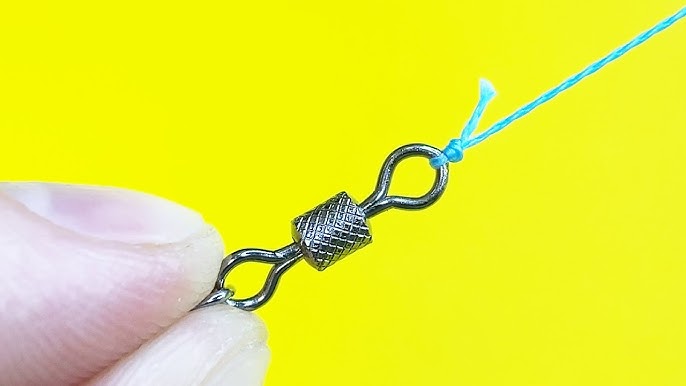
Have you ever struggled with your fishing line twisting or tangling just when you’re about to catch that big one? Knowing how to tie a swivel on your fishing line can solve that problem instantly.
It’s a simple skill that can make your fishing experience smoother and more successful. In this guide, you’ll learn a clear, step-by-step method to tie a swivel quickly and securely. Keep reading—you’re just moments away from improving your fishing game and avoiding frustrating line twists for good.
Choosing The Right Swivel
Using the right swivel can improve your fishing experience. It helps to prevent line twists and makes changing lures easier.
Picking the correct swivel depends on the type of fishing line and the fish you want to catch. Let’s look at the key points.
Types Of Swivels
There are several types of swivels to choose from. Each has a special use in fishing.
- Barrel Swivels:Most common and simple, good for general use.
- Ball Bearing Swivels:Spin smoothly, best for heavy line and strong fish.
- Three-Way Swivels:Used for rigs that need three connection points.
- Snap Swivels:Include a clip to change lures quickly.
Matching Swivel Size To Line
Choosing the right size swivel for your line is very important. The swivel must be strong but not too heavy.
| Line Strength (lbs) | Swivel Size | Recommended Type |
| 2-6 | Small (Size 10-14) | Barrel Swivel |
| 6-12 | Medium (Size 6-10) | Barrel or Ball Bearing |
| 12-20 | Large (Size 2-4) | Ball Bearing or Snap Swivel |
| 20+ | Extra Large (Size 1/0 and up) | Heavy Duty Ball Bearing |
Preparing Your Fishing Line
Before tying a swivel to your fishing line, you need to prepare the line carefully. Good preparation makes the knot strong and safe.
Two key steps are cutting the line properly and checking it for damage. These steps help avoid problems while fishing.
Cutting The Line
Cut the fishing line cleanly to ensure a strong knot. Use sharp scissors or line cutters for the best result.
- Cut the line at a slight angle to increase surface area.
- Avoid crushing or fraying the line ends.
- Trim any old knots or damaged parts.
- Keep the cut end smooth and even.
Checking For Damage
Inspect the fishing line to find any weak or damaged spots before tying the swivel. Damaged lines can break easily.
| Damage Type | Signs to Look For | Action Needed |
| Abrasions | Frayed or rough spots | Cut and remove damaged section |
| Sun Damage | Discoloration or stiffness | Replace line if severe |
| Knots | Old or loose knots | Cut off and start fresh |
| Weak Spots | Thin or stretched areas | Remove and retie |
Basic Knot Techniques
Tying a swivel to your fishing line is easy with the right knots. Good knots keep your line strong and prevent slipping.
Two common knots for this are the overhand knot and the improved clinch knot. Both are simple and reliable.
Overhand Knot
The overhand knot is the simplest knot you can use. It forms a small loop that holds the swivel tightly.
To tie it, pass the line through the swivel eye, make a loop, and pass the tag end through the loop. Pull tight.
- Pass line through swivel eye
- Make a loop with the tag end
- Pass tag end through the loop
- Pull the knot tight against the swivel
Improved Clinch Knot
The improved clinch knot is stronger and more secure than the overhand knot. It works well with all line types.
Start by passing the line through the swivel eye. Wrap the tag end around the main line five times. Then pass the tag end through the small loop near the swivel eye. Finally, pass it through the big loop you just made. Pull tight and trim the extra line.
- Pass line through swivel eye
- Wrap tag end around main line 5 times
- Pass tag end through small loop near swivel
- Pass tag end through big loop just made
- Pull knot tight and trim excess

Credit: www.wikihow.com
Tying The Swivel Step-by-step
Tying a swivel on a fishing line helps prevent line twisting. It also connects your line to your lure or hook securely.
Follow these steps carefully to tie the swivel correctly. This will keep your fishing setup strong and reliable.
Threading The Line Through The Swivel
Start by passing the end of your fishing line through the eye of the swivel. Pull about 6 to 8 inches of line through.
Make sure the line passes cleanly without twisting or fraying. This gives a smooth start for the knot.
Forming The Loop
Take the tag end of the line and bend it back toward the main line. This forms a small loop next to the swivel eye.
Hold the loop firmly, so it stays in place as you prepare to wrap the line around itself.
Securing The Knot
Wrap the tag end around the main line and loop at least five times. Keep the wraps tight and close to the swivel eye.
After wrapping, thread the tag end back through the small loop you formed earlier. This locks the knot in place.
- Wrap the tag end tightly around the main line
- Make five or more wraps for strength
- Push the tag end through the formed loop
Tightening And Trimming
Pull the main line slowly while holding the tag end. This tightens the knot firmly against the swivel eye.
Use scissors or clippers to trim the excess tag end close to the knot. Avoid cutting too close to prevent knot failure.
Testing Knot Strength
After tying a swivel on a fishing line, testing the knot strength is important. This ensures the knot will hold under pressure while fishing.
Testing the knot helps avoid losing fish or gear due to knot failure. Two key ways to check knot strength are pull test and visual inspection.
Pull Test
Pull test means gently pulling the line to feel the knot’s hold. Start with light pressure and increase slowly.
If the knot slips or loosens, it needs to be retied. The knot should stay tight and strong under steady pulling.
- Hold the swivel firmly in one hand
- Pull the line slowly with the other hand
- Check if the knot moves or loosens
- Repeat a few times to be sure
Visual Inspection
Look closely at the knot to find any problems. A good knot is neat and tight without gaps or loose loops.
Check if the line is twisted or damaged near the knot. Replace or retie if you see cuts or frays.
- Make sure the knot is wrapped cleanly
- Look for any loose or uneven loops
- Check the fishing line for damage
- Confirm the swivel is attached securely
Tips For Better Knot Tying
Tying a swivel on a fishing line is important for strong, reliable fishing. Good knots keep your gear from slipping or breaking.
Small habits improve your knot tying. Here are two tips to help you tie better knots every time.
Moistening The Line
Always wet the fishing line before tightening the knot. Moisture reduces friction and heat. This stops the line from weakening or breaking.
- Use water or saliva to moisten the line.
- Wet the knot area before pulling it tight.
- Keep the line wet during the knot-tying process.
- Do not use dry knots; they can damage the line.
Practicing Regularly
Practice tying knots often to build skill and speed. Repetition helps you remember the steps and avoid mistakes.
| Practice Tips | Benefits |
| Tie knots with different line types | Know how each line feels and works |
| Use a timer to improve speed | Tie knots faster without losing quality |
| Check knot strength by pulling hard | Learn if the knot holds under pressure |
| Practice in various lighting conditions | Prepare for real fishing situations |
Common Mistakes To Avoid
Tying a swivel on a fishing line seems simple. Many anglers make mistakes that weaken the connection.
These errors reduce your chance to catch fish and can cause line breaks. Avoid these common problems for better results.
Loose Knots
Loose knots do not hold well and can slip under tension. This leads to lost fish and tangled lines.
- Make sure the knot is tight before trimming the tag end.
- Pull the line evenly to set the knot firmly against the swivel eye.
- Check the knot by pulling hard to test its strength.
- Do not leave slack in the loops when tying.
Over-tightening
Tightening the knot too much can damage the fishing line or swivel. This weakens the connection and can cause breaks.
| Problem | Effect | Solution |
| Over-tightened knot | Line fibers get crushed and weaken | Tighten knot firmly but gently |
| Swivel bent or damaged | Swivel may break or not spin freely | Use proper knot tension and check swivel |
| Line cuts on itself | Line frays and breaks easily | Keep knot snug, avoid excess force |

Credit: www.youtube.com

Credit: www.youtube.com
Frequently Asked Questions
How Do You Attach A Swivel To A Fishing Line?
To attach a swivel, thread the line through the swivel’s eye. Then, loop it and tie a knot securely. Ensure the knot is tight to prevent slipping. Trim any excess line for a clean finish. This prevents line twists and helps in smooth casting.
What Is The Purpose Of Using A Swivel?
Swivels prevent line twists by allowing the line to spin freely. They’re essential when using lures that rotate. This reduces tangles and improves casting performance. Swivels also make it easier to change lures or leaders quickly. Using them can enhance your fishing experience significantly.
Can You Tie A Swivel Without A Knot?
Yes, some swivels allow a knotless connection. Use a loop-to-loop method or a quick-change clip. These methods are fast and efficient. However, ensure the connection is secure to avoid losing gear. Knotless methods are ideal for quick lure changes in dynamic fishing environments.
Which Knots Are Best For Tying Swivels?
The Palomar and Improved Clinch knots are popular for tying swivels. Both provide strong, reliable connections. The Palomar is simpler, while the Improved Clinch is more traditional. Ensure knots are tight to prevent slipping. Both knots are effective for various fishing conditions and line types.
Conclusion
Tying a swivel on a fishing line is simple and useful. It helps keep your line from twisting and tangling. Practice the steps a few times to get better. A secure knot can make your fishing more fun and effective.
Keep your knots tight and check them often. With patience, you will fish with less hassle. Try it on your next fishing trip and feel the difference.