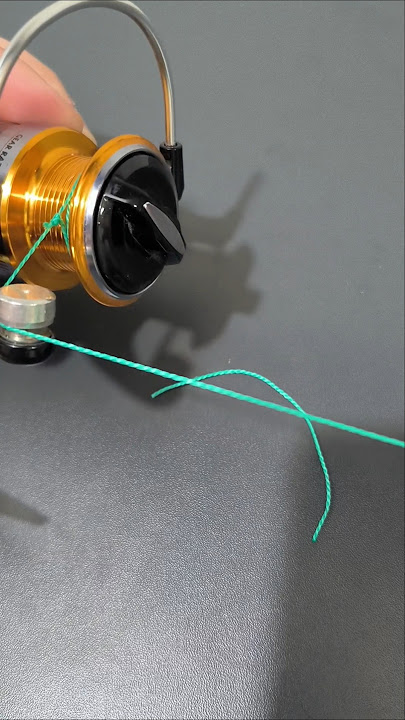
If you want your fishing experience to be smooth and successful, knowing how to tie your fishing line to a spinning reel is essential. It might seem tricky at first, but once you learn the right method, it becomes quick and easy.
This skill ensures your line stays secure, helps you cast farther, and prevents frustrating tangles. In this guide, you’ll discover simple steps that anyone can follow to get your line perfectly attached every time. Keep reading to master this basic yet powerful technique and improve your fishing game instantly.

Credit: www.youtube.com
Choose The Right Line
Choosing the right fishing line makes tying easier and fishing better. It helps you catch fish without line breaks or tangles.
Knowing the types and strength of fishing line guides you to pick the best one for your spinning reel.
Types Of Fishing Line
There are three main types of fishing line. Each type has unique features that fit different fishing needs.
- Monofilament:A single strand of nylon. It is flexible and easy to handle.
- Fluorocarbon:Less visible underwater. It sinks faster and resists abrasion.
- Braid:Made of woven fibers. It is strong and has little stretch.
Selecting Line Strength
Line strength depends on the fish you want to catch and the fishing environment. Choose a line that balances strength and ease of use.
| Fish Type | Line Strength (Pounds) | Recommended Line Type |
|---|---|---|
| Small fish (e.g., trout) | 4-8 | Monofilament or Fluorocarbon |
| Medium fish (e.g., bass) | 8-15 | Monofilament, Fluorocarbon, or Braid |
| Large fish (e.g., pike) | 15-30 | Braid or Heavy Monofilament |

Credit: windrider.com
Prepare The Spinning Reel
Before tying the fishing line, you must prepare the spinning reel. This helps the line attach properly and prevents tangles.
Taking time to get the reel ready makes fishing easier and more fun. Follow simple steps to prepare the reel.
Open The Bail Arm
The bail arm controls how the line comes off the spool. Open it to allow easy line attachment.
Lift the bail arm away from the spool until it locks in the open position. This stops the line from getting tangled.
Clean The Spool
Removing dirt and old line helps the new line stick well. Use a dry cloth to wipe the spool surface.
Check for any damage or rough spots. A clean spool prevents line damage and improves casting.
- Wipe the spool with a soft cloth
- Remove any old line or debris
- Inspect for scratches or dents
- Fix rough spots if needed
Attach The Line To The Reel
Attaching a fishing line to a spinning reel is important for a good fishing experience. You need to do it correctly for the line to work smoothly.
Understanding the process helps avoid tangles and ensures you have a stress-free fishing trip. Follow these simple steps to attach your line properly.
Make The Arbor Knot
The arbor knot is essential for tying the line to the reel. It is simple and strong, perfect for beginners.
Begin by wrapping the line around the reel spool. Tie an overhand knot around the main line.
- Wrap the line two times around the spool
- Tie an overhand knot with the tag end
- Tie another knot near the first one
Secure The Knot Properly
Securing the knot ensures the line stays firm during use. Pull the main line to tighten the knot.
Clip any excess line near the knot. Make sure the knot is snug and will not slip off.
- Pull the main line to tighten
- Clip excess line close to the knot
- Check the knot is secure and won’t slip
Wind The Line Onto The Spool
Winding the fishing line onto the spinning reel spool is important for smooth casting. It helps prevent tangles and line damage. Doing it right keeps your gear ready for any fishing trip.
Keep the line tight and even as you wind. This step ensures the line stays secure and works well under pressure.
Maintain Tension
Keeping tension on the line while winding stops loose loops and tangles. You can do this by holding the line firmly between your fingers as it goes onto the spool.
- Use your fingers to pinch the line just above the reel.
- Turn the reel handle slowly to guide the line evenly.
- Keep a steady pull to avoid slack.
- Check often for loose spots and fix them immediately.
Fill The Spool Correctly
Filling the spool to the right level helps casting distance and reduces backlash. Too much line causes tangles, and too little reduces capacity.
| Spool Fill Level | Description |
|---|---|
| Full (about 1/8 inch from rim) | Best for long casts and smooth line release |
| Half Full | Good for heavy lines or braided line use |
| Low Fill | Use only if spool size is large for your line |
Check And Trim Excess Line
After tying fishing line to a spinning reel, it is important to check the knot carefully. Excess line should be trimmed to avoid tangles.
Trimming the extra line helps keep the reel neat. It also prevents the line from catching on objects while fishing.
Inspect The Knot
Look closely at the knot to make sure it is tight and secure. A loose knot may slip and cause the line to come off the reel.
Check that the line wraps neatly around the reel spool. Make sure the knot is not twisted or tangled.
- Pull the line gently to test the knot strength
- Look for any gaps or loose loops in the knot
- Ensure the knot lies flat against the reel spool
Cut Extra Line Safely
Use a sharp pair of scissors or line clippers to trim the excess line. Cutting close to the knot reduces the chance of snagging.
Be careful not to cut the main line or the knot. Leave a small tail to keep the knot from slipping.
- Hold the line steady before cutting
- Cut about 1/8 inch from the knot
- Dispose of trimmed pieces safely to avoid litter
Test Your Setup
After tying the fishing line to your spinning reel, it is important to check your setup. Testing ensures the line holds well and works smoothly.
Doing a quick test helps avoid problems while fishing. It shows if the line is secure and ready for use.
Pull Line Smoothly
Pull the line gently to see if it moves without sticking. A smooth line pull means the knot is tight and the reel works well.
If the line feels rough or gets stuck, it may cause issues when casting or reeling in fish.
- Hold the rod firmly
- Pull the line slowly with your hand
- Check for any snags or rough spots
- Listen for any unusual sounds from the reel
Adjust If Needed
If the line does not pull smoothly, adjust your setup. You might need to retie the knot or tighten the line on the reel.
Make sure the line is not twisted or tangled. Fixing these issues improves your fishing experience.
- Untie and retie the knot carefully
- Spool the line evenly on the reel
- Remove any line twists or loops
- Test the setup again after adjustments

Credit: www.youtube.com
Frequently Asked Questions
How Do You Start Tying Line To A Spinning Reel?
Begin by threading the line through the reel’s bail arm. Tie a strong knot like the arbor knot. Pull tight to secure the line firmly to the spool.
What Is The Best Knot For Spinning Reels?
The Arbor knot is best for attaching line to spinning reels. It is simple, strong, and reliable. This knot prevents slipping and ensures smooth casting.
How Much Fishing Line Should I Spool On A Spinning Reel?
Fill the reel spool to about 1/8 inch below the spool’s rim. Avoid overfilling to prevent tangles and line breakage during casting.
Can I Use Braided Line On A Spinning Reel?
Yes, braided line works well on spinning reels. It offers high strength and low stretch. Make sure to use a backing layer or knot to prevent slipping on the spool.
Conclusion
Tying fishing line to a spinning reel is simple with practice. Use the right knot and pull tight to avoid slipping. Check your line often for wear and replace it if needed. A secure line helps you catch more fish and enjoy your time on the water.
Keep trying, and soon the process will feel natural. Fishing becomes more fun when your gear works well.