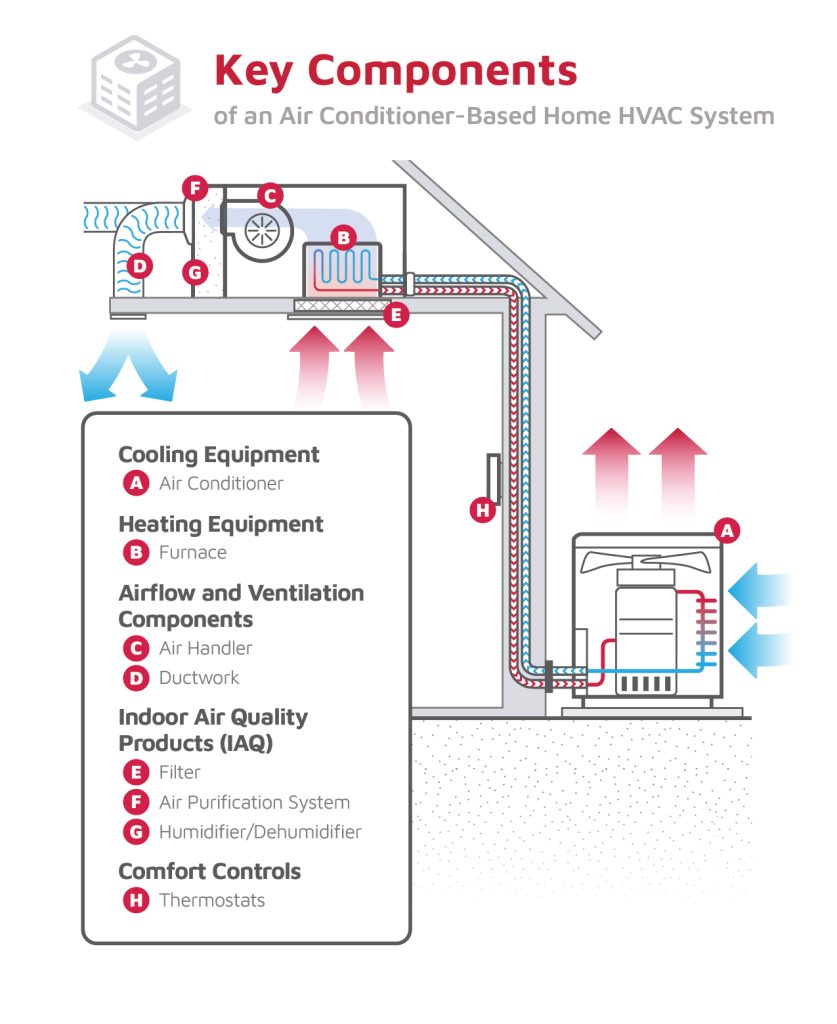
Have you ever wondered what happens behind the scenes when you switch on your central air conditioner? Understanding how your AC works can help you use it better and even save money on energy bills.
This guide will break down the process in simple terms, so you know exactly how cool air reaches every corner of your home. Keep reading—you might discover tips that make your cooling system more efficient and your home more comfortable.
Credit: www.carrier.com
Basic Components
A central air conditioner cools your home using several main parts. Each part has a special job to keep the air cool and fresh.
Understanding these parts helps you know how your system works and how to care for it.
Compressor
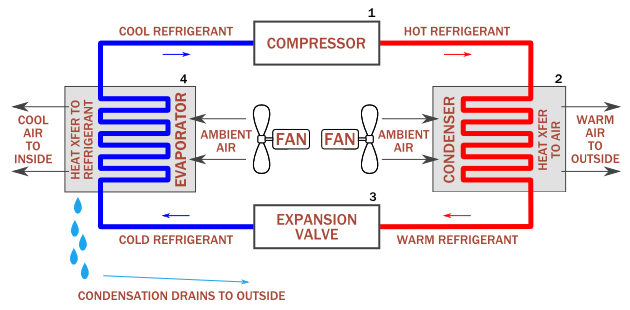
The compressor is the heart of the air conditioner. It pumps refrigerant through the system. This part increases the pressure of the refrigerant gas and moves it to the condenser coil.
Condenser Coil
The condenser coil is outside the house. It cools down the hot gas from the compressor. The gas turns into a liquid as it loses heat to the outside air.
Evaporator Coil
The evaporator coil is inside the home, often in the air handler. It changes the liquid refrigerant back to gas. This process cools the air that passes over the coil.
Expansion Valve
The expansion valve controls the flow of refrigerant into the evaporator coil. It reduces the pressure of the liquid refrigerant, allowing it to expand and cool down.
- Regulates refrigerant flow
- Reduces refrigerant pressure
- Helps cool the air inside
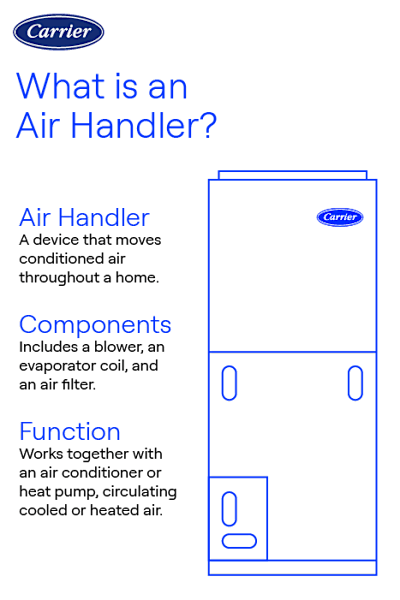
Air Handler
The air handler moves the cooled air through your home. It contains a fan and the evaporator coil. The fan blows air over the coil and into the vents.
| Component | Function |
| Compressor | Pumps and pressurizes refrigerant gas |
| Condenser Coil | Cools hot refrigerant gas into liquid |
| Evaporator Coil | Absorbs heat and cools the air |
| Expansion Valve | Controls refrigerant flow and pressure |
| Air Handler | Circulates cooled air throughout home |
Cooling Cycle Steps
A central air conditioner cools your home by moving heat from inside to outside. It uses a special fluid called refrigerant that changes between liquid and gas. This cycle repeats to keep your home comfortable.
Understanding each step helps you see how your air conditioner works. The main parts include the compressor, condenser, expansion valve, evaporator, and the air handler.
Compressing Refrigerant
The compressor squeezes the refrigerant gas. This raises its pressure and temperature. The hot, high-pressure gas then moves to the outdoor coil.
Heat Release Outside
The hot refrigerant gas flows through the condenser coil outside. Here, fans blow air over the coil. This helps the refrigerant release heat to the outside air. The refrigerant cools and changes to a liquid.
- Refrigerant enters hot and under high pressure
- Air moves heat from refrigerant to outside air
- Refrigerant cools and turns into liquid
Refrigerant Expansion
The liquid refrigerant passes through an expansion valve. This valve lowers the pressure quickly. The refrigerant cools down and partially turns back into gas.
Absorbing Heat Indoors
The cold refrigerant enters the evaporator coil inside your home. Warm air from your rooms blows over the coil. The refrigerant absorbs this heat and evaporates into gas again. This cools the indoor air.
| Location | Refrigerant State | Action |
|---|---|---|
| Outdoor Coil | Hot gas → Liquid | Releases heat to outside air |
| Expansion Valve | Liquid → Cold liquid/gas mix | Reduces pressure and temperature |
| Indoor Coil | Cold liquid/gas mix → Gas | Absorbs heat from indoor air |
Air Circulation
Fans inside your home push warm air through return vents. This air passes over the cold evaporator coil. The cooled air moves back through the supply vents. This cycle continues until the home reaches the desired temperature.
Thermostat Role
The thermostat controls when the central air conditioner turns on and off. It keeps your home at the right temperature.
The thermostat reads the air temperature inside your house. It sends signals to the air conditioner to cool the air if needed.
Measuring Indoor Temperature
The thermostat uses sensors to check the room’s temperature. It compares this to the temperature you set.
If the room is warmer than the set temperature, the thermostat tells the air conditioner to start cooling.
Controlling The Air Conditioner
The thermostat sends an electrical signal to the air conditioner unit. This signal tells the unit to turn on or off.
When the room reaches the set temperature, the thermostat stops the signal, so the air conditioner turns off.
Maintaining Comfort And Efficiency
The thermostat keeps the air conditioner running only when needed. This saves energy and keeps your home comfortable.
- Keeps home temperature steady
- Reduces energy waste
- Prevents the air conditioner from running too long
Energy Efficiency Factors
Central air conditioners use energy to cool your home. Some factors affect how much energy they use. Knowing these factors helps save money and energy.
Energy efficiency means using less power to get the same cooling. This lowers your bills and helps the environment.
Seer Rating
The SEER rating shows how efficient an air conditioner is. It stands for Seasonal Energy Efficiency Ratio. Higher SEER means better efficiency.
Air conditioners with high SEER ratings use less electricity. They cool your home without wasting energy.
- Minimum SEER rating is usually 13 or 14
- High-efficiency units have SEER ratings above 16
- Higher SEER units cost more but save energy over time
Proper Sizing
Choosing the right size air conditioner is important. A unit that is too big cools quickly but wastes energy. A unit too small runs all the time and can’t cool well.
Proper sizing means the air conditioner matches your home’s size and insulation. This helps it run efficiently and keep your home comfortable.
- Too large units cycle on and off often, using more energy
- Too small units run constantly and wear out faster
- Professional sizing uses measurements of your home
Regular Maintenance
Keeping your air conditioner clean and well-maintained improves efficiency. Dirty filters and coils make the system work harder and use more power.
Regular checks help find problems early. This keeps the air conditioner running smoothly and saves energy.
- Change or clean filters every 1-3 months
- Clean coils and remove debris around the unit
- Check refrigerant levels and fix leaks promptly
- Schedule professional tune-ups yearly
Common Issues
Central air conditioners can face common problems that reduce their cooling power. Knowing these issues helps you keep your system working well.
Below are some frequent problems and what causes them.
Refrigerant Leaks
Refrigerant is the liquid that cools the air in your system. If it leaks, your air conditioner loses its ability to cool properly.
Signs of refrigerant leaks include warm air, hissing noises, and higher energy bills. Fixing leaks requires a professional to locate and repair the source.
Dirty Filters
Air filters catch dust and dirt to keep the air clean. When filters get dirty, they block airflow and make the system work harder.
- Reduced cooling performance
- Higher energy costs
- Possible system freeze-ups
- Poor indoor air quality
Regular filter changes improve airflow and system efficiency.
Electrical Problems
Electrical parts control the AC’s operation. Faulty wiring or broken components can stop the system from running.
| Electrical Issue | Common Cause | Effect |
| Blown Fuse | Power Surges | System won’t start |
| Capacitor Failure | Wear and Tear | Fan stops running |
| Thermostat Malfunction | Incorrect Wiring | Wrong temperature readings |
Regular checks prevent electrical problems and keep your AC safe to use.
Credit: medium.com
Tips For Optimal Performance
Central air conditioners keep homes cool by moving heat outside. To make sure yours works well, follow simple care tips.
Good maintenance helps your system last longer and saves energy. These tips will help your air conditioner run at its best.
Keep Vents Unobstructed
Clear vents let cool air flow freely in your home. Blocked vents make your system work harder and waste energy.
Check that furniture, curtains, or rugs do not cover any vents. Open vents help keep rooms cool evenly.
- Move furniture away from vents
- Keep curtains and rugs clear
- Regularly dust and clean vent covers
Schedule Inspections
Regular inspections catch small problems before they become big. A professional can check refrigerant levels and parts.
Set a yearly inspection, ideally before summer. This keeps your system running smoothly when you need it most.
- Check refrigerant levels and leaks
- Clean or replace filters
- Inspect electrical connections
- Test system operation and efficiency
Use Programmable Thermostats
Programmable thermostats save energy by adjusting temperatures automatically. Set them to cool less when you are away.
This reduces wear on your system and lowers electricity bills. You can control temperatures without manual changes all day.
- Set higher temps when no one is home
- Lower temps before you return
- Use energy-saving schedules daily
Credit: www.angi.com
Frequently Asked Questions
How Does A Central Air Conditioner Cool My Home?
A central air conditioner removes heat from indoor air using refrigerant. It circulates cool air through ducts, maintaining a comfortable temperature.
What Are The Main Parts Of A Central Air Conditioner?
The main parts include the compressor, condenser, evaporator coil, and air handler. Each part works together to cool and circulate air efficiently.
How Often Should I Maintain My Central Air Conditioner?
Regular maintenance every 6 to 12 months is recommended. This ensures optimal performance, energy efficiency, and extends the system’s lifespan.
Why Is Refrigerant Important In Central Ac Systems?
Refrigerant absorbs and releases heat during the cooling cycle. It is crucial for transferring heat out of your home and cooling the air.
Conclusion
A central air conditioner cools your home by moving heat outside. It uses a compressor, condenser, and evaporator to do this. The system blows cool air through vents, keeping rooms comfortable. Regular maintenance helps it work well and last longer.
Understanding how it works can help you save energy and money. A well-functioning air conditioner makes hot days easier to handle. Simple care keeps your home cool and fresh all summer.