Are you tired of sweating through hot days and nights? A portable air conditioner might be the perfect solution for your space.
But how exactly does it work to keep you cool and comfortable? Understanding the simple science behind these handy devices can help you make the best choice for your home or office. Stick with me, and you’ll discover how a portable air conditioner pulls heat out of your room, so you can enjoy fresh, cool air anytime you need it.
Ready to feel the chill? Let’s dive in!
Portable Air Conditioner Basics
Portable air conditioners cool small spaces using a compact design. They are easy to move and install.
These units remove heat from the air inside a room and release it outside. This process lowers the room temperature.
Core Components
Portable air conditioners contain several key parts that work together to cool a room efficiently.
- Compressor:Compresses refrigerant gas to increase pressure and temperature.
- Condenser:Releases heat from the refrigerant to the outside air.
- Evaporator:Absorbs heat from the indoor air, cooling the room.
- Fan:Moves air across the evaporator and condenser coils.
- Exhaust Hose:Vents hot air outside through a window or wall.
Cooling Mechanism
The cooling process in a portable air conditioner uses a cycle of refrigerant compression and expansion to remove heat.
| Step | What Happens |
| 1 | Compressor compresses refrigerant into hot gas. |
| 2 | Hot gas passes through condenser, releasing heat outside. |
| 3 | Refrigerant cools and turns into a liquid. |
| 4 | Liquid refrigerant moves to evaporator inside the room. |
| 5 | Evaporator absorbs heat from indoor air, cooling it. |
| 6 | Refrigerant evaporates back to gas and returns to compressor. |

Credit: www.cnet.com
Airflow Process
A portable air conditioner cools a room by moving air through a system that removes heat. It uses airflow to bring in warm air and push out hot air.
This process keeps the air inside fresh and comfortable. Understanding how airflow works helps explain the cooling effect.
Intake And Exhaust
The unit takes in warm air from the room through an intake vent. This air passes over cold coils inside the machine.
- Warm air enters the intake vent.
- Air cools down as it moves past the cold coils.
- Cool air returns to the room through a separate vent.
- Hot air and moisture are pushed outside via the exhaust hose.
Heat Exchange Cycle
The heat exchange cycle moves heat from inside the room to the outside. A refrigerant absorbs heat from the air and releases it outside.
| Stage | What Happens |
|---|---|
| Evaporation | Refrigerant absorbs heat from indoor air and turns into gas. |
| Compression | Gas is compressed, raising its temperature and pressure. |
| Condensation | Hot gas releases heat outside and turns back into liquid. |
| Expansion | Liquid refrigerant cools down before starting the cycle again. |
Types Of Portable Air Conditioners
Portable air conditioners cool rooms by moving heat outside. They come in different types. Each type has a unique way of working.
Choosing the right model depends on your space and cooling needs. Understanding how each type works can help you decide.
Single Hose Models
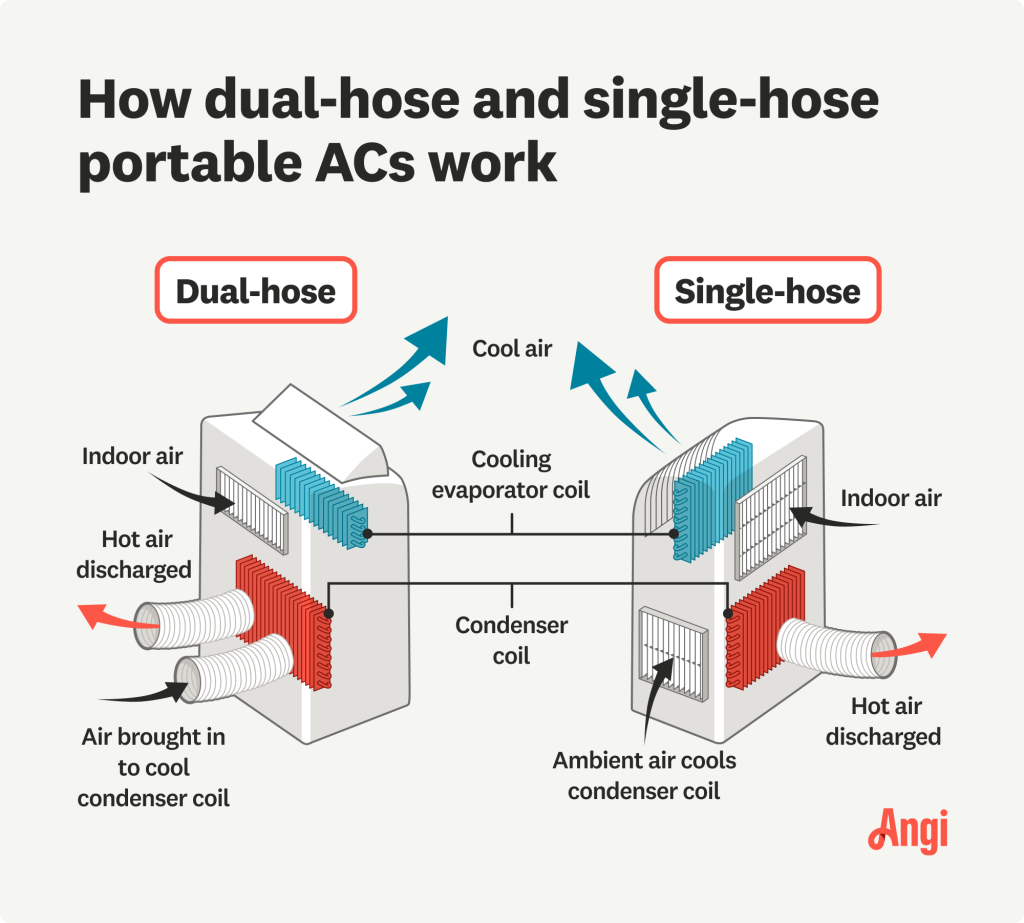
Single hose portable air conditioners use one hose to push hot air outside. They pull air from the room to cool and then blow the hot air outdoors.
- One hose vents hot air outside
- Uses indoor air to cool the unit
- May reduce room air pressure
- Less expensive than dual hose models
- Works best in small rooms
Dual Hose Models
Dual hose portable air conditioners have two hoses. One hose pulls air from outside to cool the unit. The other hose pushes hot air out.
| Feature | Single Hose | Dual Hose |
| Number of hoses | 1 | 2 |
| Air source for cooling | Indoor air | Outdoor air |
| Effect on room pressure | Negative pressure | Neutral pressure |
| Best for | Small rooms | Medium to large rooms |
| Cost | Lower | Higher |
Credit: www.dreo.com
Energy Efficiency Factors
Portable air conditioners use energy to cool a room. How much energy they use depends on several factors.
Understanding these factors helps you choose a unit that saves electricity and works well.
Power Consumption
Power consumption shows how much electricity a portable air conditioner uses. It is measured in watts.
Lower wattage means less energy use but may cool less space. High wattage units cool larger spaces but use more power.
- Small units use about 500 to 1,000 watts
- Larger units can use 1,200 to 2,000 watts or more
- Look for energy-saving modes to reduce power use
Btu Ratings
BTU stands for British Thermal Unit. It measures the cooling power of an air conditioner.
Higher BTU ratings mean the unit cools bigger rooms faster. Picking the right BTU rating helps save energy.
- 5,000 to 8,000 BTUs cool small rooms up to 300 sq ft
- 8,000 to 12,000 BTUs work well for medium rooms up to 500 sq ft
- More than 12,000 BTUs are for larger spaces over 500 sq ft
Installation Tips
Installing a portable air conditioner correctly helps it work well and last longer.
Focus on ventilation and placement to get the best cooling effect.
Ventilation Setup
Ventilation is key for a portable air conditioner to remove hot air outside.
- Use the exhaust hose that comes with the unit.
- Place the hose through a window or wall vent.
- Seal gaps around the hose to prevent warm air from re-entering.
- Avoid bending or kinking the exhaust hose for better airflow.
- Keep the hose as short as possible to improve efficiency.
Placement Advice
Choosing the right spot for your air conditioner helps it cool the room evenly.
| Placement Tip | Reason |
| Near a window | Easy to vent hot air outside |
| Flat and stable surface | Prevents tipping and damage |
| Away from heat sources | Improves cooling efficiency |
| Clear of obstructions | Allows good air circulation |
| Close to a power outlet | Avoids using long extension cords |
Credit: www.portacool.com
Maintenance And Care
Keeping your portable air conditioner in good shape helps it work well. Regular care stops problems and saves money.
Focus on cleaning the filter and managing drainage. These tasks keep the air fresh and the unit running smoothly.
Filter Cleaning
The air filter traps dust and dirt. Cleaning it often keeps air clean and cool.
- Turn off and unplug the unit before cleaning.
- Remove the filter gently from its place.
- Wash the filter with warm water and mild soap.
- Let the filter dry completely before putting it back.
- Clean the filter every two weeks during heavy use.
Drainage Management
Portable air conditioners remove moisture from the air. Proper drainage stops water from building up inside.
| Drainage Method | How to Manage |
| Automatic Evaporation | Check if water drains out with exhaust air. |
| Manual Drainage | Empty the water tank when full to avoid leaks. |
| Continuous Drainage | Attach a hose to drain water outside or to a container. |
Common Issues And Fixes
Portable air conditioners can face some common problems during use. Knowing these issues helps you fix them fast.
This guide covers two main problems: cooling problems and noise concerns. Learn how to spot and fix them.
Cooling Problems
Sometimes, the air conditioner stops cooling well. This can happen if filters or vents are blocked.
Dirty filters reduce airflow and make the unit work harder. Check and clean the filters often.
- Clean or replace air filters every month
- Ensure vents are not blocked by furniture or curtains
- Check for ice buildup on the coils and defrost if needed
- Make sure the exhaust hose is properly connected and not kinked
Noise Concerns
Loud or strange noises can be a sign of trouble. Loose parts or dirt inside can cause noise.
Check if the unit is on a flat surface and all screws are tight. Clean any dust from the fan and motor.
- Place the unit on a stable, level floor
- Tighten any loose screws or panels
- Remove dirt or debris from the fan blades
- Inspect the exhaust hose for damage or loose connections
Frequently Asked Questions
How Does A Portable Air Conditioner Cool A Room?
A portable air conditioner cools by drawing warm air inside. It uses a refrigerant to absorb heat and expels hot air outside. This process lowers the room temperature efficiently and keeps the air comfortable.
What Components Make A Portable Air Conditioner Work?
Key components include a compressor, condenser, evaporator, and fan. The compressor circulates refrigerant, the condenser releases heat, and the evaporator cools the air. Fans help distribute cool air throughout the room.
How Is Hot Air Expelled From A Portable Ac?
Hot air is expelled through an exhaust hose connected to a window. The hose directs heat outside, preventing it from re-entering the room. Proper venting is essential for effective cooling.
Can Portable Air Conditioners Dehumidify The Air?
Yes, portable air conditioners remove moisture as they cool. The evaporator coil condenses humidity, collecting water in a tank or draining it automatically. This reduces indoor humidity for added comfort.
Conclusion
A portable air conditioner cools by removing heat and moisture. It uses a simple cycle of intake, cooling, and exhaust. Easy to move, it offers flexibility for different rooms. Perfect for small spaces and temporary needs. Regular maintenance ensures efficient operation.
Clean filters and vents for better performance. Energy-efficient models save on electricity bills. Always choose the right size for your room. This ensures optimal cooling. Portable air conditioners provide comfort on hot days. An accessible cooling solution for everyone.