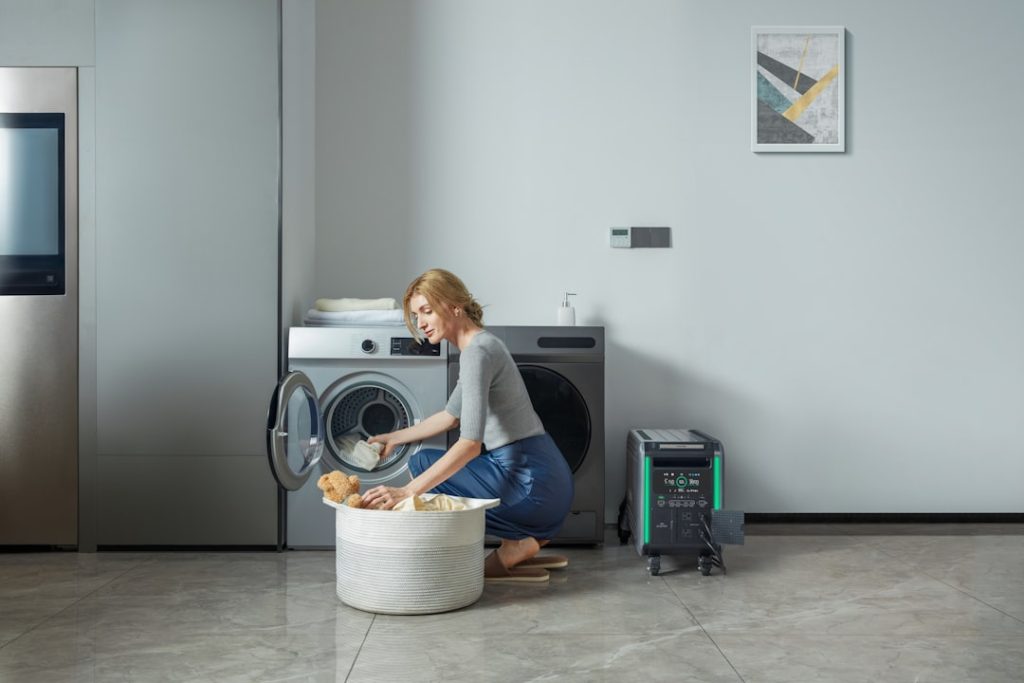
Are you tired of dealing with bulky laundry machines that take up too much space? Imagine having a compact solution that fits right into your small apartment, RV, or dorm room.
A portable washer and dryer could be exactly what you need. But how does this small powerhouse actually work? Understanding how these machines operate can help you make the best choice for your laundry needs and save you time and effort.
Keep reading, and you’ll discover the simple mechanics behind portable washers and dryers—and why they might be the perfect fit for your lifestyle.

Credit: www.searshomeservices.com
Portable Washer Basics
Portable washers are small washing machines made for limited spaces. They let you wash clothes without a full-size machine.
These machines work by filling with water, washing clothes, and spinning to remove water.
Key Components
Portable washers have parts that work together to clean clothes. These parts include:
- Water Inlet:Connects to a faucet to fill the washer with water.
- Drum or Tub:Holds the clothes and water during washing.
- Agitator or Pulsator:Moves clothes to remove dirt.
- Drain Hose:Lets out dirty water after washing.
- Control Panel:Allows you to choose wash settings and start the machine.
- Power Supply:Provides electricity to run the motor and controls.
Types Of Portable Washers
There are different kinds of portable washers. You can pick one based on your needs and space.
| Type | Description | Features |
| Top Load | Load clothes from the top. | Easy to load, usually smaller size. |
| Front Load | Load clothes from the front door. | Uses less water and energy. |
| Combo Washer-Dryer | Washes and dries clothes in one unit. | Saves space and time. |
| Mini Twin Tub | Two tubs: one for washing, one for spinning. | Manual control, lightweight. |

Credit: www.searshomeservices.com
Portable Dryer Essentials
Portable dryers are small machines that dry clothes quickly. They fit in small spaces and use less energy than big dryers.
These dryers are useful for apartments, dorms, or places without much room. They help keep clothes dry and fresh.
Main Parts
A portable dryer has a few key parts that work together to dry clothes. Each part plays an important role in the drying process.
- Drum:The drum holds clothes and spins them around to dry.
- Heating Element:This part heats the air to remove moisture from clothes.
- Blower Fan:It moves warm air through the drum and vents out wet air.
- Lint Filter:It catches lint and small fibers from the clothes.
- Control Panel:Allows users to set drying time and temperature.
Different Dryer Models
Portable dryers come in several types. Each model has a unique way to dry clothes efficiently.
Choosing the right model depends on space, power source, and drying needs.
- Vented Dryers:These dryers blow hot air out through a vent or hose.
- Condensation Dryers:They collect moisture in a tank instead of venting outside.
- Heat Pump Dryers:Use less energy by recycling heat during drying.
- Washer-Dryer Combos:Combine washing and drying in one machine for space-saving.
How Portable Washers Operate
Portable washers are small machines that clean clothes using water and soap. They work well in places without full laundry setups.
These washers use simple parts to wash clothes efficiently. Let’s look at how they take in water, drain it, and clean clothes.
Water Intake And Drainage
Portable washers connect to a water source through a hose. Water flows into the machine to fill the tub.
After washing, the machine drains the dirty water out. This usually happens through a drainage hose or pump.
- Connect hose to faucet for water supply
- Water fills the washer tub during the wash
- Dirty water drains through a hose or pump
- Drainage hose can be placed in a sink or drain
Wash Cycles And Agitation
Wash cycles control how long and how fast the washer cleans clothes. Portable washers have different settings for various fabrics.
The machine uses an agitator or spinning motion to move clothes in water. This helps remove dirt and stains effectively.
- Wash cycles vary by time and speed
- Agitator moves clothes back and forth
- Spinning helps rinse and remove water
- Different cycles suit different clothing types
How Portable Dryers Function
Portable dryers are small machines that dry clothes quickly. They work by using heat and airflow to remove moisture from wet clothes.
These dryers are easy to move and fit in small spaces. Understanding how they work helps you use them better.
Heat Generation
Portable dryers use a heating element to warm the air inside the drum. The heat helps evaporate water from the clothes.
- The heating element heats up when electricity passes through it.
- Warm air circulates around the clothes to dry them faster.
- The temperature is controlled to avoid damaging fabrics.
Airflow And Moisture Removal
Good airflow is key to removing moisture from clothes. Portable dryers use fans to move air through the drum.
| Process | Function |
|---|---|
| Air Intake | Draws in air from the room |
| Air Heating | Warms the air to absorb moisture |
| Air Circulation | Moves warm air around the clothes |
| Moisture Extraction | Removes humid air from the drum |
| Ventilation or Condensation | Releases moisture outside or collects water inside |
Energy And Water Efficiency
Portable washers and dryers are designed to save energy and water. They use modern technology to offer efficient cleaning.
These units are smaller and use less power. This makes them ideal for small spaces and eco-friendly living.
Comparing With Traditional Units
Traditional washers and dryers consume more water and energy. Portable versions aim to reduce this usage significantly.
| Feature | Traditional Units | Portable Units |
| Water Usage | High | Low |
| Energy Consumption | High | Low |
| Size | Large | Compact |
Tips For Saving Resources
Using a portable washer and dryer can save resources. Here are some simple tips to maximize these savings.
- Wash full loads to make the most of each cycle.
- Use cold water settings to save energy.
- Dry clothes on low heat to use less electricity.
- Clean the lint filter regularly for better efficiency.
Installation And Setup
Portable washers and dryers are perfect for small spaces. They are easy to install and use. Understanding their setup helps you start washing right away.
This guide will help you set up your portable washer and dryer. It covers space requirements and how to connect to water and power.
Space Requirements
Portable washers and dryers need a small area to fit. Measure your space before buying one. Make sure there is enough room for air circulation.
You should also consider where the water and power connections are. The washer and dryer should be close enough to these connections for easy setup.
- Measure the width and height of the space
- Ensure a few inches of clearance on all sides
- Locate the nearest water and power outlets
Connecting To Water And Power
Connecting the washer to water is simple. Attach the hose to a faucet. Make sure the connection is tight to prevent leaks.
For power, plug the washer into a nearby outlet. Ensure the plug is secure. Do not use extension cords as they can be unsafe.
| Task | Action |
| Connect Water | Attach hose to faucet securely |
| Connect Power | Plug into wall outlet safely |
Maintenance And Care
Keeping your portable washer and dryer in good shape helps it last longer. Regular care stops problems before they start.
Simple cleaning and checks make sure your machine works well every time you use it.
Cleaning Tips
Clean your portable washer and dryer often to avoid buildup. Dirt and soap can cause odors and damage parts.
- Wipe the machine’s outside with a damp cloth after use.
- Run an empty wash cycle with vinegar once a month to clear soap residue.
- Clean the lint trap after every drying cycle to prevent fires and improve airflow.
- Check and clean the water inlet filters to keep water flowing smoothly.
- Leave the washer door open after use to let it dry and stop mildew.
Troubleshooting Common Issues
Sometimes your portable washer and dryer may stop working right. Knowing common fixes can save time and effort.
| Problem | Possible Cause | Solution |
| Washer not spinning | Unbalanced load or lid not closed | Redistribute clothes and close lid firmly |
| Dryer not heating | Clogged lint filter or heating element failure | Clean lint filter; check heating element or call service |
| Water not draining | Blocked drain hose or pump issue | Clear hose and inspect pump for blockages |
| Machine making loud noise | Objects stuck or worn motor parts | Remove objects; check motor and replace parts if needed |
Advantages Of Portable Units
Portable washers and dryers offer practical solutions for small spaces. They fit easily into apartments, dorms, or places without full laundry rooms.
These units provide flexibility and ease of use. You can move them where you need laundry done without hassle.
Space-saving Benefits
Portable washers and dryers take up less room than standard machines. They are compact and designed to fit in tight spots.
- Can fit under counters or in closets
- Ideal for small apartments or studios
- Free up space for other uses
- Easy to store when not in use
Portability And Convenience
These units are light and easy to move. You can carry them to different rooms or even take them while traveling.
| Feature | Benefit |
| Lightweight design | Easy to carry and relocate |
| Plug and play setup | Use anywhere with a water source |
| Quick hookups | Fast and simple installation |
| Compact size | Fits in vehicles for travel |
Limitations To Consider
Portable washers and dryers are handy for small spaces. They fit well in apartments and RVs.
Still, these machines have limits you should know before buying. They work differently than full-size models.
Capacity Constraints
Portable washers and dryers hold less laundry than regular machines. This means you wash fewer clothes at once.
- Most portable washers hold 1.5 to 2.5 cubic feet of clothes.
- Full-size washers often hold 4 to 5 cubic feet.
- Small capacity means more frequent washing is needed.
- Large or bulky items may not fit well.
Performance Compared To Full-size Machines
Portable machines clean and dry clothes, but not as fast or thoroughly as full-size ones.
| Feature | Portable Washer & Dryer | Full-Size Washer & Dryer |
| Wash Cycle Time | 30 to 60 minutes | 20 to 40 minutes |
| Dry Cycle Time | 60 to 90 minutes | 40 to 60 minutes |
| Energy Use | Generally lower | Varies, often higher |
| Cleaning Power | Good for light to medium soil | Better for heavy stains |
| Noise Level | Can be louder | Usually quieter |

Credit: www.reddit.com
Frequently Asked Questions
How Does A Portable Washer Function Without Permanent Plumbing?
A portable washer connects to any faucet via a hose. It uses a built-in pump to fill and drain water. This setup eliminates the need for permanent plumbing, making it ideal for small spaces or temporary setups.
Can A Portable Dryer Effectively Dry Clothes?
Yes, portable dryers use electric heat and a fan to circulate air. They remove moisture from clothes quickly. While smaller than traditional dryers, they efficiently dry small to medium loads.
What Power Sources Do Portable Washers And Dryers Use?
Most portable washers and dryers operate on standard 110-120V household outlets. Some models offer dual voltage for travel use. They consume less electricity compared to full-sized machines, making them energy-efficient.
Are Portable Washers And Dryers Suitable For All Fabrics?
Portable washers and dryers handle most common fabrics well. Gentle cycles and adjustable heat settings protect delicate items. However, very heavy or bulky items might not fit or wash effectively.
Conclusion
Portable washers and dryers save space and time. They work by using water, detergent, and spinning to clean clothes. Dryers remove moisture quickly with heat and air flow. These machines fit well in small homes or apartments. You can easily move them where needed.
They use less water and energy than regular machines. Knowing how they work helps you use them better. Simple steps keep your clothes clean and fresh. A portable washer and dryer offer convenience every day.