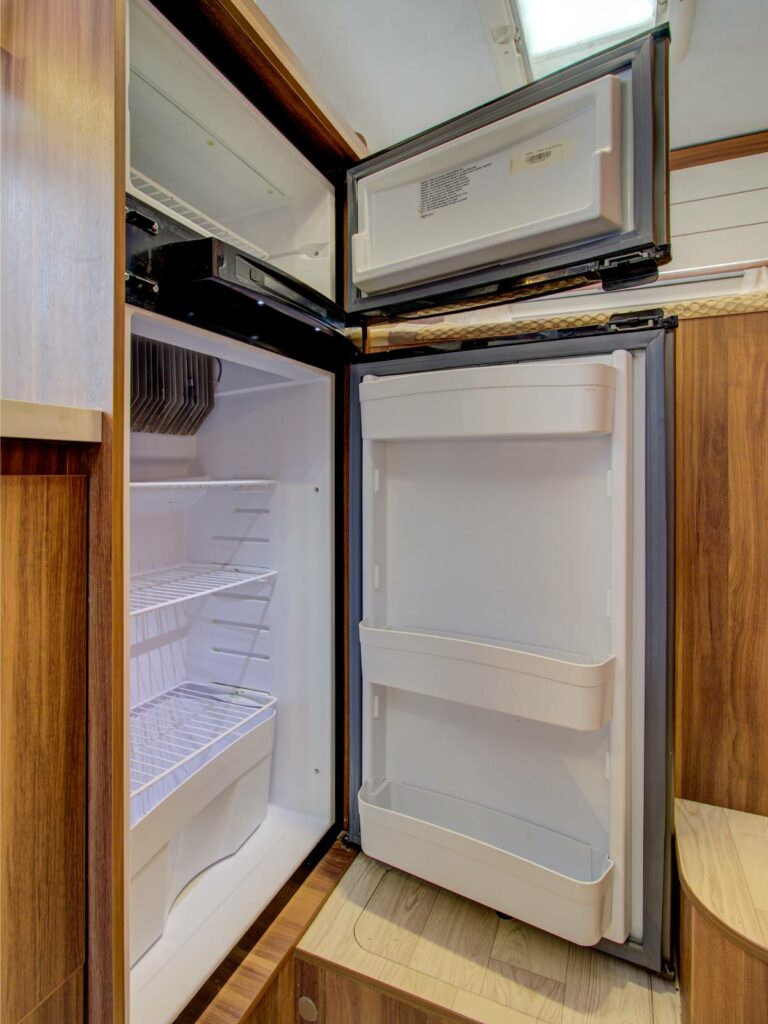
Are you curious about how your RV refrigerator keeps your food fresh and drinks cold while you’re on the road? Understanding how this essential appliance works can enhance your travel experience and ensure everything runs smoothly.
You’ll discover the fascinating mechanics behind your RV refrigerator and learn how it differs from the one in your home. Get ready to uncover practical tips that will help you optimize its performance and troubleshoot common issues, ensuring your adventures are always hassle-free.
Dive in, and let’s explore the cool world of RV refrigeration together!

Credit: blog.campingworld.com
Rv Refrigerator Basics
Understanding the basics of how an RV refrigerator works can save you time and frustration on the road. These fridges differ from home refrigerators in design and operation, tailored to fit the unique demands of mobile living. Knowing what’s inside and how it functions helps you maintain it better and troubleshoot when issues arise.
Types Of Rv Refrigerators
You’ll find three main types of refrigerators used in RVs, each with its own advantages and quirks. Absorption refrigerators are common because they can run on propane, 12V battery, or 120V electric power. This flexibility is ideal when you’re off-grid or camping without hookups.
Compressor refrigerators work like household fridges, using a compressor and coolant to keep things cold. They are more energy-efficient on electric power but usually need a steady power source, which can be a challenge in some camping situations.
Finally, there are thermoelectric refrigerators, which use electricity and a heat pump to cool. These are less common and typically smaller, but they offer a silent operation and low vibration, which can be important in a small RV space.
Key Components
At the heart of an RV refrigerator are several key parts that work together to keep your food fresh. The cooling unit, which can be an absorption system or compressor, is responsible for lowering the temperature inside the fridge.
A heat source is essential for absorption refrigerators, usually propane or electric heating elements. This heat drives a chemical reaction that absorbs heat from inside the fridge, cooling it down.
The thermostat controls the temperature by turning the cooling system on or off as needed. You also have a ventilation system that removes heat generated during the cooling process, which is critical for efficient operation.
Have you ever noticed how your RV fridge gets warm on the back? That’s where the heat exchanger works to release heat outside. Keeping this area clean and clear ensures your fridge runs smoothly and lasts longer.
Cooling Mechanism
The cooling mechanism in an RV refrigerator is key to keeping food fresh on the road. It works differently from home refrigerators because it must operate safely without a stable power source. Understanding how it cools helps maintain it better and avoid common issues.
Most RV refrigerators use one of two main cooling methods. Each method has unique parts and ways to remove heat from inside the fridge. This section explains how the absorption and compressor cooling processes work.
Absorption Cooling Process
The absorption cooling process uses heat to create cooling. It does not rely on moving parts like compressors. This makes it quieter and ideal for RVs running on propane or electricity.
- Heat heats a mixture of ammonia, water, and hydrogen gas inside the fridge.
- The heat causes ammonia to evaporate, separating from the water.
- Ammonia gas moves to the condenser, where it cools and turns back into liquid.
- The liquid ammonia mixes with hydrogen gas in the evaporator.
- This mixture absorbs heat from inside the fridge, cooling it down.
- The ammonia and hydrogen then return to the absorber to start again.
This process keeps the inside cold without needing electricity all the time. It works well for extended camping trips where power sources vary.
Compressor Cooling Process
The compressor cooling process is like home refrigerators. It uses a motor-driven compressor to move refrigerant through coils.
- The compressor compresses refrigerant gas, raising its pressure and temperature.
- The hot gas flows through condenser coils outside the fridge and cools down.
- The cooled refrigerant turns into liquid and enters the expansion valve.
- The valve lowers pressure, causing refrigerant to evaporate and cool inside the evaporator coils.
- The evaporator coils absorb heat from inside the fridge, lowering the temperature.
- The refrigerant gas returns to the compressor to repeat the cycle.
This system requires a steady power source but cools more efficiently. It is common in RVs with reliable electrical hookups or battery systems.
Power Sources And Usage
RV refrigerators operate using different power sources to keep food fresh during travel. Understanding these power options helps manage energy use efficiently. Each power type has unique benefits and limits. Knowing how and when to use each source ensures your refrigerator works well on the road or at a campsite.
Propane Operation
Many RV refrigerators run on propane gas. This method works without electricity, ideal for remote areas. Propane heats a special cooling unit inside the fridge. It uses a chemical reaction to absorb heat and cool the interior.
- Propane keeps the fridge cold even without electric power.
- It requires proper ventilation for safety.
- Propane is efficient but needs refilling on long trips.
Electric Operation
RV refrigerators often use electricity from shore power or generators. Electric mode powers a compressor or absorption system. This provides steady cooling when plugged into an external source.
- Electric power is quiet and reliable at campgrounds.
- It switches on automatically when connected to power.
- Electric mode saves propane for when electricity is unavailable.
Battery Considerations
Batteries supply power when no propane or shore power is present. Running a fridge on batteries drains them quickly. This can limit cooling time if batteries are small or old.
- Deep-cycle batteries work best for RV fridge use.
- Monitor battery levels to avoid sudden power loss.
- Solar panels can recharge batteries on sunny days.
Installation And Ventilation
Installing an RV refrigerator requires careful attention to placement and ventilation. Proper installation helps the fridge work efficiently and last longer. Without good ventilation, heat can build up, causing the refrigerator to overheat or use more power. Understanding the basics of installation and ventilation ensures your RV fridge stays cool and reliable during your travels.
Proper Placement
Choose a spot away from direct sunlight and heat sources like the stove or heater. A shaded, cool area helps the refrigerator stay energy efficient. The fridge should be level to keep the cooling system working well. Avoid tight corners where air cannot flow around the unit. Leave enough space around the fridge for easy access and maintenance. Proper placement also prevents damage from bumps while driving.
Ventilation Needs
Ventilation is key for RV refrigerators. These fridges use heat to remove cold air inside, so hot air must escape outside. Install vents at the top and bottom of the fridge compartment to allow air to flow freely. Use vent covers to protect against rain and debris. Keep vents clean and clear of obstructions like dirt or leaves. Good ventilation helps prevent overheating and keeps the fridge running smoothly.
Common Issues And Fixes
RV refrigerators face common issues due to their unique design and power sources. Identifying these problems early helps keep your food fresh and your trip smooth. Many problems are simple to fix with basic tools and knowledge. Understanding these issues saves time and money on repairs.
Temperature Problems
Temperature issues are the most common in RV refrigerators. The fridge may not cool enough or may freeze items.
- Check the thermostat setting. It might be too high or low.
- Ensure proper ventilation around the fridge. Blocked vents reduce cooling.
- Inspect door seals for cracks or gaps. Leaky seals let cold air escape.
- Clean the cooling fins or coils to improve efficiency.
Adjusting these factors often restores proper temperature control quickly.
Power Supply Troubles
RV refrigerators run on propane, 12V DC, or 120V AC power. Power issues cause the fridge to stop working or cool poorly.
- Verify the propane tank is full and the valve is open.
- Check fuses and circuit breakers in the electrical system.
- Inspect battery charge levels and connections for 12V power.
- Test the power converter or inverter for faults.
Correcting power supply faults often restores refrigerator operation.
Maintenance Tips
Regular maintenance prevents many common refrigerator problems. Simple steps keep your fridge efficient and extend its life.
- Clean the interior and exterior surfaces regularly.
- Check and clean the cooling unit and vents every few months.
- Inspect and replace door seals as needed.
- Level your RV to ensure proper cooling performance.
- Run the fridge on all power modes periodically to keep it functional.
Routine care reduces breakdowns and improves fridge reliability.

Credit: www.youtube.com
Energy Efficiency Tips
Energy efficiency in an RV refrigerator is important for saving power and extending battery life. Small changes in how you use and care for your fridge can make a big difference. These tips help keep your refrigerator running smoothly while using less energy.
Optimizing Power Use
Set the refrigerator temperature to the recommended level, usually between 37°F and 40°F. Avoid setting it colder than needed. Open the door only when necessary to keep cold air inside. Turn off the fridge when parked for long periods without power. Use propane mode if your RV supports it, as it often uses less battery power than electric mode. Regularly check the power source to avoid draining your battery.
Insulation And Sealing
Good insulation keeps the cold air in and heat out. Check the door seals for cracks or gaps and replace if damaged. Use weather stripping around the fridge door for a tighter seal. Avoid placing the refrigerator in direct sunlight or near heat sources. Cover the fridge with an insulated blanket designed for RV use to reduce heat gain. Proper ventilation around the fridge also helps it run efficiently by preventing overheating.

Credit: www.youtube.com
Frequently Asked Questions
How Does An Rv Refrigerator Differ From A Home Fridge?
An RV refrigerator uses absorption cooling, unlike home fridges that use compressors. It runs on propane, 12V DC, or 120V AC power. This design allows it to operate efficiently without electricity, ideal for mobile living and off-grid camping.
What Powers An Rv Refrigerator?
RV refrigerators can run on propane gas, 12-volt DC from the vehicle’s battery, or 120-volt AC when plugged into shore power. This flexibility ensures the fridge works during travel, at campsites, or in remote locations without electricity.
How Does Absorption Refrigeration Work In Rvs?
Absorption refrigeration uses a heat source to circulate ammonia, hydrogen, and water inside the fridge. Heat from propane or electricity causes a chemical reaction that absorbs heat from inside the fridge, cooling it without a compressor or moving parts.
How To Maintain An Rv Refrigerator For Efficiency?
Keep the fridge level during operation and clean the cooling fins regularly. Check seals and avoid overpacking for better airflow. Proper maintenance ensures efficient cooling and extends the lifespan of your RV refrigerator.
Conclusion
An RV refrigerator keeps food fresh while you travel. It works by removing heat inside the fridge compartment. This process uses propane, electricity, or both to cool down. Understanding this helps you maintain your fridge better. A well-working fridge saves energy and keeps food safe.
Regular checks ensure it runs smoothly on the road. Knowing the basics makes RV life easier and more comfortable. Simple care keeps your fridge running longer. Enjoy fresh meals wherever your journey takes you.