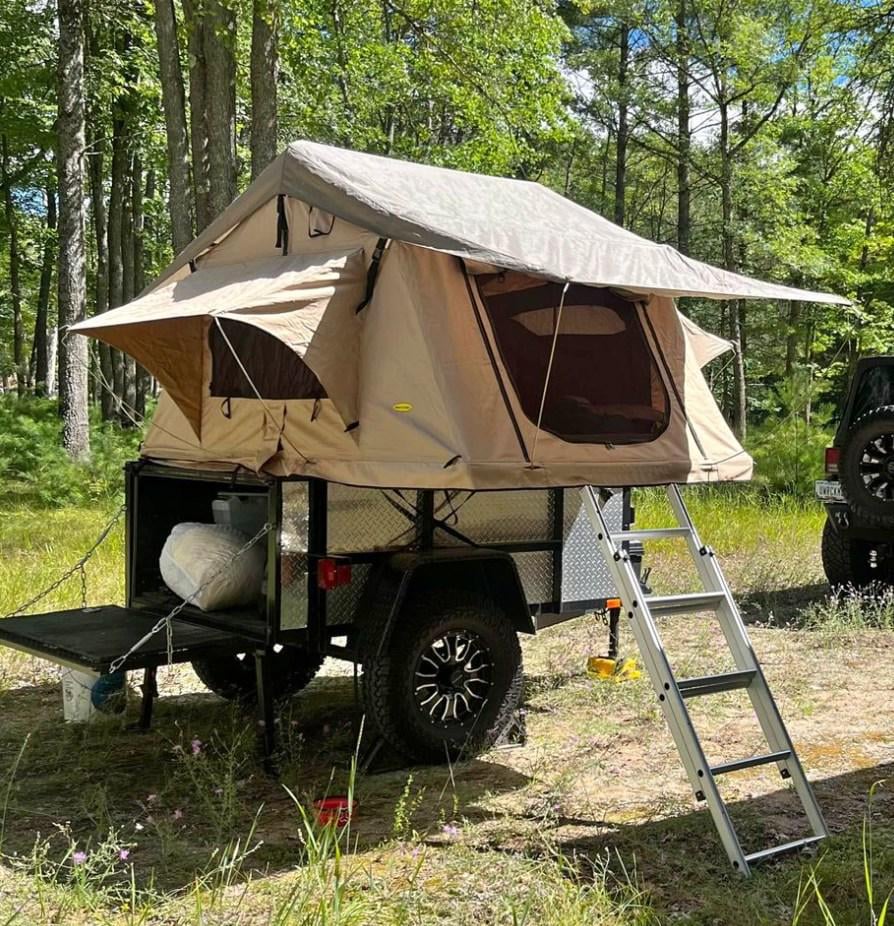
Have you ever wondered how a tent trailer works and why so many campers choose it for their outdoor adventures? If you’re looking for a way to enjoy the comfort of a tent with the convenience of a trailer, understanding the basics of a tent trailer is key.
You’ll discover exactly how these clever trailers open up to create a cozy, spacious sleeping area in minutes. By the end, you’ll see why a tent trailer might be the perfect addition to your next trip, making setup easier and your camping experience more enjoyable.
Ready to find out how it all comes together? Let’s dive in!
Tent Trailer Basics
Tent trailers are a simple way to enjoy camping with more comfort. They fold up compactly for towing. When set up, they create a tent-like living space.
Many people use tent trailers for trips because they combine the feel of a tent with the convenience of a trailer. They are easy to tow and set up.
Key Components
A tent trailer has several parts that work together to make camping easier. These parts help with transport, shelter, and comfort.
- Trailer Base:The sturdy platform that holds the tent and gear. It connects to your vehicle for towing.
- Tent Fabric:Heavy-duty material that unfolds to create walls and a roof. It keeps you dry and protected.
- Frame:Metal or fiberglass poles that support the tent fabric. They fold for storage and open for use.
- Sleeping Areas:Built-in beds or platforms inside the tent. They provide a flat, comfortable place to sleep.
- Storage Space:Compartments or bins for camping gear and supplies.
Types Of Tent Trailers
Tent trailers come in different styles. Each style offers unique features for various camping needs.
| Type | Description | Best For |
|---|---|---|
| Pop-up Tent Trailer | Folds flat for towing, then raises to full height. | Small families and short trips. |
| Expandable Tent Trailer | Has slide-out sections for extra space. | Longer trips and more room. |
| Hard-Side Tent Trailer | Has rigid panels and a tent roof. | Better insulation and durability. |

Credit: silodrome.com
Setting Up The Tent Trailer
Setting up a tent trailer is simple and quick. It lets you enjoy camping without much hassle.
Knowing the right steps helps you set up your tent trailer safely and comfortably.
Unfolding Steps
Start by parking the trailer on flat ground. Make sure the brakes are on and stable.
Release the latches that hold the trailer closed. Then carefully lift the roof and pull out the tent sides.
- Park on level surface and set brakes
- Unlock all latches securing the trailer
- Lift the roof gently to open
- Pull out the tent sides fully
Securing The Tent
After unfolding, secure the tent by fastening the poles and stakes. This keeps the tent stable in wind.
Attach the tent fabric to the frame using clips or Velcro. Then hammer stakes into the ground through the loops.
- Connect all support poles to the frame
- Use clips or Velcro to hold tent fabric
- Drive stakes into ground at each corner
- Tighten all ropes and straps for firmness
Setting Up The Awning
Pull out the awning from the side of the trailer. Extend the support arms to hold it up.
Use poles or legs to keep the awning stable. Adjust the height for shade and rain protection.
- Pull awning out carefully from trailer side
- Extend support arms fully
- Place poles or legs under awning edges
- Adjust height for best coverage
- Secure with stakes or ropes if needed
Essential Features For Comfort
Tent trailers offer a cozy way to enjoy camping. They combine shelter and mobility. Comfort depends on several key features.
Understanding these features helps you choose the right trailer. It also improves your camping experience.
Sleeping Areas
Sleeping areas in tent trailers are designed to provide a good rest. They often include fold-out beds or cushions. Some trailers have separate compartments for privacy.
Bedding space is usually larger than a standard tent. This makes it easier for families or groups to sleep comfortably.
Storage Solutions
Storage is important in a tent trailer. It keeps gear organized and safe. Good storage helps keep the sleeping area tidy and free of clutter.
- Under-bed compartments for clothes or tools
- Overhead shelves to hold small items
- External storage boxes for camping equipment
- Hooks and nets for easy access to essentials
Weather Protection
Tent trailers use durable materials to guard against rain, wind, and sun. Sealed seams and waterproof fabric keep water out. Windows often have covers for extra protection.
| Feature | Benefit |
| Waterproof Canvas | Keeps inside dry during rain |
| Wind-resistant Frame | Maintains stability in strong winds |
| Mesh Windows | Allows airflow but blocks insects |
| Zip Closures | Secure openings to keep weather out |

Credit: trekandmountain.com
Towing And Mobility
Tent trailers offer a flexible way to travel with extra space. They fold down for easy towing and open up for camping.
Understanding how to tow and move a tent trailer safely helps you enjoy your trips more.
Hitching The Trailer
Proper hitching is key to safe towing. Attach the trailer to your vehicle’s hitch securely. Make sure safety chains are crossed and hooked.
- Check the hitch ball size matches the trailer coupler.
- Lower the trailer onto the hitch ball and lock it in place.
- Attach safety chains in a crisscross pattern under the hitch.
- Connect the electrical plug for lights and signals.
- Test brake lights and turn signals before driving.
Driving Tips
Driving with a tent trailer requires extra care. The trailer adds length and weight to your vehicle.
- Drive slower than usual, especially on turns and curves.
- Allow more distance for braking.
- Use wider lanes when possible to avoid obstacles.
- Be cautious in strong winds that can sway the trailer.
- Check mirrors often to monitor the trailer and traffic behind.
Parking And Leveling
Parking your tent trailer on level ground helps for a comfortable stay. Use leveling tools to keep the trailer steady.
| Tool | Purpose |
|---|---|
| Wheel chocks | Prevent the trailer from rolling |
| Leveling blocks | Raise wheels to level the trailer |
| Hand crank jack | Lift or lower the trailer tongue |
| Spirit level | Check if the trailer is even |
Maintenance And Care
Tent trailers need regular care to last long and work well. Proper maintenance keeps them safe and comfortable.
Simple steps like cleaning, fixing, and storing help protect your tent trailer from damage and wear.
Cleaning Tips
Clean your tent trailer after each trip. Dirt and moisture can cause damage if left too long.
Use mild soap and water to wash the fabric and frame. Avoid harsh chemicals that can harm materials.
- Remove dirt and debris from the tent fabric
- Wipe down the trailer frame to prevent rust
- Dry all parts completely before storing
- Clean the windows and vents for better airflow
Repairs And Upkeep
Check your tent trailer for tears, broken parts, or leaks regularly. Fix problems early to avoid bigger issues.
Keep the tires inflated and inspect the brakes and lights. These parts keep you safe on the road.
- Patch small holes or tears in the tent fabric
- Lubricate hinges and moving parts
- Replace worn or damaged tires
- Test and repair electrical systems
Storage Recommendations
Store your tent trailer in a dry, covered place to protect it from weather damage. Good storage extends its life.
Use a breathable cover to avoid moisture buildup. Keep the trailer off the ground with blocks to prevent tire damage.
- Choose a shaded or indoor storage spot
- Cover the trailer with a tarp or custom cover
- Keep tires inflated and check them monthly
- Ventilate the trailer to prevent mold and mildew
Advantages Of Tent Trailers
Tent trailers offer a practical camping solution. They combine the comfort of a camper with the simplicity of a tent.
These trailers are easy to use and provide many benefits for outdoor lovers. Their design makes camping more accessible.
Ease Of Setup
Setting up a tent trailer takes less time than a traditional tent. You can quickly unfold and secure it in minutes.
- No need to pitch a tent from scratch
- Built-in frame supports the structure
- Less effort in setting up and packing away
- Faster to prepare your sleeping area
Cost Benefits
Tent trailers are more affordable than many campers. They save money on both purchase and maintenance.
| Expense Type | Tent Trailer | Traditional Camper |
| Initial Cost | Low | High |
| Maintenance | Minimal | Moderate to High |
| Fuel Use | Less | More |
| Storage | Compact | Large |
Versatility
Tent trailers adapt to many camping styles. They work well for families, couples, or solo trips.
- Can be towed by most vehicles
- Offers indoor and outdoor space
- Suitable for different weather conditions
- Allows easy access to camping gear
Common Challenges
Tent trailers offer a fun way to camp but come with some challenges. These can affect how well your trip goes and your comfort.
Understanding these common issues helps you prepare better and enjoy your tent trailer more.
Weather Considerations
Weather can change quickly and affect your tent trailer experience. Rain, wind, and cold can make setup and staying inside harder.
- Heavy rain can cause leaks or flooding inside the tent trailer.
- Strong wind may damage the tent or make it unstable.
- Cold weather requires good insulation and heating options.
- Sun exposure can heat the trailer, making it uncomfortable.
Space Limitations
Tent trailers are compact, so space is tight. This can cause issues with storage and movement inside the trailer.
| Challenge | Possible Solution |
|---|---|
| Limited sleeping area | Use foldable beds or bunk setups |
| Storage space low | Bring only essentials and use organizers |
| Cramped living space | Use outdoor space with awnings or tents |
Setup Troubleshooting
Setting up a tent trailer can be tricky for new users. Problems can slow down the process and cause frustration.
- Make sure all parts are clean and undamaged before setup.
- Follow the instructions step-by-step without rushing.
- Check that the trailer is on level ground to avoid tilting.
- Secure all pins and locks to keep the trailer stable.
- Practice setup at home to become familiar with the process.

Credit: www.stresslesscamping.com
Frequently Asked Questions
What Is A Tent Trailer?
A tent trailer, also known as a pop-up camper, is a lightweight, towable trailer. It features collapsible sections that expand into a spacious tent-like structure. Ideal for camping enthusiasts, it offers essential amenities like sleeping areas, a small kitchen, and storage.
Its compact design makes it easy to tow and store.
How Do You Set Up A Tent Trailer?
Setting up a tent trailer is simple and involves a few steps. First, park on level ground and unhitch the trailer. Then, crank the roof up and extend the beds. Secure the canvas sections and stabilize the trailer with jacks.
Finally, connect utilities like electricity and water.
What Amenities Are In A Tent Trailer?
Tent trailers come equipped with basic amenities for a comfortable camping experience. They typically include sleeping areas, a small kitchen with a stove and sink, and storage compartments. Some models offer additional features like a dining area, refrigerator, and portable toilet, enhancing your camping convenience.
How Does Towing A Tent Trailer Work?
Towing a tent trailer is straightforward with the right equipment. Attach the trailer to your vehicle using a hitch and ensure all connections are secure. Check the trailer’s weight and your vehicle’s towing capacity. Always balance the load and use safety chains.
Drive cautiously, especially when turning or braking.
Conclusion
A tent trailer offers a simple way to enjoy camping with comfort. It folds out easily to create a cozy space. You tow it behind your car without much effort. The setup saves time and avoids complicated gear. Tent trailers combine the freedom of camping with basic shelter.
They suit families and solo travelers alike. Understanding how they work helps you plan better trips. Ready for your next outdoor adventure? A tent trailer can make it easier and fun.