Have you ever wondered how a wall mounted air conditioner keeps your room cool without taking up floor space? If you want to stay comfortable during hot days but don’t want a bulky unit cluttering your space, this type of air conditioner might be the perfect solution for you.
Understanding how it works can help you make the best choice for your home or office. Keep reading, and you’ll discover the simple yet smart technology behind these sleek cooling devices—and how they can transform your comfort with ease.
Wall Mounted Ac Basics
Wall mounted air conditioners are popular for cooling small to medium rooms. They save space by attaching to a wall.
These units work by moving heat from inside your room to the outside. They keep the air cool and comfortable.
Key Components
A wall mounted air conditioner has several important parts. Each part helps it cool the room efficiently.
- Evaporator Coil:Absorbs heat from inside air.
- Compressor:Pressurizes refrigerant to move heat outside.
- Condenser Coil:Releases heat to the outside air.
- Blower Fan:Circulates cool air inside the room.
- Thermostat:Controls the temperature by turning the unit on or off.
Types Of Wall Mounted Acs
There are different types of wall mounted air conditioners. Each type suits different needs and room sizes.
- Split Wall Mounted AC:Has two parts; one inside and one outside. It is quiet and effective.
- Window Wall Mounted AC:Fits into a window or wall opening. It is simpler to install.
- Inverter Wall Mounted AC:Saves energy by adjusting compressor speed as needed.

Credit: genzryan.com
Cooling Process Explained
A wall mounted air conditioner cools a room by moving heat outside. It uses parts that work together to lower the temperature.
This cooling process is simple to understand. It involves air intake, refrigerant, heat exchange, and air circulation.
Air Intake And Filtration
The air conditioner first pulls warm air from the room. This air passes through a filter to remove dust and dirt.
Clean air helps the unit work better and keeps the room air fresh and healthy.
- Warm room air enters the unit
- Air passes through a filter
- Filter traps dust and particles
- Clean air moves to cooling parts
Refrigerant Cycle
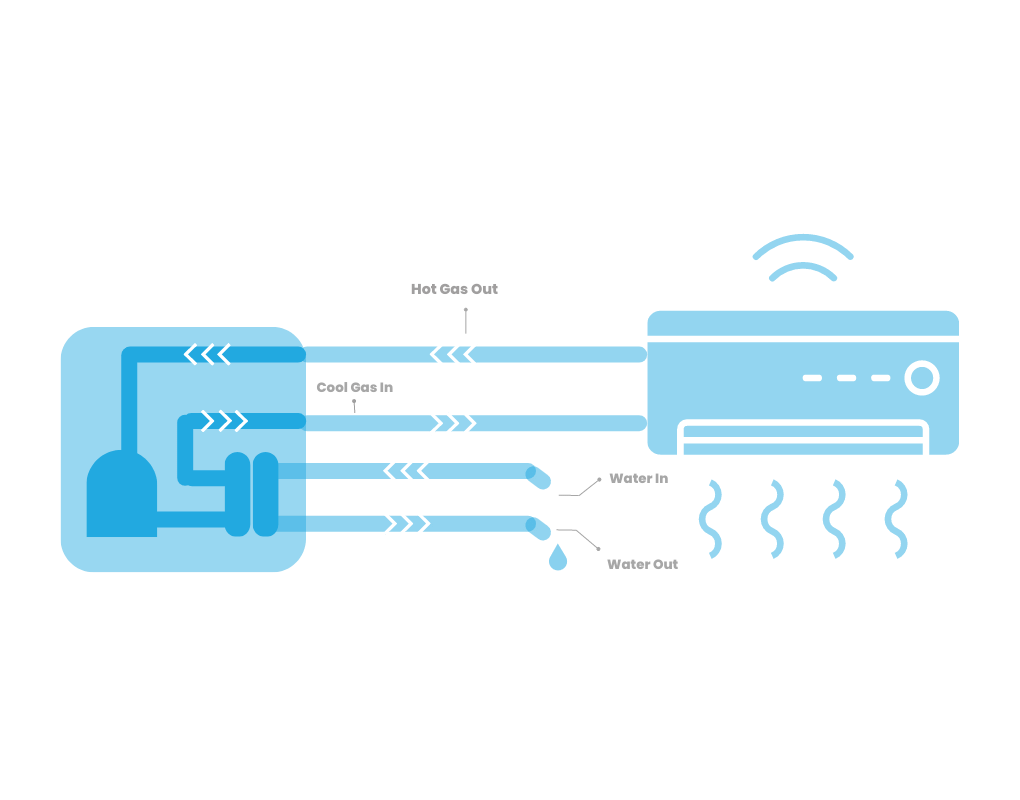
The refrigerant is a special liquid inside the air conditioner. It changes between liquid and gas to absorb heat.
The refrigerant flows through pipes and moves heat from inside to outside the room.
- Refrigerant absorbs heat from indoor air
- It turns into gas as it heats up
- Gas moves outside to release heat
- Refrigerant cools down and returns inside
Heat Exchange Mechanism
The heat exchange happens in two main coils: the evaporator inside and the condenser outside.
The evaporator coil cools the air inside. The condenser coil releases heat outside the building.
- Evaporator coil cools indoor air
- Heat moves from air to refrigerant
- Condenser coil releases heat outdoors
- Refrigerant cools and cycles back
Air Circulation Inside Room
After cooling, the air conditioner blows cool air back into the room. Fans help spread the air evenly.
This air circulation keeps the room at a comfortable temperature for everyone inside.
- Cool air leaves the unit
- Fans push air across the room
- Warm air moves back to the unit
- Cycle repeats to maintain coolness
Installation And Placement Tips
Installing a wall mounted air conditioner correctly helps it work well. Good placement makes the room cool faster.
Follow tips for location, mounting, and electrical setup. These steps keep the unit safe and efficient.
Choosing The Right Location
Select a wall with no direct sunlight. Avoid spots near heat sources like ovens or lamps.
Place the unit high on the wall. Cool air flows down and spreads better from there.
- Near the center of the room is best
- Avoid corners and blocked areas
- Keep at least 6 inches from the ceiling
- Leave space around for airflow
Mounting Techniques
Use a strong bracket made for your air conditioner model. It must hold the unit safely on the wall.
Make sure the wall is solid and can carry the weight. Use anchors if mounting on drywall.
- Check the unit’s weight before mounting
- Use a level to keep the unit straight
- Secure screws tightly but do not overtighten
- Seal any gaps to prevent air leaks
Electrical Requirements
Check the air conditioner’s power needs before installation. Use a dedicated circuit if required.
Use the right wire size to avoid overheating. Follow local electrical codes and safety rules.
- Confirm voltage matches the unit’s rating
- Install a proper circuit breaker
- Keep wiring neat and secure
- Hire a licensed electrician if unsure

Credit: www.angi.com
Energy Efficiency Factors
Wall mounted air conditioners cool rooms using less electricity. This saves money and helps the environment.
Understanding how energy efficiency works can help you choose and use these units better.
Seer Ratings And Impact
SEER stands for Seasonal Energy Efficiency Ratio. It measures how well an air conditioner uses energy.
A higher SEER rating means the unit cools more using less power. This lowers electricity bills.
- SEER ratings usually range from 13 to 25.
- Units with ratings above 20 are very efficient.
- Choose higher SEER units for long-term savings.
Smart Thermostat Integration
Smart thermostats connect to wall mounted air conditioners. They control temperature automatically.
Using a smart thermostat can reduce energy waste by adjusting the cooling only when needed.
- Set schedules for cooling times.
- Control temperature remotely with a phone.
- Detect when no one is home to save energy.
Regular Maintenance Benefits
Cleaning and checking your air conditioner helps it run smoothly. This keeps energy use low.
Dirty filters and blocked vents make the unit work harder and use more power.
- Clean or replace filters every month.
- Check and clear vents regularly.
- Schedule professional service yearly.
Troubleshooting Common Issues
Wall mounted air conditioners work well to cool rooms. Sometimes, they face problems that reduce their performance.
Knowing how to fix common issues can save time and money. Below are some common problems and how to troubleshoot them.
Poor Cooling Performance
If your air conditioner is not cooling the room well, several things could be wrong. Dirty filters or blocked airflow often cause this.
Check if the air filter is clean. Also, make sure the outdoor unit is not covered or blocked by objects.
- Clean or replace air filters regularly
- Remove any objects blocking vents or outdoor unit
- Check that windows and doors are closed tightly
- Ensure thermostat settings are correct for cooling
Unusual Noises
Strange sounds from the air conditioner may mean a problem. Loose parts or debris inside the unit can cause noise.
Turn off the unit and check for loose screws or objects stuck in the fan or vents. Tighten screws if needed.
- Inspect fan blades for damage or debris
- Tighten any loose screws or bolts
- Listen for rattling or grinding sounds
- Call a technician if noise continues after cleaning
Water Leakage
Water leaking from your air conditioner is a common issue. It usually happens due to a clogged drain pipe or frozen coils.
Check the drain pipe for blockages and clear them. Also, make sure the unit is level to allow proper drainage.
- Clear clogged drain pipe or hose
- Check if the unit is installed level
- Clean air filters to prevent coil freezing
- Turn off unit if coils are frozen, then restart
Remote Control Problems
If the remote control does not work, the batteries may be dead or the sensor might be blocked. Sometimes the remote needs resetting.
Replace batteries with new ones. Remove objects between the remote and air conditioner. Reset the remote if needed.
- Replace old batteries with fresh ones
- Point remote directly at the unit sensor
- Remove any obstacles blocking the signal
- Reset the remote according to the manual
Benefits Of Wall Mounted Ac Units
Wall mounted air conditioners offer many advantages for home cooling. They are designed to fit on walls and provide efficient temperature control.
This type of air conditioner is popular in small spaces and modern homes. It can improve comfort without taking up floor space.
Space Saving Advantages
Wall mounted AC units save floor space by being fixed on the wall. This leaves more room for furniture and movement.
- Do not block windows or doors
- Ideal for small rooms or apartments
- Easy to install high on the wall
- Frees up floor space for other uses
Aesthetic Considerations
These units blend well with room decor. They come in sleek designs that do not look bulky or intrusive.
- Compact and slim shape
- Neutral colors to match walls
- Quiet operation with minimal vibration
Cost Effectiveness
Wall mounted air conditioners often cost less to install. They use less energy to cool small areas efficiently.
| Cost Aspect | Benefit |
| Installation | Lower cost and less labor |
| Energy Use | Consumes less power in small rooms |
| Maintenance | Easy access for cleaning and repairs |

Credit: simplyair.com.au
Frequently Asked Questions
How Does A Wall Mounted Air Conditioner Cool A Room?
A wall mounted air conditioner cools by drawing warm air inside. It passes air over refrigerant-filled coils. This process absorbs heat and releases cool air back into the room, effectively lowering the temperature.
What Components Make Up A Wall Mounted Air Conditioner?
Key components include the evaporator coil, compressor, condenser, fan, and thermostat. These parts work together to absorb heat inside and release it outside, ensuring efficient cooling.
Can A Wall Mounted Ac Improve Indoor Air Quality?
Yes, most wall mounted ACs have filters that trap dust and allergens. This helps improve indoor air quality by circulating cleaner, fresher air within your space.
How Energy Efficient Are Wall Mounted Air Conditioners?
Wall mounted ACs are generally energy efficient, especially models with inverter technology. They consume less electricity by adjusting compressor speed based on cooling needs, reducing energy waste.
Conclusion
Wall mounted air conditioners cool your space efficiently. They are compact and effective. Airflow is crucial for their operation. These units pull warm air inside. Then, they cool it using refrigerant. Finally, they expel cool air back into the room.
Installing one is often simple. It usually requires minimal wall space. Regular maintenance keeps them working well. Clean filters improve performance. Energy efficiency is a key benefit. They help reduce electricity bills. Consider one for a comfortable home. Enjoy a cooler environment with ease.