Have you ever wondered why your air conditioner suddenly stops cooling or won’t start at all? One small part inside your AC unit could be the culprit: the capacitor.
Understanding how an air conditioner capacitor works can save you time, money, and frustration. You’ll discover the simple but crucial role this tiny component plays in keeping your home cool and comfortable. Keep reading—you’ll learn exactly what happens inside your AC and how knowing this can help you spot problems early and keep your system running smoothly.
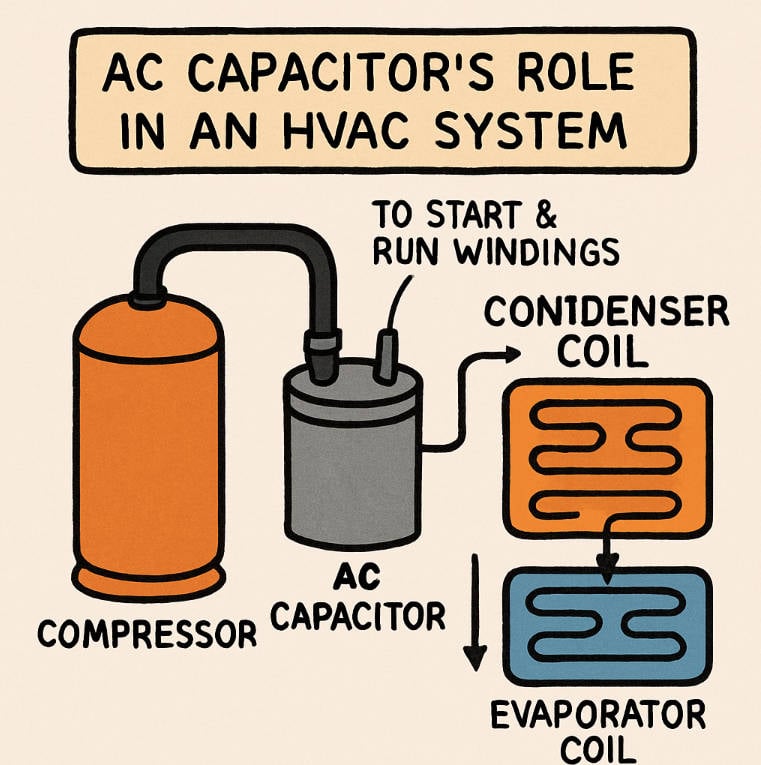
Credit: www.bettlink.com
Basics Of Air Conditioner Capacitors
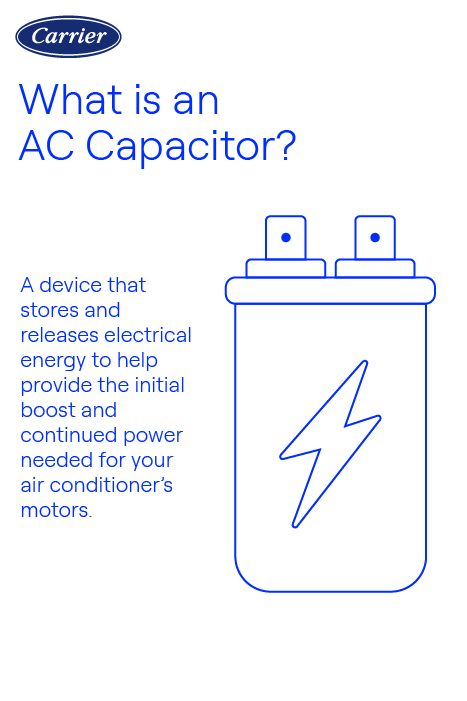
An air conditioner capacitor stores electrical energy. It helps start and run the AC motor. Without it, the AC will not work properly.
This small device plays a big role in keeping your air conditioner running smoothly. Let’s explore how it works and why it matters.
What Is An Air Conditioner Capacitor?
An air conditioner capacitor is a small cylindrical part. It stores electric charge to help start the motor. It also helps keep the motor running.
- Start Capacitor:Provides extra power to start the motor.
- Run Capacitor:Keeps the motor running smoothly.
- Dual Capacitor:Combines start and run capacitors in one unit.
How Does The Capacitor Work?
The capacitor stores energy in an electric field. It releases this energy to give the motor a boost. This helps the motor start quickly and run efficiently.
| Function | Purpose | Effect |
| Store energy | Hold electric charge | Provide power when motor starts |
| Release energy | Send charge to motor | Keep motor running smoothly |
Signs Of A Bad Capacitor
- AC motor struggles to start
- AC unit makes humming noise
- Frequent AC shut-offs
- Visible bulging or leaking on capacitor
Types Of Capacitors In Air Conditioners
Capacitors in air conditioners help start and run the motors. They store and release electrical energy. Different types of capacitors serve different roles in the system.
Understanding these types helps in knowing how your air conditioner works. The main types are start capacitors, run capacitors, and dual run capacitors.
Start Capacitors
Start capacitors give a strong boost to the motor when it first turns on. They provide extra energy to help the motor start quickly. Once the motor runs, the start capacitor stops working.
These capacitors have a higher capacitance than run capacitors. They only work for a short time during startup and then disconnect from the circuit.
Run Capacitors
Run capacitors keep the motor running smoothly after it starts. They provide continuous energy to improve motor efficiency. This helps save electricity and reduces wear on the motor.
Run capacitors stay active while the motor runs. They have a lower capacitance than start capacitors but work longer.
Dual Run Capacitors
Dual run capacitors combine two capacitors in one unit. They support both the fan motor and the compressor motor. This design saves space and simplifies wiring.
These capacitors have separate sections inside. Each section has its own capacitance value for different motors.
- One side runs the compressor motor
- The other side runs the fan motor
- Both work at the same time
- Help save space and costs
Role Of Capacitors In Air Conditioning Systems
Capacitors are small devices inside air conditioners. They help the system work smoothly and save energy.
Capacitors store and release electricity. This helps different parts of the air conditioner run correctly.
Energy Storage And Release
Capacitors store electrical energy when the air conditioner is off or running. They release this energy when needed.
This process helps keep the power steady. It supports the air conditioner’s motors during start and operation.
Voltage Regulation
Capacitors help control the voltage inside the air conditioning system. They keep voltage levels stable to protect parts.
Stable voltage means less chance of damage. It also helps the air conditioner last longer and work better.
Motor Start And Operation
Capacitors give a boost to start the motors in the air conditioner. This boost helps the motor turn on quickly.
They also keep the motor running smoothly. Without capacitors, motors might run slowly or stop working.
Signs Of A Failing Capacitor
The capacitor in an air conditioner helps start the motor and keep it running. It stores and releases electrical energy to power the fan and compressor. When the capacitor starts to fail, the air conditioner shows some clear signs.
Knowing these signs can help you fix the problem early and avoid bigger damage to your AC unit.
Unusual Noises
A failing capacitor can cause strange sounds in your air conditioner. You may hear buzzing, humming, or clicking noises coming from the unit. These sounds happen because the motor is not getting the right power to start or run smoothly.
These noises mean the capacitor is weak or damaged and cannot send enough energy to the fan or compressor.
Increased Energy Bills
A bad capacitor makes your air conditioner work harder than usual. The motor struggles to run, using more electricity. This extra effort causes your energy bills to rise without any change in cooling performance.
If you notice higher bills but your AC is not cooling well, the capacitor might be failing.
Air Conditioner Fails To Start
The most obvious sign of a bad capacitor is when your air conditioner does not start at all. The capacitor helps start the compressor and fan motors. If it is weak or dead, the motors won’t turn on.
You may see the fan trying to start and then stop or hear a clicking sound. This shows the capacitor cannot provide the initial boost needed for the motors.
Steps To Test A Capacitor
Testing an air conditioner capacitor helps find if it works right. A bad capacitor can stop the AC from running well.
This guide shows simple steps to check a capacitor safely and easily using a multimeter.
Safety Precautions
Capacitors hold electric charge even after power is off. This can cause shocks if not handled well.
Always discharge the capacitor before testing it to avoid injury.
- Turn off power to the AC unit.
- Use a screwdriver with an insulated handle to short the terminals.
- Wear safety glasses and gloves.
- Work in a dry area to prevent electric shock.
Using A Multimeter
A multimeter measures the capacitor’s ability to store charge. Use the meter’s capacitance setting for best results.
Follow these steps to test the capacitor with a multimeter.
- Set the multimeter to the capacitance mode.
- Remove the capacitor from the AC unit.
- Connect the multimeter probes to the capacitor terminals.
- Read the value shown on the multimeter screen.
Interpreting Results
Compare the multimeter reading to the capacitor’s rated value. The rated value is on the capacitor label.
Small differences are normal. Large differences or no reading means the capacitor is bad.
- If the reading is close to the rated value, the capacitor is good.
- If the reading is very low or zero, the capacitor is faulty.
- If the multimeter shows open or infinite, the capacitor is damaged.
Replacing A Capacitor
An air conditioner capacitor helps start the motor and keep it running. If the capacitor fails, the AC unit may stop working or run poorly.
Replacing a capacitor is a common repair that can save you money. It is important to choose the right part and follow safety steps.
Selecting The Right Replacement
Look at the old capacitor’s label to find its specs. Match the voltage and microfarad (µF) ratings exactly.
Using the wrong capacitor can damage your AC unit. Choose a capacitor with the same shape and terminal type for easy fit.
- Check voltage rating (usually 370V or 440V)
- Match microfarad (µF) value (e.g., 35 µF)
- Note the number of terminals and size
- Buy from a trusted supplier or store
Installation Process
Turn off power to the air conditioner before starting. Use a screwdriver to remove the old capacitor.
Note where each wire connects. Disconnect the wires and remove the old capacitor. Connect wires to the new capacitor the same way.
- Switch off the power at the breaker
- Discharge the old capacitor safely with a screwdriver
- Remove screws or clips holding the capacitor
- Label or take a photo of wire connections
- Attach wires to new capacitor terminals
- Secure the new capacitor in place
- Restore power to the unit
Testing After Replacement
After installation, turn on the AC unit to check if it starts properly. Listen for normal running sounds and check airflow.
If the unit does not start or runs poorly, recheck connections. Use a multimeter to test the capacitor’s function if needed.
- Power on the AC unit
- Check if the compressor and fan start smoothly
- Listen for unusual noises
- Measure capacitor with a multimeter (optional)
- Ensure proper airflow from vents
Benefits Of Regular Capacitor Maintenance
Maintaining your air conditioner capacitor regularly is key to keeping the system running well. It helps avoid sudden breakdowns and keeps the cooling steady.
Here are some main benefits of taking care of your air conditioner’s capacitor on time.
Prolonged System Lifespan
Capacitors help start the compressor and fan motor in the air conditioner. If they wear out, these parts strain and may fail early.
Regular checks and replacements of capacitors keep the system parts safe and extend the life of your air conditioner.
Improved Efficiency
A healthy capacitor allows the air conditioner to run smoothly. It uses less energy and cools your home better.
- Ensures the motor starts quickly and runs steadily
- Reduces power consumption
- Maintains consistent cooling performance
Cost Savings
Replacing a bad capacitor early avoids bigger repairs or full system replacement. It also lowers your electricity bills.
| Benefit | How It Saves Money |
| Fewer Repairs | Prevents damage to motors and compressors |
| Lower Energy Use | Reduces electricity bills by improving efficiency |
| Longer Equipment Life | Delays costly replacement of the whole system |

Credit: www.ic-components.com

Credit: www.searshomeservices.com
Frequently Asked Questions
What Is The Role Of A Capacitor In An Air Conditioner?
A capacitor stores electrical energy to help start and run the AC motor. It provides a boost to the compressor and fan motors, enabling smooth operation and efficient cooling performance.
How Does An Air Conditioner Capacitor Store Energy?
The capacitor stores energy in an electric field between two conductive plates. This energy release helps the motor start quickly and maintain stable operation during cooling cycles.
What Happens If An Ac Capacitor Fails?
If the capacitor fails, the AC motor may not start or run properly. This causes the unit to overheat, make unusual noises, or stop cooling effectively.
Can A Faulty Capacitor Affect Ac Efficiency?
Yes, a bad capacitor reduces motor performance, causing the AC to work harder. This lowers cooling efficiency and increases energy consumption and wear on components.
Conclusion
An air conditioner capacitor helps start and run the motor smoothly. It stores and releases electrical energy quickly. This keeps the AC working efficiently and prevents damage. Without a good capacitor, the AC may not cool properly. Regular checks can catch problems early.
Understanding this small part helps you care for your AC better. It’s simple but very important. Keep your air conditioner running cool and strong by knowing how its capacitor works.