Have you ever wondered how a portable air conditioner keeps your room cool and comfortable, especially on those hot, sticky days? Understanding how this handy device works can help you use it better and make smarter choices when buying one.
You’ll discover the simple science behind portable air conditioners and learn how they turn warm air into refreshing coolness right where you need it. Keep reading, and you’ll find out how to make your space more comfortable with ease.

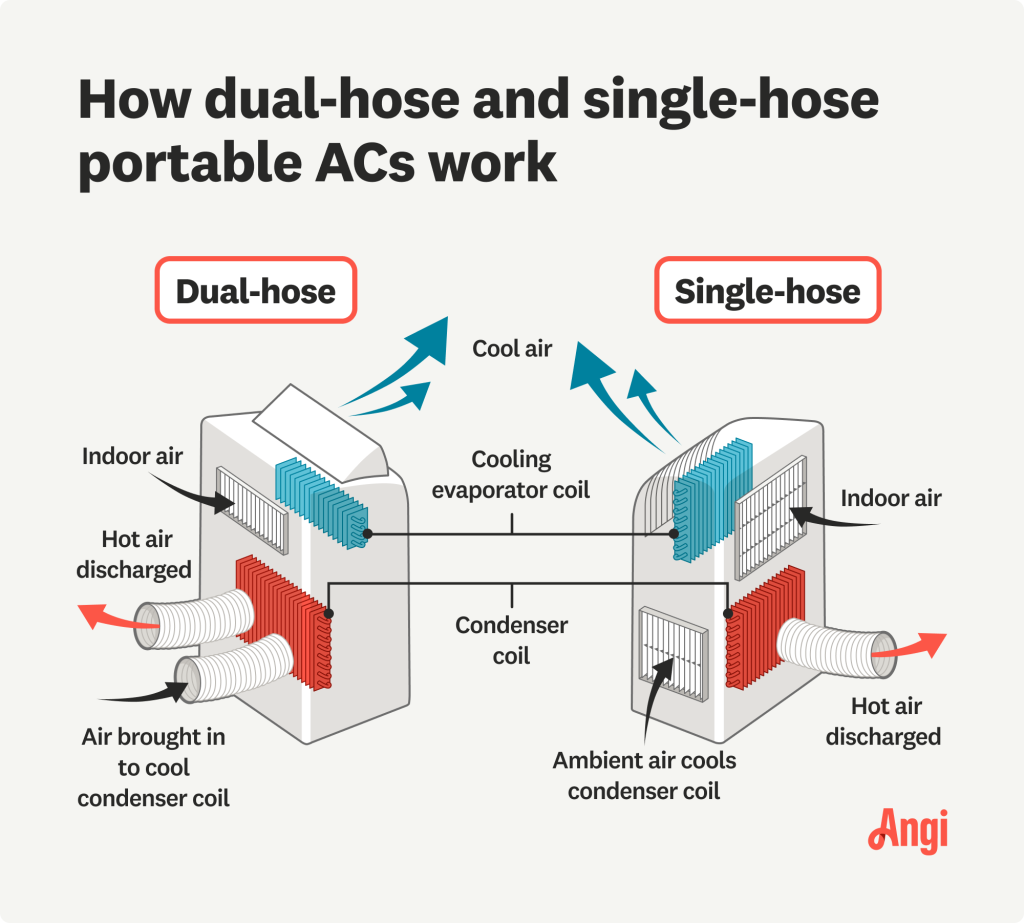
Credit: www.cnet.com
Portable Air Conditioner Basics
Portable air conditioners cool rooms without permanent installation. They are easy to move and set up.
These units work by removing heat and moisture from indoor air. They help keep spaces comfortable during hot days.
Key Components
A portable air conditioner has several important parts. Each part plays a role in cooling the air.
- Compressor:Compresses refrigerant gas to start the cooling cycle.
- Condenser:Releases heat from the refrigerant to the outside.
- Evaporator:Absorbs heat from indoor air to cool it.
- Fan:Moves air over the evaporator and condenser coils.
- Exhaust Hose:Expels hot air outside through a window or vent.
Cooling Process
The portable AC uses refrigerant to cool air inside a room. It moves heat from indoors to outdoors.
The warm indoor air passes over the evaporator coil. The refrigerant absorbs the heat, cooling the air.
- The cooled air blows back into the room.
- The refrigerant carries heat to the condenser coil.
- The condenser releases heat outside through the exhaust hose.
- The refrigerant cools down and repeats the cycle.
Types Of Portable Acs
There are different types of portable air conditioners. Each type works in a unique way.
- Single-Hose Units:Use one hose to push hot air outside.
- Dual-Hose Units:Use two hoses—one for pulling air in, one for pushing hot air out.
- Evaporative Coolers:Use water to cool air but work best in dry climates.
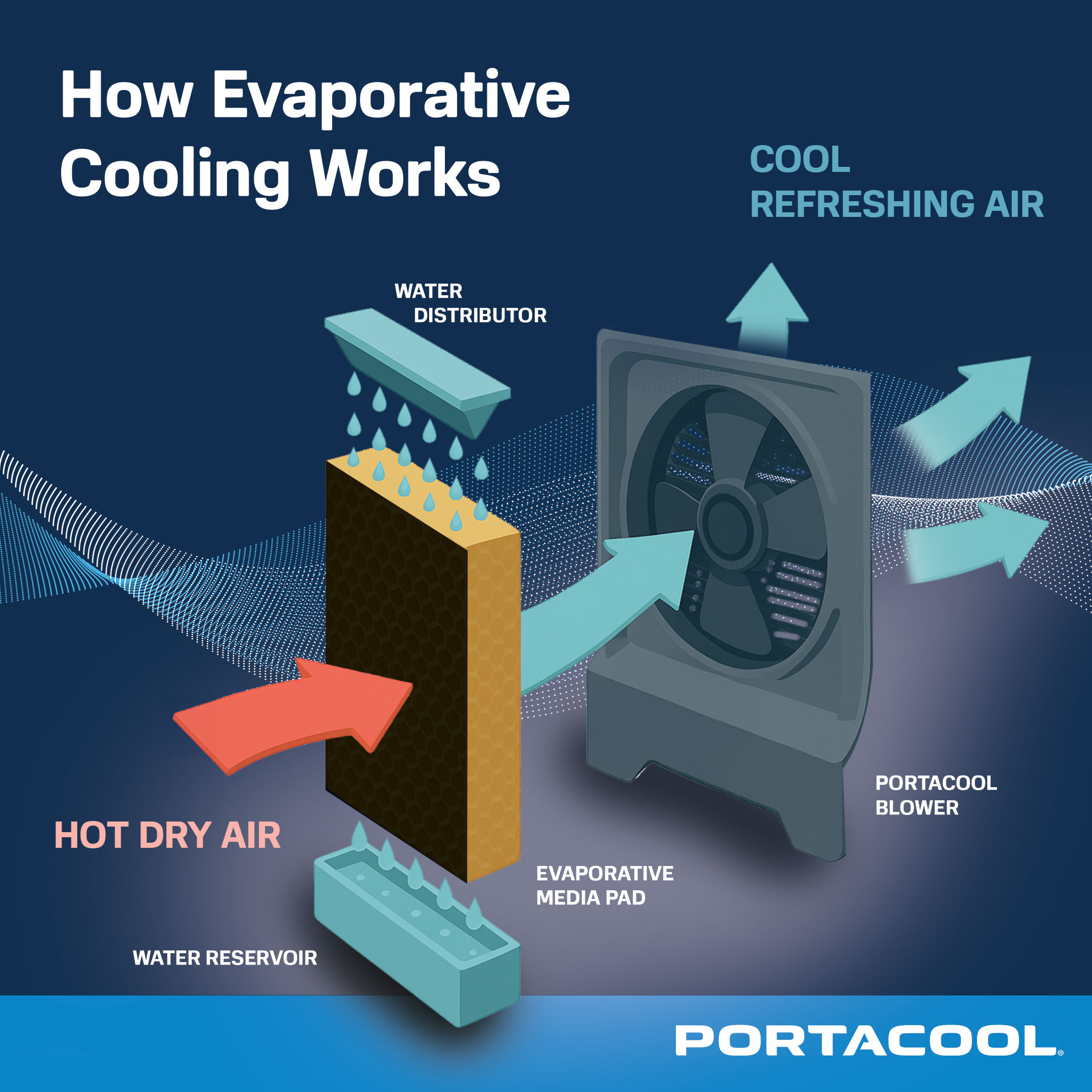
Credit: www.portacool.com
Heat Exchange Mechanism
Portable air conditioners work by moving hot air out and bringing cool air in. This process involves a series of steps using different components.
The key to this process is the heat exchange mechanism, which involves the flow of refrigerant through various parts.
Role Of Refrigerant
The refrigerant is a special fluid that absorbs heat from the air inside the room. It changes from a liquid to a gas as it does this.
- Refrigerant absorbs heat when it evaporates.
- It releases heat when it condenses.
- Moves through coils inside the air conditioner.
Compressor Function
The compressor is a crucial component in this process. It squeezes the refrigerant, increasing its pressure and temperature.
This action prepares the refrigerant to release the absorbed heat outside, allowing the air inside to cool down.
Evaporator And Condenser
The evaporator and condenser are two sets of coils. The evaporator coils are inside the unit, while the condenser coils are outside.
| Component | Function |
| Evaporator Coils | Absorb heat from room air |
| Condenser Coils | Release heat outside |
These coils work together to remove heat from the room, making the air cooler for comfort.
Airflow And Ventilation
Portable air conditioners cool rooms by moving air and removing heat. Good airflow and proper ventilation keep these units working well.
Understanding how air moves helps you set up and use your portable AC correctly.
Exhaust Hose Purpose
The exhaust hose removes hot air from the room. It connects the air conditioner to a window or vent.
Without the exhaust hose, hot air stays inside and makes the room warmer.
Intake Vs. Exhaust Air
The intake air is the warm air from the room that the AC unit cools. The exhaust air is the hot air pushed outside.
- Intake air enters the AC to cool down.
- Exhaust air carries heat out of the room.
- Separating these two airflows keeps the room cool.
- Mixing intake and exhaust air reduces cooling efficiency.
Vent Installation Tips
| Tip | Details |
|---|---|
| Use a proper window kit | Seal gaps to prevent air leaks and insects. |
| Keep exhaust hose straight | Avoid bends to improve airflow and efficiency. |
| Place vent at correct height | Follow manufacturer instructions for best results. |
| Secure hose tightly | Prevent it from disconnecting during use. |
Energy Efficiency Factors
Portable air conditioners use energy to cool rooms. Understanding energy efficiency helps save money and reduce power use.
Several factors affect how well a portable air conditioner uses energy. Knowing these can help you pick the best unit for your space.
Btu Ratings Explained
BTU stands for British Thermal Unit. It measures how much heat a unit can remove from a room per hour.
Higher BTU means more cooling power but also more energy use. Choose a BTU rating that fits your room size to save energy.
Impact Of Room Size
Room size affects how much energy a portable air conditioner needs. Small rooms need less cooling power than large rooms.
Using a unit that matches your room size helps it run efficiently. A too small unit works harder and wastes energy.
- Small rooms: 100 to 300 square feet
- Medium rooms: 300 to 500 square feet
- Large rooms: 500 square feet or more
Energy Saving Features
Many portable air conditioners have features that reduce energy use. These help lower your electricity bills.
Look for timers, sleep modes, and energy saver settings. These features turn off or lower power when cooling is not needed.
- Timer: sets unit to turn off automatically
- Sleep mode: cools gently at night
- Energy saver: cycles compressor to save power
Common Issues And Maintenance
Portable air conditioners need regular care to work well. Simple maintenance helps avoid problems. Knowing common issues saves time and money.
This guide covers filter cleaning, drainage solutions, and basic troubleshooting tips. Follow these steps to keep your unit running smoothly.
Filter Cleaning
Cleaning the filter is important. A dirty filter blocks airflow and lowers cooling power. Clean your filter every two weeks during heavy use.
- Turn off and unplug the unit before cleaning.
- Remove the filter carefully.
- Wash it with warm water and mild soap.
- Let it dry completely before reinstalling.
- Replace the filter if it is damaged or too dirty.
Drainage Solutions
Portable ACs remove moisture from the air. This water collects inside or drains outside. Proper drainage stops leaks and mold growth.
| Drainage Type | Description | Maintenance Tip |
| Internal Tank | Water collects in a tank inside the unit. | Empty tank daily to prevent overflow. |
| Continuous Drain | Water drains out through a hose. | Check hose for clogs or kinks often. |
| Self-Evaporative | Water evaporates automatically through the exhaust. | Clean exhaust vent to ensure proper airflow. |
Troubleshooting Tips
If your portable AC stops cooling or makes noise, use these tips to find the problem. Many issues are easy to fix without a technician.
- Check if the unit is plugged in and the power is on.
- Clean or replace the air filter if dirty.
- Make sure the exhaust hose is connected and not blocked.
- Empty the water tank if it is full.
- Set the thermostat to a cooler temperature.
- Listen for strange noises and tighten loose parts.
- Reset the unit by unplugging it for a few minutes.
Choosing The Right Portable Ac
Portable air conditioners offer flexible cooling for many spaces. Picking the right model helps keep your room cool and comfortable.
Consider your needs carefully before buying. Focus on cooling power, size, and features that fit your lifestyle.
Assessing Cooling Needs
Measure your room size to find the correct cooling capacity. Portable AC units have ratings in BTUs.
- Small rooms (up to 300 sq ft): 8,000 to 10,000 BTUs
- Medium rooms (300-500 sq ft): 10,000 to 14,000 BTUs
- Large rooms (over 500 sq ft): 14,000 BTUs or more
Portability Considerations
Look at the unit’s weight and size. Easy to move models suit rooms you use less often or different rooms.
| Feature | Details |
| Weight | Lightweight models under 50 lbs are easier to move |
| Wheels | Check if the unit has smooth-rolling wheels for easy transport |
| Size | Compact units fit better in small spaces |
| Hose Length | Longer exhaust hoses allow flexible placement |
Budget And Features
Set a budget before shopping. Look for features that matter most to you within that range.
- Energy efficiency helps lower electric bills
- Programmable timers allow automatic shutoff
- Remote controls add convenience
- Dehumidifier mode improves comfort in humid climates

Credit: www.amazon.com
Frequently Asked Questions
How Does A Portable Air Conditioner Cool A Room?
A portable air conditioner cools by extracting warm air inside. It uses a refrigerant cycle to absorb heat and expels it outside. The cooled air is then circulated back into the room, lowering the temperature effectively and efficiently.
What Components Make Portable Air Conditioners Work?
Portable air conditioners consist of a compressor, evaporator, condenser, and fan. The compressor circulates refrigerant, absorbing heat from the room. The condenser releases this heat outside through an exhaust hose. The fan helps distribute cool air evenly in the room.
Can Portable Air Conditioners Work Without Venting?
No, portable air conditioners need venting to expel hot air. The exhaust hose must be connected to a window or vent. Without proper venting, the unit cannot remove heat, reducing its cooling efficiency significantly.
How Efficient Are Portable Air Conditioners?
Portable air conditioners are moderately efficient for small to medium rooms. Their efficiency depends on BTU rating and proper venting. While they consume more energy than central AC, they offer flexible cooling without installation.
Conclusion
Portable air conditioners cool rooms by moving heat outside. They use fans and refrigerants to lower indoor temperature. These units are easy to install and move around. They work best in small to medium rooms. Regular maintenance keeps them running smoothly.
Choosing the right size improves cooling efficiency. Understanding how they work helps you use them well. Portable air conditioners offer flexible cooling without permanent setup. Perfect for renters or those needing temporary relief. Simple, effective, and convenient for hot days ahead.