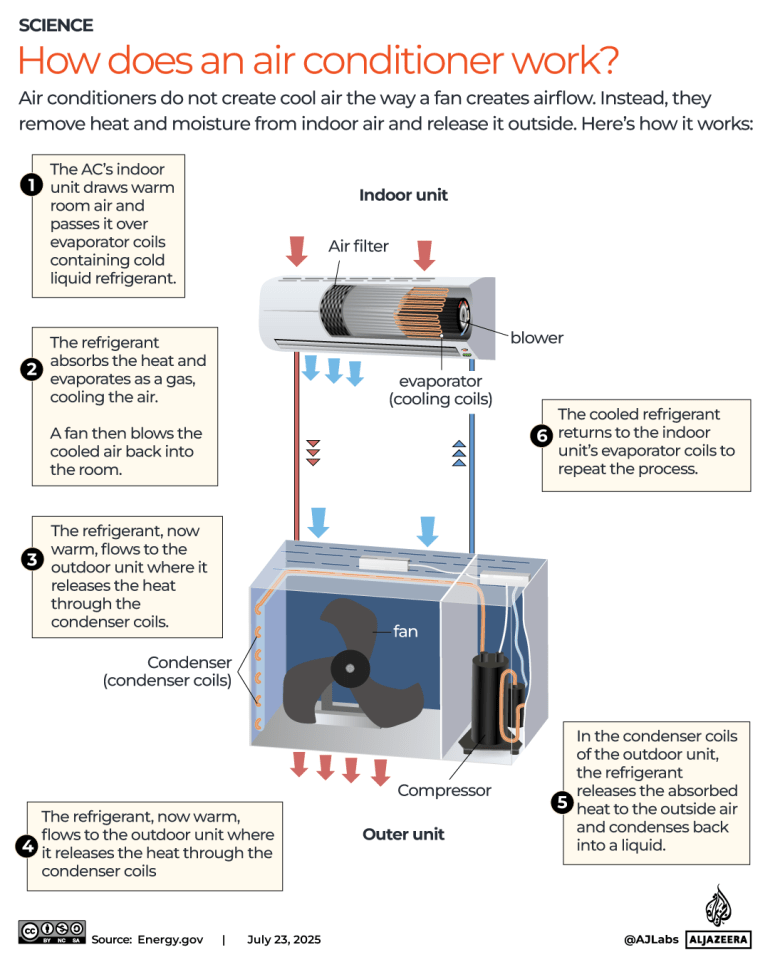
Have you ever wondered what makes your air conditioner cool the air so effectively? The secret lies in a small but powerful part called the compressor.
Understanding how the compressor in your air conditioner works can help you appreciate this cool comfort on hot days—and even spot problems before they happen. You’ll discover exactly what the compressor does, why it’s so important, and how it keeps your space feeling just right.
Keep reading to unlock the cool science behind your AC!
Role Of The Compressor
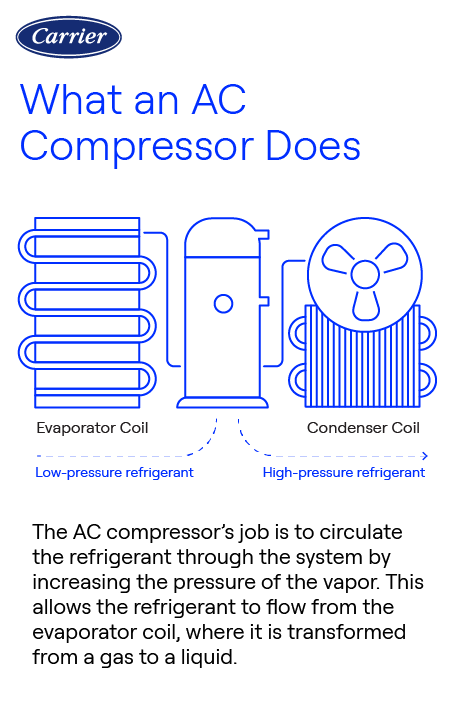
The compressoris the heartof an air conditioner. It pressesthe refrigerant gas to make it hot and high-pressure. This gas then moves to the condenser to cool down and turn into liquid.
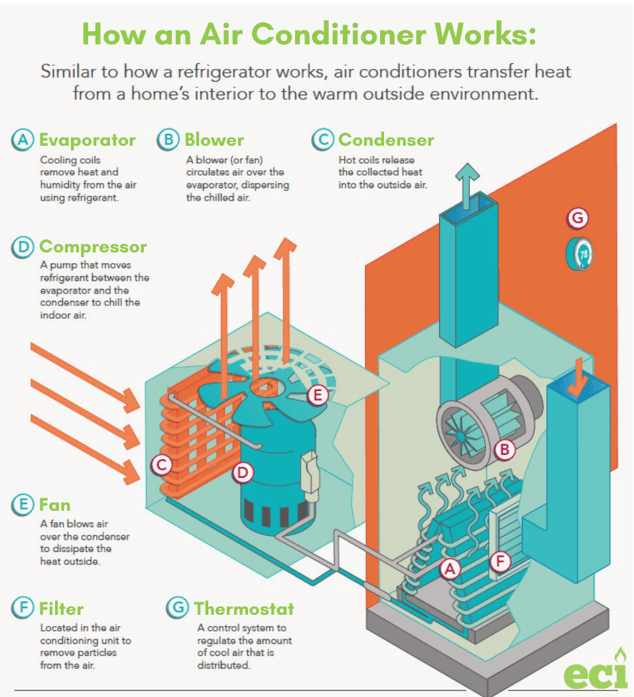
The compressor works closely with other parts:
- Evaporator:Absorbs heat from the room air.
- Condenser:Releases heat outside.
- Expansion valve:Controls refrigerant flow.
Together, they form a closed loop. The compressor keeps the refrigerant moving. This cycle removes heatfrom inside and cools the air.
Credit: www.carrier.com
Types Of Compressors
The reciprocating compressoruses a piston to compress air. It moves back and forth inside a cylinder. This type is common in small to medium air conditioners. It is simple and reliable but can be noisy.
The scroll compressorhas two spiral parts. One part stays still, the other moves in circles. This motion compresses the air. It runs quietly and is energy efficient. Many modern AC units use this type.
The rotary compressoruses a rotating blade inside a cylinder. It compresses air by spinning fast. It is smaller and lighter than reciprocating types. It works well in compact air conditioners.
The screw compressorhas two screws that turn together. They push air forward and compress it. This type is used in large air conditioners and industrial cooling. It offers high power and steady performance.
Working Principle
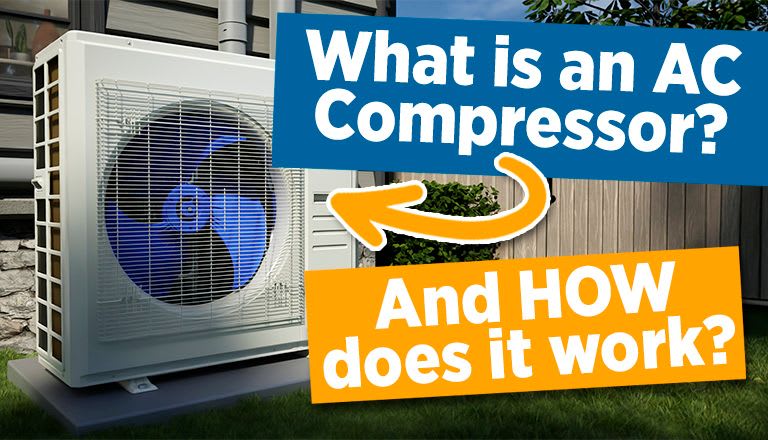
The compression cyclestarts with the compressor squeezing the refrigerant gas. This makes the gas hotter and under high pressure. The hot gas then moves to the condenser coil. There, it cools down and changes into a liquid.
Next, the liquid refrigerant passes through the expansion valve. This valve lowers the pressure, making the refrigerant cool quickly. The cold refrigerant flows into the evaporator coil. It absorbs heat from the room air, cooling the space.
The refrigerant changes back to gas and returns to the compressor. This cycle repeats, keeping the room cool.
| Step | Process | Effect |
|---|---|---|
| Compression | Compressor squeezes gas | Gas becomes hot and high pressure |
| Condensation | Gas cools in condenser | Changes to liquid |
| Expansion | Liquid passes expansion valve | Pressure drops, refrigerant cools |
| Evaporation | Cold refrigerant absorbs heat | Room air cools, refrigerant turns gas |
Key Parts Of The Compressor
The motorpowers the compressor by spinning a shaft. This shaft moves the pistons inside the compressor.
Pistons and valveswork together to compress the refrigerant gas. Pistons push the gas into smaller spaces, raising its pressure. Valves control the flow of gas in and out of the compressor.
The housingprotects the internal parts and keeps everything sealed. Sealsstop the refrigerant from leaking out and stop dust from getting in.
Energy Efficiency And Performance
Power consumptiondepends on the compressor’s design and operation. A well-designed compressor uses less energy to cool the same space. This helps lower electric billsand reduces environmental impact.
Several factors affect the compressor’s efficiency:
- Compressor type:Scroll compressors are usually more efficient than piston types.
- Size:Properly sized compressors use energy better.
- Maintenance:Clean filters and coils keep the compressor running smoothly.
- Ambient temperature:Hotter outside air makes the compressor work harder.
- Refrigerant charge:Correct refrigerant levels improve performance.
Credit: www.mrcool.com
Common Issues And Maintenance
Signs of compressor failureinclude strange noises like buzzing or rattling. The air conditioner may blow warm air or stop cooling completely. Frequent tripping of circuit breakers can also indicate compressor issues. Sometimes, the unit may run continuously without turning off, which wastes energy.
Routine maintenance tipshelp keep the compressor working well. Clean or replace air filters every month. Check refrigerant levels to avoid leaks. Clear debris around the outdoor unit to ensure good airflow. Schedule yearly professional check-ups to spot problems early. Regular maintenance can extend the life of the compressor and keep your home cool.
Innovations In Compressor Technology
Variable speed compressorsadjust their speed to match cooling needs. This saves energy and keeps rooms comfortable. They run quieter than traditional compressors. These compressors can last longer because they do not start and stop often.
Environmentally friendly refrigerantsreduce harm to the planet. New refrigerants have less impact on the ozone layer. They also produce fewer greenhouse gases. Using these refrigerants helps fight climate change. Air conditioners with these refrigerants are safer for homes and nature.
Credit: www.ecicomfort.com
Frequently Asked Questions
What Is The Role Of A Compressor In Ac?
The compressor is the heart of an air conditioner. It pumps refrigerant through the system, enabling heat exchange. By compressing the refrigerant, it increases its pressure and temperature, allowing it to release heat outside. This process cools the indoor air efficiently.
How Does An Ac Compressor Start?
An AC compressor starts with the help of a capacitor. The capacitor sends a jolt of electricity to start the compressor motor. Once started, the motor runs the compressor, initiating the refrigeration cycle. This process is crucial for cooling the air inside.
Why Is My Ac Compressor Making Noise?
A noisy compressor may indicate several issues. Common causes include loose parts, refrigerant leaks, or electrical problems. Regular maintenance can prevent these issues. If you hear unusual noises, it’s advisable to consult a professional technician for diagnosis and repair.
Can A Faulty Compressor Affect Cooling?
Yes, a faulty compressor can severely impact cooling efficiency. It may result in insufficient cooling or no cooling at all. The compressor is essential for circulating refrigerant. Without it functioning properly, the air conditioner cannot cool the air effectively.
Conclusion
The compressor plays a key role in cooling your air conditioner. It pushes the refrigerant through the system to absorb heat. This process helps cool the air inside your home. Without the compressor, the air conditioner cannot work properly. Understanding this part makes it easier to care for your AC.
Keep it clean and well-maintained for best performance. Now you know how the compressor helps keep you cool. Simple, yet important.