Have you ever wondered how your car’s engine manages to perform efficiently? It’s not just about the fuel or the engine size; it’s also about the intricate components working behind the scenes.
One such crucial component is the vacuum advance. Understanding how it works can not only boost your car’s performance but also save you money on fuel. Imagine driving smoother, with an engine that responds just the way you want it to.
Curious to know how? By the end of this article, you’ll have a clear understanding of vacuum advance and how it can enhance your driving experience. Let’s dive into the mechanics and uncover the secrets behind smoother rides and better efficiency.
Credit: www.trifive.com
Vacuum Advance Basics
Understanding vacuum advance basics helps explain how engines run more efficiently. Vacuum advance improves ignition timing by adjusting spark based on engine load. This adjustment boosts fuel economy and reduces emissions. The system uses engine vacuum to move parts inside the distributor. This movement changes the timing of the spark to ignite fuel earlier or later. The result is smoother engine performance and better power delivery.
Role In Ignition Timing
Vacuum advance shifts the ignition timing to match engine needs. At light loads, it advances the spark to burn fuel efficiently. This means the spark happens earlier in the piston’s cycle. At higher loads, the vacuum drops, reducing advance and preventing engine knock. The result is improved fuel use and less engine stress. It helps engines run cleaner and last longer.
How Vacuum Is Generated
Engine vacuum forms when the piston moves down in the cylinder. The throttle controls air entering the engine, affecting vacuum levels. At idle or light throttle, vacuum is high due to restricted airflow. When the throttle opens wide, vacuum drops because air flows freely. The vacuum advance unit senses this change to adjust timing. This simple mechanism links engine load to ignition timing.
Credit: forum.ih8mud.com
Components Involved
Understanding the components involved in vacuum advance helps you grasp how your engine adjusts timing for better performance. Each part plays a critical role in ensuring your engine runs smoothly and efficiently. Let’s break down these parts so you can see how they work together.
Vacuum Advance Canister
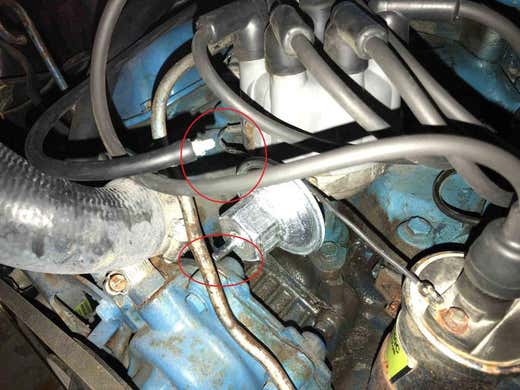
The vacuum advance canister is a small, round device attached to the distributor. Inside, there’s a diaphragm that moves when vacuum pressure changes. This movement adjusts the distributor’s internal mechanism to advance the ignition timing.
Think of it as a sensitive sensor that reacts to the engine’s vacuum. When you accelerate, the vacuum changes, causing the canister to shift the timing for improved power and fuel efficiency. If this canister fails, your engine might feel sluggish or hesitate during acceleration.
Vacuum Lines And Connections
Vacuum lines are the tubes that carry vacuum pressure from the engine to the vacuum advance canister. These lines must be free of cracks or leaks to ensure accurate timing adjustments. Old or damaged lines can cause timing issues, leading to poor engine performance.
Check your vacuum lines regularly—sometimes a tiny hole can cause big problems. Properly connected lines ensure the vacuum advance receives the right signals at the right time. Have you ever noticed rough idling or stalling? Faulty vacuum lines might be the hidden culprit.
Mechanism Of Action
The vacuum advance is a crucial part of the ignition system in many engines. It changes the timing of the spark based on the engine’s needs. This adjustment helps the engine run more efficiently and saves fuel. Understanding how it works reveals why it improves performance and reduces emissions.
Response To Engine Load
The vacuum advance works by sensing the engine load through vacuum pressure. At low load or steady cruising, the engine vacuum is high. This high vacuum pulls the diaphragm inside the vacuum advance unit. The diaphragm moves, which changes the ignition timing.
When the engine faces a heavy load, vacuum drops. The diaphragm returns to its original position. This reduces the advance, preventing the engine from knocking. The vacuum advance thus adjusts timing based on how hard the engine works.
Effect On Spark Timing
The vacuum advance shifts the spark timing earlier during light load. Early spark helps burn fuel completely and improves efficiency. It also lowers exhaust emissions by reducing unburned fuel.
At higher load, the vacuum advance reduces or stops advancing timing. This prevents the spark from firing too early. Early spark under load can cause engine knocking and damage. So, the vacuum advance protects the engine and keeps it running smoothly.
Benefits For Engine Performance
The vacuum advance plays a key role in improving engine performance. It adjusts the ignition timing based on engine load and speed. This adjustment helps the engine run smoother and more efficiently. Benefits include better fuel use, stronger power output, and lower emissions. These advantages make the vacuum advance an important part of engine tuning.
Improved Fuel Efficiency
The vacuum advance shifts ignition timing to burn fuel more completely. This precise timing reduces wasted fuel during combustion. Engines with vacuum advance use less fuel for the same power. Drivers notice fewer stops at gas stations and lower fuel costs. Efficient fuel use also helps the engine last longer.
Enhanced Power Delivery
By advancing ignition timing under light load, the engine gains better throttle response. The spark occurs earlier, allowing the air-fuel mix to burn fully. This leads to smoother acceleration and more power at lower RPMs. Drivers feel a stronger, more responsive engine during normal driving. The vacuum advance helps the engine adapt to different conditions quickly.
Reduced Emissions
Proper ignition timing reduces unburned fuel in exhaust gases. This means fewer harmful pollutants like carbon monoxide and hydrocarbons. Cleaner combustion lowers the engine’s environmental impact. Engines with vacuum advance meet emissions standards more easily. This helps keep the air cleaner and engines running better over time.
Common Issues And Troubleshooting
Understanding common issues with vacuum advance helps keep your engine running smoothly. Problems can cause poor performance and lower fuel efficiency. Quick troubleshooting saves time and avoids costly repairs.
Signs Of Vacuum Advance Failure
- Engine hesitation during acceleration
- Poor fuel economy compared to usual
- Rough idle or stalling at low speed
- Delayed or uneven spark timing
- Increased exhaust emissions or black smoke
- Check engine light related to ignition
Testing And Repair Tips
Start by inspecting the vacuum line for cracks or leaks.
Use a hand vacuum pump to test the advance unit’s diaphragm.
- Apply vacuum and watch the distributor plate move
- No movement means a faulty vacuum advance unit
- Replace damaged vacuum hoses immediately
Check for proper connection to the carburetor or intake manifold.
Clean the distributor and advance mechanism if stuck or dirty.
Replace the vacuum advance unit if it fails the vacuum test.
Vacuum Advance In Modern Engines
Vacuum advance plays a unique role in modern engines, even as technology continues to evolve rapidly. It adjusts the ignition timing based on engine load, helping improve fuel efficiency and reduce emissions. Although newer systems rely heavily on electronic controls, vacuum advance still offers valuable benefits in certain engine setups.
Comparisons With Electronic Systems
Electronic ignition systems have largely replaced vacuum advance in many vehicles. These systems use sensors and computer-controlled modules to precisely adjust timing in real time. Unlike vacuum advance, which reacts to manifold vacuum changes, electronic systems analyze multiple inputs like engine speed, load, and temperature.
Still, vacuum advance offers simplicity and reliability. It requires no complex wiring or programming, which can be an advantage in classic car restorations or simpler engine designs. Have you ever noticed how some older engines run smoother with a properly functioning vacuum advance unit?
Relevance In Today’s Vehicles
Vacuum advance remains relevant in certain engines, especially in performance or vintage cars. It helps optimize timing during cruising conditions, improving miles per gallon by advancing ignition when the engine is under light load.
While many modern vehicles rely entirely on electronic control, some still use vacuum advance as a backup or supplement to electronic timing. It’s a cost-effective way to enhance efficiency without adding expensive components.
Would you consider integrating vacuum advance into your engine setup to gain a balance between classic mechanical control and modern performance?
Credit: www.trifive.com
Frequently Asked Questions
What Is Vacuum Advance In A Car Engine?
Vacuum advance adjusts ignition timing based on engine vacuum. It improves fuel efficiency and engine performance during light load conditions.
How Does Vacuum Advance Improve Engine Performance?
Vacuum advance advances ignition timing when engine load is low. This leads to better fuel combustion and smoother engine operation.
When Does Vacuum Advance Activate In The Engine?
Vacuum advance activates during light throttle or steady cruising. It reduces fuel consumption and prevents engine knocking under these conditions.
Can Vacuum Advance Affect Fuel Economy?
Yes, vacuum advance improves fuel economy by optimizing ignition timing. It helps the engine burn fuel more efficiently during light loads.
Conclusion
Vacuum advance helps engines run more smoothly and efficiently. It adjusts the timing of the spark based on engine load. This means better fuel use and improved power. Engines respond faster to changes in speed and load. Understanding vacuum advance can help you maintain your vehicle better.
It is a small part with a big effect on performance. Keep your vacuum lines clean and check them regularly. This simple step can prevent engine issues and save fuel. Knowing how vacuum advance works benefits all car owners.