
When it comes to your kitchen, every detail matters—especially the height of your range hood. You might wonder, “How high should the hood be above the range?”
Getting this right can make a big difference in keeping your kitchen smoke-free, odor-free, and comfortable while you cook. Too low, and it feels cramped; too high, and it won’t capture smoke properly. You’ll discover the perfect height that balances safety, efficiency, and style for your cooking space.
Keep reading to find out how to make your kitchen work better for you.
Optimal Hood Height
Determining the optimal hood height above your range is not just about aesthetics. It’s crucial for effective ventilation and safety. You might wonder if your current setup is doing its job efficiently. Let’s explore the standard recommendations and the factors influencing the perfect hood placement.
Standard Height Recommendations
Most experts suggest mounting the range hood between 24 to 30 inches above the cooktop. This range offers a balance between optimal smoke capture and convenient access. If your hood is too high, it might not effectively capture all the steam and smoke.
Think about the last time you cooked a big meal. Was the hood at a comfortable height for you to reach and clean, while still keeping your kitchen air fresh? This standard height is designed to maximize both function and accessibility.
Factors Affecting Hood Placement
Several factors can influence the height at which you should install your range hood. The type of cooking you do plays a significant role. If you frequently fry or cook at high temperatures, you might need the hood closer to the range.
Another consideration is the ceiling height in your kitchen. Higher ceilings might require adjustments to the standard height to maintain effectiveness. Additionally, the design of the hood itself can dictate its placement; some models are specifically designed for closer or further installations.
Finally, consider your personal comfort and the ease of maintenance. An easily accessible hood ensures better cleaning and maintenance, increasing its lifespan. Have you ever struggled to reach your hood for a deep clean? Adjusting the height could resolve such issues, making your kitchen experience more enjoyable.

Credit: prolinerangehoods.com
Types Of Range Hoods
Range hoods come in different styles to fit various kitchen layouts and needs. Each type has its own design and installation height guidelines. Choosing the right hood type affects its performance and how high it should be placed above the range. Understanding these types helps in selecting the best fit for your kitchen.
Under-cabinet Hoods
These hoods install directly under kitchen cabinets. They save space and blend well with cabinetry. Ideal for kitchens with limited space. Placement height is often between 20 to 24 inches above the cooking surface. They provide good ventilation for most home cooking.
Wall-mounted Hoods
Wall-mounted hoods attach to the wall above the range. They offer a larger venting area and often have a stylish chimney design. These hoods usually require a height of 24 to 30 inches above the cooktop. Suitable for kitchens where cabinets do not sit above the stove.
Island Hoods
Island hoods hang from the ceiling over an island cooktop. They need to be suspended at a height that balances safety and efficient smoke capture. Typically, the recommended height is 30 to 36 inches above the cooking surface. Ideal for open kitchen designs with an island setup.
Downdraft Hoods
Downdraft hoods rise from the countertop behind the range. They pull smoke and steam downward instead of upward. These hoods do not require overhead clearance. Placement depends on the countertop and cooktop design. They work well with flat cooktops and minimal overhead space.
Measuring Hood Height
Measuring the hood height above your range is crucial for proper ventilation. The right height ensures smoke and odors leave your kitchen effectively. It also keeps your cooking space safe and comfortable.
Accurate measurement helps you follow building codes and manufacturer guidelines. It avoids common problems like poor suction or excessive noise. Measuring is simple with the right tools and steps.
Tools Needed
- Tape measure or laser distance measurer
- Step ladder or stool for height access
- Notepad and pen to record measurements
- Helper for holding tools or guiding
Step-by-step Measurement
- Place the ladder or stool near the cooking range.
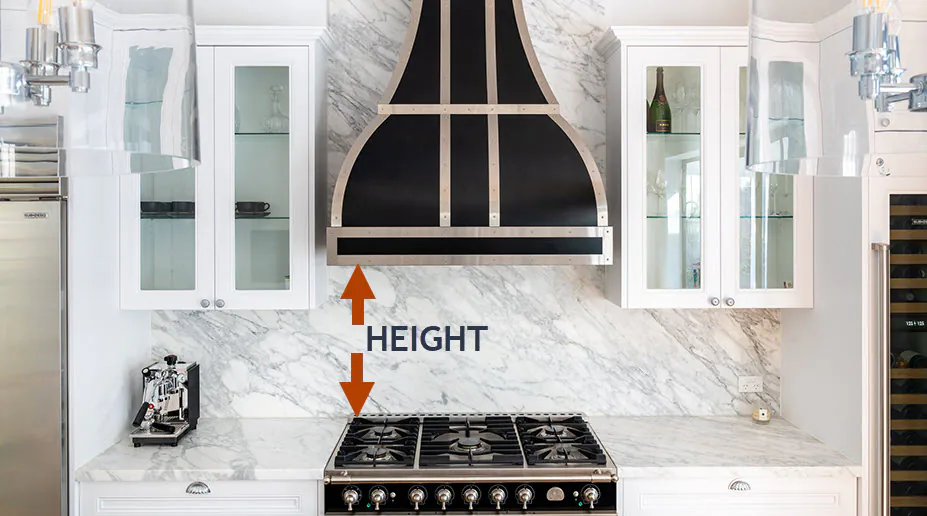
- Measure from the cooktop surface to the bottom of the hood.
- Record the distance in inches or centimeters.
- Check the height at multiple points for accuracy.
- Compare measurements to your hood’s installation guide.
- Adjust the hood height if it falls outside recommended range.
Credit: www.sydneyrangehoods.com.au
Safety Considerations
Setting the right height for the hood above the range is vital for kitchen safety. The correct distance helps prevent accidents and improves the hood’s performance. Safety considerations affect both fire risks and how well the hood ventilates your cooking area.
Fire Hazards
Placing the hood too low increases fire risks. Flames or heat from pots and pans can reach the hood quickly. This can damage the hood or cause a fire. A hood placed too high may not catch smoke and grease well. This allows grease to build up, which is also a fire risk.
Follow manufacturer guidelines for minimum height. Keep the hood clean to reduce grease buildup. Avoid flammable materials near the cooking surface. Proper installation reduces the chance of accidents and fire.
Ventilation Efficiency
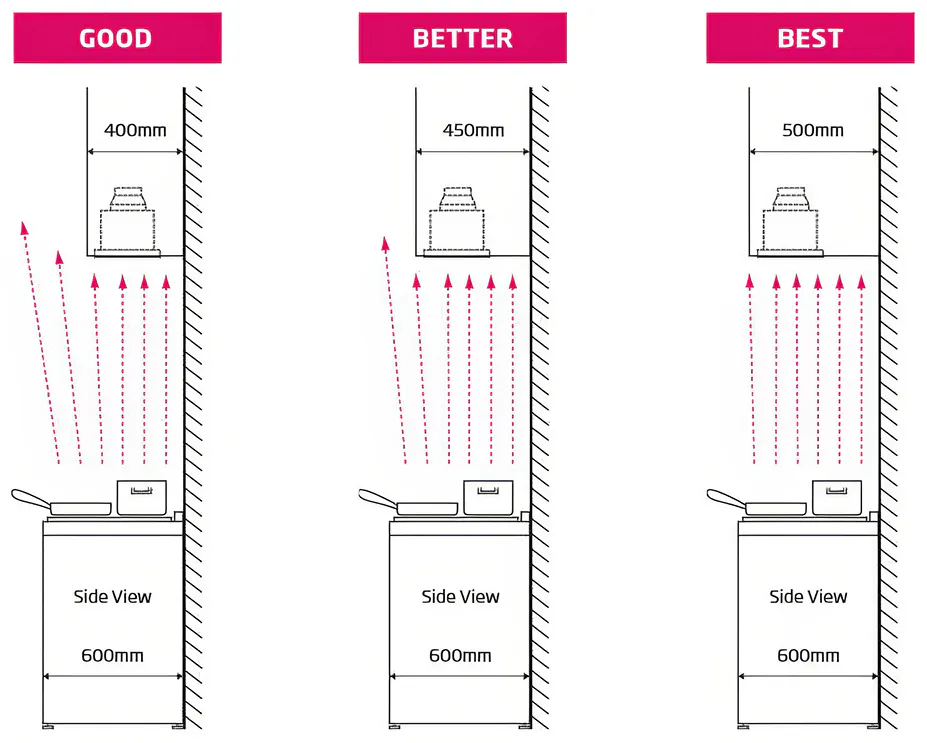
The hood needs to be close enough to capture smoke and steam. Too high, and it loses suction power. Too low, and it blocks your cooking space and risks fire hazards. The correct height balances airflow and safety.
A good rule is between 24 and 30 inches above the cooktop. This distance helps the hood pull out smoke, odors, and grease efficiently. Proper ventilation keeps your kitchen air fresh and safe to breathe.
Impact On Cooking Performance
The height of your range hood plays a crucial role in how well it performs in your kitchen. Position it too high, and you might not capture all the smoke and odors. Place it too low, and it could interfere with your cooking space. Let’s look closely at how this height affects your cooking experience.
Smoke And Odor Removal
Keeping smoke and odors out of your kitchen depends heavily on the hood’s height. If the hood is too high above the range, it can miss capturing all the rising smoke, leaving your kitchen smoky and your walls stained.
On the other hand, placing the hood too close might cause it to draw air unevenly or even disrupt your cooking flames. The ideal height ensures that the hood captures smoke and odors efficiently without disturbing your cooking process.
Have you noticed that some hoods seem to leave a lingering smell even after cooking? This could be a sign that the hood is installed too high.
Heat Management
The right hood height helps manage the heat generated while cooking. If the hood is set too high, hot air escapes into your kitchen, making the space uncomfortable and potentially damaging cabinets and walls over time.
Conversely, a hood too low might heat up the hood itself, which can be unsafe and reduce the lifespan of the appliance. Finding the sweet spot allows the hood to pull away excess heat efficiently, keeping your kitchen cooler and safer.
Think about how comfortable you feel cooking—does the air around you stay fresh, or do you often feel heat trapped near your face? Adjusting your hood height could make a noticeable difference.
Building Codes And Regulations
Building codes and regulations set the standard for installing kitchen hoods safely. These rules help prevent fire hazards and ensure proper ventilation. Knowing the right height for your hood keeps your kitchen safe and efficient.
Local Requirements
Local building codes vary by city and state. They often specify the minimum and maximum height for range hoods. These rules depend on factors like ceiling height and stove type. It is important to check with your local building authority before installation. This ensures your hood meets safety and efficiency standards.
Manufacturer Guidelines
Manufacturers provide specific instructions on hood installation. They recommend height ranges based on hood design and airflow capacity. Following these guidelines maintains optimal performance and warranty coverage. Ignoring them may reduce ventilation efficiency or cause damage. Always read and follow the manufacturer’s installation manual carefully.
Adjusting Hood Height
Adjusting the height of your kitchen hood is key to maximizing its efficiency and keeping your cooking area smoke-free. Too low, and it might interfere with your cooking; too high, and it won’t capture smoke effectively. Finding the perfect height depends on your specific range and kitchen setup.
Custom Installations
Custom hood installations give you the flexibility to set the hood height exactly where it works best for your cooking style. Many chefs prefer the hood to sit between 24 to 30 inches above the range for optimal smoke and odor capture.
If you have a gas stove, aim for the lower end of this range to catch rising fumes quickly. Electric or induction cooktops can handle a slightly higher hood since they produce less smoke.
Think about your kitchen’s ceiling height too. Tall ceilings might tempt you to install the hood higher, but this can reduce performance. Balancing aesthetics with function is important here.
Retrofitting Existing Hoods
When upgrading or adjusting an existing hood, first check the manufacturer’s guidelines for height recommendations. Many hoods can be moved up or down within a certain range without losing efficiency.
If your hood is too high, you might notice lingering smoke or smells. Lowering it can often solve this without needing a new unit. However, ensure you don’t bring it so low that it blocks your cooking space.
Have you measured the distance from your stovetop to your hood recently? Small adjustments can make a big difference in air quality and kitchen comfort.
Common Mistakes To Avoid
Setting the hood height above the range is crucial for good kitchen ventilation. Many people make mistakes that reduce the hood’s effectiveness. Avoiding common errors can improve air quality and keep the kitchen cleaner. Below are frequent placement problems to watch out for.
Too High Placement
Placing the hood too high makes it less effective at capturing smoke and odors. Air and grease can escape before reaching the hood. This leads to poor ventilation and a smoky kitchen.
Too high placement also forces the fan to work harder. This wastes energy and creates more noise. The hood’s extraction power drops significantly above the recommended height.
Most manufacturers suggest a height between 24 to 30 inches above the cooking surface. Exceeding this range weakens the hood’s performance.
Too Low Placement
Mounting the hood too low can block your view and interfere with cooking. It may also cause heat damage to the hood or create a fire hazard.
Low placement can trap heat and steam, reducing comfort while cooking. It may also make cleaning difficult due to grease buildup.
Ensure the hood is high enough to avoid these problems but still close enough to capture fumes effectively.
Maintenance Tips
Keeping your range hood in top shape is key to its performance and longevity. Regular maintenance not only improves air quality but also prevents costly repairs. Let’s dive into how often you should clean and when to swap out filters to keep your kitchen fresh and safe.
Cleaning Frequency
How often you clean your hood depends on your cooking habits. If you cook daily or prepare greasy meals, aim to clean the hood at least once a month. For occasional cooks, every two to three months may suffice.
Don’t ignore the buildup on the exterior and fan blades. Grease and dust reduce efficiency and can cause unpleasant odors. Have you noticed a drop in suction power? That’s a clear sign it’s time for a thorough cleaning.
- Wipe down the hood surface weekly with a mild detergent.
- Deep clean the fan blades and interior every 1-3 months.
- Check for grease buildup around vents and remove it promptly.
Filter Replacement
Filters trap grease and particles, and they wear out over time. Depending on your hood type, replace or clean filters regularly to maintain airflow.
Metal filters can usually be washed and reused, but charcoal or carbon filters need replacement. Have you checked your filter’s condition lately? A clogged filter can make your hood noisy and less effective.
- Metal filters: Wash with hot soapy water every 1-3 months.
- Charcoal/carbon filters: Replace every 6-12 months or as recommended.
- Follow manufacturer guidelines for specific filter types and intervals.
Maintaining your range hood isn’t just about cleanliness—it’s about safety and efficiency. How much time do you dedicate to hood maintenance each month? Small efforts can make a big difference in your kitchen’s air quality.
Credit: www.sydneyrangehoods.com.au
Frequently Asked Questions
How High Should The Range Hood Be Above The Stove?
The ideal height for a range hood is 24 to 30 inches above the stove. This ensures effective smoke and odor removal. Too low can cause heat damage; too high reduces efficiency.
Does Hood Height Affect Ventilation Performance?
Yes, hood height greatly impacts ventilation. Proper height allows optimal capture of smoke and grease. Incorrect height leads to poor air extraction and kitchen odors.
What If My Ceiling Is Too Low For Standard Hood Height?
For low ceilings, install the hood closer to 24 inches above the range. Choose low-profile or under-cabinet hoods designed for compact spaces to maintain efficiency.
Are There Different Height Recommendations For Gas Vs Electric Ranges?
Yes, gas ranges typically require 27 to 30 inches, while electric ranges work well with 24 to 30 inches. Gas stoves produce more heat, needing more clearance.
Conclusion
Choosing the right height for your hood keeps your kitchen safe and fresh. Too low can block your view or catch fire. Too high may not remove smoke well. Aim for the recommended distance to balance safety and comfort. This small step helps your cooking space stay clean and pleasant.
Remember, a well-placed hood works quietly but makes a big difference. Keep these tips in mind for your next kitchen setup.