
Ever wondered how many amps your dishwasher uses? You’re not alone.
Many homeowners overlook this detail, yet it’s crucial for managing your energy consumption and avoiding unexpected power issues. Understanding the amperage of your dishwasher not only helps you optimize your electrical setup but also saves you money in the long run.
Imagine reducing your energy bills while ensuring your kitchen runs smoothly—sounds great, right? As you dive into the details, you’ll discover practical tips and insights that can make a real difference in your home. Stick around to learn how this small piece of information can empower you to make smarter choices about your energy use.
Credit: www.electriciantalk.com
Dishwasher Power Basics
Understanding the power use of a dishwasher helps with electrical planning. Knowing how much electricity it draws can prevent overloads and save energy. Dishwashers use electricity to heat water and run motors. These tasks require different amounts of power.
Typical Wattage Range
Most dishwashers use between 1200 and 1500 watts. This range depends on the model and its features. Basic models use less power, while high-end models with more functions use more. The heating element usually consumes the most electricity. Running a dishwasher at this wattage uses about 10 to 12 amps of current.
Voltage And Amperage Relationship
Voltage and amperage work together to deliver power. Power (watts) equals voltage times current (amps). In the U.S., dishwashers typically run at 120 volts. If a dishwasher uses 1500 watts, it pulls about 12.5 amps (1500 ÷ 120 = 12.5). Knowing this helps you choose the right circuit breaker size. This prevents electrical problems and keeps your home safe.
Average Amps Used By Dishwashers
Understanding the average amps used by dishwashers helps manage your home’s electricity. Dishwashers draw different amounts of current depending on their design and features. Knowing these numbers can guide you in choosing the right model for your needs and electrical setup.
Standard Household Models
Most standard dishwashers use between 6 and 12 amps during operation. Their motors and heating elements consume the majority of power. These models typically run on a 120-volt circuit. The exact current depends on the cycle and dishwasher size.
- Heating water requires more amps during the wash cycle.
- Drying cycles also increase power use but for a shorter time.
- Idle or standby amps are very low, often under 1 amp.
Energy-efficient Models
Energy-efficient dishwashers often use less current, around 4 to 8 amps. They employ better insulation and advanced motors to reduce power use. These models also heat water more efficiently and use less electricity for drying.
- Improved technology lowers the overall amps needed.
- Some energy-efficient models use sensors to adjust power use.
- These dishwashers reduce electricity bills and environmental impact.
Factors Affecting Power Consumption
Understanding what affects your dishwasher’s power consumption helps you manage your energy bills better. Several factors influence how many amps your dishwasher draws during operation. These factors can vary widely depending on the model and how you use it.
Cycle Settings And Duration
Your choice of cycle has a direct impact on power use. A heavy-duty cycle uses more electricity because it runs longer and often includes more intense washing actions. On the other hand, quick or eco-friendly cycles consume fewer amps since they operate for a shorter time and use less water.
Have you noticed that sometimes a quick wash is enough? Choosing the right cycle for your load can save you energy without sacrificing cleanliness.
Heating Elements And Water Temperature
The heating element is one of the biggest power consumers in a dishwasher. It heats the water to the desired temperature for effective cleaning. If you set your dishwasher to use hotter water or if your home’s water heater is set low, the dishwasher’s heating element will work harder, drawing more amps.
Think about your water heater settings—sometimes adjusting them slightly can reduce the dishwasher’s power demand. Also, some dishwashers heat water internally, while others rely on your home’s water supply temperature.
Additional Features Impact
Modern dishwashers come packed with features like drying modes, sensors, and smart controls. Each extra feature can add to the power consumption. For instance, heated drying uses significant electricity compared to air-drying options.
Do you really need the heated dry every time? Skipping certain features can lower your dishwasher’s amp draw and save energy over time.
Credit: magnifyelectric.com
Calculating Amps For Your Dishwasher
Calculating the amps your dishwasher uses helps you understand its power needs. This knowledge ensures your electrical system handles the load safely. It also aids in troubleshooting or planning new installations. The calculation relies mainly on the dishwasher’s wattage and the voltage of your power supply.
Using Wattage And Voltage
Start by finding the dishwasher’s wattage. You can find this on the appliance label or in the manual. Wattage shows how much power the dishwasher uses. Next, check the voltage of your home’s electrical system. Most dishwashers run on 120 volts in the US.
Use this simple formula to find amps:
- Amps = Watts ÷ Volts
For example, a dishwasher with 1440 watts and 120 volts uses 12 amps. This calculation gives a clear estimate of current draw. It helps you verify the circuit breaker size needed for the dishwasher.
Estimating Peak Vs. Average Usage
Dishwashers do not use the same power all the time. They have cycles with different energy needs. Peak usage happens during heating and washing phases. Average usage is lower and includes idle times.
To estimate peak amps, use the highest wattage value. For average amps, check the energy guide or manual for power consumption over time. This helps prevent overloads and saves energy.
Understanding these numbers makes it easier to manage your dishwasher’s energy use. It also helps keep your home electrical system safe and efficient.
Electrical Requirements And Safety
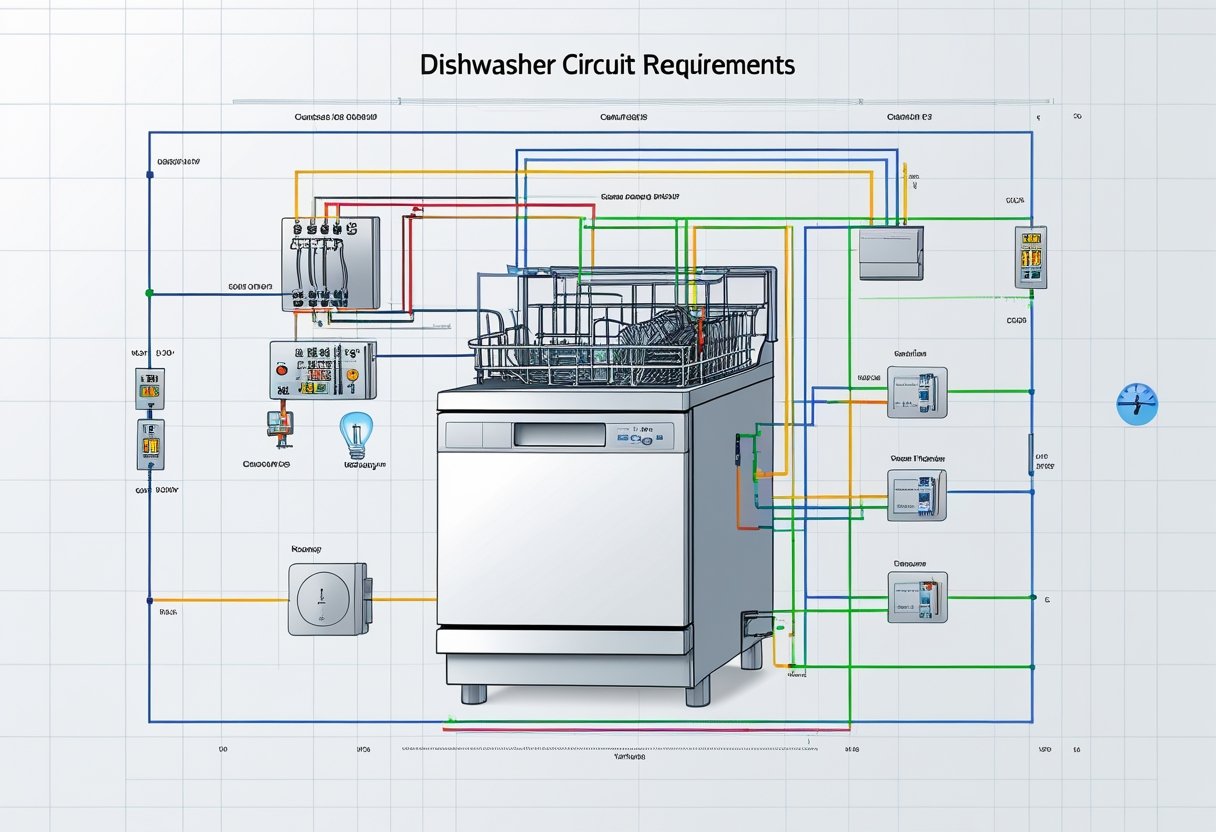
Understanding the electrical requirements for a dishwasher is essential for safe and efficient operation. Dishwashers typically need a dedicated circuit to handle their power needs. This prevents overloads and potential hazards. Following proper safety guidelines protects your home and appliance.
Circuit Breaker Recommendations
A dishwasher usually requires a 15-amp or 20-amp circuit breaker. The exact rating depends on the model and power consumption. A dedicated circuit breaker prevents interference with other appliances. It also reduces the risk of electrical fires.
Using the correct breaker size ensures the dishwasher runs smoothly. An undersized breaker may trip frequently. An oversized breaker can be unsafe and violate electrical codes.
Proper Wiring And Installation
Proper wiring is crucial for dishwasher safety and performance. Use copper wiring rated for at least 12 or 14 gauge. The gauge depends on the circuit breaker size. Secure all connections tightly to avoid loose wires.
Install the dishwasher according to the manufacturer’s instructions. Avoid using extension cords or adapters. These can cause overheating or electrical shorts. Grounding the appliance properly adds an extra layer of safety.
Reducing Dishwasher Energy Use
Reducing dishwasher energy use helps save money and protects the environment. Dishwashers use electricity and water, so cutting energy use lowers utility bills and reduces waste. Small changes in how you use your dishwasher can make a big difference. Choosing efficient appliances also plays a key role in energy savings.
Energy-saving Tips
- Run the dishwasher only when it is full.
- Use the eco or energy-saving mode if available.
- Avoid pre-rinsing dishes with hot water.
- Air-dry dishes instead of using the heat dry option.
- Clean the filter regularly to keep the dishwasher efficient.
- Use off-peak electricity hours to run your dishwasher.
Choosing Energy Star Appliances
Energy Star dishwashers use less electricity and water than standard models. They meet strict energy efficiency guidelines set by the government. These appliances reduce energy use by up to 12% and water use by 30%. Investing in an Energy Star dishwasher lowers your energy bills over time. Look for the Energy Star label when buying a new dishwasher.
Comparing Dishwashers To Other Appliances
Understanding how many amps a dishwasher uses helps compare its power needs with other kitchen appliances. This comparison shows which devices draw more electricity. It also highlights the dishwasher’s role in your home’s energy use. Knowing this helps manage power consumption better.
Amps Used By Common Kitchen Devices
Many kitchen appliances use different amounts of amps. For example, a microwave typically uses around 10 amps. A refrigerator usually draws about 3 to 6 amps. A dishwasher often uses between 10 and 15 amps, depending on the model.
Here is a simple table showing amps used by common kitchen devices:
| Appliance | Approximate Amps |
|---|---|
| Dishwasher | 10-15 amps |
| Microwave | 10 amps |
| Refrigerator | 3-6 amps |
| Coffee Maker | 5-8 amps |
| Toaster | 7-10 amps |
Impact On Household Energy Bills
Appliances with higher amps use more electricity. The dishwasher can increase your energy bill if used often. Its heating element and water pump consume a lot of power. Running it during off-peak hours may reduce costs.
Lower amp devices like refrigerators run constantly but use less power. Using high-amp appliances wisely helps save money. Understanding amps helps plan energy use and control bills.

Credit: www.jackery.com
Frequently Asked Questions
How Many Amps Does A Standard Dishwasher Use?
A standard dishwasher typically uses 10 to 15 amps. This depends on the model and power rating. Newer energy-efficient models may use less amperage.
Can A Dishwasher Run On A 15-amp Circuit?
Yes, most dishwashers run on a 15-amp circuit. However, some heavy-duty models might require a 20-amp circuit for safe operation.
Does Dishwasher Amperage Affect Electricity Bills?
Yes, higher amperage means more power consumption. Using a dishwasher with lower amps can reduce electricity costs over time.
What Is The Voltage Requirement For A Dishwasher?
Dishwashers usually require 120 volts in North America. Voltage is standard, but amperage varies by model and features.
Conclusion
Knowing how many amps a dishwasher uses helps plan your home’s electricity. Most dishwashers draw between 6 and 12 amps. This range depends on the model and cycle chosen. Checking your dishwasher’s manual gives exact details. Proper understanding avoids circuit overloads and power issues.
It keeps your kitchen safe and efficient. Always ensure your electrical setup fits your appliance needs. Small steps like this protect your home and save energy. Simple knowledge leads to smarter energy use every day.