Are you wondering how many amps your RV air conditioner uses? Knowing this number is key to making sure your RV’s electrical system can handle the load.
If you’re planning a trip or upgrading your setup, understanding your AC’s power needs can save you from unexpected outages and costly repairs. You’ll discover exactly how to figure out your RV air conditioner’s amp draw and what it means for your power supply.
Keep reading to make your RV adventures cooler and worry-free!
Rv Air Conditioner Basics
RV air conditioners come in different types. The main ones are roof-mountedand portable units. Roof-mounted units attach on top of the RV. Portable units can be moved around inside. Both types cool the air but use different power amounts.
Power use depends on the sizeand cooling capacity. Most RV air conditioners use between 10 and 20 amps. Smaller units use less power, about 10-12 amps. Larger, more powerful units can draw up to 20 ampsor more.
| Type | Power Use (Amps) | Notes |
|---|---|---|
| Small Portable AC | 8 – 12 | Best for small RVs, low power use |
| Roof-Mounted AC | 10 – 20 | Common in larger RVs, higher cooling power |
| High Capacity AC | 15 – 25 | For very large RVs or hot climates |
Amps And Electrical Requirements
An RV air conditioner uses electrical power measured in amps. The running ampsare the amount of current it needs to keep cooling. This value is usually lower and steady.
The starting ampsare higher. These are the amps the unit draws when it first turns on. This surge helps start the compressor and fan motor.
For example, an RV air conditioner might run at about 12 to 15 amps. But the starting amps can spike to 30 to 35 ampsbriefly.
Knowing both values helps you choose the right power source. It also prevents overloading your RV’s electrical system.
Typical Amp Usage For Rv Ac Units
RV air conditioners use different amps based on their size and power. Small units usually draw 5 to 10 amps. These are good for compact RVs and use less electricity.
Standard units often need 12 to 15 amps. These work well for medium-sized RVs and balance power with efficiency.
High-capacity units can pull 20 amps or more. These are for large RVs or hot climates where strong cooling is needed.
| Unit Size | Amp Usage | Best For |
|---|---|---|
| Small Units | 5 – 10 amps | Compact RVs |
| Standard Units | 12 – 15 amps | Medium RVs |
| High-Capacity Units | 20+ amps | Large RVs, Hot Climates |

Credit: www.renogy.com
Factors Affecting Amp Draw
Voltage variationscan change how many amps an RV air conditioner uses. Lower voltage makes the unit draw more amps to work well. Higher voltage means it uses fewer amps. Keeping voltage steady helps the air conditioner run smoothly.
Temperature settingsalso affect amp draw. Setting the temperature lower makes the AC work harder. This increases the amps it pulls. A higher temperature setting means less work and fewer amps used.
Unit age and maintenanceplay a big role too. Older units or those not cleaned often use more amps. Dust and dirt block airflow and make the motor work harder. Regular cleaning and servicing keep amps low and the unit efficient.
Power Supply Options For Rv Air Conditioners
Shore poweris the most common way to run an RV air conditioner. It plugs into a campground’s electric supply. Usually, it uses a 30 or 50 amp breaker. This power source can run the AC and other appliances easily.
Generatorsprovide power when shore power is not available. They can supply enough amps for the air conditioner. Generators must be sized correctly to match the AC’s power needs. They are noisy and require fuel.
Batteries and invertersoffer a portable power option. Inverters change battery power to AC power for the air conditioner. This setup works well for short times or smaller units. Large air conditioners need many batteries and a strong inverter.
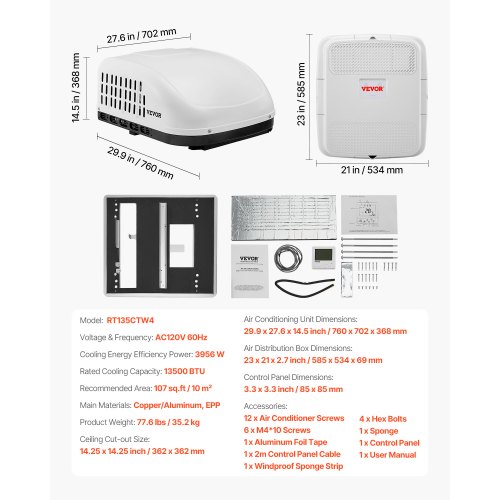
Credit: www.vevor.com
Choosing The Right Electrical Setup
Circuit breaker sizesmust match the air conditioner’s amperage needs. Most RV air conditioners need a 30 to 40 amp breaker. A breaker too small can trip often. Too large can be dangerous and cause fires.
Wiring considerationsinclude using wires that can handle the current safely. Use wires rated for at least 10 to 8 gaugedepending on distance. Longer wire runs need thicker wires to avoid voltage drop. Always check wire ratings for safety.
- Use copper wiringfor best conductivity.
- Keep wires neat and secure to prevent damage.
- Avoid using extension cords with air conditioners.
Safety tipshelp protect your RV and its occupants. Always install breakers and wiring according to the manufacturer’s instructions. Test the breaker regularly. Use a ground fault circuit interrupter (GFCI)for added protection. Never bypass safety devices.
Tips To Reduce Amp Consumption
Using your RV air conditioner efficientlyhelps save amps. Keep doors and windows closed to keep cool air inside. Run the AC only when needed. Use a fan to help spread cool air, reducing AC use.
Regular maintenancekeeps the unit running well. Clean or replace air filters often. Check for debris blocking air flow. Inspect the AC coil to ensure it is clean. Well-maintained units use less power.
Energy-efficient modelsuse less amps. Look for AC units with good energy ratings. Newer models often have better technology to save power. Upgrading can lower your amp use and save battery life.

Credit: fogattiliving.com
Frequently Asked Questions
How Many Amps Does A Typical Rv Ac Use?
A typical RV air conditioner uses between 11 to 16 amps. The exact amperage depends on the model and size of the unit. Larger units generally require more power. Always check your RV’s electrical system capacity before connecting an air conditioner to avoid overloading.
Can An Rv Air Conditioner Run On A 15-amp Circuit?
Yes, some RV air conditioners can run on a 15-amp circuit. However, it depends on the unit’s size and efficiency. Ensure no other major appliances are running on the same circuit to avoid tripping the breaker. Always consult the manufacturer’s specifications for accurate information.
Does Rv Air Conditioner Amp Usage Vary?
Yes, RV air conditioner amp usage varies based on several factors. The size and efficiency of the unit affect amp usage. Larger units tend to use more amps. Temperature settings and outside temperature can also impact the power consumption of your RV air conditioner.
How To Calculate Rv Ac Amp Usage?
To calculate RV AC amp usage, check the unit’s wattage. Divide the wattage by the voltage to find amperage. For example, a 1,500-watt AC on a 120-volt system uses 12. 5 amps. Always ensure your RV’s electrical system can handle the calculated amperage before use.
Conclusion
An RV air conditioner usually uses between 10 and 20 amps. This depends on the model and size of the unit. Knowing the amp use helps you plan your power needs better. It also keeps your RV electrical system safe.
Always check your air conditioner’s specifications before use. This way, you avoid overloads and power problems. Proper planning makes your trip more comfortable. Understanding amps saves you from unexpected issues on the road.