
If you’re curious about how many amps your dishwasher uses, you’re not alone. Understanding your dishwasher’s energy consumption can help you make smarter choices about your household’s energy use, save on electricity bills, and even extend the life of your appliance.
But how do you determine the right number of amps, and why is it important for your home? Before you dive into the depths of manuals and technical jargon, let’s break it down into simple, digestible pieces of information. By the end of this article, you’ll know exactly what you need to maintain a smooth and efficient kitchen experience.
Ready to uncover the secrets behind your dishwasher’s power usage? Let’s get started!
Dishwasher Power Basics
Understanding dishwasher power basics helps in managing energy use effectively. Knowing how much electricity your dishwasher draws can prevent circuit overloads and save on utility bills. Power use depends on the dishwasher’s design and cycle settings. Let’s explore the typical wattage and how voltage relates to current flow.
Typical Wattage Range
Dishwashers usually consume between 1200 and 1500 watts during operation. Some models with advanced features may use up to 1800 watts. The heating element, which warms water, is the largest energy user. Other components like the motor and pump use less power. Short cycles generally use less energy than heavy wash cycles.
Voltage And Current Relationship
Voltage is the electrical force pushing current through the dishwasher’s wiring. Most dishwashers in the U.S. operate at 120 volts. The current, measured in amps, depends on the wattage and voltage. Use the formula: amps = watts ÷ volts. For example, a 1500-watt dishwasher at 120 volts draws about 12.5 amps. This helps in choosing the right circuit breaker and wiring for safe use.

Credit: www.jackery.com
Average Amp Usage
Understanding the average amp usage of a dishwasher helps manage your home’s energy better. Dishwashers vary in power needs, but most fall within a common range. Knowing this range aids in estimating electricity consumption and planning your electrical system accordingly.
Standard Dishwasher Amp Draw
Most dishwashers use between 6 and 10 amps during operation. This range covers typical models found in many homes. The exact amp draw depends on the dishwasher’s size and features.
Older dishwashers might draw more power, sometimes up to 12 amps. Newer, energy-efficient models often use less than 7 amps. The heating element inside the dishwasher usually consumes the most power.
Factors Affecting Amp Consumption
- Heating Element:Dishwashers with powerful heaters use more amps.
- Cycle Type:Heavy wash cycles consume more electricity than light cycles.
- Water Temperature:Using hot water increases amp draw as heaters work less.
- Age and Efficiency:Newer models often use less power than older ones.
- Additional Features:Extra functions like drying or sanitizing raise amp usage.
Circuit Requirements
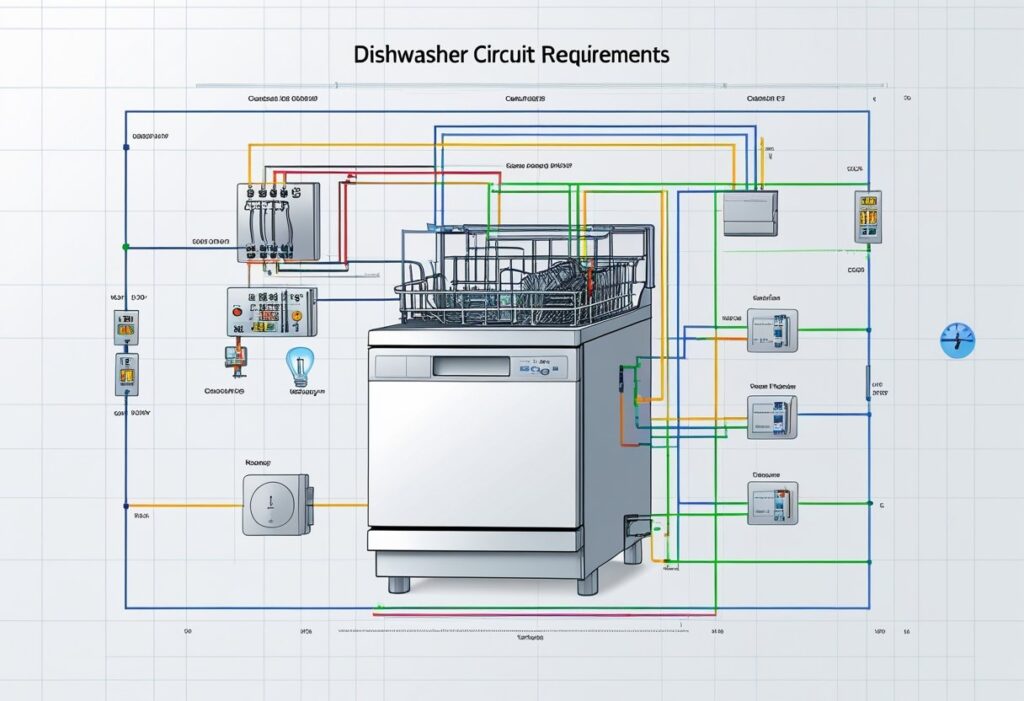
Understanding the circuit requirements for a dishwasher is essential for safe and efficient operation. Dishwashers draw a specific amount of electrical current, measured in amps, which affects the size of the circuit needed. Proper circuit sizing protects your home’s electrical system and ensures the appliance functions correctly without tripping breakers or causing hazards.
Recommended Circuit Size
Most dishwashers require a 15-amp or 20-amp circuit. The exact size depends on the dishwasher’s power rating and model specifications. Many newer models use around 10 amps during operation. However, using a circuit with at least 15 amps allows room for safe operation.
Here’s a simple guide:
- Standard dishwashers: 15-amp circuit
- High-power or commercial models: 20-amp circuit
Always check the manufacturer’s instructions for exact circuit size recommendations.
Dedicated Circuit Importance
A dedicated circuit means the dishwasher has its own separate electrical line. This setup prevents overloads from other appliances sharing the same circuit. It reduces the risk of breaker trips and electrical fires.
Sharing a circuit with other high-power devices like microwaves or garbage disposals can cause problems. A dedicated circuit ensures the dishwasher gets steady power supply. It is also a common electrical code requirement for safety.
Energy Efficiency Impact
Understanding the energy efficiency impact of your dishwasher can help you save money and reduce your environmental footprint. Knowing how many amps your dishwasher uses is just one part of the equation. The real question is how that usage translates into energy costs and overall efficiency.
Energy Star Dishwashers
Energy Star dishwashers are designed to use less electricity and water without sacrificing cleaning power. These models typically draw fewer amps during operation compared to older, non-certified units. Choosing an Energy Star dishwasher means you get reliable performance with lower energy bills.
I once replaced my decade-old dishwasher with an Energy Star model. The difference in my monthly electricity bill was noticeable within the first two months. This proved that amp usage alone doesn’t tell the whole story—efficient design matters more.
Amp Usage Vs Energy Savings
It’s easy to assume that a dishwasher using fewer amps will always save more energy. However, some dishwashers use slightly more amps but run faster or with better water heating technology, resulting in overall energy savings. This means you need to balance amp usage with cycle time and temperature.
Consider this:
- A dishwasher using 10 amps for 1 hour consumes 10 amp-hours.
- A dishwasher using 12 amps for 40 minutes consumes 8 amp-hours.
Even though the second dishwasher draws more amps, it uses less total energy because it runs for a shorter time. Have you checked how long your dishwasher’s cycle runs compared to its amp draw? This can help you better estimate your real energy savings.
Troubleshooting Electrical Issues
Electrical issues with your dishwasher can be frustrating and sometimes dangerous. Knowing how to spot problems early can save you time and costly repairs. Let’s look at how you can troubleshoot these issues effectively and keep your kitchen running smoothly.
Signs Of Overloaded Circuit
One common cause of dishwasher electrical problems is an overloaded circuit. If you notice your dishwasher frequently trips the breaker or the lights flicker when it runs, these are clear warning signs.
Other signs include:
- A burning smell near the dishwasher or electrical panel
- Dishwasher stops mid-cycle without warning
- Unusual buzzing or humming sounds from the electrical outlet
Have you ever experienced your dishwasher cutting out just when you needed it most? That sudden break could be your circuit telling you it’s working too hard.
When To Call An Electrician
Sometimes, fixing dishwasher electrical issues requires more than just a quick reset. If you see persistent breaker trips, scorch marks around outlets, or if the dishwasher won’t start despite power reaching it, it’s time to call a professional.
Electrical systems can be complex and risky to handle without proper knowledge. A licensed electrician can:
- Assess if your circuit can handle the dishwasher’s amperage
- Identify wiring faults or damaged components
- Upgrade your home’s electrical system if needed
Don’t wait for a small problem to become a hazard. Have you checked if your dishwasher’s amperage matches your circuit’s capacity? If not, an expert can help you figure that out safely.
Credit: magnifyelectric.com
Installation Tips
Installing a dishwasher correctly ensures it runs efficiently and safely. Follow key tips to avoid electrical issues and protect your home. Proper installation helps the appliance perform well and last longer.
Proper Wiring Practices
Use the right wire gauge for the dishwasher’s amperage. Typically, a 12-gauge wire supports up to 20 amps. Connect the dishwasher to a dedicated circuit to prevent overloads. Secure all wiring connections tightly to avoid loose contacts. Use a junction box if splicing wires, ensuring it remains accessible. Check local electrical codes for specific wiring rules.
Safety Precautions
Turn off the power at the breaker before starting installation. Test the circuit with a voltage tester to confirm no electricity flows. Avoid running wires near water pipes or heat sources. Ground the dishwasher properly to prevent electrical shocks. Use a circuit breaker with the right amperage rating. Inspect all components for damage before use. Follow the manufacturer’s safety instructions carefully.
Comparing Dishwashers By Amp Usage
Understanding how many amps a dishwasher uses can help you make smarter choices for your kitchen and electrical setup. Different dishwasher types draw different amounts of current, which impacts your energy bills and your home’s electrical load. Comparing amp usage across models gives you the power to pick a dishwasher that fits both your needs and your wiring safely.
Portable Vs Built-in Models
Portable dishwashers usually use less amperage than built-in models, typically around 7 to 10 amps. They’re designed for easy connection and disconnection, which often means a lower power requirement.
Built-in dishwashers, however, can draw anywhere from 10 to 15 amps depending on size and features. They connect directly to your home’s power supply and often have stronger heating elements for faster drying and cleaning.
If you have limited electrical capacity, a portable model might be the smarter choice. Do you know if your kitchen circuits can handle a high-amperage built-in dishwasher without tripping breakers?
High-efficiency Models
High-efficiency dishwashers focus on reducing water and energy use without sacrificing cleaning power. These models tend to use lower amperage, often between 6 and 9 amps, because they rely on smarter technology rather than brute force.
Choosing a high-efficiency dishwasher can lower your electric bill and reduce your environmental impact. Have you considered how much energy your current dishwasher consumes each cycle?
When deciding on a dishwasher, look beyond just the amp rating. Factor in energy efficiency and your household’s daily needs to find the best fit for your kitchen and budget.
Credit: www.electriciantalk.com
Frequently Asked Questions
How Many Amps Does A Dishwasher Typically Use?
A dishwasher usually draws between 6 to 12 amps during operation. This range depends on the model and cycle selected. Knowing the amp usage helps ensure your electrical circuit can handle the load safely.
What Affects A Dishwasher’s Amperage Consumption?
Amperage varies based on factors like heating elements, motor size, and cycle type. Energy-efficient models often use fewer amps. Understanding these factors helps optimize energy use and avoid electrical issues.
Can A Dishwasher Overload A 15-amp Circuit?
Yes, if combined with other appliances on the same circuit, a dishwasher can cause an overload. It’s best to have a dedicated 15-20 amp circuit for dishwashers to prevent tripping breakers.
How To Measure Dishwasher Amps At Home?
You can use a clamp meter around the dishwasher’s power cord to measure amps. Always follow safety guidelines or hire a professional for accurate readings and safety.
Conclusion
A dishwasher usually uses between 6 and 15 amps. This depends on the model and cycle type. Knowing the amps helps you avoid electrical problems. It also helps you choose the right circuit breaker. Check your dishwasher’s manual for exact information.
Proper electrical setup keeps your appliance safe and working well. Always follow safety rules when installing or using a dishwasher. Simple steps can save you time and money. Understanding amps makes your kitchen safer and more efficient.