Are you wondering how many BTUs your air conditioner needs to cool your space perfectly? Choosing the right size can save you money and keep your home comfortable all year round.
Too small, and your AC will struggle; too big, and you’ll waste energy and cash. You’ll discover exactly how to find the perfect BTU rating for your room or house. Keep reading to learn simple tips that make a big difference in your cooling comfort and energy bills.

Credit: www.amazon.com
What Btu Means
BTU stands for British Thermal Unit, measuring how much heat an air conditioner can remove. Knowing the right BTU helps cool your space efficiently. Choosing the correct BTU size ensures comfort without wasting energy.
Btu And Cooling Power
BTUstands for British Thermal Unit. It measures the energy needed to cool or heat one pound of water by one degree Fahrenheit.
In air conditioners, BTU shows how much cooling powerthe unit has. A higher BTU means the AC can cool a larger room or space faster.
Why Btu Matters
Choosing the right BTU for your room size is very important.
- Too low BTU: The room will stay warm and the AC works too hard.
- Too high BTU: The AC cools too fast but causes humidity problems.
Proper BTU size helps save energyand keeps your room comfortable.
Credit: northnjhvac.com
Factors Affecting Btu Needs
The size and shapeof the room affect BTU needs. Larger rooms need more cooling power. Odd shapes may cause uneven cooling.
Insulation qualityhelps keep cool air inside. Better insulation means less BTU is needed.
Sunlight exposureraises room temperature. Rooms with many windows or direct sun need higher BTU capacity.
The number of occupantsadds heat. More people increase the BTU requirement.
Heat-generating applianceslike ovens or computers add warmth. Rooms with many devices need stronger cooling units.
Calculating Btu Requirements
Measure the lengthand widthof your room in feet. Multiply these numbers to get the square footage. For example, a 10 ft by 12 ft room is 120 square feet.
Use the formula: BTU = square footage × 25. This gives a good estimate of the cooling power needed. For 120 sq ft, you need about 3000 BTU.
Adjust the BTU if the room has special conditions:
- High ceilings need more BTU.
- Rooms with lots of sunlight require extra cooling.
- If more than two people stay in the room, add 600 BTU per person.
- Kitchen areas need extra BTU because of heat from appliances.
Btu Recommendations By Room Size
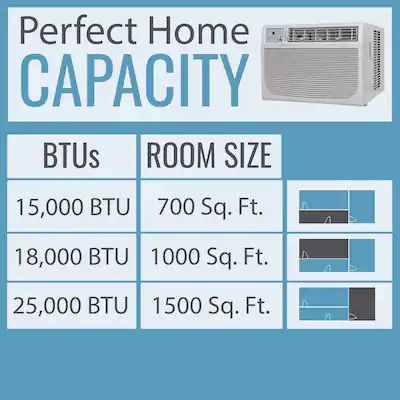
Choosing the right BTUsize depends on the room size. Small rooms need less cooling power. A room under 150 square feet usually requires 5,000 to 6,000 BTUs. This keeps the space cool without wasting energy.
Medium rooms between 150 and 300 square feet need 6,000 to 8,000 BTUs. This size cools the air comfortably and evenly.
Large rooms from 300 to 450 square feet require 8,000 to 12,000 BTUs. This amount of cooling power handles bigger spaces well.
Open floor plans need more BTUs because the air flows freely. Spaces over 450 square feet often need 12,000 to 15,000 BTUsor more. This keeps the whole area cool.
Types Of Air Conditioners
Window unitsare easy to install and fit in windows. They cool small rooms well and are affordable. These units are good for single rooms but can be noisy.
Split systemshave two parts: one inside and one outside. They cool larger areas quietly. These systems are more energy-efficient and offer better air flow control.
Portable ACscan be moved from room to room. They need a vent for hot air, usually through a window. Portable ACs are good for renters or small spaces.
Central air conditioningcools the whole house. It uses ducts to spread cool air. This system is more expensive but keeps every room comfortable.
Energy Efficiency And Btu
SEER ratingsmeasure an air conditioner’s energy efficiency. A higher SEER means better efficiency and lower energy use. These ratings help buyers choose models that save money and reduce power consumption.
Choosing an energy-efficient modelreduces electricity bills. Models with higher SEER ratings cost less to run. This saves money over time, especially in hot climates.
| SEER Rating | Energy Efficiency | Estimated Savings |
|---|---|---|
| 13 (Minimum) | Standard | Lowest savings |
| 16 – 18 | Good | Moderate savings |
| 20+ | Best | Highest savings |
Electricity bills drop with better efficiency. Small changes in SEER can make a big difference. Saving energy helps both your wallet and the environment.
Common Mistakes To Avoid
Choosing the right sizeof air conditioner is key. Oversizingcools the room too fast, causing humidity problems. Undersizingmakes the AC run nonstop, wasting energy and wearing outthe unit faster.
Room conditions affect cooling needs. Factors like sunlight, insulation,and number of people matter. Ignoring these can make your AC less effective.
Regular maintenancekeeps your air conditioner working well. Dirty filters and coils reduce cooling powerand increase energy use. Check and clean parts often.
Additional Cooling Tips
Using fans helps cool rooms by moving air. Ceiling fans push air down, making you feel cooler. Box fans or stand fans help air flow in small spaces. Fans do not lower room temperature but help sweat evaporate faster.
Sealing windows and doors blocks hot air from entering. Use weatherstripping or caulk to close gaps. Thick curtains or blinds keep sunlight out. This reduces the cooling load on your air conditioner.
Managing humidity makes rooms feel cooler and more comfortable. Use a dehumidifier or air conditioner with humidity control. Open windows during dry, cool times to let moisture out. Dry air helps sweat evaporate, cooling your body faster.
Credit: www.bestbuy.com
Frequently Asked Questions
What Size Room Needs A 5,000 Btu Air Conditioner?
A 5,000 BTU air conditioner is ideal for rooms up to 150 square feet. It’s perfect for small bedrooms, offices, or dorm rooms. Ensure proper insulation for maximum efficiency. Consider room use and sunlight exposure when choosing size.
How To Calculate Needed Btu For A Room?
To calculate BTU, measure the room’s square footage. Multiply the length by the width. For every square foot, you need approximately 20 BTU. Consider factors like ceiling height, sunlight, and room use for accurate calculation.
Is A Higher Btu Always Better?
A higher BTU isn’t always better. An oversized AC can cool too quickly, leading to inefficient humidity control. This causes discomfort and increased energy costs. Choose a size suitable for your room’s size and needs for optimal performance.
What Factors Affect Btu Requirements?
Room size, ceiling height, and insulation affect BTU requirements. Sunlight exposure and room use also play roles. Rooms with more sunlight or frequent use may need more BTU. Properly assess these factors for the right air conditioner size.
Conclusion
Choosing the right BTU for your air conditioner matters a lot. Too small, and it won’t cool your space well. Too big, and it wastes energy and money. Think about room size, sun exposure, and people inside. Measure carefully to find the best fit.
A good choice keeps you cool and saves costs. Stay comfortable all summer without overspending. Simple steps make a big difference in home comfort.