Are you wondering how many BTUs your car’s air conditioner needs to keep you cool and comfortable? Getting the right BTU rating for your car AC is key to beating the heat without wasting energy or money.
If your AC feels weak or blows cold air too slowly, it might not have enough power. On the other hand, too much cooling can drain your battery faster. You’ll discover exactly how to find the perfect BTU for your car’s air conditioner, so you stay cool no matter the weather.
Keep reading to make sure your ride stays refreshingly comfortable every time you hit the road.
Car Ac Basics
BTUstands for British Thermal Unit. It measures the amount of heatan air conditioner can remove in one hour. The higher the BTU, the more cooling power the AC has.
Car air conditioners usually range from 5,000 to 15,000 BTU. Smaller cars need fewer BTUs, while larger cars require more to cool effectively.
| Car Size | Recommended BTU Range |
|---|---|
| Small Cars | 5,000 – 7,000 BTU |
| Medium Cars | 7,000 – 10,000 BTU |
| Large Cars/SUVs | 10,000 – 15,000 BTU |
Choosing the right BTU helps keep your car cool without wasting energy.

Credit: www.ebay.com
Factors Affecting Btu Needs
The size of your carand its interior volumegreatly affect BTU needs. A bigger car needs more cooling power. Small cars need fewer BTUs to cool the space.
The climate and temperaturewhere you live matter a lot. Hot and sunny places require air conditioners with higher BTU to keep the car cool. Cooler climates need less power.
Insulation and window tintalso play a role. Good insulation keeps the car cooler. Dark window tint blocks sunlight and reduces heat, lowering BTU requirements.
Passenger loadaffects cooling too. More people mean more heat inside the car. The air conditioner must work harder and needs higher BTU to keep everyone comfortable.
Btu Requirements By Vehicle Type
The BTUneeded for car air conditioners depends on the vehicle size and type. Smaller cars use less power, while bigger vehicles require more cooling strength.
| Vehicle Type | BTU Range | Notes |
|---|---|---|
| Compact Cars | 5,000 – 7,000 BTU | Best for small interiors and quick cooling |
| Sedans and SUVs | 7,000 – 10,000 BTU | Offers balanced cooling for medium spaces |
| Trucks and Vans | 10,000 – 15,000 BTU | Needed for larger cabins and more air volume |
Calculating Your Car’s Btu
To calculate your car’s BTU, start by measuring the interior space. Measure the length, width, and height in feet. Multiply these numbers to get the volume in cubic feet. This helps estimate how much cooling power is needed.
Consider external conditionslike sunlight and outside temperature. Cars in hot, sunny areas need more cooling power. Shade or cooler climates reduce BTU needs.
Adjust BTU based on usage patterns. If many people ride often or you carry heat-absorbing items, increase BTU. Short trips require less cooling than long drives.
| Factor | Effect on BTU |
|---|---|
| Interior Space | More space needs higher BTU |
| External Conditions | Hotter, sunnier areas increase BTU |
| Usage Patterns | More passengers or heat sources raise BTU |
Choosing The Right Ac Unit
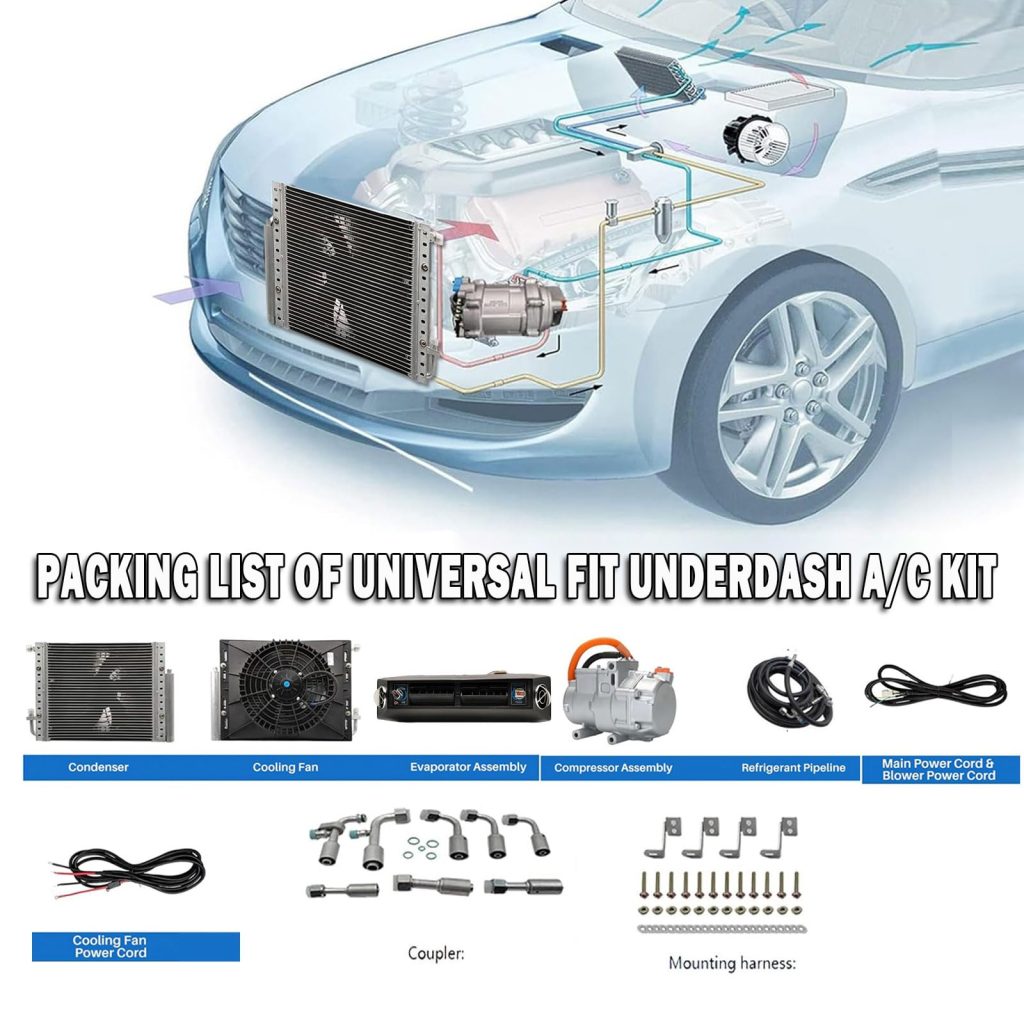
Factory installedAC units fit your car perfectly. They work well with your car’s system. Aftermarket unitscan be cheaper but might not fit as well. They may need extra parts or adjustments.
| Type | Energy Efficiency | Cost | Fit |
|---|---|---|---|
| Factory Installed | Usually high | Higher | Perfect fit |
| Aftermarket | Varies | Lower | May require adjustments |
Energy efficiency means how much power the AC uses. Better ratings save fuel and reduce wear on your car. Check the BTU ratingto match your car size for best cooling.
- Keep the AC clean and check refrigerant levels
- Fix leaks fast to avoid bigger problems
- Regular service helps the unit last longer

Credit: us.amazon.com
Tips For Optimal Cooling
Proper vent placement helps cool air flow better inside the car. Position vents to face passengers directly. Avoid blocking vents with objects or clothes. This lets cold air spread evenly and cools faster.
Regular maintenance keeps the air conditioner working well. Check refrigerant levels often. Clean or replace air filters to stop dust build-up. Fix small leaks quickly to avoid bigger problems later.
- Use sunshades to block sunlight from heating the car.
- Cover your car when parked outside to keep it cool.
- Park in shaded areas when possible to reduce heat inside.

Credit: www.ebay.com
Frequently Asked Questions
How Many Btu Does A Car Air Conditioner Need?
A car air conditioner typically requires between 5,000 and 15,000 BTU. The exact BTU depends on the vehicle size and climate conditions. Small cars need less cooling power, while larger vehicles or hotter climates demand higher BTU for effective cooling.
What Factors Affect Car Ac Btu Requirements?
Car AC BTU needs depend on car size, outside temperature, insulation, and cabin volume. Larger cabins and hotter climates require more BTU. Proper insulation reduces cooling load, lowering BTU needs. These factors ensure the AC cools efficiently without overworking.
Can Too Many Btus Harm A Car Ac System?
Yes, an oversized AC with too many BTUs can cause frequent cycling. This reduces system efficiency and increases wear and tear. It may also waste fuel and increase costs. Choosing the right BTU size ensures optimal performance and longevity.
How To Calculate Btu For Car Air Conditioning?
Calculate BTU by assessing vehicle interior volume and expected temperature drop. Use formulas or consult manufacturer guidelines for accurate BTU sizing. Proper calculation avoids under or oversizing, ensuring comfortable cooling and energy efficiency.
Conclusion
Understanding your car air conditioner’s BTU is crucial. It affects comfort. Choose the right BTU for your vehicle size. A larger car needs more cooling power. Smaller cars can do with less. Ensure the air conditioner suits your climate. Hotter areas demand higher BTU.
Balance efficiency and comfort wisely. Remember, a well-matched air conditioner saves fuel. It also provides better cooling. Proper maintenance ensures longevity. Keep your car cool and efficient. Make informed decisions for a comfortable ride. Ultimately, the right BTU enhances driving experience.
Stay cool and enjoy your journey.