If you own a Jeep Patriot, you might be wondering about its catalytic converters. Knowing how many catalytic converters your vehicle has is important for maintenance, repairs, and even understanding emissions.
But how many catalytic converters does a Jeep Patriot actually have? You’ll get clear answers and simple explanations that help you take better care of your car. Keep reading to find out exactly what’s under your Jeep’s hood and why it matters to you.
Catalytic Converter Basics
Understanding the basics of catalytic converters can help you appreciate why your Jeep Patriot needs one or more of these devices. These components play a crucial role in reducing harmful emissions from your vehicle. Knowing how they work and their purpose can also guide you in proper maintenance and troubleshooting.
Purpose Of Catalytic Converters
Catalytic converters are designed to reduce toxic gases released by your Jeep Patriot’s engine. They convert harmful substances like carbon monoxide, nitrogen oxides, and hydrocarbons into less harmful emissions such as carbon dioxide and water vapor.
Without these devices, your vehicle would emit dangerous pollutants that contribute to air pollution and health problems. Have you ever noticed a decrease in fuel efficiency or engine performance? Sometimes, a failing catalytic converter could be the cause, which makes understanding its role even more important.
How They Work
Inside the catalytic converter, a honeycomb structure coated with precious metals like platinum, palladium, and rhodium facilitates chemical reactions. These metals act as catalysts to speed up the conversion of harmful gases into safer ones without being consumed in the process.
When exhaust gases pass through this structure, the harmful molecules break down, transforming into less toxic emissions before leaving your Jeep Patriot’s tailpipe. This process happens quickly and continuously as long as your engine is running.

Credit: www.amazon.com
Jeep Patriot Exhaust System
The Jeep Patriot exhaust system plays a key role in controlling emissions and engine noise. It helps the engine run smoothly and keeps the air cleaner. The system includes several parts like the exhaust manifold, catalytic converters, muffler, and tailpipe. Each part works together to reduce harmful gases and improve performance.
Exhaust Layout
The Jeep Patriot has a simple and effective exhaust layout. It starts at the engine’s exhaust manifold, where gases first exit. These gases travel through pipes connected to the catalytic converters. After that, the exhaust flows into the muffler, which reduces noise. Finally, the gases leave through the tailpipe at the back of the vehicle.
Placement Of Catalytic Converters
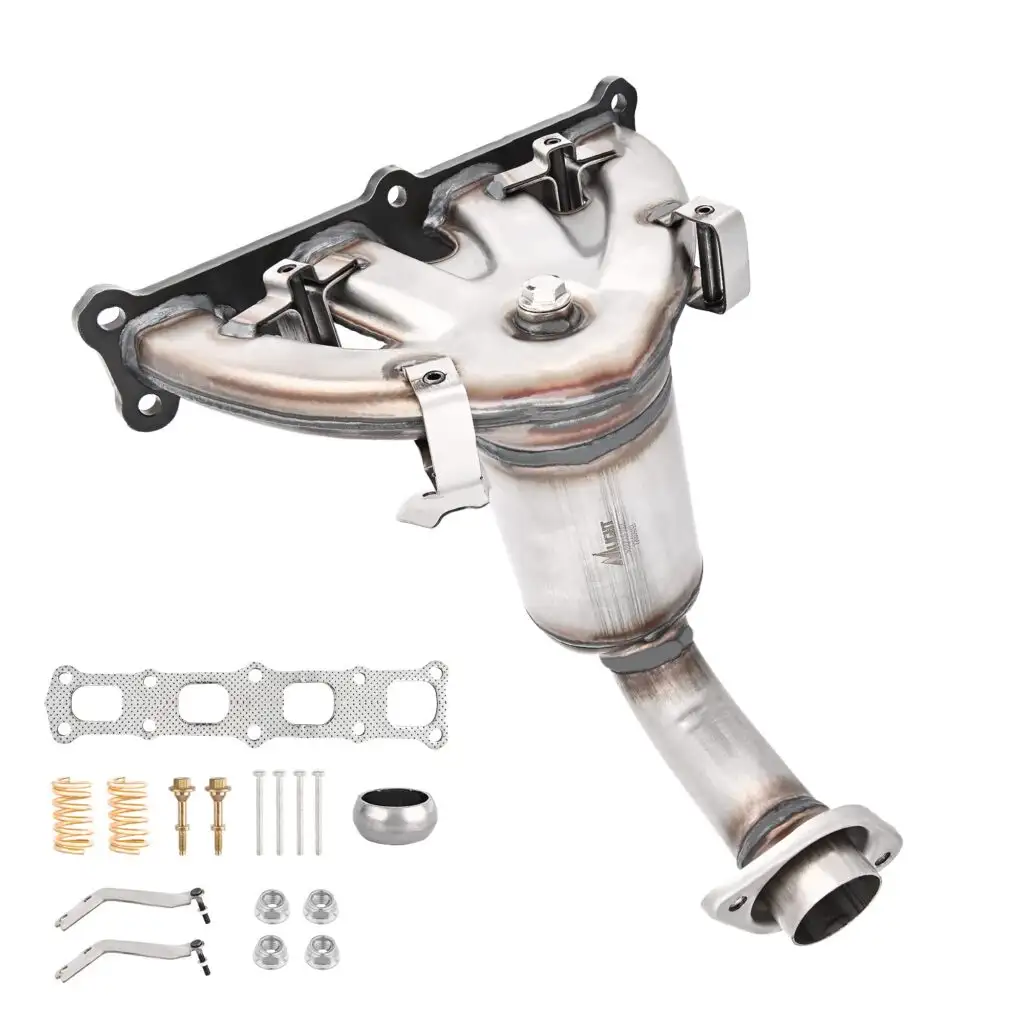
The Jeep Patriot usually has two catalytic converters. One is placed near the engine, close to the exhaust manifold. This helps reduce emissions early in the exhaust flow. The second catalytic converter is located further down the exhaust pipe. This setup ensures the vehicle meets emission standards and runs cleanly.
Number Of Catalytic Converters In Jeep Patriot
Understanding the number of catalytic converters in your Jeep Patriot can save you time and money, especially if you’re dealing with exhaust issues or planning an upgrade. Catalytic converters play a key role in reducing harmful emissions, so knowing how many your vehicle has helps in maintenance and repair. Let’s break down the specifics based on different factors.
Standard Models
Most Jeep Patriot standard models come equipped with one catalytic converter. This single converter handles the exhaust gases before they leave the vehicle, making it compliant with emission standards. If you own a base model, this is likely what you’ll find under the hood.
Variations By Engine Type
The number of catalytic converters can change depending on the engine your Jeep Patriot has. Models with the 2.0L engine typically have one catalytic converter, while the 2.4L engine versions often feature two catalytic converters. This setup improves emission control efficiency by splitting the exhaust flow.
Differences By Model Year
Over the years, Jeep has adjusted its catalytic converter configuration to meet stricter emission regulations. Early model years (2007-2010) mostly have a single catalytic converter, but later years (2011 and onwards) sometimes include two converters, especially in higher trims or specific engine options.
Have you checked your Jeep Patriot’s undercarriage lately? Noticing the number of catalytic converters can give you insight into your vehicle’s emission system and help diagnose potential problems before they get costly.

Credit: www.amazon.com
Signs Of Catalytic Converter Issues
Recognizing the signs of catalytic converter issues in your Jeep Patriot can save you time and money. The catalytic converter plays a key role in reducing harmful emissions, so any problem with it can affect your vehicle’s performance and the environment. Paying attention to changes in how your Jeep runs can help you catch problems early.
Common Symptoms
- Check Engine Light:This warning often lights up when the catalytic converter isn’t working properly. It’s a clear sign that your vehicle needs attention.
- Reduced Engine Performance:You might notice your Jeep feels sluggish or struggles to accelerate. This happens because a clogged converter restricts exhaust flow.
- Rattling Noise:If you hear a rattling sound from underneath your Jeep, especially when starting or accelerating, it could mean the converter’s internal components are breaking apart.
- Failed Emissions Test:A failing converter can’t clean exhaust gases effectively, causing your vehicle to fail emissions inspections.
- Strong Sulfur Smell:A rotten egg odor is a telltale sign of converter issues, indicating the chemical reactions inside are not happening correctly.
Diagnostic Methods
To confirm if your catalytic converter is the problem, you’ll need to run some tests. A professional mechanic can use an OBD-II scanner to check for trouble codes related to the exhaust system. These codes provide clues about what’s wrong.
Another useful method is measuring the temperature before and after the converter. A healthy converter will show a higher temperature at the outlet compared to the inlet. If temperatures are similar, it might be clogged or damaged.
You can also perform a backpressure test. This involves checking the exhaust pressure with a gauge to see if the flow is restricted. High backpressure means exhaust gases aren’t passing freely, hinting at converter problems.
Have you noticed any of these symptoms in your Jeep Patriot? Don’t ignore them—early diagnosis can prevent more serious engine damage down the road.
Replacement And Maintenance Tips
Maintaining and replacing catalytic converters in a Jeep Patriot is essential for vehicle health and performance. Knowing when to replace the converter and how to care for it can save money and avoid bigger repairs. Proper maintenance keeps emissions low and helps the engine run smoothly.
When To Replace
Signs of a failing catalytic converter include:
- Reduced engine power or acceleration
- Check engine light turns on
- Rattling noise from underneath the vehicle
- Failed emissions test
Replace the converter if these symptoms last more than a few days. Early replacement prevents damage to other parts.
Cost Considerations
The price to replace a Jeep Patriot catalytic converter varies by model year and part quality. Original equipment manufacturer (OEM) parts cost more. Aftermarket parts are cheaper but may last less time.
Labor costs depend on the shop and location. Expect to pay between $500 and $1,200 for parts and labor. Compare quotes before deciding.
Preventive Care
- Use high-quality fuel to reduce deposits
- Fix engine misfires quickly to prevent damage
- Change spark plugs and air filters regularly
- Avoid driving through deep water or rough terrain
Regular vehicle check-ups help spot issues early. Keep the exhaust system clean and intact for longer converter life.

Credit: www.amazon.com
Frequently Asked Questions
How Many Catalytic Converters In A Jeep Patriot?
A Jeep Patriot typically has two catalytic converters. These are crucial for reducing harmful emissions. The converters are part of the vehicle’s exhaust system, ensuring it meets environmental standards.
Where Are The Catalytic Converters Located?
The catalytic converters are located in the exhaust system. One is near the engine’s exhaust manifold, and the other is further down the exhaust line.
Why Does A Jeep Patriot Need Two Catalytic Converters?
A Jeep Patriot uses two catalytic converters for efficient emission control. This setup ensures optimal reduction of pollutants, meeting strict environmental regulations.
Can A Jeep Patriot Run Without Catalytic Converters?
Legally, a Jeep Patriot cannot operate without catalytic converters. They are essential for reducing emissions and ensuring compliance with environmental laws.
Conclusion
A Jeep Patriot usually has one catalytic converter. It helps reduce harmful gases from the engine. Knowing this helps with repairs and replacements. Keep your vehicle well-maintained for better performance. Regular checks can prevent costly problems later. Simple care extends your Jeep’s life and keeps it clean.
Understanding parts like the catalytic converter is useful. It makes you more confident when talking to mechanics. Stay informed to keep your Jeep running smoothly.