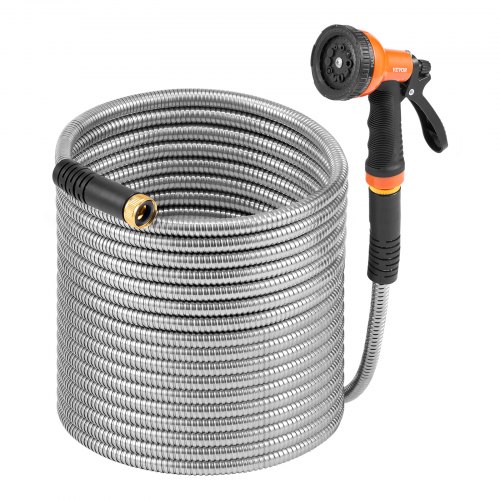
Have you ever wondered how much water flows through your garden hose every minute? Knowing how many gallons per hour (GPH) your hose delivers can help you water your plants efficiently, save water, and avoid wasting money.
Whether you’re watering a small flower bed or a large lawn, understanding your hose’s flow rate is key to getting the job done right. You’ll discover how to measure your garden hose’s GPH and why it matters for your gardening and outdoor chores.
Keep reading—you’ll be surprised at how this simple number can make a big difference.
Credit: www.amazon.com
Garden Hose Flow Basics
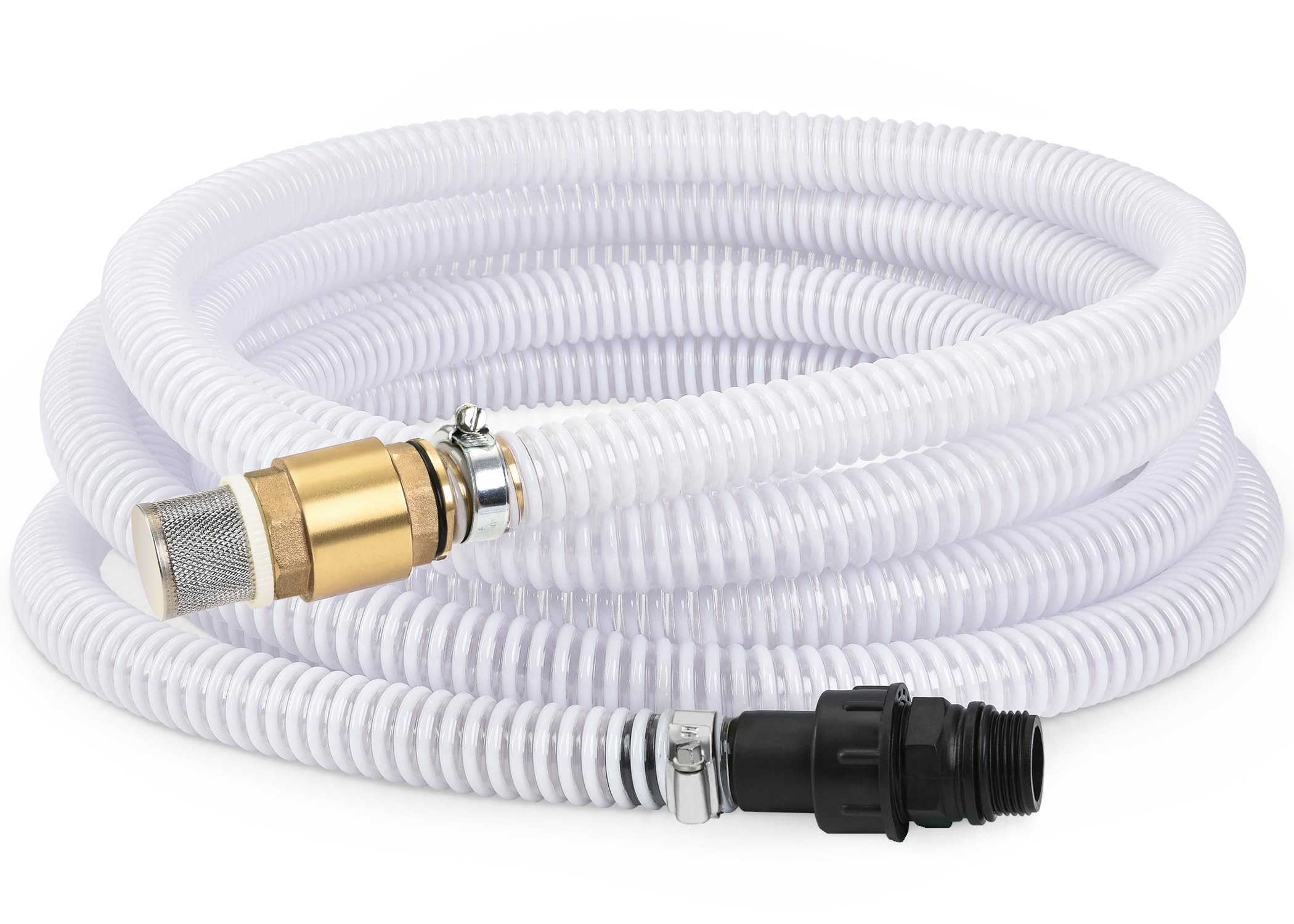
Understanding how water flows through a garden hose helps in choosing the right hose. It also helps in knowing how much water you get for your gardening or cleaning needs.
This guide explains the basics of garden hose flow, focusing on gallons per hour, or GPH.
What Is Gph?
GPH means gallons per hour. It shows how much water flows through the hose in one hour. This measure helps in planning watering times and water use.
Factors Affecting Flow Rate
The flow rate depends on several things. These include hose length, diameter, water pressure, and any bends or kinks.
- Hose Length:Longer hoses reduce flow speed.
- Hose Diameter:Wider hoses allow more water.
- Water Pressure:Higher pressure pushes more water.
- Bends and Kinks:These block water flow and lower GPH.
Common Hose Sizes
Garden hoses come in different sizes. The diameter size affects the flow rate and GPH.
| Hose Diameter | Typical Flow Rate (GPH) |
| 1/2 inch | Up to 500 GPH |
| 5/8 inch | Up to 900 GPH |
| 3/4 inch | Up to 1,200 GPH |
Credit: www.homedepot.com
Measuring Hose Flow
Knowing how many gallons per hour (GPH) your garden hose delivers helps in planning watering tasks. It tells you how fast water flows through your hose.
This guide explains how to measure your hose flow easily and understand the results.
Tools Needed
Gather these items before measuring your garden hose flow:
- Measuring container (5-gallon bucket or similar)
- Stopwatch or timer
- Calculator (optional)
- Garden hose with nozzle
Step-by-step Measurement
Follow these steps to measure the flow rate of your garden hose accurately.
- Attach the hose nozzle and turn the water on full.
- Place the measuring container under the hose opening.
- Start the timer as the container begins to fill.
- Stop the timer when the container is full.
- Record the time it took to fill the container.
Interpreting Results
Use this table to find the flow rate based on your measurements.
| Container Size (Gallons) | Time to Fill (Seconds) | Flow Rate (GPH) |
|---|---|---|
| 5 | 30 | 600 |
| 5 | 60 | 300 |
| 5 | 90 | 200 |
Calculate flow rate with this formula:
Flow Rate (GPH) = (Gallons ÷ Seconds) × 3600
This number tells you how many gallons flow through the hose each hour.
Typical Flow Rates
Garden hoses deliver water at different speeds. The flow rate depends on many factors. Knowing flow rates helps you water plants well.
This guide explains typical flow rates in gallons per hour (GPH). It covers hose size and water pressure effects.
Standard Garden Hose Gph
Most garden hoses flow between 5,000 and 15,000 gallons per hour. The exact rate depends on hose length and pressure.
- A 50-foot hose usually flows about 9,000 GPH.
- A 100-foot hose flows less, around 7,000 GPH.
- Longer hoses reduce flow due to friction.
Effect Of Hose Diameter
Hose diameter changes how much water flows through. Larger diameters let more water pass at once.
| Hose Diameter | Approximate Flow Rate (GPH) |
|---|---|
| 1/2 inch | 5,000 – 7,000 |
| 5/8 inch | 9,000 – 12,000 |
| 3/4 inch | 12,000 – 15,000 |
Impact Of Water Pressure
Water pressure affects flow speed. Higher pressure pushes more water through the hose.
- Low pressure (20 psi) delivers less water, about 5,000 GPH.
- Medium pressure (40 psi) gives an average flow near 9,000 GPH.
- High pressure (60 psi) can reach 15,000 GPH or more.
Improving Hose Flow
Garden hoses deliver water at different flow rates, measured in gallons per hour (GPH). Improving hose flow helps water your plants faster and more evenly. Simple changes can increase the flow without needing expensive tools.
Small adjustments to your hose setup make a big difference. Learn how to choose the right hose, keep it in good shape, and use pressure boosters to get better flow.
Choosing The Right Hose Diameter
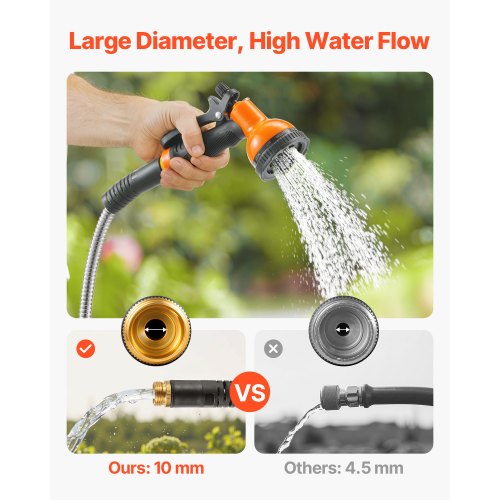
The diameter of a garden hose affects how much water flows through it. Larger diameters let more water pass with less resistance. A hose with a small diameter slows the water and lowers the GPH.
Common hose diameters are ½ inch, ⅝ inch, and ¾ inch. For better flow, pick a wider hose if your water source can supply enough pressure.
- ½ inch hoses deliver about 9-17 GPH
- ⅝ inch hoses deliver about 17-25 GPH
- ¾ inch hoses deliver about 25-35 GPH
Maintaining Hose Condition
Keep your garden hose in good shape to maintain strong water flow. Old hoses with cracks or kinks reduce the GPH and cause leaks. Check your hose often and fix problems quickly.
Store the hose properly by coiling it without sharp bends. Avoid leaving it in the sun for a long time, as heat can weaken the material.
- Check for holes and cracks
- Remove kinks before use
- Store hose in shade or indoors
- Drain water after use to prevent damage
Using Pressure Boosters
Pressure boosters help increase water pressure in your garden hose. Higher pressure pushes more water through the hose, raising the GPH. Use a booster if your water source has low pressure.
Pressure boosters come in different types. Some attach to the faucet, while others work with pumps. Choose one that fits your hose size and water supply.
- Attach boosters near the faucet for best effect
- Use boosters designed for garden hoses
- Check booster pressure limits to avoid damage
- Combine with a wider hose for better flow
Flow Rate And Watering Needs
Garden hoses come with different flow rates, measured in gallons per hour (GPH). Knowing the flow rate helps you water plants properly. It also saves water and keeps your garden healthy.
Watering needs depend on the size of your garden and the types of plants. Some plants need more water, while others need less. Choosing the right flow rate ensures your plants get enough water without waste.
Matching Flow To Garden Size
Small gardens need less water, so a hose with a low flow rate works well. Large gardens require more water and a higher flow rate hose. This avoids long watering times.
Measure your garden area to pick the right hose flow. This keeps watering efficient and helps your plants grow better.
- Small garden: 5-10 GPH
- Medium garden: 10-20 GPH
- Large garden: 20+ GPH
Adjusting For Sprinklers And Attachments
Sprinklers and attachments affect how much water your hose delivers. Some use more water, which needs a higher flow rate. Others need less water, so a lower flow rate works.
Check the flow requirements of your attachments. Adjust your hose or watering time to avoid overwatering or under watering.
- High-flow sprinklers need hoses with 20+ GPH
- Drip attachments work well with 5-10 GPH hoses
- Adjust watering time based on attachment use
Conserving Water Efficiently
Use the right flow rate to save water. Avoid using too much water for small plants or short garden areas. This saves water and lowers your bills.
Turn off the hose when not in use. Use timers or watering tools to control flow and timing. This helps keep your garden healthy and water use low.
- Choose a hose with a suitable flow rate
- Use timers to control watering duration
- Turn off the hose when done watering
- Use drip irrigation for precise watering
Troubleshooting Low Flow
Garden hoses usually deliver water at a rate measured in gallons per hour (GPH). Low flow means less water comes out than expected. This can make watering plants or cleaning harder.
Many factors can cause low flow in garden hoses. Some problems you can fix quickly. Others may mean your hose needs to be replaced.
Common Causes
Low flow often happens because of clogs, leaks, or kinks in the hose. Water pressure from the source can also be low. Sometimes, the hose diameter affects flow rate.
- Dirt or debris blocking the hose
- Kinks or twists restricting water
- Leaks causing water loss
- Low water pressure from the faucet
- Using a narrow hose with less flow
Quick Fixes
Fixing low flow can be simple. Clear clogs by running water backward. Remove kinks by straightening the hose. Check and tighten connections to stop leaks.
- Flush the hose with clean water
- Straighten any twists or bends
- Tighten or replace leaking fittings
- Check water pressure at the faucet
- Use a wider hose for better flow
When To Replace Your Hose
Replace your hose if it has many leaks or severe damage. Old hoses may get hard and crack. If flow stays low after fixes, a new hose may be best.
- Multiple leaks that are hard to fix
- Cracks or holes in the hose material
- Hose feels stiff or brittle
- Flow remains low after cleaning and repairs
- Hose length or diameter is not suitable
Credit: www.vevor.ca
Frequently Asked Questions
How Many Gph Does A Typical Garden Hose Deliver?
A standard garden hose typically delivers between 240 to 540 gallons per hour (GPH). The flow rate depends on hose diameter and water pressure. A larger diameter and higher water pressure increase the flow rate.
What Factors Affect Garden Hose Gph?
Garden hose GPH is influenced by hose diameter, length, and water pressure. Larger diameters and higher pressures increase GPH, while longer hoses decrease it.
Can I Increase My Garden Hose’s Gph?
Increasing GPH is possible by using a hose with a larger diameter or increasing water pressure. Ensure your home’s plumbing system can handle increased flow to avoid damage.
Does Hose Material Impact Gph?
Yes, hose material can affect GPH. Flexible materials may reduce flow, while rigid ones maintain better pressure. Choose a suitable material for optimal flow.
Conclusion
Knowing how many GPH a garden hose delivers helps you water plants well. Hose size and water pressure change the flow rate. Most garden hoses run between 9 and 17 gallons per minute. Choosing the right hose means less water waste and better garden care.
Check your hose’s flow to save time and water. Simple steps make your watering tasks easier and more efficient. Keep your garden healthy by understanding hose flow rates.