Have you ever wondered how much water flows through your garden hose every minute? Knowing the gallons per minute (GPM) from your hose can help you water your garden efficiently, save water, and choose the right equipment.
Whether you’re filling a pool, watering plants, or washing your car, understanding your hose’s water flow can make a big difference. Keep reading, and you’ll discover simple ways to measure your hose’s GPM and why it matters for your everyday tasks.
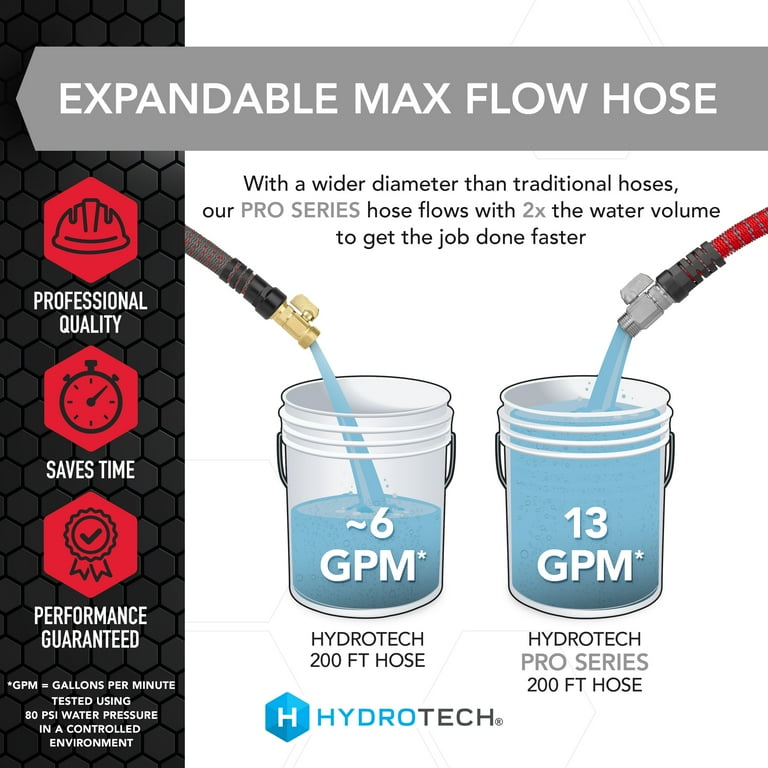
Credit: www.walmart.com
Factors Affecting Flow Rate
The flow rate from a garden hose depends on several key factors. These affect how much water comes out per minute.
Understanding these factors helps you get the right water flow for your needs.
Hose Diameter And Length
The size and length of a hose affect the water flow. A wider hose lets more water pass through. A longer hose reduces pressure and flow.
| Hose Diameter | Effect on Flow Rate |
| 1/2 inch | Lower flow, less water volume |
| 5/8 inch | Standard flow for most hoses |
| 3/4 inch | Higher flow, more water volume |
| Length | Longer hose means lower pressure and flow |
Water Pressure Impact
Water pressure pushes water through the hose. Higher pressure means more flow. Low pressure reduces flow and weakens the spray.
- City water pressure usually ranges from 40 to 60 psi.
- Higher pressure increases gallons per minute (GPM).
- Pressure loss happens with long or narrow hoses.
- Check pressure if flow seems weak.
Nozzle And Fittings Influence
Nozzles and fittings can limit flow. Some nozzles narrow the water stream and reduce GPM. Loose or small fittings cause leaks and pressure drops.
| Component | Effect on Flow |
|---|---|
| Standard nozzle | Controls spray pattern, moderate flow |
| High-flow nozzle | Allows more water, higher flow rate |
| Old or clogged fittings | Reduce flow, cause leaks |
| New, tight fittings | Maintain good flow and pressure |

Credit: www.dripworks.com
Typical Gpm For Garden Hoses
Garden hoses deliver water at a flow rate measured in gallons per minute, or GPM. Knowing the typical GPM helps you water plants efficiently.
The flow rate depends on hose size, water pressure, and material. Most garden hoses fall within a common GPM range.
Common Hose Sizes And Their Flow Rates
Garden hoses come in different diameters, which affect how much water flows through them each minute. Larger hoses carry more water.
- 1/2 inch hose: About 5 to 7 GPM
- 5/8 inch hose: About 8 to 12 GPM
- 3/4 inch hose: About 12 to 17 GPM
Choosing the right hose size helps match your watering needs. Smaller hoses work for light tasks, while larger ones handle more water.
Flow Rate Variations By Hose Material
Different hose materials affect water flow. Some materials reduce flow due to internal friction or thickness.
- Rubber hoses usually have a smooth interior, allowing better flow.
- Vinyl hoses can be stiffer and may lower flow rates slightly.
- Reinforced hoses keep shape but may restrict flow if thick.
Material choice impacts durability and ease of use along with flow rate. Pick a hose that fits both water needs and comfort.
Measuring Gpm At Home
Measuring the gallons per minute (GPM) from a garden hose is simple. Knowing your hose’s GPM helps in gardening and water management.
With a few tools, you can measure water flow easily at home. Follow these steps to find out how much water your hose delivers.
Tools Needed For Measurement
Gathering the right tools is important for accurate measurement. You will need only a few basic items.
- Standard garden hose
- Bucket with gallon markings
- Stopwatch or timer
- Calculator or pen and paper
Step-by-step Measurement Process
Follow these steps to measure the GPM of your garden hose. This process is quick and straightforward.
First, connect the hose to a water source. Make sure there are no kinks in the hose.
| Step | Action |
| 1 | Place the bucket under the hose. |
| 2 | Turn on the water at full pressure. |
| 3 | Use the stopwatch to time for 10 seconds. |
| 4 | Turn off the water and measure the amount in the bucket. |
| 5 | Multiply the amount by 6 to get GPM. |
By following these steps, you can easily find out the GPM of your garden hose. This knowledge helps in efficient water use.
Optimizing Flow Rate
Knowing how many gallons per minute (gpm) your garden hose can deliver helps you water efficiently. The flow rate depends on many factors, including hose size and water pressure.
Optimizing the flow rate means getting the most water out of your hose with less waste. This guide covers ways to reduce pressure loss, choose the right hose, and maintain it well.
Reducing Pressure Loss
Pressure loss lowers the water flow from your garden hose. It happens when water meets resistance in the hose or fittings. You can reduce pressure loss by using shorter hoses and wider diameters.
- Avoid long hose runs to keep pressure high
- Use hoses with larger diameters for better flow
- Minimize sharp bends and kinks in the hose
- Check fittings for leaks or tightness
Choosing The Right Hose
The hose type affects the gallons per minute you get. Thicker hoses may reduce flow, but they last longer. Lightweight hoses give better flow but can wear out fast.
| Hose Diameter | Typical Flow Rate (gpm) |
| 1/2 inch | 5-7 gpm |
| 5/8 inch | 9-12 gpm |
| 3/4 inch | 15-18 gpm |
Maintenance Tips
Proper care keeps your hose working at its best. Dirt, cracks, and leaks lower flow and pressure. Clean and store hoses properly to avoid damage.
- Drain water after each use to prevent freezing
- Store hose in a cool, shaded place
- Inspect for cracks or holes regularly
- Replace washers in fittings to stop leaks
Applications And Flow Rate Needs
Knowing how many gallons per minute (GPM) flow from a garden hose helps you choose the right tool. Different tasks need different flow rates.
The flow rate depends on hose diameter, water pressure, and length. Understanding this helps you water plants, fill pools, or clean better.
Watering Gardens
Garden hoses usually deliver between 5 to 10 GPM. This flow rate suits watering plants and flower beds well.
Low flow rates help avoid overwatering and soil erosion. You can control the water with a nozzle or timer.
- Use 5 GPM for small garden beds and pots
- Use 7-10 GPM for large lawns or vegetable gardens
- Adjust flow with a spray nozzle for delicate plants
Filling Pools And Ponds
Filling pools and ponds needs a higher flow rate to save time. Most garden hoses deliver 8 to 12 GPM at good pressure.
Large pools may take hours to fill. Using a wide-diameter hose or multiple hoses speeds up the process.
- Use hoses with 1-inch diameter for faster filling
- Expect 10-12 GPM from standard garden hoses
- Consider water pressure for best flow rates
Cleaning And Other Uses
Cleaning with a garden hose needs moderate to high flow rates. Flow rate depends on the task, such as washing cars or patios.
Pressure nozzles increase water force without raising GPM. Use spray patterns to rinse dirt and debris efficiently.
- Use 6-10 GPM for washing cars and outdoor furniture
- Higher flow rates help clean large surfaces faster
- Nozzles improve water use and cleaning power
Credit: www.dripworks.com
Frequently Asked Questions
What Is The Average Gpm From A Garden Hose?
The average garden hose delivers about 9 to 17 gallons per minute (GPM). This depends on the hose diameter and water pressure. Most standard hoses have a 5/8-inch diameter, providing roughly 9 to 12 GPM under normal pressure.
How Does Hose Diameter Affect Gpm Flow Rate?
A larger hose diameter increases the GPM flow rate. For example, a 3/4-inch hose can deliver more water than a 1/2-inch hose. Bigger diameter reduces friction, allowing more water to pass through faster, improving overall flow.
Can Water Pressure Impact Gpm From A Garden Hose?
Yes, water pressure directly influences GPM. Higher pressure pushes more water through the hose, increasing flow. Lower pressure reduces GPM, causing weaker water flow. Typical household pressure ranges from 40 to 60 PSI, affecting hose output.
How To Measure Gpm From A Garden Hose Accurately?
To measure GPM, time how long it takes to fill a container of known volume. Divide the volume by the time in minutes. This simple test provides an accurate estimate of your garden hose’s flow rate.
Conclusion
Knowing the gallons per minute from a garden hose helps you water plants better. It also guides you when choosing the right hose for your needs. Flow rates can change with hose size and water pressure. Small changes make a big difference in watering time.
Keep this in mind to save water and avoid waste. Use this information to plan your garden care smartly. A good flow rate makes outdoor chores easier and quicker. Simple steps lead to better results in your garden.