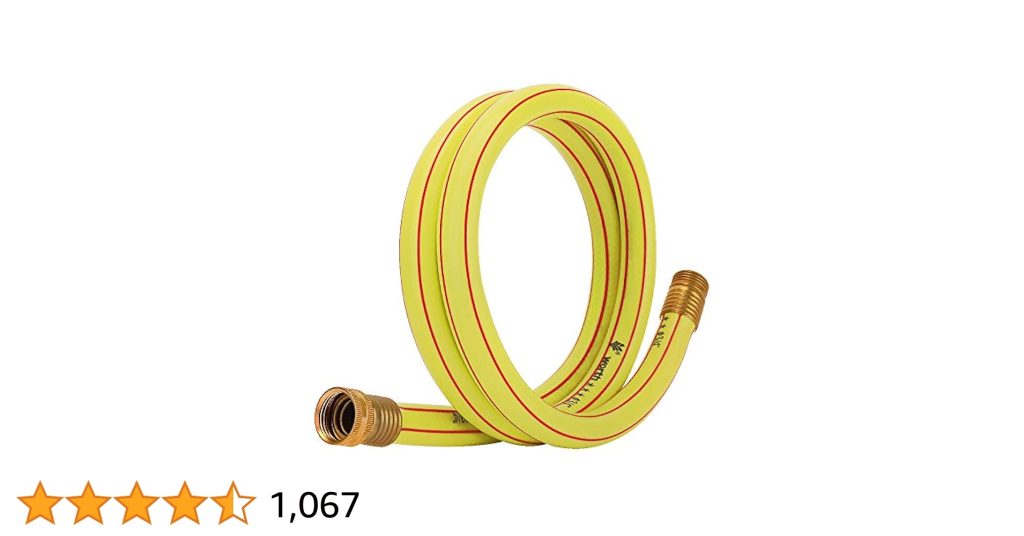
Have you ever wondered how much water actually flows through your garden hose? Knowing how many gallons per minute (GPM) your hose delivers can make a big difference when watering your plants, washing your car, or filling a pool.
Understanding this simple number helps you save water, avoid wasting time, and get your outdoor tasks done more efficiently. You’ll discover exactly how to measure your garden hose’s flow rate and why it matters to you. Keep reading to unlock the secret to smarter watering and better results.
Garden Hose Flow Basics
Knowing how many gallons per minute (GPM) a garden hose delivers helps you choose the right hose. Flow rate affects watering speed and efficiency.
Garden hoses come in different sizes and materials. These factors change how water moves through the hose.
What Affects Flow Rate
Several things affect how fast water flows in a garden hose. Hose diameter, length, water pressure, and fittings all play a role.
- Hose Diameter:Larger diameter means more water flows through.
- Hose Length:Longer hoses reduce flow because of friction inside the hose.
- Water Pressure:Higher pressure pushes more water.
- Fittings and Kinks:Narrow or bent parts block water flow.
Common Hose Sizes
Garden hoses come in standard sizes. The size you pick changes the flow rate and water use.
| Hose Diameter | Typical Flow Rate (GPM) | Best Use |
| 1/2 inch | 5-7 | Light watering, small gardens |
| 5/8 inch | 9-12 | Most common, general use |
| 3/4 inch | 15-17 | Heavy watering, large areas |
Calculating Gpm For Hoses
GPM means gallons per minute. It tells how much water flows through a garden hose. Knowing GPM helps with watering and other tasks.
You can find the GPM by measuring the flow rate of your hose. This shows how fast water moves from the hose.
Measuring Flow Rate
To measure flow rate, first use a container with a known volume. For example, a 5-gallon bucket works well.
Next, turn on the hose fully and fill the container. Use a timer to see how long it takes to fill.
- Start the timer when water begins to fill the container
- Stop the timer when it is full
- Note the time in seconds or minutes
Divide the container volume by the time taken to fill it. This gives the flow rate in gallons per minute (GPM).
Tools Needed
You need a few tools to measure your hose’s GPM accurately. These tools are easy to find at home or stores.
- A container with volume marks (like a bucket or large measuring cup)
- A stopwatch or timer (use a phone timer)
- A garden hose connected to a water source
With these tools, you can quickly calculate the flow rate and understand your garden hose’s water supply.
Typical Gpm By Hose Diameter
Garden hoses come in different sizes. The size affects the water flow. This is measured in gallons per minute (GPM).
The diameter of a hose impacts how much water flows through it. Let’s look at typical GPM rates for different hose sizes.
1/2 Inch Hose
A 1/2 inch hose is common for light watering tasks. It is often used in small gardens or for potted plants.
This size usually delivers about 9 to 10 GPM. It is suitable for tasks that do not require a large volume of water.
5/8 Inch Hose
The 5/8 inch hose is the standard choice for many households. It balances water flow and pressure effectively.
This hose size typically provides around 15 GPM. It is ideal for general gardening and yard work.
3/4 Inch Hose
A 3/4 inch hose is used for heavy-duty tasks. It is perfect for large gardens or filling pools.
This size can deliver up to 25 GPM. It handles more water efficiently for demanding tasks.

Credit: www.homedepot.com
Impact Of Water Pressure
Water pressure plays a big role in how much water flows through a garden hose. It affects the gallons per minute (GPM) that come out of the hose.
Knowing about water pressure helps you understand how fast water moves from your hose. This is important for watering plants or washing cars.
Pressure Variations
Water pressure changes in different places and times. It depends on your water source and how many people use water nearby.
Low pressure means less water flow. High pressure means more water flows out of the hose.
- City water usually has stable pressure.
- Well water pressure can change often.
- Using multiple taps lowers pressure.
How Pressure Influences Gpm
Higher water pressure pushes more water through the hose. This raises the GPM, giving a stronger flow.
Lower pressure reduces the GPM. The water flows slower and covers less area.
| Water Pressure (PSI) | Approximate GPM |
|---|---|
| 20 PSI | 5 GPM |
| 40 PSI | 9 GPM |
| 60 PSI | 12 GPM |
Effect Of Hose Length
The length of a garden hose affects how much water flows through it. Longer hoses make water flow slower. This happens because water loses pressure as it moves through the hose.
Understanding this effect helps you choose the right hose length for your garden. It also helps you keep good water flow for watering plants or washing cars.
Flow Loss Over Distance
Water pressure drops as it travels through a long hose. The longer the hose, the more pressure it loses. This pressure loss reduces the gallons per minute (GPM) you get at the end of the hose.
| Hose Length (feet) | Approximate Flow Rate (GPM) |
| 25 | 9 |
| 50 | 7 |
| 75 | 5.5 |
| 100 | 4 |
Optimizing Hose Length
To keep good water flow, choose a hose length that fits your needs without being too long. A shorter hose means less flow loss and better water pressure.
- Measure the distance from your water source to your garden.
- Pick a hose length just a little longer than this distance.
- Use wider hoses to reduce flow loss over longer distances.
- Connect hoses only if needed, to avoid unnecessary length.

Credit: us.amazon.com
Improving Hose Flow Rate
The flow rate of a garden hose is measured in gallons per minute (GPM). Many factors affect how much water flows through the hose. You can improve the flow rate with simple changes.
Two main ways to increase water flow are reducing kinks and bends and upgrading the hose material. Both help water move more freely.
Reducing Kinks And Bends
Kinks and sharp bends slow down water flow. Fixing these stops blockages and improves the GPM of your hose.
- Uncoil the hose fully before use.
- Avoid sharp turns or loops.
- Use hose guides around corners.
- Store the hose on a reel to prevent tangles.
- Check for damage that may cause pinching.
Upgrading Hose Material
Material type affects hose flexibility and water flow. Some materials allow water to pass easier than others.
| Material | Flexibility | Flow Rate Impact |
| Vinyl | Low | More kinks, lower flow |
| Rubber | High | Fewer kinks, better flow |
| Reinforced Hybrid | Medium | Balanced flow and durability |
Choosing The Right Hose For Your Needs
Garden hoses come with different flow rates, usually measured in gallons per minute (GPM). Choosing the right hose depends on what you need to do in your garden or yard.
Knowing the GPM of a hose helps you match water flow to your tasks. This saves water and makes gardening easier.
Matching Flow To Tasks
Different garden jobs need different water flows. For example, watering flowers needs less flow than washing a car.
Check the hose’s GPM to see if it fits your task. A low GPM hose is good for delicate plants. A high GPM hose works well for big jobs.
- Low flow (5 GPM or less) is gentle on plants
- Medium flow (5 to 10 GPM) suits most garden needs
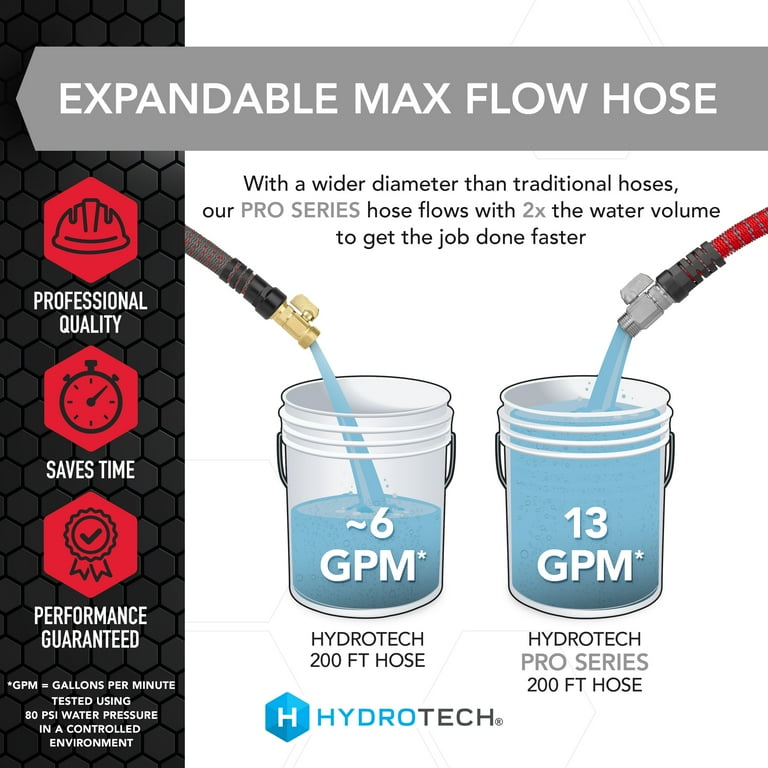
- High flow (above 10 GPM) is best for cleaning and filling pools
Balancing Flexibility And Flow
A hose that flows well might be stiff and hard to move. A flexible hose is easy to use but may limit water flow.
Choose a hose that balances good flow with easy handling. Lightweight hoses often have lower GPM but are simple to move around.
- Thicker hoses usually have higher GPM but less flexibility
- Thin hoses are flexible but may reduce water flow
- Material and length also affect both flow and handling
Credit: www.walmart.com
Frequently Asked Questions
What Is The Average Gpm Of A Garden Hose?
A typical garden hose delivers about 9 to 17 gallons per minute (GPM). The exact flow depends on hose diameter and water pressure.
How Does Hose Diameter Affect Gpm Flow Rate?
Larger diameter hoses carry more water, increasing GPM. For example, a 5/8-inch hose flows more than a 1/2-inch hose.
Can Water Pressure Impact Garden Hose Gpm?
Yes, higher water pressure boosts GPM by pushing more water through the hose. Low pressure reduces flow rate significantly.
What Gpm Is Needed For Typical Garden Watering?
Most garden watering requires 10 to 12 GPM. This flow rate ensures efficient watering without wasting water.
Conclusion
Knowing how many GPM a garden hose delivers helps you water efficiently. Most hoses provide between 5 and 10 gallons per minute. This range suits common gardening and cleaning tasks well. Choosing the right hose size affects water flow and pressure.
Use this info to pick a hose that fits your needs. Simple steps lead to better watering and save water too. Keep your garden healthy with the right water flow every time.