Have you ever wondered how much electricity your air conditioner actually uses? Knowing how many kilowatt hours (kWh) your AC consumes can help you take control of your energy bills and make smarter choices.
Whether you want to save money, reduce your carbon footprint, or simply understand your home’s power usage better, this guide will give you clear answers. Keep reading to discover exactly how to measure your air conditioner’s energy use and easy tips to lower it without sacrificing comfort.
Credit: www.aquilaelectrical.com.au
Air Conditioner Energy Basics
Air conditioners use electricity to cool your home. Understanding their energy use helps manage bills.
This guide explains kilowatt hours and how air conditioners consume energy.
What Is A Kilowatt Hour
A kilowatt hour (kWh) measures energy use. It equals using 1,000 watts for one hour.
- 1 watt is the power of one small light bulb
- 1,000 watts equal one kilowatt
- Using 1,000 watts for 1 hour equals 1 kWh
- Electric bills show energy use in kWh
How Ac Units Consume Energy
Air conditioners use energy based on size, efficiency, and run time.
| Factor | Effect on Energy Use |
| BTU Rating | Higher BTU means more power used |
| SEER Rating | Higher SEER means better efficiency |
| Usage Time | Longer use increases total energy |
| Temperature Setting | Lower settings use more electricity |

Credit: thefurnaceoutlet.com
Factors Affecting Ac Energy Use
An air conditioner’s energy use depends on several key factors. Understanding these can help you manage electricity better. It also helps explain why some AC units use more power than others.
This guide looks at unit size and efficiency, usage patterns and settings, and climate and home insulation. Each plays a role in how many kilowatt hours your AC consumes.
Unit Size And Efficiency
AC units come in different sizes and energy ratings. Larger units cool bigger spaces but can use more electricity. Efficiency ratings tell how well the unit uses power to cool air.
| Factor | Impact on Energy Use |
|---|---|
| Unit Size (BTU) | Larger units use more power but cool faster |
| Energy Efficiency Ratio (EER) | Higher EER means less electricity used |
| Seasonal Energy Efficiency Ratio (SEER) | Better SEER lowers energy consumption over time |
Usage Patterns And Settings
How you use your air conditioner affects its energy use. Running it all day uses more power than short bursts. Temperature settings also change consumption levels.
- Lower temperature settings increase power use
- Using timers can reduce unnecessary running
- Fan speed affects electricity consumption
- Frequent on/off cycles may use more energy
Climate And Home Insulation
The local climate and how well your home holds cool air matter. Hotter climates make ACs work harder. Good insulation keeps cooled air inside, reducing energy use.
| Climate Condition | Energy Impact |
|---|---|
| Hot and Humid | High energy use due to constant cooling |
| Dry and Hot | Moderate energy use, less humidity control |
| Temperate | Lower energy use, less cooling needed |
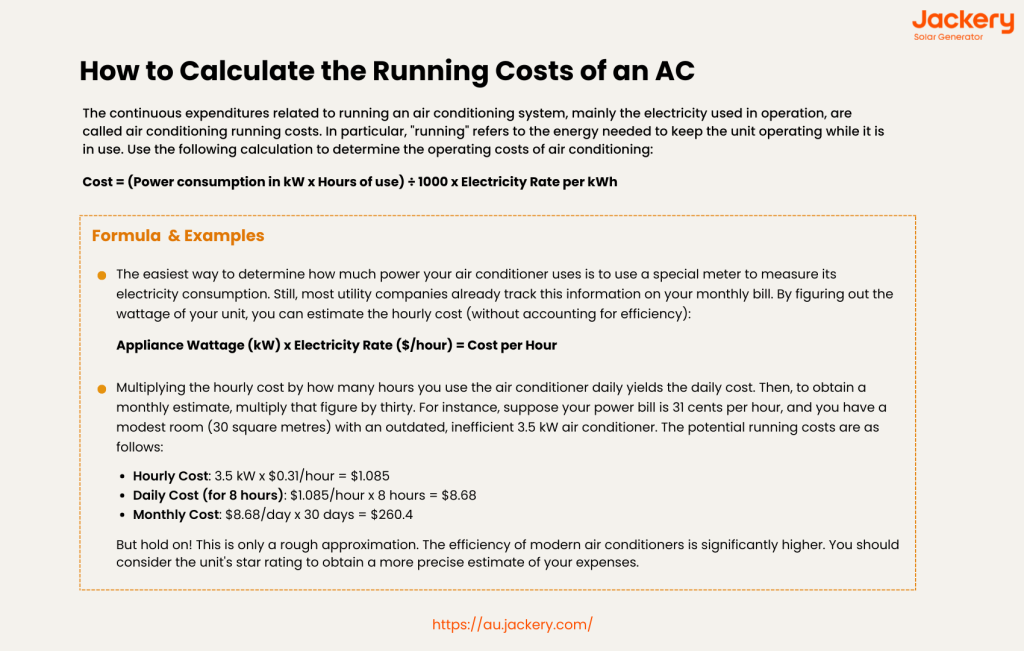
Calculating Kilowatt Hours For Ac
Knowing how many kilowatt hours (kWh) your air conditioner uses helps you manage energy bills. It shows how much electricity your AC consumes over time.
You can calculate kWh using different methods. These include reading the energy label, estimating usage, or using energy meters.
Reading The Energy Label
The energy label on your AC shows its power consumption in watts or kilowatts. It usually lists the cooling capacity and energy efficiency.
Look for the power rating, often in watts (W). To get kilowatts, divide watts by 1000. This tells you how much power the AC uses when running.
- Check the label for power consumption (e.g., 1500 W)
- Convert watts to kilowatts by dividing by 1000 (1500 W ÷ 1000 = 1.5 kW)
- Use the kW value to calculate energy use
Estimating Daily And Monthly Consumption
Multiply the AC’s power in kilowatts by the hours it runs each day. This gives you daily energy use in kWh.
Multiply daily kWh by the number of days you use the AC in a month. This gives monthly consumption.
| Example | Calculation | Result |
|---|---|---|
| Power rating | 1500 W ÷ 1000 | 1.5 kW |
| Daily use | 1.5 kW × 8 hours | 12 kWh/day |
| Monthly use | 12 kWh/day × 30 days | 360 kWh/month |
Using Energy Meters
Energy meters measure the exact electricity your AC uses. Plug the meter between the AC and the power outlet.
The meter shows real-time energy use and total kWh over time. This helps track actual consumption and save energy.
- Plug energy meter into the wall socket
- Connect your AC to the energy meter
- Run your AC for a set time
- Read the kWh used from the meter display

Credit: acstore.com.au
Reducing Air Conditioner Energy Use
Air conditioners use a lot of electricity. Lowering their energy use saves money and helps the environment.
Simple changes can cut energy use without making your home uncomfortable.
Optimal Thermostat Settings
Set your thermostat at a temperature that balances comfort and energy savings. A higher temperature in summer means less energy used.
Use a programmable thermostat to change the temperature when you are not home or at night.
- Set thermostat to 78°F (26°C) when at home
- Raise temperature by 7-10°F (4-6°C) when away
- Use a fan to feel cooler without lowering temperature
Regular Maintenance Tips
Clean and maintain your air conditioner often. A clean system works better and uses less energy.
Check filters, coils, and fins regularly. Replace or clean parts as needed to keep airflow smooth.
- Replace or clean filters every 1-3 months
- Clean evaporator and condenser coils yearly
- Keep area around the unit free of debris
- Seal leaks in ducts and windows
Upgrading To Energy-efficient Models
Old air conditioners use more electricity. New models save energy and cool better.
Look for units with a high SEER rating. These models use less power for the same cooling.
- Choose ENERGY STAR certified units
- Check SEER rating; higher is better
- Consider inverter technology for efficiency
- Size the unit correctly for your space
Cost Implications Of Ac Energy Use
Air conditioners use a lot of electricity. This use affects your monthly energy bill. Understanding these costs helps you manage your spending.
Knowing how much energy your AC uses can guide you to save money. We will look at key points about electricity rates, bill estimation, and savings.
Understanding Electricity Rates
Electricity rates vary by location and provider. They may change by time of day or season. Rates are usually shown in cents per kilowatt-hour (kWh).
- Flat rate: Same price all day
- Time-of-use rate: Higher price during peak hours
- Tiered rate: Price rises after certain usage levels
Estimating Monthly Bills
To find your AC’s monthly cost, multiply its kWh use by your electricity rate. Then multiply by the number of hours used each day and days used per month.
| Factor | Example |
| AC Power Use | 1.5 kW |
| Hours Used Daily | 8 hours |
| Days Used Monthly | 30 days |
| Electricity Rate | $0.12 per kWh |
| Estimated Monthly Cost | $43.20 |
Financial Benefits Of Energy Savings
Saving energy cuts costs and helps the environment. Small changes can add up to big savings over time.
- Use energy-efficient AC units
- Set thermostat to a higher temperature
- Use fans to circulate air
- Maintain your AC regularly
- Seal leaks around doors and windows
Alternative Cooling Options
Air conditioners use a lot of electricity, which can increase your bills. There are other ways to stay cool that use less energy.
These options can help reduce how many kilowatt hours your home uses for cooling. They are simple and often cheaper to run.
Fans And Ventilation
Fans move air around to help your body feel cooler. They use much less power than air conditioners.
Good ventilation lets hot air escape and fresh air enter. This keeps rooms cooler without using electricity.
- Ceiling fans use about 10% of the energy of an AC unit
- Window and exhaust fans remove hot air from rooms
- Cross ventilation uses open windows to let air flow through
Evaporative Coolers
Evaporative coolers use water to cool the air. They work best in dry climates.
These coolers use less electricity because they only run a fan and water pump. They add moisture to the air.
- They consume about one quarter of the energy of a typical AC
- They cool air by evaporating water, which lowers the temperature
- Not ideal for very humid places
Smart Cooling Technologies
Smart cooling uses technology to save energy while keeping rooms comfortable. It adjusts cooling based on your needs.
These systems can include smart thermostats and sensors that control fans or AC units efficiently.
- Smart thermostats learn your schedule to reduce energy waste
- Temperature sensors adjust cooling in different rooms
- Remote control via phone apps helps manage energy use
Frequently Asked Questions
How Many Kilowatt Hours Does An Air Conditioner Use Daily?
An air conditioner typically uses 1 to 2. 5 kilowatt hours daily. Usage depends on unit size, efficiency, and running time. Larger or older models consume more energy. Running it for 8 hours can increase electricity costs significantly.
What Affects An Air Conditioner’s Kilowatt Hour Consumption?
Energy use depends on unit size, efficiency rating, and usage hours. Outdoor temperature and insulation quality also impact consumption. Higher SEER ratings mean better efficiency and lower kilowatt hours used. Proper maintenance ensures optimal energy use.
How Can I Reduce Air Conditioner Energy Consumption?
Use a programmable thermostat to limit operation time. Regularly clean or replace filters to improve airflow. Seal leaks and insulate your home well. Use fans to circulate cool air, lowering AC runtime and kilowatt hours used.
Is A Smaller Air Conditioner More Energy Efficient?
Smaller units generally consume fewer kilowatt hours due to lower capacity. However, undersized ACs run longer, offsetting savings. Choose an appropriately sized unit for your space to balance comfort and energy use.
Conclusion
Air conditioners use different amounts of electricity depending on size and usage. Knowing kilowatt hours helps control your energy bills. Small units use less power than large ones. Running your AC less often saves energy and money. Regular maintenance keeps your unit working well and using less power.
Checking your usage helps plan better for hot months. Simple steps can lower energy use without losing comfort. Understanding these basics makes managing your home easier.