Have you ever wondered how much electricity your air conditioner actually uses? Understanding how many kilowatt-hours (kWh) your AC consumes can help you take control of your energy bills and make smarter choices.
Whether you want to save money, reduce your carbon footprint, or simply get the most out of your cooling system, knowing this number is key. Keep reading, and you’ll discover easy ways to track your AC’s energy use and tips to lower it without sacrificing comfort.
Factors Affecting Ac Energy Use
Air conditioners use different amounts of electricity depending on many factors. Understanding these can help you manage energy better.
Knowing what affects your AC’s power use lets you make smart choices to save energy and money.
Ac Size And Capacity
The size of your air conditioner matters a lot. A bigger AC uses more power but cools faster. A smaller one uses less power but may run longer.
Usage Patterns
How often and how long you run your AC changes energy use. Using AC during the hottest hours uses more power.
- Running AC all day increases power use
- Shorter, less frequent use saves energy
- Turning off AC when not needed reduces costs
Outdoor Temperature
The hotter it is outside, the harder your AC works. High outdoor temperatures make the AC use more electricity to cool your home.
Thermostat Settings
| Thermostat Temperature | Energy Use Impact |
| Lower than 72°F | High energy use |
| 72°F to 78°F | Moderate energy use |
| Above 78°F | Lower energy use but less cooling |
Setting your thermostat at a moderate temperature saves energy. Avoid very low settings to reduce power use.
Insulation And Home Efficiency
Good insulation keeps cool air inside and hot air outside. This reduces the AC’s work.
- Seal windows and doors well
- Use curtains or blinds to block sunlight
- Improve attic and wall insulation

Credit: www.tnebbillcalculator.com
Calculating Ac Power Consumption
Knowing how much electricity your air conditioner uses helps you control energy costs. You can calculate the power consumption by understanding key concepts.
This guide explains how to find out how many kilowatt-hours (kWh) your AC uses.
Understanding Kilowatt-hours
A kilowatt-hour (kWh) measures energy use over time. It means using 1,000 watts for one hour.
Electric bills show energy in kWh. The more kWh used, the higher the bill.
Wattage And Running Time
First, find your AC’s wattage. It is usually on the label or manual.
Next, multiply the wattage by how many hours the AC runs.
| Example | Calculation | Result |
|---|---|---|
| AC wattage | 1500 watts | 1.5 kilowatts |
| Running time | 5 hours | |
| Energy used (kWh) | 1.5 kW × 5 hours | 7.5 kWh |
Using Energy Meters
Energy meters measure how much electricity your AC uses. Plug the meter between the AC and outlet.
The meter shows real-time power use and total kWh over time. This gives a clear reading.
- Check meter before turning AC on
- Run AC for a set time
- Read total kWh used on the meter
Estimating Monthly Usage
To find monthly energy use, multiply daily kWh by days used per month.
Use this formula: Monthly kWh = Daily kWh × Days used.
- If AC uses 7.5 kWh daily
- And runs 20 days a month
- Then monthly use = 7.5 × 20 = 150 kWh
Energy Consumption By Ac Types
Air conditioners use different amounts of electricity based on their type. Understanding their energy use helps you save on power bills.
We will look at four common AC types and how much energy each one typically uses.
Window Air Conditioners
Window air conditioners are popular for cooling single rooms. They are easy to install in a window space.
These units usually consume between 500 and 1500 watts per hour. The exact usage depends on the size and model.
Split Systems
Split systems have an indoor and outdoor unit. They cool larger spaces more quietly and efficiently.
- Use around 1000 to 3000 watts per hour
- Energy use varies with cooling capacity
- More efficient models use less power for the same cooling
Central Air Conditioners
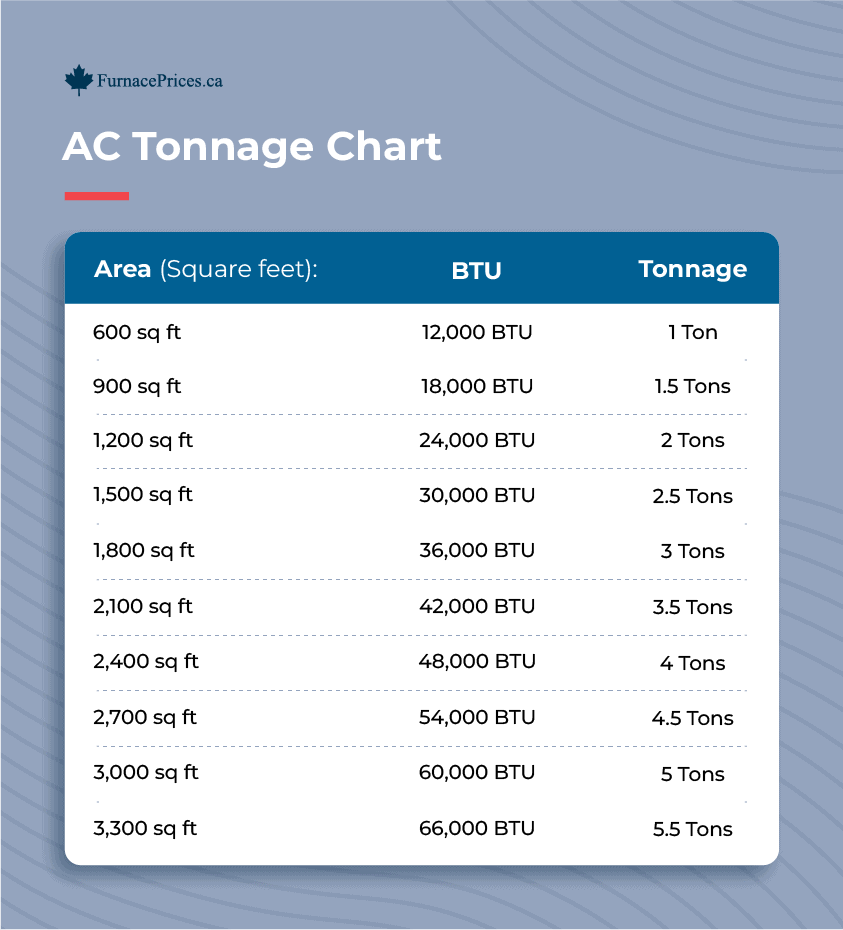
Central air conditioners cool entire homes through duct systems. They use more electricity but cool many rooms at once.
| AC Size (Tons) | Average kWh per Hour |
| 1.5 | 1500 – 1800 |
| 2.0 | 2000 – 2400 |
| 3.0 | 3000 – 3600 |
| 4.0 | 4000 – 4800 |
Portable Ac Units
Portable AC units are easy to move from room to room. They are less efficient than other types.
Typical power use of portable units:
- Small units: 700 to 1000 watts per hour
- Medium units: 1000 to 1400 watts per hour
- Larger units: 1400 to 2000 watts per hour
Credit: www.furnaceprices.ca
Ways To Reduce Ac Energy Use
Air conditioners use a lot of electricity. Reducing their energy use saves money and helps the environment. You can use simple methods to lower AC power consumption.
Try these tips to keep your home cool and your energy bills low. They include smart settings, regular care, and better home design.
Smart Thermostat Settings
Using a smart thermostat helps control your AC better. It can adjust the temperature when you are away or asleep. This stops wasting energy.
- Set the temperature higher when you are not home
- Use programmable schedules for day and night
- Avoid lowering the temperature too much
- Use energy-saving modes if available
Regular Maintenance
Keeping your air conditioner clean and checked helps it run well. Dirty filters and parts make the AC work harder. This increases energy use.
- Clean or replace air filters monthly
- Check for leaks in ducts and seals
- Inspect and clean coils yearly
- Clear debris around outdoor units
Energy-efficient Models
Using energy-efficient AC models saves power. These models use less electricity to cool the same space. Look for the Energy Star label when buying.
| Feature | Benefit |
| High SEER rating | Better cooling with less energy |
| Inverter technology | Adjusts cooling power as needed |
| Eco-friendly refrigerants | Lower environmental impact |
Improving Home Insulation
Good insulation keeps your home cool longer. It stops hot air from entering and cool air from escaping. This lowers the need for AC use.
- Seal windows and doors with weather stripping
- Use curtains or blinds to block sunlight
- Add insulation to walls and attics
- Fix any cracks or gaps in the building
Using Fans And Ventilation
Fans help move air and cool people without using much power. Proper ventilation removes hot air from your home. This lowers AC use.
- Use ceiling fans to improve airflow
- Turn fans off when no one is in the room
- Open windows at night to let cool air in
- Use exhaust fans in kitchens and bathrooms
Impact Of Ac Energy Use On Electricity Bills
Air conditioners use a significant amount of electricity. This use affects your monthly electricity bill. Understanding how much power your AC consumes helps manage costs.
Electricity costs depend on how much energy your AC uses and the rates your utility charges. Different factors change the total cost you pay.
Calculating Cost From Kwh
To find the cost of running your AC, you need to know its energy use in kilowatt-hours (kWh). The formula is simple: multiply kWh used by your electricity rate.
For example, if your AC uses 1.5 kWh per hour and your rate is 12 cents per kWh, your cost per hour is 18 cents.
| AC Power Use (kW) | Hours Used | Electricity Rate ($/kWh) | Total Cost ($) |
|---|---|---|---|
| 1.5 | 8 | 0.12 | 1.44 |
| 2 | 10 | 0.15 | 3.00 |
| 1.2 | 6 | 0.10 | 0.72 |
Seasonal Variations
Air conditioner use changes with the seasons. You use more in summer and less in winter. This change makes your electricity bills higher in hot months.
In some places, summers are longer and hotter. This means more running time for your AC and bigger bills.
- Summer: High AC use, high electricity bills
- Spring and Fall: Moderate use, medium bills
- Winter: Low or no AC use, low bills
Peak Vs Off-peak Rates
Electric companies charge different rates at different times. Peak hours cost more than off-peak hours. Running your AC during off-peak times can save money.
Peak hours usually happen during the hottest parts of the day. Off-peak hours are at night or early morning.
- Peak hours: Higher rates, higher cost
- Off-peak hours: Lower rates, lower cost
- Check your utility’s schedule for exact times
- Use programmable thermostats to cool during off-peak times
Alternative Cooling Options
Air conditioners use a lot of electricity, which can increase your energy bills. Many people look for other ways to stay cool without using as much power.
This section covers some alternative cooling options that use less energy and still keep you comfortable.
Evaporative Coolers
Evaporative coolers cool the air by adding moisture. They use less electricity than air conditioners. They work best in dry climates.
These coolers pull hot air through wet pads. The air cools down as water evaporates. This process uses much less energy.
- Use about 75% less electricity than AC units
- Increase humidity in dry areas
- Cost less to buy and run
Ceiling Fans
Ceiling fans move air around the room. They help sweat evaporate, making you feel cooler. Fans use much less energy than air conditioners.
Use fans with AC to raise the thermostat setting. This saves energy without losing comfort.
- Use 10 times less electricity than AC
- Circulate air for better cooling
- Easy to install and maintain
Natural Ventilation
Natural ventilation uses windows and vents to cool indoor spaces. It works by letting cool air in and hot air out. This method uses no electricity.
Open windows at night or early morning for fresh air. Close them during the hottest parts of the day.
- Use cross-ventilation for better airflow
- Place vents near the ceiling and floor
- Use shading to reduce heat gain
Energy-saving Tips
Reducing how much energy your cooling system uses can save money. Simple habits and changes help lower power use.
- Set AC thermostat higher when not home
- Use fans to help circulate cool air
- Keep curtains closed during sunny hours
- Seal gaps in doors and windows
- Maintain AC and cooling devices regularly

Credit: www.aljazeera.com
Frequently Asked Questions
How Many Kwh Does A Typical Air Conditioner Use Daily?
A typical air conditioner uses about 1 to 2 kWh per hour. Daily usage depends on run time and unit size. On average, it consumes around 8 to 12 kWh if used 8 hours a day. Energy efficiency also affects consumption.
What Factors Affect Air Conditioner Kwh Consumption?
Air conditioner kWh use depends on unit size, efficiency, and usage hours. Weather, insulation, and thermostat settings also impact energy consumption. Regular maintenance helps keep the unit efficient, reducing kWh usage. Larger rooms need more power, increasing consumption.
How Can I Reduce My Air Conditioner’s Kwh Usage?
To reduce kWh usage, set your thermostat higher when possible. Use fans to circulate air and close curtains to block heat. Regular cleaning of filters improves efficiency. Upgrading to an energy-efficient model also lowers electricity consumption.
Does The Air Conditioner’s Size Influence Kwh Consumption?
Yes, larger air conditioners consume more kWh as they cool bigger spaces. Oversized units cycle on and off frequently, wasting energy. Properly sized units match room size, ensuring efficient energy use and lower kWh consumption.
Conclusion
Understanding your air conditioner’s energy use is crucial. It helps manage electricity bills. You now know how many kWh it uses. This knowledge aids in making smarter energy choices. Keep track of usage during peak times. It can save you money and reduce energy waste.
Consider energy-efficient models for better savings. A little effort can lead to significant benefits. Stay informed and make your home comfortable. Efficiently and affordably.