Are you wondering how many tons your air conditioner has? Knowing this can make a big difference in keeping your home cool and your energy bills low.
If your AC is too small, it won’t cool your space well. If it’s too big, you could be wasting money and energy. You’ll discover exactly what “tons” mean for your air conditioner and how to find the right size for your needs.
Keep reading, and you’ll never have to guess about your AC again!

Credit: www.reddit.com
What A Ton Means In Air Conditioning
Many people ask how many tons their air conditioner has. The term “ton” in air conditioning is different from weight. It measures the cooling power of the unit.
This article explains what a ton means in air conditioning and why it matters for your home’s comfort.
Origin Of The Term
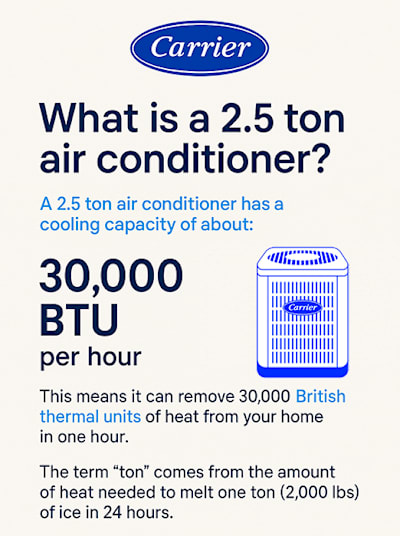
The term “ton” in air conditioning comes from the amount of heat needed to melt one ton of ice in 24 hours. This old method helped people understand cooling power.
- One ton equals melting 2,000 pounds of ice.
- It takes 12,000 British Thermal Units (BTUs) per hour.
- BTU measures heat energy.
- The term started in the early 1900s.
Cooling Capacity Explained
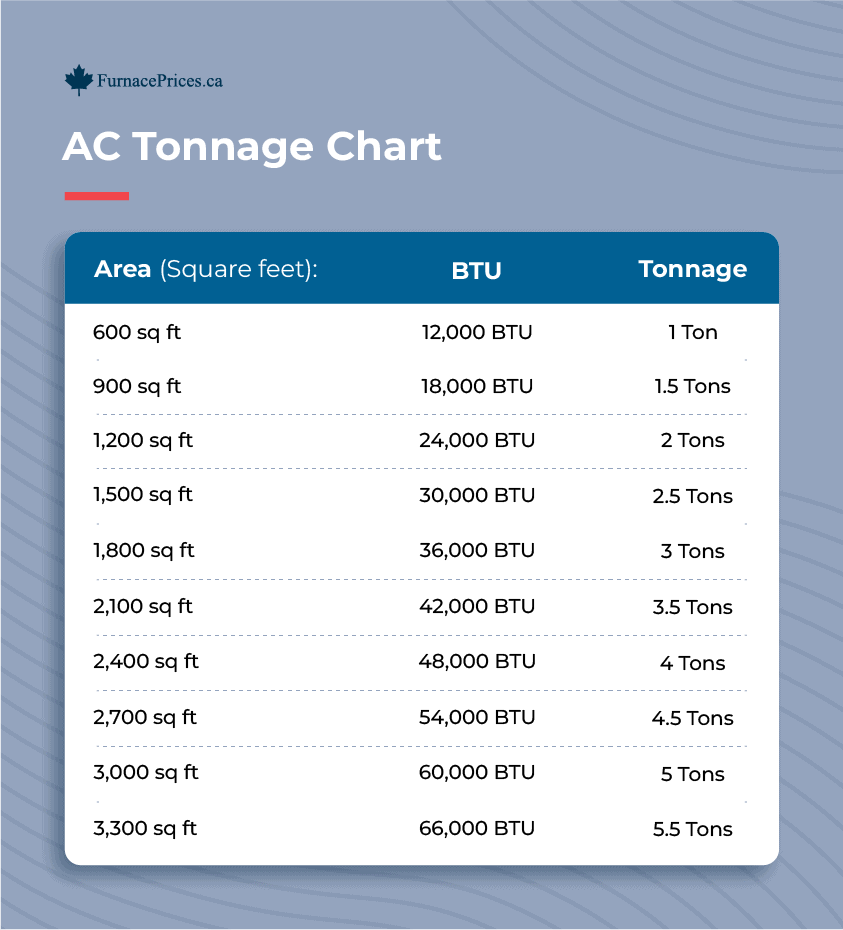
The cooling capacity shows how much heat an air conditioner can remove per hour. It is measured in BTUs or tons.
| Unit | Cooling Capacity |
|---|---|
| 1 Ton | 12,000 BTU/hour |
| 2 Ton | 24,000 BTU/hour |
| 3 Ton | 36,000 BTU/hour |
| 4 Ton | 48,000 BTU/hour |
Credit: www.furnaceprices.ca
Calculating Tons For Your Space
Choosing the right size air conditioner is important. It helps keep your space cool and saves energy.
The size of an air conditioner is measured in tons. This tells you how much heat it can remove from a room.
Factors Influencing Ac Size
Several things affect the size of air conditioner you need. These include the room size and how much sun it gets.
- Room square footage: Bigger rooms need bigger AC units.
- Ceiling height: Higher ceilings mean more space to cool.
- Sunlight exposure: Rooms with many windows or direct sun need more cooling.
- Number of people: More people produce more heat.
- Appliances and lights: They add heat inside the room.
Simple Sizing Formulas
You can estimate the AC size using simple formulas. This helps you find the right tonnage for your space.
One common rule is to use 20 BTUs per square foot of space. Then convert BTUs to tons by dividing by 12,000.
| Step | Calculation |
|---|---|
| 1 | Measure room size (length × width) in square feet |
| 2 | Multiply square feet by 20 BTUs |
| 3 | Divide total BTUs by 12,000 to get tons |
For example, a 500 square foot room needs 10,000 BTUs (500 × 20). Divide by 12,000 to get about 0.83 tons.
Common Air Conditioner Sizes
Air conditioners come in different sizes measured in tons. The ton rating tells you how much cooling power the unit has. Picking the right size is important for comfort and energy use.
This guide explains common ton ratings and how to match them to your room size. Knowing this helps you choose the best air conditioner.
Typical Ton Ratings
Air conditioners usually range from 0.5 tons to 5 tons. Here are common sizes and their cooling power:
- 0.5 ton – good for small rooms up to 250 square feet
- 1 ton – fits rooms from 250 to 450 square feet
- 1.5 tons – covers rooms between 450 and 700 square feet
- 2 tons – used for rooms about 700 to 1000 square feet
- 3 tons – for large spaces over 1000 square feet
Matching Size To Room Dimensions
To pick the right air conditioner size, match the ton rating to your room’s square footage. This table shows a simple guide:
| Room Size (sq ft) | Recommended Ton Rating |
| Up to 250 | 0.5 Ton |
| 251 – 450 | 1 Ton |
| 451 – 700 | 1.5 Tons |
| 701 – 1000 | 2 Tons |
| Over 1000 | 3+ Tons |

Credit: www.reddit.com
Finding Your Ac Unit’s Ton Rating
Knowing the ton rating of your air conditioner helps you understand its cooling power. This rating shows how many tons of heat your unit can remove from your home each hour.
There are simple ways to find your AC unit’s ton rating. You can check the manufacturer labels or use the model number to learn this information.
Checking Manufacturer Labels
Most air conditioners have labels placed by the manufacturer. These labels include important details about the unit, including its ton rating. You can usually find these labels on the outdoor unit or inside the access panel.
- Look for a label with the nameplate data
- Find the cooling capacity, often listed in BTUs
- Divide the BTUs by 12,000 to get the ton rating
- Check for terms like “Cooling Capacity” or “Capacity”
Using Model Numbers
The model number of your AC unit can also tell you the ton rating. Manufacturers use codes inside model numbers that indicate the size and power of the system.
| Model Number Code | Cooling Capacity (BTUs) | Tonnage |
|---|---|---|
| 018 | 18,000 | 1.5 tons |
| 024 | 24,000 | 2 tons |
| 030 | 30,000 | 2.5 tons |
| 036 | 36,000 | 3 tons |
Effects Of Incorrect Ac Sizing
Choosing the right air conditioner size is important. An AC that is too big or too small can cause problems.
Incorrect sizing affects comfort, energy use, and system lifespan. It is important to understand these effects.
Over-sized Units
An over-sized AC cools the room too fast. It shuts off before removing humidity properly.
This causes the room to feel cold but damp. It also increases energy bills and wears out the system.
- Short cycling reduces cooling quality
- Higher electricity use and costs
- More wear on the compressor
- Poor humidity control
Under-sized Units
An under-sized AC runs constantly but struggles to cool the space. It cannot reach the desired temperature.
This leads to high energy use and system damage. The unit works too hard and may break down early.
- Constant running increases energy bills
- Uneven cooling in the room
- Shorter equipment life due to strain
- Reduced comfort levels
Energy Efficiency And Ton Size
Choosing the right ton size for your air conditioner affects energy use. Bigger units use more power but cool faster. Smaller units save energy but may run longer.
Understanding how ton size impacts energy efficiency helps lower bills. It also keeps your home comfortable without waste.
Impact On Energy Bills
Air conditioners with the wrong ton size cause higher energy costs. Too large units cycle on and off often. Too small units run nonstop to cool your space.
- Oversized units waste electricity and increase bills.
- Undersized units use more power by running longer.
- Correct ton size balances cooling speed and energy use.
- Proper installation and maintenance improve efficiency.
Choosing Energy Star Units
Energy Star units meet strict efficiency guidelines. They use less energy and save money over time. These models help reduce your carbon footprint.
| Feature | Benefit |
| Higher SEER Rating | Lower energy consumption |
| Advanced Compressor | Quieter and efficient cooling |
| Smart Controls | Better temperature management |
| Durable Components | Longer life and fewer repairs |
When To Upgrade Your Air Conditioner
Your air conditioner cools your home and keeps you comfortable. Over time, it may not work well. Knowing when to upgrade your AC saves energy and money.
One key factor is the size of your AC unit. The size is measured in tons. If your AC is too small or too large, it can cause problems. Read on to learn the signs and benefits of the right size.
Signs Your Ac Is Too Small Or Large
If your air conditioner does not cool well, it might be too small. It runs all day but still leaves rooms warm. You may also hear it running loudly or cycling on and off too often.
An AC that is too large cools quickly but does not remove enough moisture. This leaves the air feeling damp and uncomfortable. It also turns on and off too fast, wasting energy.
- AC runs constantly but cannot cool the home (too small)
- Rooms have uneven temperatures (too small)
- AC cycles on and off frequently (too large)
- Air feels damp or clammy (too large)
- Higher electric bills without better comfort (too small or too large)
Benefits Of Proper Sizing
Choosing the right size AC helps your home stay cool and comfortable. It uses less energy and lasts longer. Proper sizing also lowers your electricity bills.
A well-sized air conditioner keeps humidity in check. It runs smoothly with fewer repairs. This makes your home healthier and your AC more reliable.
- Lower energy costs
- Better temperature control
- Improved humidity levels
- Longer equipment life
- Fewer breakdowns and repairs
Frequently Asked Questions
What Does A Ton In Air Conditioning Mean?
A ton in air conditioning measures cooling capacity. One ton equals 12,000 BTUs per hour. It indicates how much heat an AC unit can remove in an hour.
How To Find The Tonnage Of My Air Conditioner?
Check your AC unit’s model number or label. It usually shows the tonnage or BTU rating. Divide the BTUs by 12,000 to get tons.
Why Is Knowing My Ac Tonnage Important?
Knowing your AC’s tonnage ensures proper cooling for your space. Too small or large units waste energy and reduce comfort. Correct tonnage improves efficiency and saves money.
Can I Replace My Ac With A Different Tonnage?
Replacing an AC with a different ton size can cause issues. Oversized units cool quickly but waste energy. Undersized units run constantly and may not cool properly.
Conclusion
Knowing how many tons your air conditioner has helps you choose the right size. A properly sized unit cools your home well and saves energy. Too big or too small can cause problems and raise bills. Check your air conditioner’s label or manual for tonnage.
Understanding this number makes maintenance and repairs easier too. Keep this info handy for better comfort and savings. Simple steps lead to a cooler home and lower costs.