Are you curious about how your home stays warm during chilly days? Understanding the different types of boiler heating systems can help you make smarter choices for your comfort and energy bills.
Whether you’re thinking of upgrading your current system or just want to know how it all works, knowing the options available is the first step. You’ll discover the main types of boiler heating systems, how they operate, and which one might be the best fit for your home.
Keep reading—you’ll soon see that heating your home efficiently is easier than you think.
Boiler Heating Systems Basics
Boiler heating systems provide warmth by heating water or steam. This heat moves through pipes to warm rooms. They are common in many homes and buildings.
There are different types of boiler heating systems. Each has unique parts and ways it works to deliver heat efficiently.
Key Components
Boiler heating systems have several important parts. These parts work together to heat your home safely and effectively.
- Boiler:The main unit that heats water or creates steam.
- Burner:Burns fuel to create heat inside the boiler.
- Heat Exchanger:Transfers heat from the burner to the water.
- Pipes:Carry hot water or steam to radiators or baseboards.
- Radiators or Baseboards:Release heat into rooms.
- Expansion Tank:Absorbs pressure changes in the system.
- Thermostat:Controls the temperature by turning the boiler on or off.
How They Work
Boiler systems heat water or steam and send it through pipes. The heat leaves the water and warms rooms. Then, the cooled water returns to the boiler to be heated again.
| Step | Process |
| 1 | Burner heats the water inside the boiler. |
| 2 | Hot water or steam moves through pipes to radiators. |
| 3 | Radiators release heat into rooms. |
| 4 | Cooled water returns to the boiler for reheating. |

Credit: thermodyneboilers.com
Hot Water Boilers
Hot water boilers heat water and send it through pipes to warm a building. The heated water moves through radiators or underfloor tubes.
This type of heating system is common in homes and small businesses. It provides steady and comfortable heat without blowing air.
System Operation
Hot water boilers work by heating water in a tank or heat exchanger. A fuel source like gas or oil powers the burner. The hot water then flows through pipes to heat spaces.
- The boiler heats water to the desired temperature.
- Water circulates through pipes to radiators or baseboards.
- Heat transfers from water to air in the room.
- Cooled water returns to the boiler for reheating.
Common Uses
Hot water boilers are used in many places due to their efficiency and quiet operation. They are ideal for homes, schools, and offices.
| Location | Reason for Use |
| Residential Homes | Comfortable, even heat |
| Schools | Safe and quiet heating |
| Small Offices | Energy efficient heat source |
| Hospitals | Reliable and clean heating |
Advantages
Hot water boilers offer several benefits over other heating systems. They provide gentle heat without drafts or noise.
- Energy efficient and cost-effective
- Quiet operation with no fans
- Even heat distribution throughout rooms
- Low maintenance and long lifespan
- Works well with various fuel types
Steam Boilers
Steam boilers are a type of heating system that uses steam to warm buildings. They heat water until it becomes steam.
The steam moves through pipes to radiators or other heat exchangers. This spreads warmth throughout the space.
System Operation
Steam boilers heat water in a closed tank until steam forms. The steam rises and travels through pipes.
The steam flows to radiators or baseboards. It releases heat and then cools back to water. The water returns to the boiler to start again.
- Water is heated to make steam.
- Steam moves through pipes to heat rooms.
- Steam cools and turns back to water.
- Water cycles back to the boiler.
Common Uses
Steam boilers are often used in older buildings and homes. They provide strong, even heat in cold climates.
They are common in schools, factories, and large homes. Steam boilers can also supply heat for industrial processes.
- Heating older residential buildings
- Schools and public buildings
- Factories and industrial plants
- Hospitals and large facilities
Advantages
Steam boilers are simple and last a long time. They provide steady heat and work well in cold weather.
They are easy to control and maintain. Steam carries heat over long distances without much loss.
- Long lifespan and reliability
- Consistent, strong heat output
- Good for cold climates
- Simple to operate and maintain
- Efficient heat transfer over distance
Condensing Boilers
Condensing boilers are a common type of heating system. They work by reusing heat from exhaust gases.
This process makes them more efficient than traditional boilers. They use less fuel to heat your home.
Energy Efficiency
Condensing boilers have high energy efficiency ratings. They can reach efficiency levels of over 90%.
They capture heat that normal boilers lose through the exhaust. This lowers fuel consumption and saves money.
- Use less gas or oil to heat water
- Reduce greenhouse gas emissions
- Save on energy bills over time
Design Features
Condensing boilers have a special heat exchanger. It cools the exhaust gases to recover heat.
They often include a larger water tank and sealed combustion chamber. This helps improve safety and performance.
- Secondary heat exchanger to reclaim heat
- Sealed system to prevent gas leaks
- Compact size for easier placement
Installation Considerations
Installing a condensing boiler requires proper venting for exhaust gases. This is different from older boilers.
They need a drain for the water that forms from condensation. The system also needs a compatible heating setup.
- Use plastic or stainless steel vents
- Connect to a drain for condensate
- Check compatibility with existing pipes
Combi Boilers
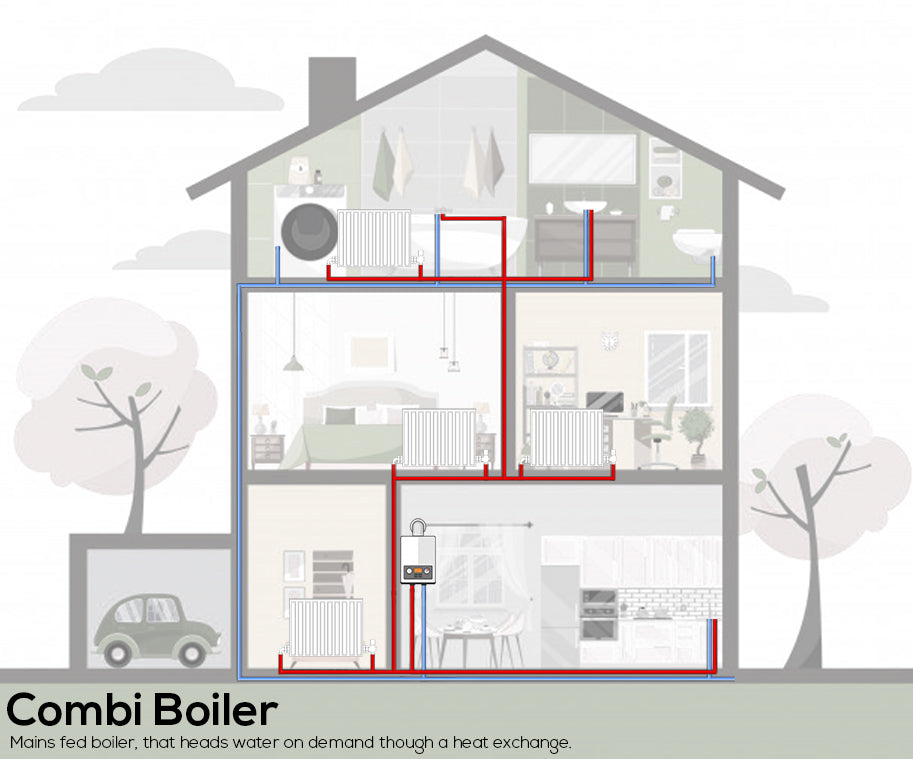
Combi boilers are a popular type of heating system. They provide both heat and hot water from one unit.
These boilers do not need a separate water tank or cylinder. This makes them compact and efficient.
Space Saving Benefits
Combi boilers save a lot of space in your home. They fit easily in small areas like cupboards.
Without the need for extra tanks or cylinders, they free up room for other uses. This is great for small homes.
Performance
Combi boilers heat water quickly and efficiently. They supply hot water on demand without waiting.
These boilers are energy efficient and reduce heat loss. They only heat water when needed.
Ideal Applications
Combi boilers work best in small to medium-sized homes. They suit houses with limited space.
They are perfect where hot water use is moderate. They fit well in apartments and flats.
Electric Boilers
Electric boilers use electricity to heat water for home heating systems. They are an alternative to gas or oil boilers.
These boilers are popular in places where electric power is cheaper or gas is not available.
How They Operate
Electric boilers heat water using electric heating elements inside the unit. The water then circulates through pipes to warm the house.
The system uses a thermostat to control the temperature and turn the boiler on or off as needed.
Pros And Cons
Electric boilers have several advantages and disadvantages to consider.
- Pros:
- Easy to install and maintain
- No emissions or combustion gases
- Quiet operation
- Compact size saves space
- Cons:
- Higher electricity costs in some areas
- Not suitable for large homes
- Power outages stop heating
Best Use Cases
Electric boilers work best in small homes or apartments. They are ideal where gas is unavailable.
They are also good for homes with low heating needs or supplementary heating systems.
System Vs. Conventional Boilers
Boiler heating systems come in two main types: system boilers and conventional boilers. Each type has unique features and works differently in homes.
Understanding these types helps homeowners choose the right heating system for their needs.
Design Differences
System boilers have most parts built inside the boiler. They connect directly to the heating system and hot water cylinder.
Conventional boilers need extra parts outside the boiler. These include a cold water tank and a hot water cylinder.
- System Boilers:Built-in components, no need for a cold water tank.
- Conventional Boilers:Use external tanks and cylinders for water storage.
- Installation:System boilers are easier to install due to fewer parts.
Benefits Comparison
| Feature | System Boilers | Conventional Boilers |
| Space Needed | Less space, no cold water tank | More space for tanks |
| Water Pressure | Good pressure for multiple taps | Pressure may vary |
| Installation Cost | Lower due to fewer parts | Higher cost for extra tanks |
| Maintenance | Easier with fewer external parts | More maintenance for tanks and pipes |

Credit: thermodyneboilers.com
Choosing The Right Boiler
Boiler heating systems come in several types. Choosing the right one depends on your home’s needs. This guide will help you decide the best boiler for your situation.
Consider factors like heating needs, budget, and energy sources. Each affects how well a boiler works for your home.
Assessing Heating Needs
First, find out how much heat your home requires. Larger homes need more powerful boilers. Also, think about the number of rooms and insulation quality.
- Size of your home
- Number of rooms
- Quality of insulation
- Climate in your area
- Hot water usage
Budget Factors
Boiler prices vary. You must plan for both installation and running costs. Some boilers cost more upfront but save money over time.
| Boiler Type | Installation Cost | Running Cost |
| Combi Boiler | Medium | Low |
| System Boiler | High | Medium |
| Conventional Boiler | Low | High |
Energy Sources
Boilers use different energy sources. Choose one that fits your home and local fuel availability.
- Natural gas – common and often affordable
- Electricity – easy to install but can be costly
- Oil – used in areas without gas lines
- Propane – portable and clean burning
- Renewable options – such as biomass boilers
Maintenance Tips
Boiler heating systems need regular care to work well. Proper maintenance helps keep the system safe and efficient.
Following simple tips can reduce breakdowns and save money on repairs. This guide covers key maintenance points.
Routine Checks
Check your boiler often to find small problems early. Look for leaks, strange noises, and pressure changes.
Clean filters and vents to keep air flowing. Make sure the thermostat works correctly for steady heating.
- Inspect for water leaks around the boiler
- Listen for unusual noises during operation
- Check the pressure gauge regularly
- Clean or replace air filters every few months
- Test the thermostat for accurate temperature control
Common Issues
Boilers can face problems like low pressure, pilot light failure, or strange noises. These issues affect heating performance.
Ignoring problems can cause bigger damage and costly repairs. Fix small issues quickly to avoid breakdowns.
- Low water pressure can stop the boiler from working
- Pilot light failure can prevent heating
- Strange noises may signal air or sludge build-up
- Thermostat faults cause uneven room temperatures
- Leaks reduce efficiency and can cause damage
Extending Boiler Life
Regular care extends your boiler’s life. Clean parts and schedule annual professional checks for safety.
Use the system properly and avoid overworking it. Replace worn parts quickly to keep the boiler in good shape.
- Schedule yearly professional inspections
- Keep the boiler area clean and free of dust
- Do not block vents or air intakes
- Fix leaks and replace damaged parts promptly
- Use the heating system within recommended settings
Credit: www.mfmgroup.co.uk
Frequently Asked Questions
What Are The Main Types Of Boiler Heating Systems?
The main types of boiler heating systems are steam, hot water, and electric boilers. Each type uses different methods to heat water or steam for home heating.
How Does A Hot Water Boiler Heating System Work?
A hot water boiler heats water and circulates it through pipes to radiators. The water releases heat into rooms before returning to the boiler for reheating.
What Is The Difference Between Steam And Hot Water Boilers?
Steam boilers heat water until it becomes steam, which travels through pipes to radiators. Hot water boilers circulate heated water without turning it into steam.
Are Electric Boiler Heating Systems Efficient?
Yes, electric boilers are efficient and clean. They convert electricity directly into heat without combustion, making them ideal for small spaces or homes without gas lines.
Conclusion
Boiler heating systems vary widely. Each type has its unique benefits. Choosing the right system ensures efficiency and comfort in your home. Consider factors like space, cost, and fuel type. Regular maintenance keeps your system running smoothly. Energy efficiency can save money in the long run.
Researching different systems helps you make an informed decision. Make sure to consult a professional for installation. Understanding your needs leads to better choices. Selecting the right boiler system enhances your living space. Stay warm and cozy with the right heating solution.