Are you wondering how many watts your generator needs to power your air conditioner? Choosing the right generator size can be confusing, but it’s crucial to keep your home cool without any interruptions.
If your generator is too small, your AC won’t run properly. If it’s too big, you might waste money on extra capacity you don’t need. You’ll discover exactly how to figure out the right wattage for your generator so you can stay comfortable no matter what.
Keep reading to find the simple steps that will save you time, money, and stress.

Credit: www.jackery.com
Air Conditioner Power Needs
Air conditioners need electricity to work. The amount of power they use depends on the type and size. Knowing the wattage helps you pick the right generator.
This guide explains the power needs of different air conditioners. It also shows typical wattage ratings for common models.
Types Of Air Conditioners
There are many types of air conditioners. Each uses a different amount of power. The main types include:
- Window air conditioners
- Portable air conditioners
- Split system air conditioners
- Central air conditioning systems
Window units are small and cool one room. Portable models are easy to move but less efficient. Split systems have two parts and work quietly. Central systems cool whole buildings but need a lot of power.
Typical Wattage Ratings
Each air conditioner type uses different watts. The wattage depends on cooling capacity and energy efficiency. Here is a table showing typical wattage ratings:
| Air Conditioner Type | Cooling Capacity (BTU) | Typical Wattage Used |
|---|---|---|
| Window AC | 5,000 – 12,000 | 500 – 1,400 watts |
| Portable AC | 8,000 – 14,000 | 900 – 1,500 watts |
| Split System AC | 9,000 – 24,000 | 700 – 2,000 watts |
| Central AC | 24,000 – 60,000+ | 2,000 – 5,000+ watts |
Calculating Generator Size
Choosing the right size generator helps run your air conditioner smoothly. It needs enough power to start and keep it running.
Understanding watts and load is key to picking the correct generator size. Let’s look at important details.
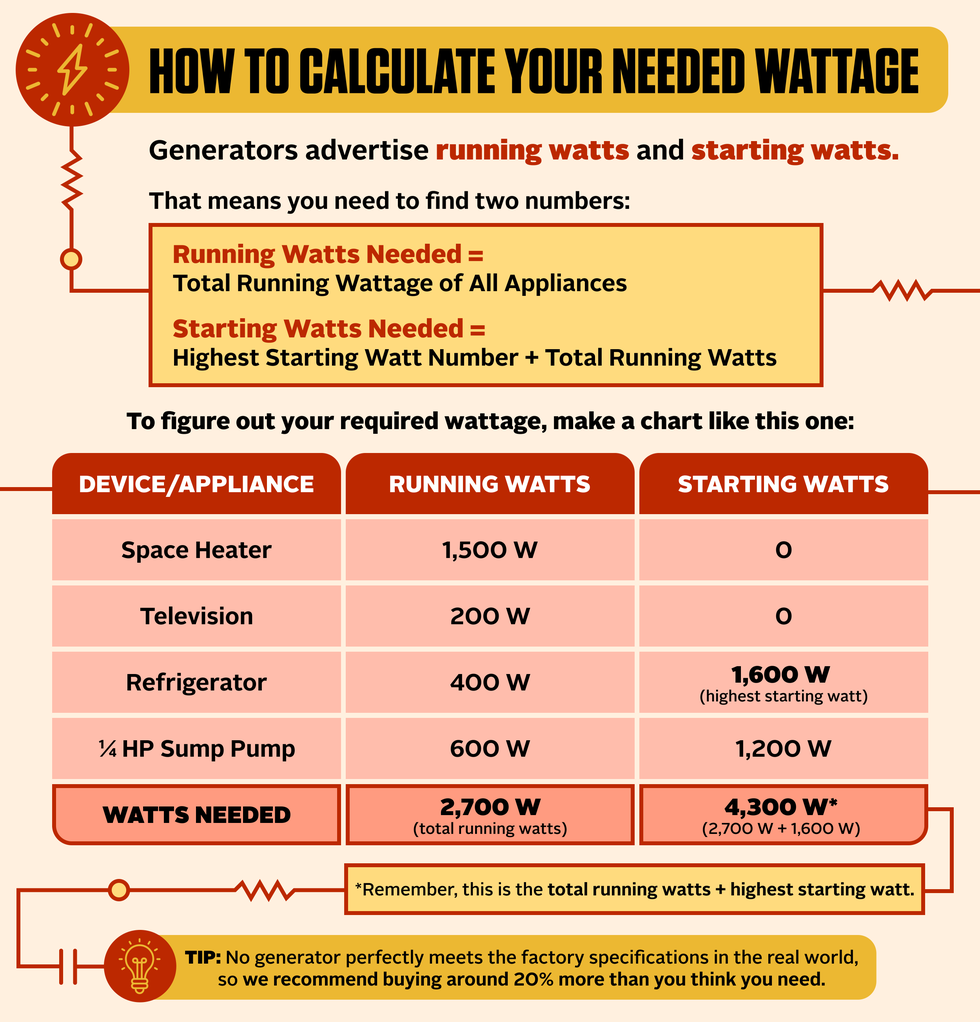
Starting Vs Running Watts
Air conditioners need more power to start than to run. This is because the compressor motor draws extra watts at startup.
| Type of Watts | Description |
| Starting Watts | Power needed to start the AC motor. |
| Running Watts | Power needed to keep the AC running steadily. |
You must choose a generator that handles the starting watts. This ensures your AC starts without tripping the generator.
Estimating Total Load
Calculate total load by adding the watts of all devices the generator will run.
- Find the running watts of your air conditioner.
- Add watts for other appliances you want to power.
- Include the highest starting watts among your devices.
- Choose a generator with capacity above this total.
This helps prevent overload and keeps your generator running safely and efficiently.
Choosing The Right Generator
Choosing the right generator is important to run your air conditioner safely. You need enough power to start and keep it running.
This guide helps you understand the main types of generators and fuel options. It makes picking easier and smarter.
Portable Vs Standby Generators
Portable generators are small and easy to move. Standby generators are fixed and start automatically during outages.
- Portable generators need manual setup and refueling.
- Standby generators connect to your home’s electrical system.
- Standby units provide more power and longer running time.
- Portable units cost less but may not handle big air conditioners.
Fuel Types And Efficiency
Generators use different fuels like gasoline, propane, or diesel. Each fuel has pros and cons for power and cost.
| Fuel Type | Advantages | Disadvantages |
| Gasoline | Easy to find, good for portable units | Short shelf life, less efficient |
| Propane | Clean burning, stores well | Lower power output, needs special tanks |
| Diesel | High efficiency, good for standby | Louder, harder to start in cold |

Credit: vtoman.com
Additional Factors To Consider
Choosing the right watt generator for your air conditioner needs more than just looking at the AC’s power rating. Other important factors affect the generator size you need.
Understanding these factors helps you pick a generator that runs your AC smoothly and safely.
Voltage And Amperage Requirements
Air conditioners need a specific voltage and amperage to work properly. If the generator does not match these needs, the AC may not start or could get damaged.
Check the AC unit’s label or manual to find the voltage and amperage ratings. Make sure your generator can supply at least this much power.
- Voltage should match the AC’s requirement (usually 120V or 240V).
- Amperage must cover the startup surge and running current.
- Generators with higher amperage capacity handle the AC better.
Multiple Appliances Running
If you plan to run other appliances with your air conditioner, add their power needs to the total wattage. This ensures your generator can handle the load.
Running several devices at once increases the power demand. Underestimating this can cause your generator to overload or shut down.
- List all devices you want to power together.
- Add each device’s starting and running watts.
- Choose a generator with higher wattage than the total sum.
- Leave extra capacity for safety and future needs.
Tips For Safe Generator Use
Running an air conditioner with a generator needs care and safety. You must know how much power the AC uses. Using the right size generator helps avoid problems.
This guide gives tips on how to use your generator safely. It covers proper installation, maintenance, and safety rules.
Proper Installation
Place your generator outside and far from windows. This keeps harmful gases away from your home. Use a sturdy, level surface to keep it stable.
Connect your generator to your air conditioner with the right power cord. Avoid using extension cords that are not rated for the generator’s power. Make sure the generator is grounded to prevent shocks.
- Place generator at least 20 feet from your home
- Use heavy-duty cords rated for the generator
- Keep generator dry and covered but ventilated
- Ground the generator properly
Maintenance
Regular maintenance keeps your generator running well. Check oil and fuel levels before use. Clean air filters to avoid engine problems.
Run the generator monthly for 20 minutes to keep it ready. Replace worn parts quickly. Store fuel safely to prevent fire risks.
- Check oil and fuel before every use
- Clean or replace air filters regularly
- Run generator monthly for short tests
- Store fuel in approved containers
Safety Precautions
Never run a generator indoors or in a closed space. Carbon monoxide gas can build up and cause death. Always have a carbon monoxide detector nearby.
Do not overload the generator. Know your air conditioner’s wattage and keep total load below the generator’s limit. Turn off the generator before refueling to avoid fire.
- Use generator outdoors only
- Keep carbon monoxide detector nearby
- Do not exceed the generator’s wattage limit
- Turn off generator before refueling
- Keep children and pets away from generator

Credit: www.microair.net
Frequently Asked Questions
How Many Watts Does An Air Conditioner Use?
An air conditioner typically uses between 500 to 1500 watts. The exact wattage depends on the AC size and model. Larger units consume more power. Checking the AC’s label helps determine its wattage needs accurately.
What Size Generator Is Needed For A 1500 Watt Ac?
A generator with at least 2000 watts capacity is ideal for a 1500 watt AC. This accounts for the initial surge when the AC starts. Choosing a generator with extra capacity ensures stable and efficient operation.
Can A 1000 Watt Generator Run An Air Conditioner?
A 1000 watt generator is usually insufficient for most air conditioners. Most AC units require more power to start and run. Using a higher wattage generator prevents overload and potential damage to your equipment.
Why Do Air Conditioners Need Extra Starting Watts?
Air conditioners need extra starting watts due to the compressor surge. This surge requires 2 to 3 times the running watts briefly. Generators must handle this surge to avoid shutting down or damaging the AC.
Conclusion
Choosing the right generator wattage keeps your air conditioner running smoothly. Check the AC’s startup and running watts first. Add extra power for other devices you may use. A generator with too little power can damage your AC or fail to start it.
A slightly larger generator gives you a safe power margin. This helps avoid sudden shutdowns and protects your equipment. Remember, knowing your watt needs saves headaches and keeps you cool. Power your air conditioner wisely and enjoy a comfortable home anytime.