Wondering how much electricity your home air conditioner actually uses? Knowing the wattage can help you take control of your energy bills and keep your home cool without surprises.
You’ll discover exactly how many watts your AC might be pulling, what affects that number, and simple tips to save money while staying comfortable. Keep reading—you’ll be surprised at how a little knowledge can make a big difference for your wallet and your comfort.
Air Conditioner Power Basics
A wattis a unit that measures power. It shows how much energy something uses every second. For example, a 100-watt bulb uses 100 watts of power.
Air conditioners use watts to run their parts. The compressor, fan, and controls all need power. The total watts show how much electricity the AC uses.
Most home air conditioners use between 500 and 3500 watts. Small window units use less power. Bigger central systems need more watts.
Watts tell us how much electricity an AC draws. This helps estimate the cost to runthe unit. More watts mean higher power use and higher electricity bills.
Factors Affecting Ac Wattage
Unit size and capacitygreatly affect how many watts an air conditioner uses. Larger units with higher BTU ratings need more power to cool bigger spaces. Small rooms require less energy.
Energy efficiency ratingslike SEER or EER show how well an AC uses electricity. Higher ratings mean less power use for the same cooling. Choosing a unit with a good rating saves energy.
Different types of air conditionersuse different amounts of power. Window units usually use less electricity than central systems. Portable ACs can vary based on size and model.
Usage patternsalso change power use. Running the AC all day uses more watts than just a few hours. Setting the thermostat higher reduces energy use.
Typical Wattage For Home Acs
Home air conditioners use different amounts of wattsbased on type and size.
| Type | Typical Wattage | Notes |
|---|---|---|
| Window Units | 500 – 1,500 watts | Good for small rooms, easy to install |
| Split Systems | 1,000 – 3,500 watts | Quieter and more efficient than window units |
| Central Air Conditioners | 3,000 – 5,000+ watts | Cool whole house, higher energy use |
The wattage depends on the cooling capacity. Larger units use more power. Energy efficiency can also change usage.
Credit: calfohomeservices.com
Calculating Energy Consumption
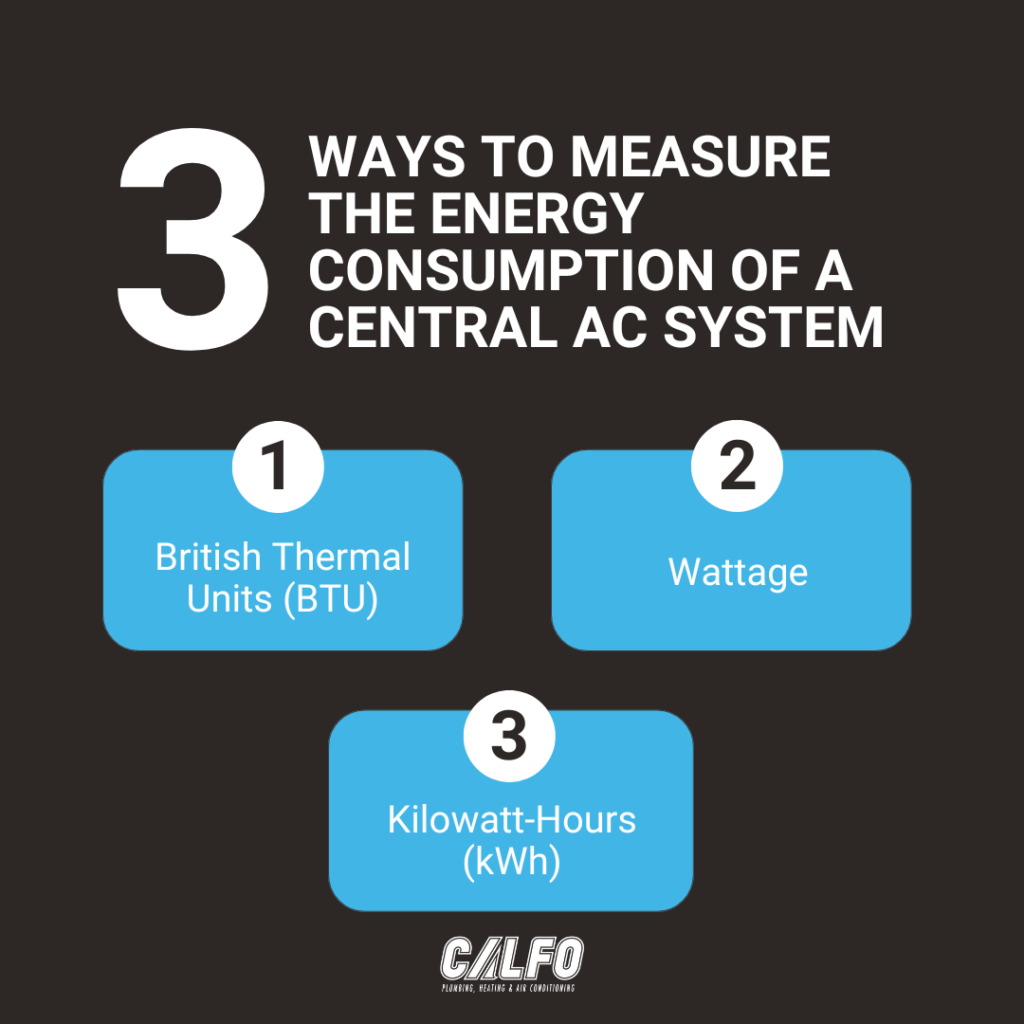
To convert wattageinto kilowatt-hours (kWh), divide watts by 1000. Then multiply by hours used. This gives the energy used in kWh. For example, a 1500-watt AC running 5 hours uses 7.5 kWh (1500 ÷ 1000 × 5).
Estimating monthly usage depends on daily run time and days used. Multiply daily kWh by days in the month. This helps predict the monthly energy cost.
Temperature settings impact energy use a lot. Lower temperatures make the AC work harder. Setting it a few degrees higher saves energy. Also, using a fan with the AC can reduce power use.
Reducing Ac Energy Use
Smart thermostats help save energy by learning your schedule.
They adjust the temperature when you’re away or sleeping.
Lowering the temperature by just a few degrees cuts energy use.
Regular maintenance keeps your air conditioner running smoothly.
- Clean or replace filters every 1-3 months.
- Check and clean the coils annually.
- Clear debris around the outdoor unit.
- Ensure proper refrigerant levels.
Good insulation stops cool air from escaping your home.
Seal gaps around doors and windows with weatherstripping.
Add insulation in the attic and walls to keep heat out.

Credit: aurorasolar.com
Cost Implications
Electricity billsdepend on the air conditioner’s power usage. A typical home AC uses between 500 to 1500 watts. This means your cost changes based on how long you run it and your local electricity price.
Estimating bills:
- Find the wattage on your AC’s label.
- Multiply watts by hours used daily.
- Convert to kilowatt-hours by dividing by 1000.
- Multiply by your cost per kWh from the utility company.
| AC Type | Power Use (Watts) | Estimated Cost per Hour ($) |
|---|---|---|
| Window AC | 500 – 1400 | 0.06 – 0.17 |
| Split AC | 700 – 1500 | 0.08 – 0.18 |
| Central AC | 2000 – 5000 | 0.24 – 0.60 |
Choosing The Right Ac For Your Home
Choosing the right air conditioner means knowing the size of your home. A unit too small won’t cool well. Too big wastes energy and money. Measure your room size to match the right AC.
Energy Star ratingshelp pick efficient models. These units use less power but cool just as well. Look for this label to save on electricity bills.
Think about your budget and long-term savings. Cheaper units may cost less now but use more power. Spending a bit more on an efficient AC can save money over time.

Credit: aurorasolar.com
Frequently Asked Questions
How Many Watts Does A Central Ac Use?
A central air conditioner typically uses between 2,000 to 5,000 watts. The exact consumption depends on the unit’s size and efficiency. Larger homes may require more powerful units, which consume more energy. Regular maintenance and energy-efficient models can help reduce overall power consumption and lower electricity bills.
Does Ac Wattage Vary By Size?
Yes, AC wattage varies by size. Smaller units, like window ACs, use 500 to 1,500 watts. Larger central systems use more. The size and efficiency of the unit determine its energy consumption. Choosing the right-sized unit for your space can optimize energy usage and improve cooling efficiency.
How Can I Reduce My Ac’s Energy Use?
To reduce your AC’s energy use, maintain regular servicing and cleaning. Use a programmable thermostat to optimize temperature settings. Ensure your home is well-insulated to prevent cool air from escaping. Additionally, using energy-efficient models can significantly lower energy consumption and reduce utility costs over time.
What Affects An Ac’s Watt Usage?
Several factors affect an AC’s watt usage. These include the unit’s size, efficiency, and age. Environmental factors like outdoor temperature and home insulation also play a role. Regular maintenance and choosing energy-efficient models help in minimizing energy consumption, ensuring effective cooling while reducing electricity bills.
Conclusion
Knowing how many watts a home air conditioner uses helps save energy and money. Different models use different power levels, so check your unit’s label. Running your AC efficiently keeps your home cool without high bills. Simple steps like setting the right temperature and regular maintenance make a big difference.
Small changes add up over time. Keep track of your usage to stay in control. Cool air doesn’t have to mean high electricity costs. Stay smart and comfortable all summer long.