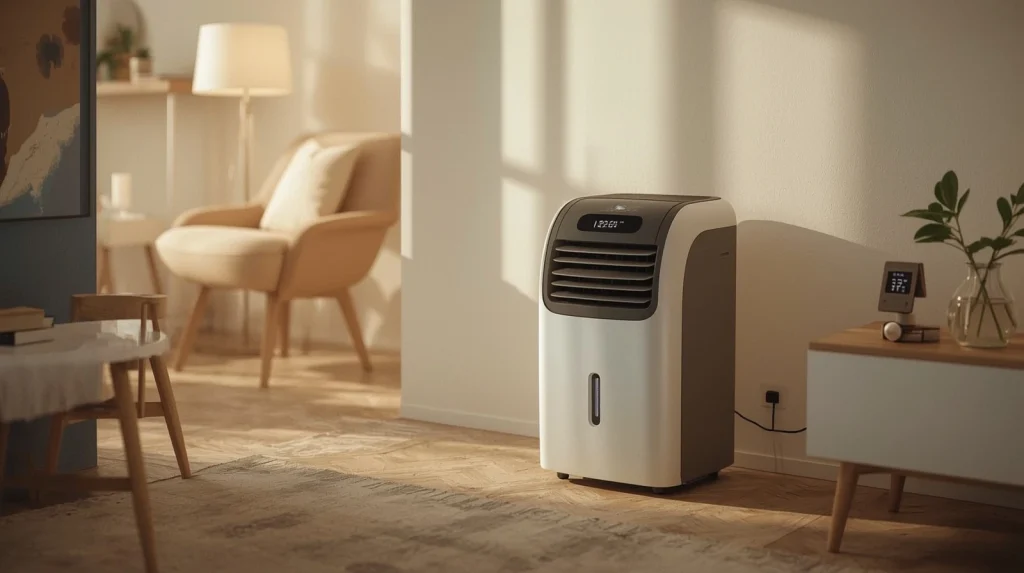
Are you wondering how much power your portable air conditioner really uses? Knowing the watts your unit consumes can help you save money and avoid surprises on your electricity bill.
Whether you’re cooling a small room or a larger space, understanding energy use is key to making smart choices. You’ll discover exactly how many watts a portable air conditioner uses and how that impacts your energy costs. Keep reading to find out how to keep cool without overheating your budget.

Credit: nomadicsupply.com
Portable Ac Power Basics
Portable air conditioners cool small spaces without permanent installation. They use electricity to run a compressor and fan.
Understanding the power use of these units helps manage electricity bills. Wattage shows how much power the unit needs.
Typical Wattage Range
Most portable air conditioners use between 800 and 1500 watts. The exact number depends on the model size and cooling capacity.
Smaller units use less power, while larger units need more watts to cool bigger rooms.
- Small units: about 800 to 1000 watts
- Medium units: around 1000 to 1300 watts
- Large units: up to 1500 watts or more
Factors Influencing Power Use
Power use depends on room size, temperature settings, and unit efficiency. Cooler rooms or lower fan speeds use less electricity.
Other factors include how well the room is insulated and how often the AC runs.
- Room size: bigger rooms need more power
- Temperature setting: lower temps use more energy
- Insulation: better insulation reduces power use
- Usage time: longer use increases electricity
- Unit efficiency: newer models use less power
Energy Efficiency Ratings
Portable air conditioners use different amounts of power. Knowing their energy efficiency helps you save money. Efficiency ratings show how well a unit cools using less electricity.
Understanding these ratings can help you pick a unit that uses fewer watts. This guide explains important ratings to check before buying.
Seer And Eer Explained
SEER stands for Seasonal Energy Efficiency Ratio. It measures cooling efficiency over a whole season. A higher SEER means the air conditioner uses less energy.
EER means Energy Efficiency Ratio. It shows efficiency at a specific temperature, usually 95°F. Like SEER, a higher EER means better energy use.
| Rating | Meaning | How It Helps |
|---|---|---|
| SEER | Seasonal efficiency | Lower energy use during cooling season |
| EER | Efficiency at high temperature | Good for hot days, saves electricity |
Choosing Energy Star Models
Energy Star models meet strict energy efficiency rules. They use less power than standard models. Choosing these can lower your electricity bills.
- Look for the Energy Star label on the unit
- Compare SEER and EER ratings with non-certified models
- Check if the model fits the room size for efficient cooling
- Read reviews about the unit’s power use and performance
Comparing Portable Ac To Other Cooling Options
Portable air conditioners offer a flexible way to cool rooms without permanent installation. They use electricity and come in different power levels.
This article compares portable AC units with other common cooling options. We look at window units, fans, and evaporative coolers.
Window Units Vs Portable Ac
Window air conditioners usually cool rooms more efficiently than portable units. They fit into a window and vent heat outside.
| Cooling Type | Average Power Usage (Watts) | Installation | Mobility |
| Window AC | 500 – 1500 W | Fixed in window | Low |
| Portable AC | 800 – 1800 W | No window needed, vent hose required | High |
Window units usually use less power for the same cooling power. Portable ACs are more convenient but often consume more electricity.
Fans And Evaporative Coolers
Fans and evaporative coolers use less electricity than portable ACs. Fans move air but do not lower room temperature. Evaporative coolers cool air by adding moisture.
- Fans use about 10 to 100 watts.
- Evaporative coolers use 100 to 300 watts.
- Portable ACs use 800 to 1800 watts.
Fans and evaporative coolers are cheaper to run but work best in dry climates. Portable ACs cool rooms more effectively but use more power.
Estimating Your Energy Costs
Knowing how many watts a portable air conditioner uses helps you estimate energy costs. This way, you can plan your budget better.
Energy use depends on the unit’s power and how long you run it. Let’s look at how to calculate daily and monthly costs.
Calculating Daily And Monthly Usage
First, find the wattage of your portable air conditioner. It usually ranges from 800 to 1500 watts. Multiply the watts by hours used daily.
To get monthly usage, multiply daily usage by the number of days you use the AC in a month.
- Find the wattage on the device label or manual
- Multiply watts by hours used per day (Watts × Hours)
- Multiply daily watt-hours by days used in a month
- Convert watt-hours to kilowatt-hours by dividing by 1000
Impact Of Usage Patterns
Energy costs change if you use the air conditioner more or less. Short bursts use less power than running it all day.
Also, setting a higher temperature saves energy. Running the AC at a cooler setting uses more watts.
- Longer daily use increases energy costs
- Lower temperature settings use more power
- Using the AC only when needed reduces bills
- Room size affects how hard the AC works
Ways To Reduce Power Consumption
Portable air conditioners use varying amounts of power. You can lower energy use with simple steps. Saving power helps reduce bills and environmental impact.
Focus on how you set the temperature and keep the unit well maintained. These two areas make a big difference in power consumption.
Optimal Temperature Settings
Setting your portable air conditioner to the right temperature saves energy. Avoid very low temperatures as they increase power use.
- Set the temperature to around 78°F (25-26°C) for comfort and efficiency.
- Use a programmable thermostat if available to adjust settings when not home.
- Close doors and windows to keep cool air inside.
- Use fans to help circulate air and reduce the workload on the unit.
Maintenance Tips For Efficiency
Regular maintenance helps your portable air conditioner use less power. Clean and check the unit often for better performance.
| Maintenance Task | Frequency | Effect on Power Use |
| Clean or replace air filters | Every 2 weeks | Improves airflow, reduces energy |
| Clear debris from vents | Monthly | Prevents blockages, saves power |
| Check coolant levels | Yearly | Maintains cooling efficiency |
| Inspect and seal leaks | Every 6 months | Stops cool air loss, lowers usage |

Credit: www.amazon.ca
Environmental Impact Of Portable Acs
Portable air conditioners use electricity to cool small spaces. This use affects the environment in many ways. Understanding these effects helps us choose better cooling options.
This article explains the carbon footprint of portable ACs and offers ideas for sustainable cooling.
Carbon Footprint Considerations
Portable air conditioners consume power, usually between 800 to 1500 watts. This electricity often comes from burning fossil fuels, which releases carbon dioxide.
- Higher wattage means more electricity use and higher emissions.
- Frequent use increases the total carbon footprint.
- Older models tend to be less energy efficient.
- Refrigerants inside ACs may harm the ozone layer if leaked.
Choosing energy-efficient units and maintaining them can reduce environmental harm.
Sustainable Cooling Alternatives
There are options that cool your space with less environmental impact. These methods use less electricity or no harmful chemicals.
| Cooling Method | Energy Use | Environmental Impact |
| Evaporative Coolers | Low | Uses water, no harmful gases |
| Fans | Very Low | No refrigerants, minimal power |
| Window ACs (Energy Star rated) | Moderate | More efficient, less waste |
| Portable ACs with inverter technology | Lower than standard | Reduced power use, less emissions |
Using shades, ventilation, and insulation helps reduce cooling needs. Simple changes can lower energy use and protect the planet.

Credit: www.jackery.com
Frequently Asked Questions
How Many Watts Does A Portable Ac Use?
Portable air conditioners typically use between 800 to 1,400 watts per hour. This can vary based on the size and efficiency. Larger units generally consume more watts. Always check the manufacturer’s specifications for precise information. Energy-saving models might use less power, helping reduce electricity costs.
Does A Portable Ac Consume A Lot Of Electricity?
Yes, portable air conditioners can consume significant electricity. They are less efficient than central systems. However, using energy-efficient models or setting higher temperatures can reduce consumption. Regular maintenance, like cleaning filters, can also improve efficiency. Always consider the energy rating before purchasing a unit.
How Can I Reduce My Portable Ac’s Watt Usage?
To reduce watt usage, keep your portable AC in a shaded area. Clean or replace filters regularly to ensure efficiency. Set the temperature slightly higher and use fans to circulate air. Seal windows and doors to prevent cool air from escaping.
Energy-efficient models can also help in reducing consumption.
What Factors Affect A Portable Ac’s Watt Usage?
Several factors impact watt usage, including the unit’s size, efficiency, and room size. Larger spaces require more power to cool. The ambient temperature and unit settings also influence consumption. Regular maintenance and proper placement can optimize efficiency. Always consult the manual for specific energy usage details.
Conclusion
A portable air conditioner’s watt usage varies by model and size. Most use between 800 and 1500 watts. Knowing this helps plan your electricity costs better. Smaller units use less power but cool smaller spaces. Larger ones need more watts but cool bigger rooms faster.
Always check the product label for exact wattage. This way, you avoid surprises on your energy bill. Choosing the right unit saves money and keeps you cool. Simple steps make a big difference in comfort and cost.