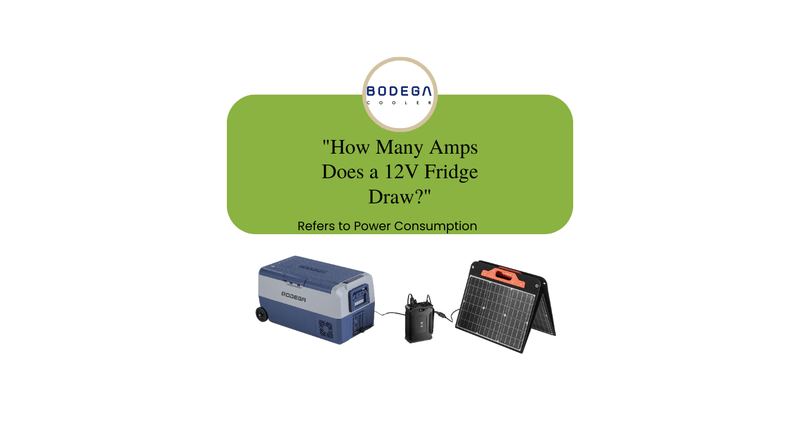
Have you ever wondered how much electricity your small refrigerator actually uses? Knowing the answer can help you save money on your energy bills and choose the right appliance for your space.
Whether you’re setting up a dorm room, office, or tiny kitchen, understanding how many watts your small fridge draws is key. You’ll discover simple facts that make it easy to estimate energy use and take control of your power consumption.
Keep reading to find out exactly what affects your fridge’s wattage and how you can make smarter choices for your home.
Power Consumption Basics
Understanding how much power your small refrigerator uses starts with getting clear on some power consumption basics. Knowing these can help you manage your energy bills better and choose the right appliance for your space. Let’s break down the key concepts that influence how power is measured and used.
Watts Vs Kilowatts
Watts (W) measure the rate at which an appliance uses energy. A small refrigerator might use anywhere from 50 to 150 watts while running. But the electricity you pay for is billed in kilowatt-hours (kWh), which is how many kilowatts you use over one hour.
Since 1 kilowatt equals 1,000 watts, it’s easy to confuse the two. If your fridge runs at 100 watts, that’s 0.1 kilowatts. So, if it runs for 10 hours, it consumes 1 kWh of electricity (0.1 kW × 10 hours = 1 kWh). Understanding this helps you estimate how much power your fridge really draws over time.
How Refrigerators Use Power
Your refrigerator doesn’t use the same amount of power all the time. It cycles on and off to keep the temperature steady inside. When the compressor kicks in, that’s when it draws the most watts.
Think about your fridge like a runner who sprints and then rests. The compressor runs more when the door opens often or when it’s hot outside. Less frequent use means lower energy consumption overall.
Have you noticed your fridge working harder after you stock it with warm groceries? That’s because it needs more power to cool down new items. Being aware of these patterns can help you reduce unnecessary power use and save on your bills.
Credit: www.homedepot.com
Typical Wattage Of Small Refrigerators
Knowing the typical wattage of small refrigerators helps you manage your energy consumption better. These appliances vary in power use depending on their size and features, so understanding what to expect can aid in budgeting your electricity bills. Let’s break down the average wattage and what influences the power draw of these compact fridges.
Average Wattage Range
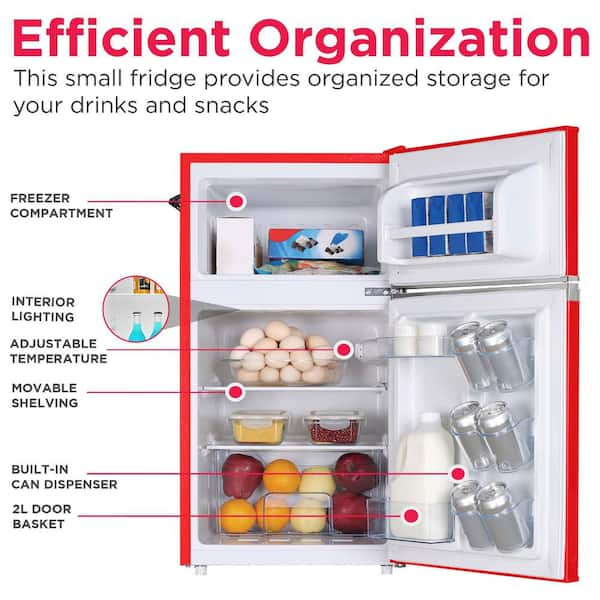
Small refrigerators usually draw between 50 to 100 wattswhen running. This range covers most models designed for dorm rooms, offices, or small apartments.
- Mini fridges with basic cooling functions often use around 50 to 70 watts.
- Compact refrigerators with freezer compartments or additional features might draw closer to 80 to 100 watts.
Keep in mind, the wattage mentioned is the running wattage, not the startup wattage, which can be higher briefly when the compressor kicks in. If you’ve ever noticed your fridge making a humming noise at intervals, that’s when it’s using more power momentarily.
Factors Affecting Power Draw
Your refrigerator’s power consumption isn’t fixed. Several factors can make it use more or less electricity.
- Size:Larger small fridges use more watts than ultra-compact ones.
- Age and condition:Older models often use more energy due to less efficient compressors and insulation.
- Temperature settings:Lower temperatures increase power draw because the compressor runs longer.
- Ambient temperature:Placing your fridge in a hot room makes it work harder.
- Frequency of door openings:Every time you open the door, cold air escapes, forcing the fridge to use more power to cool down again.
Have you ever thought about where your mini fridge sits in your room? Moving it away from heat sources and limiting how often you open its door can save more energy than you expect. How much could you reduce your electricity bill by making these small changes?
Energy Efficiency Ratings
Energy efficiency ratings show how much power a small refrigerator uses. These ratings help buyers choose models that save electricity. Efficient refrigerators use less energy to keep food cold. This lowers electricity costs and reduces environmental impact.
Understanding Energy Star
Energy Star is a label for energy-efficient appliances. Refrigerators with this label meet strict energy-saving rules. These models use about 10-20% less electricity than standard ones. Energy Star refrigerators often have better insulation and advanced compressors. This helps them maintain temperature with less power.
Impact On Electricity Bills
Energy-efficient refrigerators can cut electricity bills significantly. A typical small fridge draws 100 to 250 watts. Models with high energy ratings use watts closer to the lower end. Using less power daily adds up to big savings over time. Choosing an efficient fridge means paying less for electricity every month.
Credit: www.homedepot.com
Calculating Energy Usage
Understanding how much energy a small refrigerator uses helps manage electricity bills. Calculating energy usage involves knowing the power draw and the time the fridge runs daily. This gives a clear view of its consumption and cost impact.
Estimating Daily Consumption
Most small refrigerators use between 100 and 250 watts while running. They do not run all the time but cycle on and off. Average run time is about 8 hours per day.
To estimate daily energy use, multiply the wattage by the hours of operation. Then divide by 1,000 to convert to kilowatt-hours (kWh), which is what electric companies use.
- Example:A 150-watt fridge running 8 hours daily uses:
- 150 watts × 8 hours = 1,200 watt-hours
- 1,200 watt-hours ÷ 1,000 = 1.2 kWh per day
Annual Energy Cost
To find the yearly cost, multiply daily kWh by 365 days. Then multiply by the local electricity rate per kWh.
Electricity rates usually range from $0.10 to $0.20 per kWh.
- Example:With 1.2 kWh daily and $0.15 per kWh:
- 1.2 kWh × 365 = 438 kWh per year
- 438 kWh × $0.15 = $65.70 per year
This cost helps plan your energy budget and compare refrigerator models.
Reducing Power Consumption
Reducing power consumption of your small refrigerator not only saves you money but also helps the environment. Small changes in how you use and maintain your fridge can make a big difference in energy use. Let’s look at practical ways to lower the watts your fridge draws without sacrificing convenience.
Smart Usage Tips
Think about how often you open your fridge. Every time the door opens, cold air escapes and the compressor works harder. Try to plan what you need before opening the door to keep it closed as much as possible.
Set the temperature between 37°F and 40°F (3°C to 4°C). Colder settings use more power but don’t necessarily keep food fresher. Adjusting the thermostat slightly can reduce energy use significantly.
Keep your fridge full but not overcrowded. Food items help maintain cold temperatures inside, reducing the compressor’s workload. If you don’t have enough food, add bottles of water.
Maintenance For Efficiency
Dirty coils force your fridge to use more energy. Clean the condenser coils at least twice a year using a vacuum or brush. You’ll notice the compressor runs less often and uses fewer watts.
Check the door seals regularly. If the rubber gasket is cracked or loose, cold air leaks out. Replace worn seals to keep your fridge airtight and prevent energy waste.
Defrost the freezer section if you spot ice buildup. Ice layers make the compressor work harder, increasing power consumption. A quick defrost can save you watts and extend your fridge’s life.
Comparing Small Refrigerators To Other Appliances
Small refrigerators use less power than many household appliances. Understanding their energy use helps in managing electricity bills. Comparing their wattage to other devices shows their efficiency and cost-effectiveness.
Power Use In Context
Small refrigerators typically draw between 50 and 100 watts when running. This is lower than a microwave, which can use 800 to 1500 watts. A standard TV often uses around 100 to 200 watts. Even a laptop charger can draw 60 to 90 watts. This means small refrigerators fit well in low-energy homes.
Power use depends on factors like size, age, and model. Older refrigerators tend to consume more electricity. Energy Star-rated models use less power. Running time also varies; compressors cycle on and off to maintain temperature.
Choosing Energy-saving Models
Energy-saving refrigerators reduce electricity costs. Look for models with Energy Star certification. These units meet strict energy efficiency guidelines. Features like better insulation and efficient compressors help save power.
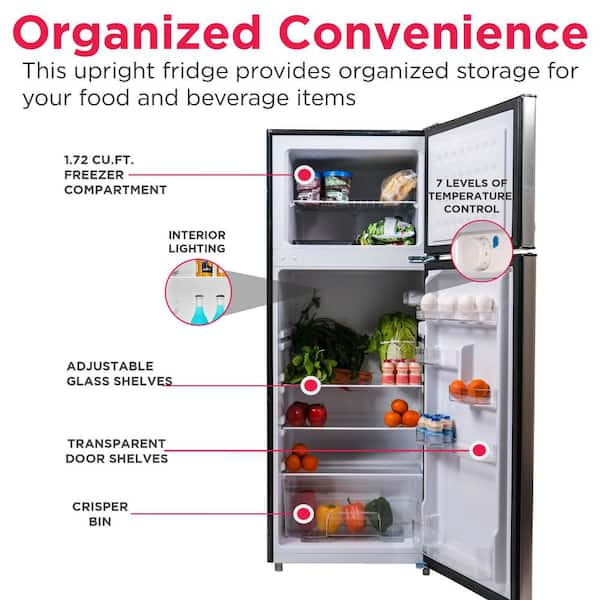
Smaller refrigerators with adjustable thermostats allow better control of energy use. LED lighting inside uses less energy than traditional bulbs. Choosing the right size for your needs avoids wasting power on unused space.

Credit: naturesgenerator.com
Frequently Asked Questions
How Many Watts Does A Small Refrigerator Use Daily?
A small refrigerator typically uses between 100 to 250 watts. Daily energy consumption depends on usage and efficiency, averaging about 1 to 2 kWh per day.
What Factors Affect A Small Fridge’s Wattage Consumption?
Wattage depends on fridge size, compressor type, insulation quality, and how often the door opens. Energy-efficient models use less power.
Can A Small Refrigerator Run On A Solar Panel?
Yes, small refrigerators can run on solar power. Ensure the solar panel and battery system meet the fridge’s wattage and startup power requirements.
How To Reduce Wattage Usage Of A Mini Fridge?
Keep the fridge in a cool spot, avoid frequent door openings, and maintain proper ventilation to lower power consumption effectively.
Conclusion
Understanding a small refrigerator’s wattage can save you energy costs. Most small fridges consume between 100 to 250 watts. This varies by brand and model. Regular checks help in maintaining efficiency. Be mindful of energy ratings when buying. A fridge with a higher rating uses less power.
Consider your needs and space before purchasing. Smaller units often use less energy. Regular maintenance keeps it running efficiently. Energy-efficient choices benefit both your wallet and the planet. Making informed choices ensures long-term savings. Keep these tips in mind for smarter energy use.