Are you tired of unexpected power outages putting your groceries at risk? Or perhaps you’re planning a camping trip and want to keep your food fresh on the go?
Whatever your reason, understanding how many watts you need for a refrigerator generator is essential. This knowledge not only ensures your fridge runs efficiently but also saves you from overspending on unnecessary power capacity. In this guide, you’ll discover the ideal wattage to keep your refrigerator humming smoothly.
By the end of this article, you’ll have the confidence to choose the perfect generator for your needs, ensuring peace of mind and uninterrupted cooling. Dive in to unlock the secrets of optimal power usage for your refrigerator!
Refrigerator Power Basics
Understanding the power requirements of your refrigerator is crucial when choosing a generator. Refrigerators don’t just use a constant amount of power—they have different needs when starting up compared to running normally. Knowing these basics helps you pick a generator that won’t leave your food spoiled or your power supply overwhelmed.
Typical Wattage Range
Most modern refrigerators operate between 100 and 800 watts while running. Smaller models or energy-efficient ones might be closer to 100-300 watts, whereas larger or older units often use 400-800 watts. This running wattage is what your generator needs to support continuously.
Keep in mind that these values can vary based on the fridge’s age, size, and features like built-in ice makers or temperature control.
Starting Vs Running Watts
Refrigerators require more power at startup than during normal operation. The compressor motor can need 2 to 3 times the running watts briefly when it kicks on.
For example, a fridge that runs at 600 watts may need 1200 to 1800 watts to start. If your generator isn’t rated to handle this surge, it might shut off or fail to power the fridge.
Have you checked if your generator’s surge capacity covers this startup spike? It’s a simple step that can save a lot of frustration.

Credit: www.renogy.com
Calculating Generator Size
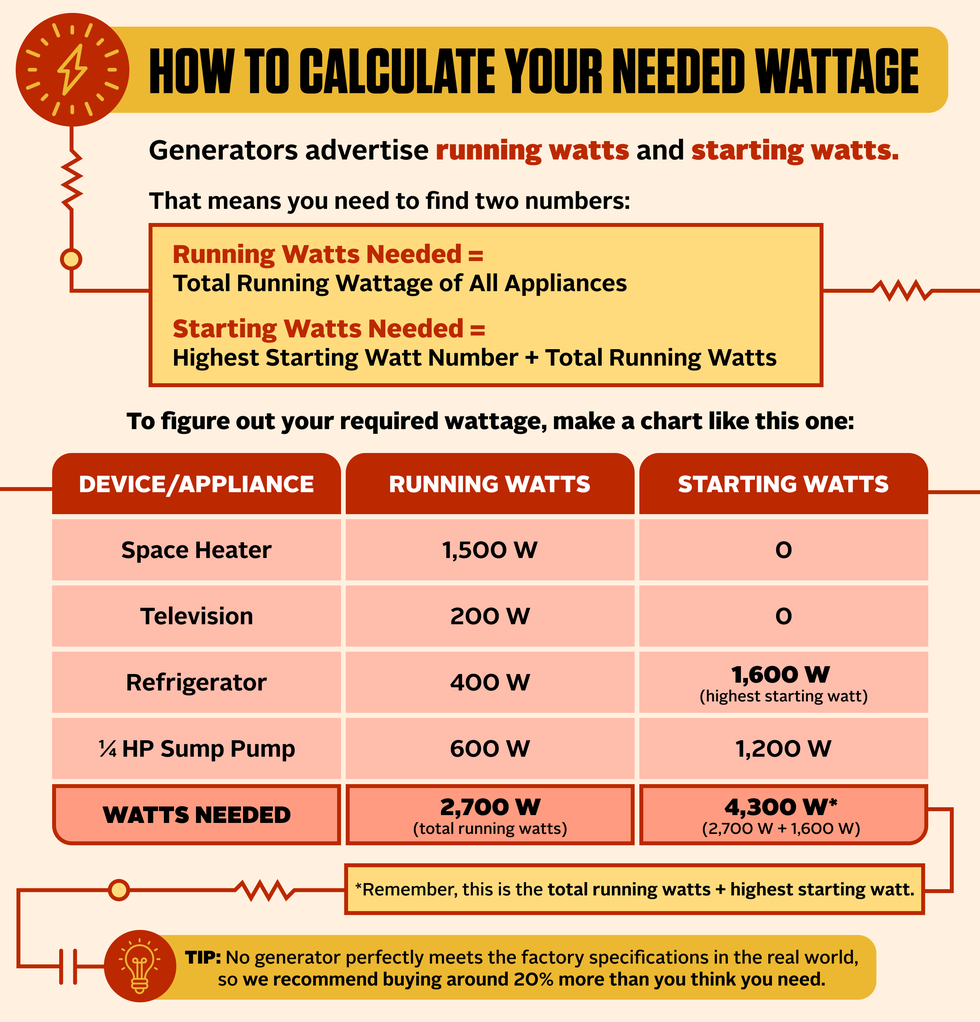
Calculating the right generator size for your refrigerator ensures steady power. A generator with too low wattage may fail to start the fridge. Too high wattage means wasting fuel and money. Correct calculation balances efficiency and safety.
Assessing Your Refrigerator’s Needs
First, check the wattage label on your refrigerator. It shows running watts and starting watts. Starting watts are higher because the compressor needs extra power to start.
Note down both numbers. Running watts tell how much power fridge uses continuously. Starting watts are needed only for a few seconds during startup.
Example:
- Running watts: 200 watts
- Starting watts: 600 watts
Your generator must handle the starting watts comfortably to avoid overload.
Adding Extra Appliances
Consider other appliances you want to power with the same generator. Add their running and starting watts to your total load.
Common extra appliances:
- Lights
- Fans
- Microwave
Sum all running watts and find the highest starting watts among devices. This sum ensures your generator handles peak loads.
Types Of Generators
Choosing the right generator for your refrigerator depends heavily on the type of generator you pick. Each type offers different features, power outputs, and usability that can impact how well your fridge runs during a power outage. Understanding these types will help you decide what suits your needs best.
Portable Generators
Portable generators are a popular choice for emergency power. They are generally affordable and easy to move around, making them perfect if you need power in different locations.
These generators can produce between 1,000 to 10,000 watts, so you can find one that matches your refrigerator’s wattage needs. However, they can be noisy and require fuel, which you’ll need to store safely.
Think about how often you might need to move your generator or use it for other appliances. Would a portable option fit into your lifestyle?
Inverter Generators
Inverter generators provide cleaner and more stable power, which is safer for sensitive appliances like refrigerators. They tend to be quieter and more fuel-efficient than standard portable generators.
Though usually more expensive, inverter generators are excellent if you want to avoid damaging your fridge’s compressor. They typically produce less wattage than large portable generators but are sufficient for most household refrigerators.
Have you ever experienced a power surge that damaged your appliances? An inverter generator might be worth the extra cost to protect your fridge.
Standby Generators
Standby generators are permanently installed and automatically turn on when the power goes out. They provide the most reliable and consistent power supply for your refrigerator and entire home.
These generators usually have higher wattage capacities, often 7,000 watts or more, ensuring they can handle multiple appliances simultaneously. They run on natural gas or propane, eliminating the need to refuel manually.
Consider if you want a hands-free solution that keeps your fridge running seamlessly during outages. Is the convenience and higher upfront cost worth it for your peace of mind?

Credit: weather.com
Fuel Options And Efficiency
Choosing the right fuel for a refrigerator generator affects both cost and performance. Each fuel type offers different levels of efficiency and convenience. Understanding these options helps in selecting the best fit for your needs.
Gasoline Generators
Gasoline generators are widely available and easy to refuel. They start quickly and provide steady power output. Gasoline is less expensive upfront but can be less efficient for long use. It produces more emissions compared to other fuels. Storing gasoline safely is important due to its flammability.
Propane Generators
Propane generators run cleaner than gasoline models. They emit fewer pollutants and have a longer shelf life for fuel storage. Propane is easy to store and does not degrade over time. These generators often run quieter and require less maintenance. Propane may cost more but offers better efficiency over time.
Dual Fuel Generators
Dual fuel generators can run on both gasoline and propane. This flexibility allows users to switch fuels based on availability. Dual fuel models provide backup options during fuel shortages. They may have slightly higher costs but improve overall reliability. Efficiency varies depending on the fuel used.
Starting Your Generator Safely
Starting your generator safely is essential to protect both your equipment and yourself. A refrigerator needs a surge of power when it kicks on, so understanding how to manage that initial load is key. Taking a few safety steps before and during startup can prevent damage and extend your generator’s life.
Proper Setup
Place your generator on a flat, stable surface outdoors to avoid carbon monoxide buildup. Never run it inside your home, garage, or any enclosed area.
Before starting, check that your fuel tank is filled with fresh gasoline or diesel. Stale fuel can cause poor performance or engine damage.
Connect your refrigerator to the generator using a heavy-duty extension cord rated for outdoor use. Make sure the connections are tight and secure to prevent power loss or sparks.
Maintenance Tips
Regularly inspect your generator for leaks, dirt, and wear. Clean air filters and replace spark plugs as needed to keep the engine running smoothly.
Change the oil after the first 20 hours of use, then every 50 hours or as recommended by the manufacturer. This simple step helps avoid costly repairs.
Test your generator monthly during the off-season to ensure it starts easily and powers your refrigerator without issues. This practice helps you catch problems before they become emergencies.
Energy-saving Tips For Refrigerators
Saving energy with your refrigerator can significantly reduce the wattage demand on your generator. Small adjustments in how you use and maintain your fridge add up to big savings on electricity. Let’s look at practical tips you can apply today to keep your refrigerator running efficiently without compromising on food preservation.
Optimizing Temperature Settings
Setting your refrigerator to the ideal temperature is crucial. The recommended temperature is between 37°F and 40°F (3°C to 4°C) for the fridge and 0°F (-18°C) for the freezer. Cooler than that? You’re wasting energy without extra benefits.
Have you checked your fridge’s current setting recently? Many people keep it colder than necessary because they think it preserves food better, but that simply increases power use. Adjusting to the right temperature can reduce energy consumption by up to 10%.
Regular Maintenance
Keeping your refrigerator clean and well-maintained helps it run smoothly and use less energy. Dusty coils at the back force your fridge to work harder, which increases wattage draw.
- Clean condenser coils every 6 months using a vacuum or brush.
- Check door seals for cracks or gaps; a poor seal leaks cold air, wasting energy.
- Defrost your freezer regularly if it isn’t frost-free to maintain efficiency.
I once ignored a small crack in the door seal and noticed my generator had to run longer to keep things cold. Fixing that seal cut down the generator run time noticeably. What small maintenance task have you overlooked that might be costing you extra energy?
Troubleshooting Power Issues
Troubleshooting power issues with a refrigerator generator is key to keeping your appliance running smoothly. Power problems can cause the fridge to stop working or even damage it. Understanding common issues helps you fix problems quickly and safely.
Generator Overload
Overloading happens when the generator powers too many devices at once. This leads to insufficient power for the refrigerator. Signs include the generator shutting down or the fridge not cooling properly.
To avoid overload:
- Check the generator’s wattage capacity.
- Compare it to the refrigerator’s starting and running watts.
- Turn off other appliances when using the fridge.
- Use a generator with higher wattage if needed.
Voltage Fluctuations
Voltage fluctuations can harm the refrigerator’s compressor and electronics. These happen when the generator delivers unstable power. Symptoms include flickering lights and the fridge cycling on and off.
Prevent voltage issues by:
- Using a generator with automatic voltage regulation (AVR).
- Keeping the generator well maintained and fueled.
- Avoiding running the generator near heavy machinery or tools.
- Using a surge protector to safeguard the fridge.

Credit: www.reddit.com
Frequently Asked Questions
How Many Watts Does A Refrigerator Typically Use?
A standard refrigerator uses between 100 to 800 watts, depending on size and efficiency. Most average models require about 600 watts to run.
What Size Generator Is Needed For A Refrigerator?
A generator with at least 1000 watts is recommended to safely power a refrigerator. This accounts for the starting surge and continuous running load.
Can A Small Generator Handle A Refrigerator’s Startup Watts?
No, a small generator under 1000 watts may fail during the refrigerator’s startup surge, which can be 2-3 times its running watts.
How To Calculate Wattage For A Refrigerator Generator?
Check your refrigerator’s label for running and starting watts. Add 20-30% extra capacity for safety and start-up power surges.
Conclusion
Choosing the right generator wattage keeps your refrigerator running smoothly. Most fridges need between 600 and 1200 watts to start. Running watts are usually lower, around 100 to 800 watts. Remember to add extra power for safety. A generator with at least 1500 watts is a safe bet.
This ensures your fridge stays cold during power outages. Always check your refrigerator’s manual for exact wattage. A well-sized generator saves you from food spoilage and stress. Simple planning makes a big difference when power goes out.