Are you wondering how many watts your window air conditioner needs to keep your room cool without wasting energy? Choosing the right wattage is key to staying comfortable and saving money on your electricity bill.
If your air conditioner uses too much power, you’ll pay more than necessary. If it’s too weak, your room won’t feel cool enough. You’ll discover exactly how to find the perfect wattage for your window air conditioner, so you can enjoy refreshing cool air without any guesswork.
Keep reading to make the smartest choice for your home and your budget.
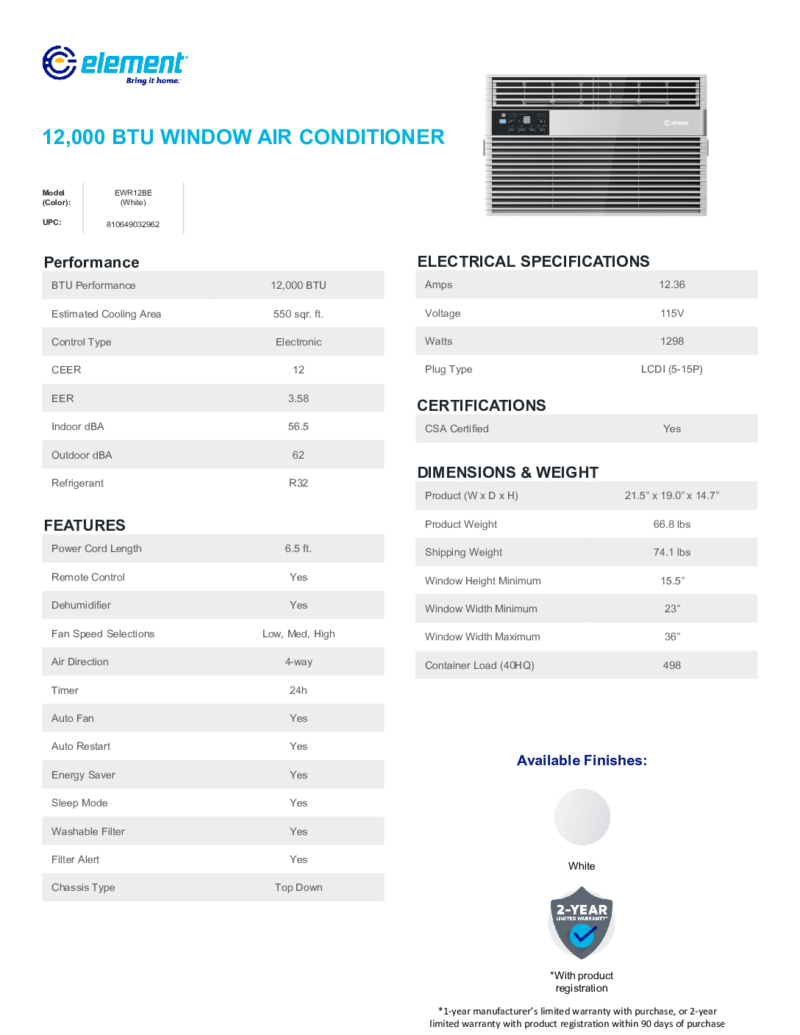
Credit: elementelectronics.com
Window Ac Power Basics
Window air conditioners use electricity to cool a room. Knowing how many watts they use helps you understand energy use. This knowledge can help you choose the right unit for your needs.
Watts measure the power an air conditioner needs to run. This affects your electric bill and the unit’s efficiency. Let’s look at what watts mean for a window AC.
What Watts Mean For Ac
Watts show how much electricity an air conditioner uses each hour. A higher watt number means the AC uses more power. This usually means it can cool bigger spaces.
- Lower watts mean less power use but less cooling power.
- Higher watts mean more power use but more cooling power.
- Watts affect your monthly electricity costs.
- Choosing the right wattage saves money and energy.
Typical Wattage Range
Window ACs come in many sizes. Each size uses a different amount of watts. Here is a table showing typical wattage ranges for common window AC sizes.
| Cooling Capacity (BTU) | Typical Wattage (Watts) | Room Size (sq ft) |
|---|---|---|
| 5,000 BTU | 450 – 600 | 100 – 150 |
| 8,000 BTU | 700 – 900 | 200 – 350 |
| 10,000 BTU | 900 – 1,200 | 350 – 450 |
| 12,000 BTU | 1,100 – 1,500 | 450 – 550 |
| 15,000 BTU | 1,400 – 1,800 | 550 – 800 |
Factors Affecting Ac Wattage
Choosing the right wattage for a window air conditioner is important. It helps cool your room efficiently.
Different factors affect how many watts an AC will use. These factors help you pick the right unit.
Room Size And Cooling Needs
The size of your room is the main factor in choosing AC wattage. Bigger rooms need more power to cool.
Cooling needs depend on how hot your area is and how much sunlight the room gets.
- Small rooms (up to 150 sq ft) need about 500-700 watts
- Medium rooms (150-300 sq ft) need 700-1,200 watts
- Large rooms (300+ sq ft) require 1,200 watts or more
Energy Efficiency Ratings
Energy efficiency ratings show how well an AC uses power. Higher ratings mean less electricity use.
Look for units with good Energy Efficiency Ratio (EER) or Seasonal Energy Efficiency Ratio (SEER) scores.
- High EER means lower wattage for the same cooling
- Efficient ACs save money on energy bills
- Energy Star certified models meet strict efficiency rules
Additional Features Impact
Extra features on window ACs can increase power use. Features like fans, timers, and smart controls use extra watts.
Some features help save energy, while others add to the total wattage.
- Fan-only mode uses less power than cooling mode
- Timers help reduce running time and save watts
- Smart sensors adjust cooling for energy savings
Calculating Wattage For Your Space
Choosing the right wattage for your window air conditioner helps keep your room cool. It saves energy and keeps you comfortable.
To find the right wattage, you need to understand your room’s cooling needs. This depends on the room size and other factors.
Estimating Cooling Load
Cooling load is the amount of heat your air conditioner must remove. It depends on room size, sunlight, and insulation.
To estimate cooling load, measure your room’s square footage. Then adjust for windows and heat sources.
- Measure room length and width in feet
- Multiply length by width to get square feet
- Add extra watts for sunny windows or many people
- Consider extra insulation to lower watts needed
Matching Ac Capacity To Room Size
Air conditioner capacity is measured in watts or BTUs. Match this capacity to your room size for best cooling.
Use this guide to pick the right wattage based on room size.
| Room Size (sq ft) | Recommended Wattage | BTUs (approx.) |
|---|---|---|
| 100 – 150 | 500 – 700 watts | 5,000 – 7,000 BTUs |
| 150 – 250 | 700 – 1,000 watts | 7,000 – 10,000 BTUs |
| 250 – 350 | 1,000 – 1,200 watts | 10,000 – 12,000 BTUs |
| 350 – 450 | 1,200 – 1,500 watts | 12,000 – 15,000 BTUs |
Credit: northnjhvac.com
Energy Consumption And Costs
Window air conditioners use electricity to cool your room. The amount of power they use depends on their size and how long they run. Understanding energy use helps you save money on bills.
Knowing how many watts your window air conditioner uses can help you estimate daily and monthly costs. This guide explains energy use and ways to reduce power consumption.
Daily And Monthly Usage
Most window air conditioners use between 500 and 1500 watts. If you run a 1000-watt unit for 8 hours a day, it uses 8 kilowatt-hours (kWh) daily.
To find monthly use, multiply daily kWh by days used. For example, 8 kWh times 30 days equals 240 kWh per month.
- 500 watts running 8 hours = 4 kWh daily
- 1000 watts running 8 hours = 8 kWh daily
- 1500 watts running 8 hours = 12 kWh daily
- Monthly use = daily kWh × number of days
Impact On Electricity Bills
Electricity costs depend on the price per kWh in your area. Multiply the kWh used by the rate to get the cost. Running a 1000-watt AC for 8 hours daily may cost $1 per day.
Monthly, this adds up. For 240 kWh at $0.12 per kWh, the bill is about $29. Electricity rates and usage time affect total costs.
- Cost per day = kWh used × cost per kWh
- Cost per month = daily cost × days used
- Longer use means higher bills
- Higher wattage means more power used
Ways To Reduce Power Use
Lowering power use saves money. Use your window AC only when needed. Set the temperature higher to use less energy. Keep the unit clean for better performance.
Use fans to help circulate cool air. Close windows and doors to keep cold air inside. Use curtains to block heat from sunlight.
- Run AC less often and for shorter times
- Set thermostat to 78°F or higher
- Clean or replace filters regularly
- Use fans to improve air flow
- Seal windows and doors to keep cool air in
- Block sunlight with curtains or blinds
Choosing The Right Window Ac
Picking the right window air conditioner is important for comfort. The wattage affects how well it cools and how much energy it uses.
Choosing the right size and power can save money and keep your room cool. Let’s look at how to balance these factors.
Balancing Power And Efficiency
Window AC units use watts to run and cool your room. More watts usually mean more cooling power but higher electricity costs.
Look for models with good Energy Efficiency Ratio (EER). This shows how much cooling you get per watt used.
- High wattage cools larger spaces fast
- Lower wattage saves energy in small rooms
- Energy-efficient units cost less to run
Size And Wattage Recommendations
Choose an AC with wattage that fits your room size. Too small won’t cool well. Too big wastes energy.
| Room Size (sq ft) | Recommended Wattage (Watts) | BTU Rating |
|---|---|---|
| 100 – 150 | 400 – 550 | 5,000 – 6,000 |
| 150 – 250 | 550 – 700 | 6,000 – 8,000 |
| 250 – 350 | 700 – 900 | 8,000 – 10,000 |
| 350 – 450 | 900 – 1,200 | 10,000 – 12,000 |
Check your room size before buying. Match it with the right wattage and BTU for best results.
Brands And Models To Consider
Some brands offer reliable window ACs with good power and energy use. Look for units with good reviews and energy ratings.
- Brand A: Known for quiet, efficient models
- Brand B: Offers affordable units with good wattage options
- Brand C: Focuses on energy-saving technology
Compare features like cooling power, wattage, and energy star ratings before choosing.
Installation And Maintenance Tips
Knowing how many watts a window air conditioner uses helps with energy planning. Proper installation and regular upkeep keep it running well.
This guide covers where to place your unit, cleaning tips, and how to fix high power use problems.
Proper Placement For Efficiency
Place your window air conditioner in a shaded spot if possible. This helps it use less power to cool your room.
Keep the unit away from heat sources like direct sunlight or lamps. Make sure the airflow is not blocked.
- Install the unit on a sturdy window frame.
- Ensure the back of the unit vents outside.
- Avoid placing it near appliances that give off heat.
- Seal gaps around the unit to stop air leaks.
Routine Cleaning And Servicing
Clean the air filter every month to keep air flowing well. A dirty filter makes the unit work harder and use more watts.
Check the coils and fins for dirt and dust. Clean them gently with a soft brush or cloth to avoid damage.
- Remove and wash the air filter with warm water.
- Use a vacuum or brush on the coils and fins.
- Clear any debris blocking the outside vents.
- Schedule professional servicing yearly for best results.
Troubleshooting High Power Use
If your air conditioner uses more watts than usual, check for common issues. Fixing these can save energy and money.
Look for dirty filters, blocked vents, or poor insulation. These problems make the unit work harder than it should.
- Replace or clean dirty air filters.
- Ensure vents are clear and not blocked.
- Check window seals to stop cold air leaks.
- Reduce room temperature settings slightly.
- Inspect the unit for unusual noises or smells.
Credit: www.renogy.com
Frequently Asked Questions
How Many Watts Does A Typical Window Ac Use?
A typical window air conditioner uses between 500 and 1500 watts. The exact wattage depends on the unit’s cooling capacity and energy efficiency rating.
What Wattage Is Needed For A 5000 Btu Window Ac?
A 5000 BTU window air conditioner typically uses about 500 watts. This wattage efficiently cools small rooms up to 150 square feet.
How To Calculate Watts For A Window Air Conditioner?
Multiply the unit’s BTU rating by 0. 293 to estimate its wattage. This method provides a quick, approximate power consumption value.
Do Larger Window Ac Units Use More Watts?
Yes, larger units with higher BTU ratings consume more watts. Bigger rooms require more cooling power, increasing the energy usage accordingly.
Conclusion
Choosing the right wattage for a window air conditioner is crucial. It ensures efficient cooling and energy savings. Always consider room size and insulation quality. Bigger rooms need more power. Smaller rooms, less. Check the unit’s energy efficiency rating. This helps in reducing electricity bills.
Consult experts if unsure about wattage needs. A well-chosen air conditioner enhances comfort. It keeps the room cool during hot days. Making an informed decision leads to long-term satisfaction. Keep these tips in mind for optimal cooling results.