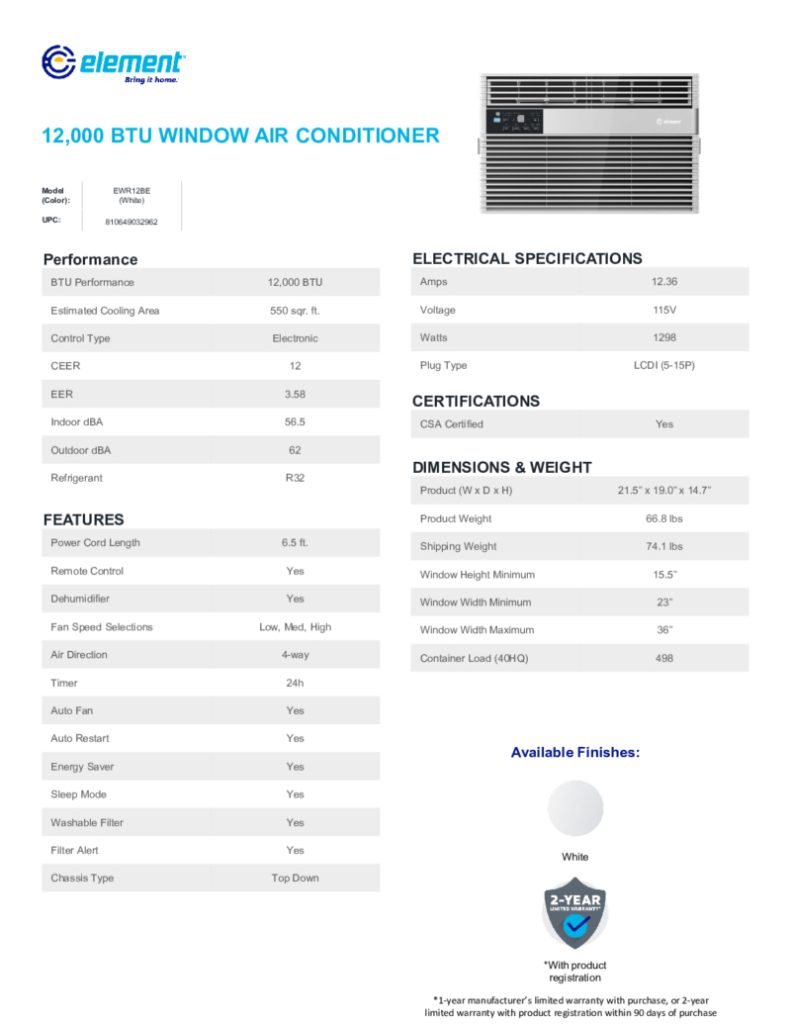
Are you wondering how many watts your window air conditioner uses? Knowing this can help you save money and choose the right unit for your space.
Understanding the power consumption of your air conditioner is key to managing your energy bills and keeping your home cool without surprises. You’ll discover exactly how to figure out the wattage of your window AC and why it matters for your comfort and budget.
Keep reading to learn simple tips that will help you make smarter cooling choices.
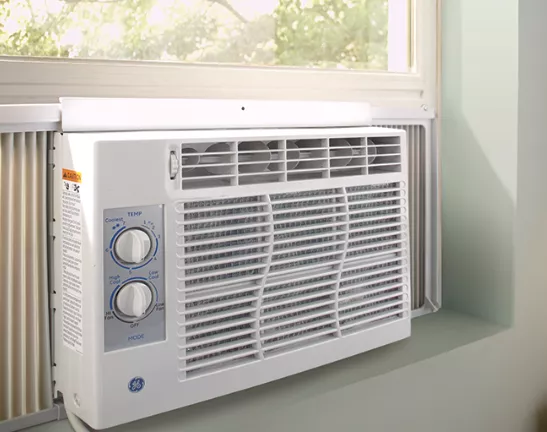
Credit: www.premium-electric.ca
Window Air Conditioner Basics
Window air conditioners cool rooms by removing heat and moisture from the air. They fit into a window or a wall opening. These units are common in homes and small offices.
Understanding how many watts a window air conditioner uses helps you manage energy costs. Watts measure the power the unit consumes to run.
Common Features
Most window air conditioners share several features. These features make them easy to use and effective in cooling.
- Adjustable Thermostat: Lets you set the desired temperature.
- Fan Speeds: Usually two or three settings for airflow control.
- Remote Control: Allows operation from across the room.
- Timer: Enables automatic on/off scheduling.
- Filter: Removes dust and improves air quality.
Energy Efficiency Ratings
Energy efficiency ratings show how well a window air conditioner uses power. Higher ratings mean better efficiency and lower electricity bills.
| Rating Type | What It Means | Typical Range |
| Energy Efficiency Ratio (EER) | Cooling output divided by power input | 8 to 12 |
| Seasonal Energy Efficiency Ratio (SEER) | Efficiency over a cooling season | 10 to 15 |
| Energy Star Certified | Meets strict energy efficiency guidelines | Yes or No |
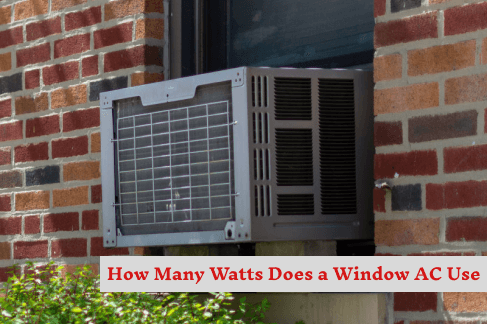
Credit: www.renogy.com
Wattage Factors
Window air conditioners use watts to show how much power they need. The wattage depends on different factors. These factors help decide how much electricity the unit will use.
Knowing these wattage factors helps you pick the right air conditioner. It also helps save energy and money.
Cooling Capacity
Cooling capacity shows how much heat the air conditioner can remove. It is usually measured in BTUs (British Thermal Units). Higher BTUs mean more cooling power.
More cooling power usually means the unit uses more watts. Small units may use about 500 watts. Larger units can use over 1500 watts.
Room Size Impact
The size of the room affects the wattage needed. Bigger rooms need air conditioners with higher wattage. This is because more energy is needed to cool a large space.
- Small rooms (up to 150 sq ft): 500-700 watts
- Medium rooms (150-300 sq ft): 700-1000 watts
- Large rooms (300-500 sq ft): 1000-1500 watts
Energy Efficiency Ratio
The Energy Efficiency Ratio (EER) shows how well the air conditioner uses power. A higher EER means better efficiency and less wattage for the same cooling.
Choosing a unit with a good EER helps lower electricity bills. It also reduces the total wattage the unit needs.
Average Wattage Ranges
Window air conditioners use different amounts of power based on their size and cooling capacity. Knowing the wattage helps you estimate energy use and costs.
This guide shows average wattage for small, medium, and large window AC units. It helps you choose the right size for your needs.
Small Units
Small window AC units usually cool rooms up to 150 square feet. They use less power and are good for small spaces like bedrooms or offices.
- Cooling capacity: 5,000 to 6,000 BTU
- Average wattage: 400 to 600 watts
- Energy efficient for small rooms
Medium Units
Medium units cool rooms between 150 and 350 square feet. They balance power use and cooling ability well for average-sized rooms.
| Cooling Capacity (BTU) | Average Wattage (Watts) |
| 7,000 – 8,500 | 600 – 900 |
| 9,000 – 10,000 | 900 – 1,200 |
Large Units
Large window AC units cool spaces over 350 square feet. They need more power to keep bigger rooms comfortable.
Typical wattage for large units:
- 10,500 to 12,500 BTU units use 1,200 to 1,500 watts
- Units above 12,500 BTU can use 1,500 watts or more
Choosing the right size helps save energy and keeps your room cool.
Calculating Power Consumption
Knowing how many watts a window air conditioner uses helps you control energy costs. Each model uses different power depending on its size and efficiency.
Calculating power consumption lets you estimate electricity use and plan your budget better.
Daily Usage Estimation
To estimate daily power use, multiply the unit’s wattage by hours it runs each day. Most window ACs use between 500 and 1500 watts.
For example, if your AC uses 1000 watts and runs 8 hours, it uses 8000 watt-hours or 8 kilowatt-hours daily.
- Find the wattage on the label or manual
- Estimate daily running hours
- Multiply watts by hours to get watt-hours
- Divide by 1000 to convert to kilowatt-hours (kWh)
Monthly Energy Costs
To find monthly energy costs, multiply daily kWh by days used per month. Then multiply by your electricity rate per kWh.
This shows how much you pay for running the window AC each month.
| Example | Value |
|---|---|
| Daily Usage (kWh) | 8 |
| Days per Month | 30 |
| Electricity Rate ($ per kWh) | 0.12 |
| Monthly Cost | 8 × 30 × 0.12 = $28.80 |
Tips For Energy Efficiency
Window air conditioners use watts to measure energy. Saving energy helps lower bills and protects the planet.
Follow simple tips to keep your air conditioner working well and using less power.
Proper Installation
Install your window air conditioner tightly in the window frame. Gaps let hot air in and cool air out.
Place the unit in a shady spot if possible. Shade helps the air conditioner use less energy.
- Seal gaps around the unit with foam or weatherstripping
- Keep curtains or blinds closed on sunny windows
- Make sure the unit is level to prevent water leaks
Regular Maintenance
Clean or replace the air filter every month during use. A dirty filter blocks airflow and wastes energy.
Check and clean the coils at least twice a year. Dusty coils reduce cooling power and increase watt use.
- Turn off and unplug before cleaning
- Use a soft brush or vacuum for coils
- Keep the outside unit free from debris
Optimal Temperature Settings
Set your air conditioner to a comfortable but not too cold temperature. Around 78°F (25°C) is good.
Use a programmable timer to turn off the unit when no one is home. This saves many watts over time.
- Avoid setting temperature below 72°F (22°C)
- Use fans to help spread cool air
- Close doors and windows while cooling
Choosing The Right Unit
Choosing the right window air conditioner means picking a unit with the right wattage. Wattage affects how well the unit cools your space. It also impacts your electricity use and cost.
Use the right size unit for your room size. A too small unit will not cool well. A too large unit wastes energy and money.
Assessing Room Needs
Start by measuring your room. The size in square feet guides how many watts you need. Other factors matter too, like sunlight and ceiling height.
- Measure the room’s length and width to get square footage
- Consider how much sun the room gets during the day
- Note if the room has high ceilings or many windows
- Account for how many people usually use the room
Budget Considerations
Set a clear budget for your air conditioner purchase. Wattage affects the unit price and running costs. Balance upfront cost with energy use.
| Wattage | Approximate Price | Energy Use (kWh/month) |
|---|---|---|
| 500 – 1000 W | $150 – $250 | 30 – 50 |
| 1001 – 1500 W | $250 – $400 | 50 – 75 |
| 1501 – 2000 W | $400 – $600 | 75 – 100 |
Long-term Savings
Look for energy-saving features. A unit with higher efficiency uses fewer watts for the same cooling. This saves money over time.
Here are tips to save energy and money with your air conditioner:
- Choose a unit with a high Energy Efficiency Ratio (EER).
- Use a programmable thermostat to control cooling times.
- Keep doors and windows closed while the unit runs.
- Clean or replace filters regularly for best airflow.

Credit: udpwr.com
Frequently Asked Questions
How Many Watts Does A Typical Window Ac Use?
A typical window air conditioner uses between 500 to 1500 watts. The exact wattage depends on the unit’s size and cooling capacity. Smaller units consume less power, while larger units designed for bigger rooms use more watts.
What Wattage Is Needed For A 5,000 Btu Window Ac?
A 5,000 BTU window AC typically uses around 500 watts. This size suits small rooms up to 150 square feet. It balances efficient cooling with low energy consumption.
How To Calculate Watts For Window Air Conditioners?
To estimate watts, divide the BTU rating by 3. 41. For example, a 10,000 BTU window AC uses about 2933 watts. This formula helps approximate power needs for different units.
Do Higher Btus Mean Higher Wattage In Window Acs?
Yes, higher BTU units generally consume more watts. More cooling power requires more electricity. However, energy efficiency ratings can affect actual power use.
Conclusion
Choosing the right wattage for a window air conditioner saves energy and money. Smaller rooms need less power, while bigger rooms need more. Check the unit’s watt rating before buying. A good fit keeps your space cool without high electricity bills.
Simple steps help you stay comfortable all summer. Now you know how many watts a window air conditioner uses. Keep this in mind for smart cooling choices.