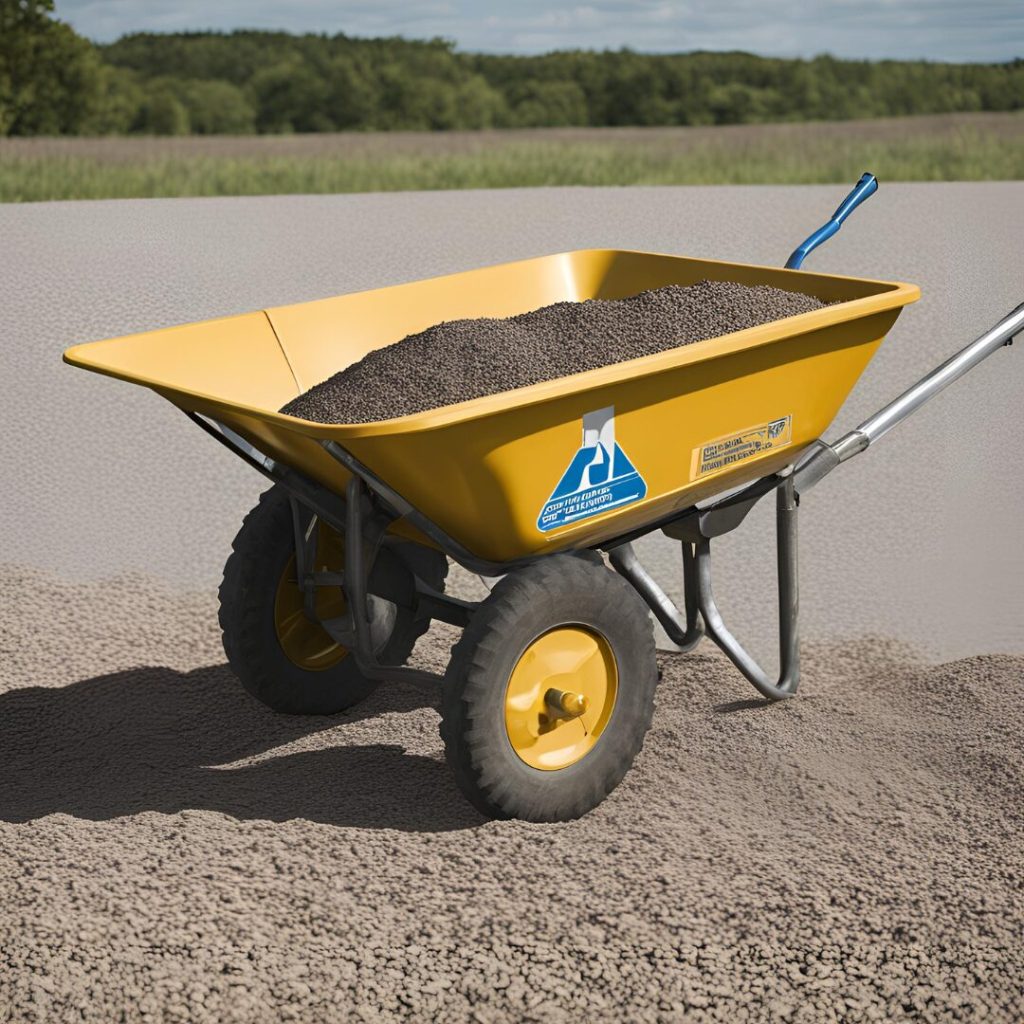
Are you planning a landscaping or construction project and wondering how to measure your materials? One common question is, “How many wheelbarrows are in a cubic yard?” Knowing the answer can save you time, effort, and money.
You’ll discover the simple math behind this conversion and get practical tips to make your work easier. Keep reading to take the guesswork out of your project and get accurate results every time.

Credit: mcmunnandyates.com
Wheelbarrow Capacity
Knowing how many wheelbarrows fit in a cubic yard helps with measuring materials. It saves time and effort on projects.
This guide explains wheelbarrow sizes and their volume to help you estimate loads better.
Standard Wheelbarrow Volume
Most standard wheelbarrows hold about 6 cubic feet of material. This is a common size for general tasks.
- One cubic yard equals 27 cubic feet.
- Standard wheelbarrow volume is roughly 6 cubic feet.
- Therefore, about 4.5 wheelbarrow loads fill one cubic yard.
Variations In Wheelbarrow Sizes
Wheelbarrows come in different sizes for various jobs. Knowing these sizes helps plan material transport.
| Wheelbarrow Size | Volume (cubic feet) | Loads per Cubic Yard |
| Small | 4 | 6.75 |
| Standard | 6 | 4.5 |
| Large | 8 | 3.375 |

Credit: willmachinery.com
Cubic Yard Basics
A cubic yard is a unit of volume used in many trades. It measures the space inside a cube that is one yard long, wide, and high.
This measurement helps workers estimate how much material they need. Knowing how many wheelbarrows fit in one cubic yard saves time on the job.
Definition And Dimensions
A cubic yard equals a cube with sides one yard long. One yard is 3 feet or 36 inches.
The volume of a cubic yard is 27 cubic feet. This equals 46,656 cubic inches.
- Length: 3 feet (36 inches)
- Width: 3 feet (36 inches)
- Height: 3 feet (36 inches)
- Volume: 27 cubic feet
Common Uses In Construction
Builders use cubic yards to measure materials like concrete, dirt, and gravel. It helps them buy the right amount for projects.
Wheelbarrows carry these materials from one place to another. Knowing how many wheelbarrows fit in a cubic yard helps plan work better.
- Concrete mixing and pouring
- Moving soil or mulch
- Transporting gravel or sand
- Estimating material quantities
Calculating Wheelbarrows Per Cubic Yard
Understanding how many wheelbarrows are in a cubic yard is useful for gardening and construction. It helps you plan your work efficiently.
A cubic yard is a unit of volume, while a wheelbarrow is a tool for moving materials. Calculating the number of wheelbarrows needed can save time and effort.
Simple Math Approach
One cubic yard is equal to 27 cubic feet. A standard wheelbarrow holds about 3 cubic feet of material.
To find out how many wheelbarrows are in a cubic yard, divide 27 by the capacity of your wheelbarrow.
- 27 cubic feet per cubic yard
- Standard wheelbarrow holds 3 cubic feet
- 27 divided by 3 equals 9 wheelbarrows
Factors Affecting Calculation
Wheelbarrow size can vary. Some wheelbarrows hold more, others less. Check your wheelbarrow’s capacity for accurate calculations.
Materials also affect the number of trips. Heavy or compact materials may require fewer trips. Light or loose materials might need more.
- Check wheelbarrow size
- Consider material type and weight
- Adjust calculations as needed
Material Type And Density
The number of wheelbarrow loads in a cubic yard depends on the material type. Different materials have different densities. Density means how heavy the material is for its size.
Heavier materials fill a wheelbarrow with less volume. Lighter materials take more space to fill the same weight. Knowing material density helps estimate loads better.
Impact On Wheelbarrow Loads
Wheelbarrow capacity is usually about 6 cubic feet. A cubic yard is 27 cubic feet. The number of wheelbarrow loads per cubic yard changes with material weight.
For heavy materials, fewer wheelbarrow loads are needed to move a cubic yard. For light materials, more loads are needed because they weigh less per volume.
Examples With Different Materials
Here are some common materials with their densities and approximate wheelbarrow loads per cubic yard.
| Material | Density (lbs/cubic yard) | Wheelbarrow Loads per Cubic Yard |
|---|---|---|
| Dry Soil | 2700 | 4 to 5 loads |
| Wet Soil | 3200 | 4 loads |
| Sand | 3000 | 4 to 5 loads |
| Mulch | 600 | 8 to 9 loads |
| Gravel | 2800 | 4 to 5 loads |
| Concrete Mix | 4000 | 3 to 4 loads |
Practical Tips For Measuring
Knowing how many wheelbarrows fit in a cubic yard helps in planning work. It saves time and avoids extra trips.
Measuring loads correctly is important for tasks like gardening, construction, and landscaping. Use simple tools and clear methods.
Estimating Loads Accurately
First, know the size of your wheelbarrow’s bucket. Most hold about 3 to 6 cubic feet. A cubic yard equals 27 cubic feet.
- Measure your wheelbarrow’s length, width, and depth in feet.
- Multiply these numbers to get the volume in cubic feet.
- Divide 27 cubic feet by your wheelbarrow’s volume.
- The result tells how many wheelbarrow loads fill one cubic yard.
Avoiding Common Mistakes
Many make errors by guessing volumes or ignoring material type. Wet soil weighs more than dry soil and packs tighter.
| Common Mistake | Effect |
| Not measuring wheelbarrow size | Wrong load count |
| Ignoring material moisture | Underestimating weight |
| Overfilling wheelbarrow | Unsafe loads, spills |
| Using rough volume estimates | Inaccurate planning |
Applications In Projects
Knowing how many wheelbarrows fit in a cubic yard helps plan project work. It saves time by estimating materials needed.
This knowledge is useful in different projects like landscaping, concrete work, and gardening. It helps workers move materials efficiently.
Landscaping
Landscaping needs soil, mulch, or gravel moved in bulk. Knowing wheelbarrows per cubic yard helps plan the loads.
A typical wheelbarrow holds about 3 cubic feet. Since one cubic yard is 27 cubic feet, it equals about 9 wheelbarrow loads.
- Estimate loads to avoid extra trips
- Use this to budget soil or mulch delivery
- Organize work by knowing how much to move each trip
Concrete Work
Concrete mixes come in cubic yards. Moving concrete with a wheelbarrow requires knowing how many loads to carry.
Since a wheelbarrow holds about 3 cubic feet, it takes roughly 9 wheelbarrow trips to move one cubic yard of concrete.
- Plan the number of trips for concrete pouring
- Calculate labor needed for moving concrete
- Manage time by estimating wheelbarrow loads
Gardening
Gardening often requires moving compost, soil, or mulch. Knowing wheelbarrows per cubic yard helps with task planning.
Since one cubic yard equals about 9 wheelbarrow loads, gardeners can estimate how many trips to make.
- Estimate compost needed for beds
- Plan how many wheelbarrow loads to move soil
- Save effort by knowing load size in advance

Credit: mcmunnandyates.com
Frequently Asked Questions
How Many Wheelbarrows Fill One Cubic Yard?
One cubic yard typically fills about 4 to 6 wheelbarrows. This depends on the wheelbarrow size and material density.
What Is The Wheelbarrow Capacity In Cubic Feet?
A standard wheelbarrow holds around 3 to 6 cubic feet. This varies by model and influences how many fit in a cubic yard.
How To Calculate Wheelbarrows Per Cubic Yard?
Measure your wheelbarrow’s volume in cubic feet, then divide 27 (cubic feet in a yard) by that number.
Why Does Wheelbarrow Count Vary Per Material?
Materials differ in weight and volume; sand compacts more than mulch, affecting how many wheelbarrows fill a cubic yard.
Conclusion
A cubic yard holds about three to four wheelbarrow loads. This depends on the wheelbarrow size and material weight. Knowing this helps you plan work and buy right amounts. It saves time and avoids extra trips. Always check your wheelbarrow’s capacity before starting.
Simple math keeps your project smooth and stress-free. Now, you can move materials with confidence and ease.