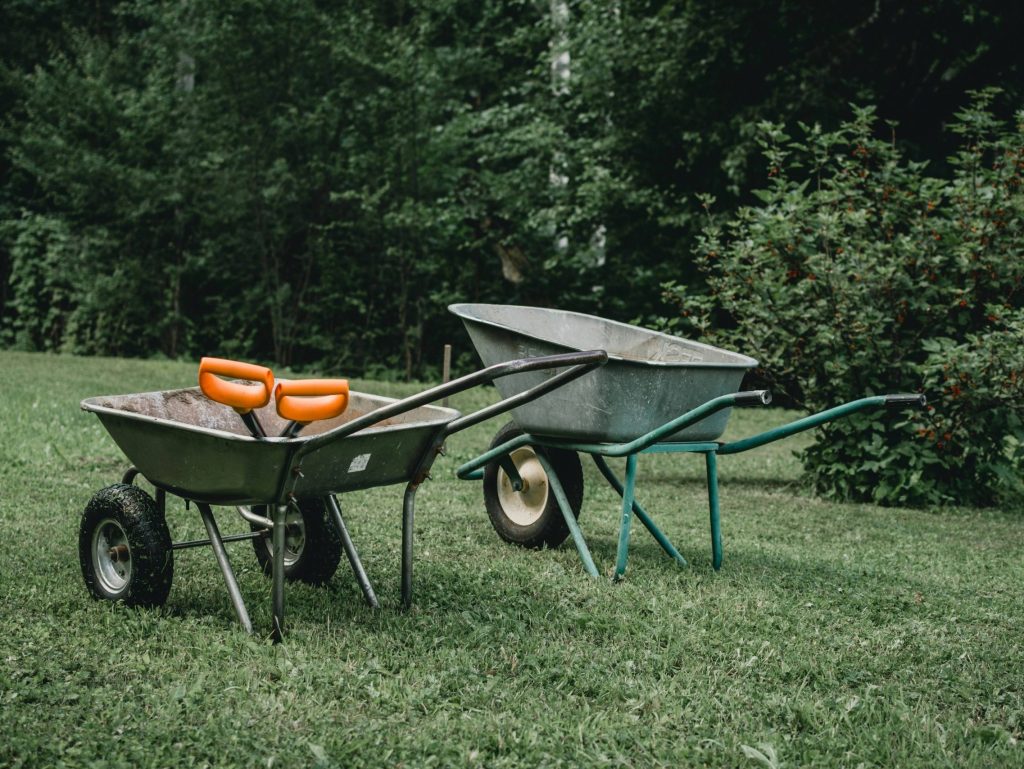
Are you planning a landscaping project or some heavy-duty gardening and wondering, “How many wheelbarrows make up a yard?” Knowing this can save you time, effort, and unexpected trips back and forth.
Whether you’re moving soil, gravel, or mulch, getting the right estimate helps you work smarter, not harder. You’ll discover the simple calculations and tips you need to measure your workload accurately. Keep reading, and you’ll be ready to tackle your project with confidence and ease.
Wheelbarrow And Yard Basics
Knowing how many wheelbarrows fill a yard helps in planning work. It saves time and effort during projects.
This guide explains wheelbarrow capacity and yard measurement. These basics make calculations easier.
What Is A Wheelbarrow Capacity
A wheelbarrow’s capacity is how much it can hold. It varies by size and model.
- Small wheelbarrows hold about 2 cubic feet
- Standard wheelbarrows hold around 6 cubic feet
- Larger wheelbarrows can carry up to 8 cubic feet
Capacity matters for loading materials like soil, gravel, or mulch. Knowing it helps avoid overloading.
Understanding A Yard Measurement
A yard is a unit to measure volume in landscaping and construction. One yard equals 27 cubic feet.
| Measurement | Value |
| 1 Yard (Cubic Yard) | 27 Cubic Feet |
| Standard Wheelbarrow Capacity | 6 Cubic Feet |
| Number of Wheelbarrows in 1 Yard | 4.5 (27 ÷ 6) |
Using this table, you can estimate how many wheelbarrow loads fill a yard. This helps in project planning and material buying.
Calculating Volume Of A Wheelbarrow
Knowing the volume of a wheelbarrow helps you understand how much it can hold. This is useful for planning work and estimating loads.
To calculate the volume, you need to measure the wheelbarrow’s container size. This involves finding its length, width, and depth.
Common Wheelbarrow Sizes
Wheelbarrows come in different sizes. The size affects how much material they can carry at once.
- Small wheelbarrows hold about 2 cubic feet
- Medium wheelbarrows hold about 4 to 6 cubic feet
- Large wheelbarrows can hold up to 8 cubic feet or more
The size you choose depends on your work type and how heavy the load will be.
Measuring Wheelbarrow Dimensions
Measure the inside length, width, and depth of the wheelbarrow’s tray. Use a tape measure for accuracy.
Multiply length × width × depth to get the volume in cubic inches. Then convert cubic inches to cubic feet by dividing by 1728.
- Measure length from front to back inside the tray
- Measure width across the widest part inside the tray
- Measure depth from bottom to top inside the tray
| Dimension | Example Measurement |
|---|---|
| Length | 36 inches |
| Width | 24 inches |
| Depth | 12 inches |
| Volume (in³) | 36 × 24 × 12 = 10,368 |
| Volume (ft³) | 10,368 ÷ 1728 = 6 cubic feet |
Converting Wheelbarrow Loads To Yards
Understanding how many wheelbarrow loads make up a yard is useful for garden projects. This helps you estimate how much material you need.
Different wheelbarrows have different capacities. Knowing these can make your work easier and more efficient.
Volume Conversion Methods
One way to convert is by using the wheelbarrow’s volume. Most wheelbarrows hold between 2 and 6 cubic feet of material.
You can calculate how many loads you need by dividing the total cubic feet in a yard by your wheelbarrow’s capacity.
- 1 cubic yard equals 27 cubic feet
- A 3-cubic-foot wheelbarrow needs 9 loads for 1 yard
- A 6-cubic-foot wheelbarrow needs 4.5 loads for 1 yard
Examples Of Wheelbarrows Per Yard
For practical understanding, let’s look at some examples. A standard construction wheelbarrow often holds 6 cubic feet.
If you use a smaller garden wheelbarrow, it might hold only 2 cubic feet. You need more trips with smaller wheelbarrows.
| Wheelbarrow Capacity | Loads per Yard |
| 2 Cubic Feet | 13.5 Loads |
| 3 Cubic Feet | 9 Loads |
| 6 Cubic Feet | 4.5 Loads |
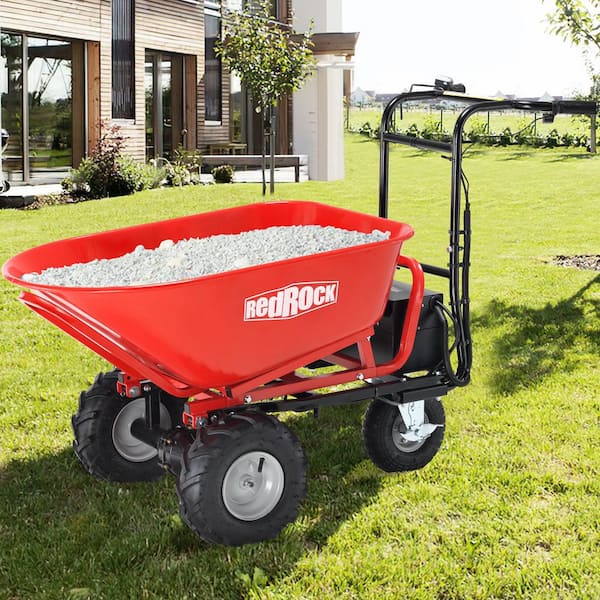
Credit: www.homedepot.com
Factors Affecting Measurement Accuracy
Estimating how many wheelbarrows fit in a yard depends on several factors. These factors can change the accuracy of your measurement.
Understanding these factors helps you get a better estimate and avoid mistakes in your calculations.
Material Type And Compaction
The type of material affects how much fits in a wheelbarrow. Loose materials take up more space than compacted ones.
- Sand is denser and settles tightly, so it fills the wheelbarrow more.
- Mulch is lighter and bulky, which means less fits in the same space.
- Gravel varies by size; small stones pack better than large stones.
- Soil changes volume when wet or dry, affecting load size.
Compaction reduces air gaps. The more compacted the material, the more you can carry in one wheelbarrow load.
Wheelbarrow Shape And Fill Level
Wheelbarrow design impacts how much material you can carry. Different shapes hold different volumes.
| Wheelbarrow Shape | Volume Capacity | Effect on Measurement |
| Traditional Deep Basin | High | Holds more material |
| Flat Tray | Low | Holds less material |
| Rounded Tub | Medium | Moderate capacity |
Fill level matters too. Overfilling can cause spillage and underfilling wastes space. Fill to a consistent level for best accuracy.
Practical Tips For Accurate Measurement
Measuring how many wheelbarrows fill a yard helps plan work and materials. Accurate measurement saves time and avoids waste.
Use simple techniques to get correct results. This guide shows how to measure consistently and use tools well.
Consistent Measuring Techniques
Always measure using the same units. Choose either cubic feet or cubic yards to keep it simple.
Measure the wheelbarrow’s volume by multiplying length, width, and depth. Then measure your yard’s volume the same way.
- Measure the inside of the wheelbarrow bed
- Use a tape measure for length, width, and depth
- Calculate volume as Length × Width × Depth
- Measure the yard’s length, width, and depth
- Calculate yard volume using the same formula
Using Tools And Calculators
Use online calculators to convert volumes between units. This reduces math errors and speeds up the process.
Digital tape measures and apps make measuring easier. They give quick and accurate readings for all dimensions.
- Use a calculator to convert cubic feet to cubic yards
- Try digital measuring tools for quick data
- Enter measurements into an app for instant volume
- Double-check numbers to avoid mistakes

Credit: mcmunnandyates.com
Common Mistakes To Avoid
Estimating how many wheelbarrows fill a yard is important for planning. Mistakes here waste time and effort.
Two common errors are overestimating wheelbarrow loads and ignoring material differences. Avoid these to get better results.
Overestimating Wheelbarrow Loads
People often think one wheelbarrow can carry more than it actually can. This leads to fewer trips planned than needed.
- Assuming a full load is always possible
- Not accounting for weight limits of the wheelbarrow
- Ignoring the type of material when loading
- Not considering the user’s strength and safety
Ignoring Material Differences
Different materials take up different space and weight. Gravel, soil, and sand vary in volume and heaviness.
| Material | Approximate Weight per Wheelbarrow | Notes |
|---|---|---|
| Soil | 50-70 lbs | Varies by moisture content |
| Gravel | 80-100 lbs | Heavier and denser |
| Sand | 70-90 lbs | Medium weight, can compact |

Credit: topwheelbarrow.com
Frequently Asked Questions
How Many Wheelbarrows Make One Cubic Yard?
One cubic yard equals about 3 to 4 standard wheelbarrow loads. This varies by wheelbarrow size and material density. Always measure your wheelbarrow’s capacity for accuracy.
What Is The Average Volume Of A Wheelbarrow?
A typical wheelbarrow holds around 6 cubic feet of material. This equals roughly 0. 22 cubic yards. Knowing this helps calculate how many loads fill a yard.
How To Calculate Wheelbarrows For A Yard Of Soil?
Divide the yard’s volume by your wheelbarrow’s volume. For example, 1 cubic yard divided by 0. 22 cubic yards equals about 4. 5 loads. Adjust based on actual wheelbarrow size.
Why Does Wheelbarrow Capacity Vary By Material?
Different materials pack differently, affecting volume per load. Loose soil occupies more space than compact gravel. This changes the number of wheelbarrow loads per yard.
Conclusion
Knowing how many wheelbarrows fill a yard helps plan projects better. It saves time and effort when moving soil or materials. Remember, wheelbarrow size and yard depth affect the count. Measure carefully before starting your work. This simple step leads to smoother, faster results.
Now, you can handle yard tasks with more confidence.