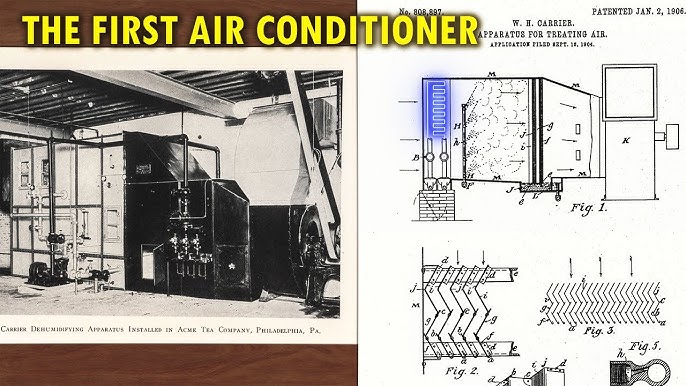
Have you ever wondered how much the very first air conditioner cost? You might think cooling your home today is expensive, but the original price might surprise you.
Understanding the cost of the first air conditioner can give you a new perspective on how far technology has come—and how it changed the way we live. Keep reading to discover the story behind this groundbreaking invention and what it meant for your comfort then and now.
Credit: www.popularmechanics.com
Early Cooling Methods
Long before modern air conditioners, people used simple ways to cool down. They relied on nature and natural materials to stay comfortable.
These early methods show how humans adapted to hot weather using available resources and smart designs.
Natural Ventilation
Natural ventilation uses air movement to cool indoor spaces. Open windows and vents let cool air in and hot air out. This process helps lower indoor temperatures without machines.
- Position buildings to catch wind
- Use high ceilings and open floor plans
- Build windows on opposite walls for cross-ventilation
- Install vents near the roof to release hot air
Ice And Evaporative Cooling
Before electric coolers, ice and evaporation helped reduce heat. People used ice blocks in rooms to cool the air. Evaporative cooling used water to lower temperatures by evaporation.
| Cooling Method | How It Works | Common Use |
| Ice Cooling | Ice absorbs heat as it melts. | Placed ice in rooms or air ducts. |
| Evaporative Cooling | Water evaporation cools the air around it. | Wet cloths, fountains, or water-soaked mats. |

Credit: www.furnaceprices.ca
Invention Of The First Air Conditioner
The first air conditioner was invented in the early 1900s. It helped control temperature and humidity indoors.
This invention changed how people lived and worked in hot weather. It made buildings more comfortable.
Willis Carrier’s Breakthrough
Willis Carrier created the first modern air conditioner in 1902. He was an engineer working to solve humidity problems.
Carrier’s design could cool air and remove moisture. This was a new idea at the time and very useful.
Initial Purpose And Design
The first air conditioner was made to help a printing company. High humidity made their paper and ink expand and ruin the work.
The machine used cold coils to cool air. It also pulled moisture from the air to keep the factory dry.
- Controlled temperature and humidity
- Used cold water to cool coils
- Improved printing quality
- Cost was high but worth it for businesses
Price Of The First Air Conditioner
The first air conditioner was a new invention in the early 20th century. It changed how people stayed cool indoors. Understanding its cost helps us see its early impact on homes and businesses.
This article looks at the manufacturing costs and retail price of the first air conditioner. We will learn why it was expensive and who could afford it.
Manufacturing Costs
Building the first air conditioner cost a lot due to new technology. Materials and labor were expensive. The parts needed careful design and assembly.
- Metal components required special shaping and treatment
- Electric motors were custom-made for the machine
- Refrigerants used were costly and hard to get
- Labor involved skilled workers to build and test the unit
Retail Price And Affordability
The first air conditioner sold at a high price. Only rich businesses and wealthy homes could buy it. Many people saw it as a luxury item.
| Year | Model | Price (USD) | Target Market |
| 1902 | Original Cooling Machine | $10,000 | Large factories and theaters |
| 1920s | Smaller Units | $5,000 | Wealthy homes |
Economic Impact Of The Price
The first air conditioner was expensive when it was introduced. Its high cost affected who could buy it. This price influenced the air conditioner’s role in society and business.
Understanding this impact helps us see how air conditioning changed markets and industries over time.
Market Demand And Accessibility
The first air conditioners were costly and large. Only wealthy homes and big companies could afford them. This limited the number of users at first.
- High price made it a luxury product.
- Limited production kept the price high.
- Only certain regions with hot climates showed interest.
- Demand slowly grew as prices dropped over time.
Influence On Industry And Business
Businesses saw air conditioning as a way to improve work conditions. This led to changes in office design and factory work hours.
| Year | Price of First Air Conditioner | Economic Effect |
| 1902 | $10,000 | Only large companies could buy it |
| 1920s | $3,000 | More businesses started using air conditioning |
| 1950s | $300 | Air conditioning became common in offices and homes |
Price Evolution Over Time
The cost of air conditioners has changed a lot since the first model was made. Early air conditioners were very expensive and only a few could buy them.
This article looks at how the price of air conditioners dropped over time. It explains what caused the changes in price.
Technological Advances
Early air conditioners used complex and costly parts. Over time, better technology made parts cheaper and more reliable. This helped lower the price.
- Improved compressors reduced energy use.
- Better refrigerants made systems safer and efficient.
- Smaller motors cut down size and cost.
- Digital controls simplified operation and reduced expenses.
Mass Production Effects
Mass production started in the mid-20th century. Factories made many units at once. This lowered the cost per air conditioner.
| Year | Average Cost (USD) |
|---|---|
| 1920 | $10,000 |
| 1950 | $1,200 |
| 1980 | $700 |
| 2000 | $400 |
Modern Air Conditioner Costs
Today, air conditioners cost less but offer more features. Energy efficiency and smart controls add value without much price increase.
Factors that affect modern costs:
- Brand and model type
- Unit size and capacity
- Installation complexity
- Energy efficiency rating
- Additional smart features
Credit: www.furnaceprices.ca
Cultural And Social Effects
The first air conditioner changed how people lived and worked. It made hot places cooler and more comfortable.
This invention affected culture and society in many ways. It changed daily life and helped cities grow.
Changing Lifestyles
Air conditioning made homes and workplaces cooler. People could enjoy indoor activities during hot weather.
It allowed people to sleep better and stay healthy in heat. Families spent more time indoors comfortably.
- More indoor social gatherings in summer
- Better work conditions in factories and offices
- Improved health by reducing heat stress
Urban Development And Climate
Cities in hot climates grew faster because air conditioning made living there easier. People moved to warmer places.
Buildings and offices used air conditioning to stay cool. This changed city designs and energy needs.
- Growth of cities in the southern United States
- More high-rise buildings with central cooling
- Increased energy use for cooling systems
Frequently Asked Questions
How Much Did The First Air Conditioner Cost?
The first air conditioner, invented by Willis Carrier in 1902, cost approximately $10,000. This was a significant investment at the time, equivalent to over $300,000 today due to inflation.
Who Invented The First Air Conditioner And When?
Willis Carrier invented the first modern air conditioner in 1902. His invention revolutionized indoor climate control and laid the foundation for modern HVAC systems.
Why Was The First Air Conditioner So Expensive?
Early air conditioners used complex technology and rare materials. Limited production and high manufacturing costs made the initial units very costly.
How Did The First Air Conditioner Impact Businesses?
The first air conditioner improved comfort in factories and offices. It increased productivity by controlling humidity and temperature, benefiting industries like printing and textiles.
Conclusion
The journey of the air conditioner began with a hefty price. It was a luxury, not a necessity. Only a few could afford it back then. Now, air conditioners are common in homes and offices. Prices have become more affordable over time.
This change shows how technology evolves. It started as a costly invention. Today, it’s an essential part of our lives. Understanding its history helps us appreciate modern comforts. The first air conditioner’s cost was high. Yet, it paved the way for the cooling systems we enjoy today.