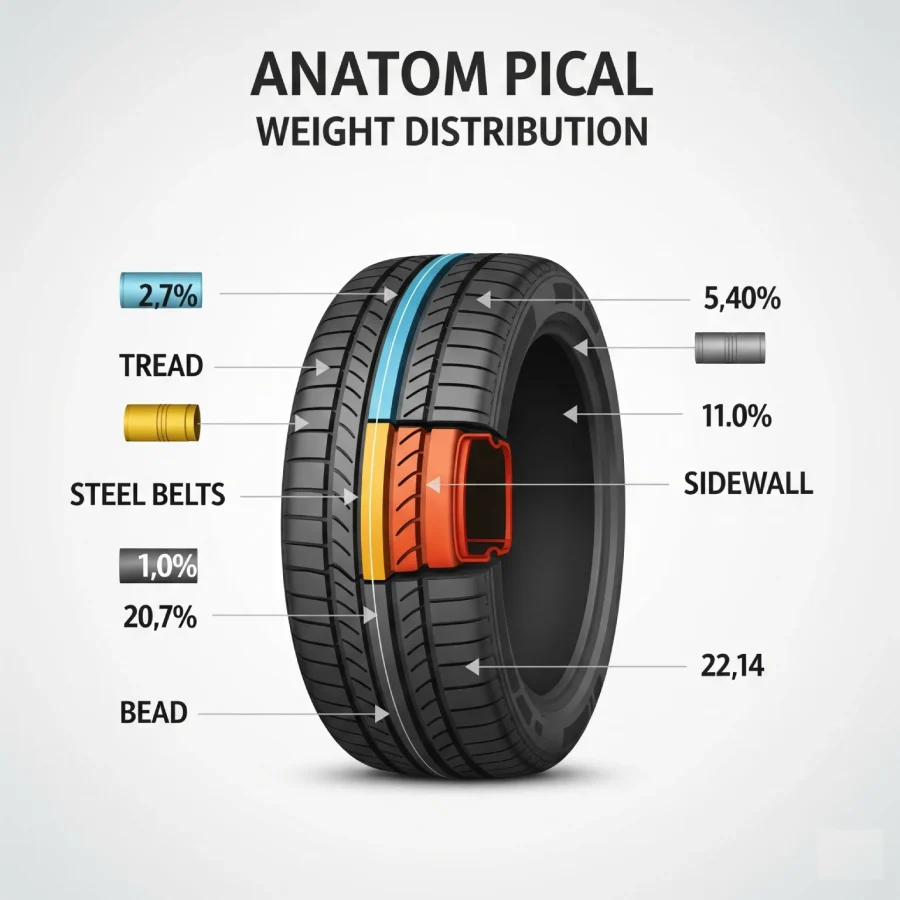
Have you ever wondered how much a car tire actually weighs? It’s a question that might seem simple but can surprise you with its answer.
Knowing the weight of your tires isn’t just trivia—it affects your car’s performance, fuel efficiency, and even your driving safety. If you want to understand more about your vehicle and make smarter choices, keep reading. This guide will break down everything you need to know about car tire weight in a clear and straightforward way.
Factors Affecting Tire Weight
The weight of a car tire depends on many factors. These factors change how heavy or light a tire feels.
Knowing what affects tire weight helps when choosing the right tire for a car.
Tire Size And Dimensions
Tires come in different sizes and shapes. Bigger tires usually weigh more than smaller ones.
The width, height, and diameter of a tire all add to its total weight. Larger tires need more material.
- Wide tires are heavier because they use more rubber.
- Tall tires weigh more due to extra sidewall material.
- Larger diameter tires need bigger wheels and more rubber.
Material Composition
Tires are made from rubber, fabric, and metal parts. The type of materials changes the tire weight.
Stronger materials may add weight but increase durability. Some tires use lighter materials to save weight.
- Natural and synthetic rubber add bulk and flexibility.
- Steel belts increase strength and add weight.
- Fabric layers provide support with less weight.
- Lightweight materials reduce total tire weight.
Tread Design And Depth
Tread is the part that touches the road. Deep or complex tread patterns can add weight to a tire.
Deeper treads use more rubber, making the tire heavier. Simple treads use less rubber and weigh less.
- Off-road tires have deep, heavy treads.
- High-performance tires have lighter, shallow treads.
- Winter tires use more rubber for better grip.
Purpose And Usage
Tires made for different uses have different weights. Race tires are lighter than truck tires.
Heavy-duty tires carry more weight and are built stronger. Light tires focus on speed and fuel economy.
- Passenger car tires balance weight and comfort.
- Truck tires are heavier for durability and load.
- Performance tires prioritize low weight for speed.
- All-terrain tires are heavier for rough conditions.

Credit: www.carid.com
Average Weight Of Common Tires
The weight of car tires varies based on type and size. Knowing tire weight helps with handling and fuel efficiency.
This guide covers the average weight of common tire types used on different vehicles.
Compact Car Tires
Compact car tires are smaller and lighter. They usually weigh between 15 and 20 pounds. This makes them easy to handle and more fuel-efficient.
Sedan And Suv Tires
Tires for sedans and SUVs are bigger and heavier. They typically weigh from 20 to 30 pounds. The added weight supports larger vehicle size and load.
- Passenger sedan tires weigh about 20-25 pounds.
- Mid-size SUV tires weigh roughly 25-30 pounds.
- Weight depends on tire width and construction.
Truck And Heavy-duty Tires
Truck and heavy-duty tires are much heavier than passenger tires. They can weigh between 40 and 80 pounds or more. These tires carry heavy loads and rough terrain.
| Tire Type | Average Weight (lbs) |
|---|---|
| Light Truck Tires | 40-50 |
| Heavy-Duty Truck Tires | 60-80+ |
Performance And Racing Tires
Performance tires focus on speed and grip. They are lighter than truck tires but heavier than compact tires. Racing tires are very light to improve speed.
- Performance tires: 20-30 pounds
- Racing slicks: 15-25 pounds
How Tire Weight Impacts Vehicle Performance
Car tires come in different weights depending on their size and material. Tire weight affects how a vehicle drives and handles on the road.
Understanding tire weight helps you know how it changes fuel use, comfort, and control of your car.
Fuel Efficiency
Heavier tires make the engine work harder to move the car. This extra effort uses more fuel. Lighter tires reduce fuel consumption because they need less energy to turn.
Reducing tire weight can save fuel, especially on long drives or city traffic where tires stop and start often.
Handling And Stability
Tire weight affects how well the car responds to steering. Lighter tires improve handling by making the car easier to steer quickly. Heavy tires can slow down steering response.
Stable tires help keep the car steady during turns and at high speeds. Too heavy tires may reduce stability and control.
Ride Comfort
Heavier tires can make the ride feel rough because they add more unsprung weight. This weight affects how the suspension works to absorb bumps.
Lighter tires allow the suspension to work better. This leads to a smoother ride on uneven roads.
Acceleration And Braking
Light tires help the car speed up faster because less energy is needed to turn them. Heavy tires slow acceleration down.
Braking also improves with lighter tires. They reduce the distance needed to stop the car safely. Heavy tires increase stopping distances.

Credit: www.cjponyparts.com
Tips For Choosing The Right Tire Weight
Car tires come in different weights depending on size and materials. Choosing the right tire weight helps your car perform well and stay safe.
Picking a tire that matches your needs keeps your vehicle balanced and improves fuel efficiency. Read these tips to find the best tire weight for your car.
Matching Vehicle Specifications
Check your car’s manual to find the recommended tire weight and size. Using tires that fit your vehicle keeps it stable and safe.
Too heavy tires can strain your suspension. Too light tires may wear out faster or not support your car’s weight well.
- Look for tire weight limits in your vehicle manual
- Match tire size and weight to your car’s specifications
- Use tires approved by the car manufacturer
Considering Driving Conditions
Your driving style and road type affect the best tire weight. Heavy tires work well on rough roads but can reduce fuel efficiency.
Light tires improve speed and handling on smooth roads but may wear faster on rough terrain.
- Choose heavier tires for off-road or rough surfaces
- Pick lighter tires for city or highway driving
- Think about climate and road conditions you often face
Balancing Weight And Durability
Heavier tires usually last longer because they have more material. Lighter tires save fuel but may not be as durable.
Find a balance between tire weight and how long you want them to last. Consider how much you drive and where you drive.
- Heavier tires offer better wear resistance
- Lighter tires improve fuel economy
- Choose based on your driving needs and tire lifespan goals
Consulting Manufacturer Recommendations
Tire and vehicle makers give guidance on the best tire weight for your car. Follow these to keep your warranty and ensure safety.
Check labels on tires and consult experts to pick the right weight. Using recommended tires avoids problems and keeps your car running well.
- Read tire labels for weight and size info
- Ask tire dealers or car service centers for advice
- Follow vehicle and tire manufacturer guidelines
Methods To Measure Tire Weight
Knowing the weight of a car tire helps with maintenance and performance. You can measure tire weight in a few ways. Each way gives you useful information.
This guide explains three common methods to find out how much a tire weighs. You can choose the best method for your needs.
Using A Scale
Using a scale is the most direct way to measure a tire’s weight. You place the tire on the scale and read the weight value.
Make sure the scale can handle the tire’s weight. A bathroom scale works for most car tires. For bigger tires, use a heavy-duty scale.
- Remove the tire from the car before weighing
- Place the tire flat on the scale
- Check the weight reading and note it down
Manufacturer Data
Tire makers often provide weight information in their manuals or websites. This data is an estimate based on the tire model and size.
You can find the tire weight in the product specifications or technical sheets. This method does not require physical measurement.
- Check the tire brand’s official website
- Look for product details or specs
- Find weight listed by tire size or model
Online Resources And Tools
There are websites and apps that estimate tire weight. These tools use tire size and type to give an approximate weight.
Online calculators are quick and easy to use. They can help if you do not have the tire or a scale nearby.
- Enter tire width, aspect ratio, and diameter
- Select tire type like all-season or performance
- Get the estimated weight instantly

Credit: www.carid.com
Frequently Asked Questions
How Much Does A Standard Car Tire Weigh?
A standard car tire typically weighs between 20 to 25 pounds. The weight varies based on tire size and type, affecting vehicle performance and fuel efficiency.
Do Tire Weights Affect Car Fuel Efficiency?
Yes, heavier tires can reduce fuel efficiency. Increased weight requires more energy for movement, leading to higher fuel consumption over time.
What Factors Influence A Car Tire’s Weight?
Tire size, tread design, and materials impact weight. Larger tires and those with reinforced sidewalls usually weigh more than standard models.
Can Tire Weight Impact Vehicle Handling?
Tire weight affects handling by influencing unsprung mass. Lighter tires improve responsiveness and ride quality, enhancing overall driving experience.
Conclusion
Car tire weight varies based on size and type. Most tires weigh between 20 and 30 pounds. Larger tires, like those for trucks, weigh more. Tire weight affects fuel efficiency and handling. Knowing tire weight helps when replacing or upgrading tires.
Always check the tire label for exact weight details. Choosing the right tire keeps your vehicle safe and efficient. Simple facts can make a big difference. Understanding tire weight is useful for every driver.