Are you worried about your electricity bill soaring every time you turn on your air conditioner? You’re not alone.
Many people wonder, “How much does the air conditioner cost to run? ” Knowing the answer can help you take control of your energy expenses and keep your home cool without breaking the bank. You’ll discover simple facts and practical tips that make understanding and managing your AC costs easier than ever.
Keep reading to find out how you can stay comfortable and save money at the same time.

Credit: www.hhaircon.com.au
Air Conditioner Energy Usage
Air conditionersuse electricity to cool rooms. Their power consumptiondepends on size and type. Most use between 500 watts and 3500 watts. The longer you run it, the higher the cost.
| Type | Average Power Use (Watts) | Typical Use |
|---|---|---|
| Window Unit | 500 – 1500 | Single room |
| Split System | 1000 – 3500 | Multiple rooms |
| Central Air | 2000 – 5000 | Whole house |
Energy use also changes with these factors:
- Room size – bigger rooms need more energy
- Outside temperature – hotter days use more power
- Thermostat settings – lower temps increase use
- Insulation quality – better insulation saves energy
- Unit age – older models often use more power
Estimating Running Costs
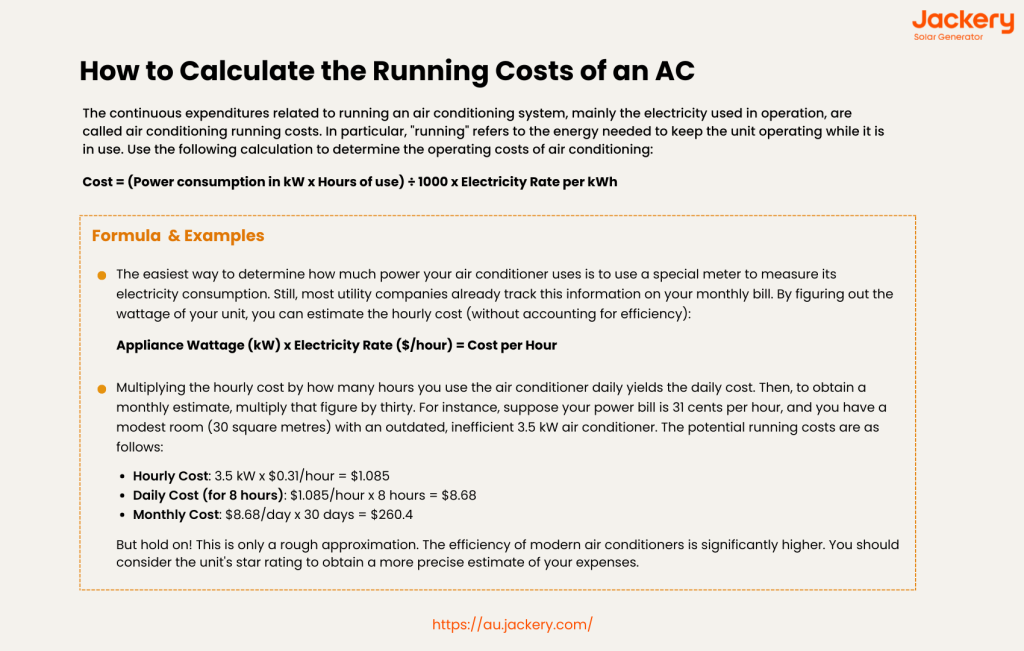
The cost to run an air conditioner depends on its power and energy rate. Most units use between 1,000 to 2,000 watts. Multiply the watts by your electric rate per kWh to find the hourly cost.
| Power (Watts) | Electric Rate ($/kWh) | Hourly Cost ($) |
|---|---|---|
| 1,000 | 0.12 | 0.12 |
| 1,500 | 0.12 | 0.18 |
| 2,000 | 0.12 | 0.24 |
Monthly and seasonal costs vary with usage. Running the AC for 8 hours dailyincreases bills. Cooler months lower expenses. Fans or other cooling can help save energy.
- Longer use means higher bills.
- Using a thermostat reduces waste.
- Turning off when not needed saves money.
Electricity Rates And Billing
Your electricity billshows how much energy you use. It lists total kilowatt-hours (kWh) used and the price per kWh. The cost depends on your electricity rateand how much you use.
Some companies use variable rates. Prices change at different times of day. Time-of-use pricing means electricity costs less at night and more during the day. This affects your air conditioner cost.
- Run your AC during off-peak hoursto save money.
- Use a programmable thermostat to cool only when needed.
- Seal leaks and improve insulation to reduce AC use.
- Consider energy-efficient AC units for lower bills.
Tips To Reduce Ac Running Costs
Setting your thermostatto a higher temperature in summer lowers energy use. Use a programmable thermostat to adjust temperatures automatically. Avoid setting it too low; every degree cooler raises costs. Turn off the AC when no one is home to save money.
Regular maintenancekeeps your AC running efficiently. Clean or replace filters every 1-3 months. Dirty filters block airflow and increase energy use. Schedule yearly professional check-ups to inspect coils and refrigerant levels. Well-maintained units last longer and cost less to run.
Good home insulationhelps keep cool air inside. Seal windows and doors to stop air leaks. Use curtains or blinds to block sunlight during hot days. Insulating walls and attics reduces the need for constant AC use.
Energy-efficient Air Conditioning Options
High SEER rated modelsuse less energy to cool your home. SEER means Seasonal Energy Efficiency Ratio. The higher the SEER, the less electricity your air conditioner uses. These models might cost more upfront but save money on bills over time.
Smart thermostatshelp control your air conditioner better. They learn your schedule and adjust cooling to save energy. You can also control them from your phone. This means less waste and lower costs.
Alternative cooling methodscan reduce how much you run your AC. Using fans, closing curtains during hot days, and planting shade trees help keep your home cooler naturally. These steps cut down on electricity use.
Credit: www.portacool.com
Cost Comparison By Region
Climate greatly affects air conditioner costs.Hotter areas use AC more, raising bills. Cooler regions spend less on cooling. This difference changes energy use and costs.
Electricity prices vary by region.Some places charge more per kWh, increasing AC running costs. Others have lower rates, making it cheaper to cool homes.
Local incentives and rebates help reduce costs.Many areas offer discounts or rebates for energy-efficient AC units. These programs lower upfront and running expenses.
| Factor | Impact on AC Cost | Example |
|---|---|---|
| Climate | More use in hot areas raises bills | Desert regions have higher AC costs |
| Electricity Price | Higher rates increase running costs | Urban areas may have higher prices |
| Incentives | Lower costs with rebates and discounts | State rebates for energy-efficient units |
Long-term Savings Strategies
Older air conditioners use more energy and cost more to run. Upgrading to a newer model can save money on bills. New units often have higher energy efficiency ratings. This means they use less power for the same cooling.
Using solar power can cut electricity costs. Solar panels convert sunlight into energy. This energy can run your air conditioner during the day. It lowers dependence on the grid and reduces monthly expenses.
Smart home integration helps control cooling better. Smart thermostats learn your schedule and adjust settings. You can control your AC from your phone. This avoids cooling empty rooms and saves energy.
- Upgrade old units for better efficiency
- Use solar power to reduce electricity bills
- Install smart thermostats to control usage

Credit: northnjhvac.com
Frequently Asked Questions
How Much Does It Cost To Run An Air Conditioner Daily?
Running an air conditioner daily costs between $1 to $5, depending on size and efficiency. Usage hours and electricity rates also impact the cost.
What Factors Affect Air Conditioner Running Costs?
Energy efficiency, unit size, local electricity rates, and daily usage time mainly affect air conditioner running costs. Maintenance also plays a role.
How Can I Reduce My Air Conditioner Electricity Bill?
To lower costs, use a programmable thermostat, seal leaks, maintain filters, and run the AC only when needed. Efficient units save more energy.
Does The Size Of An Air Conditioner Impact Running Costs?
Yes, larger air conditioners use more power, raising running costs. Choosing the right size for your space optimizes efficiency and reduces expenses.
Conclusion
Understanding air conditioner costs helps manage your energy bills. Simple steps make a big difference. Regular maintenance, using a smart thermostat, and keeping windows closed. These can reduce your costs. Choose energy-efficient models for long-term savings. Think about your usage habits, too.
Are you cooling empty rooms? Adjust settings to reflect actual needs. Awareness and smart choices lead to more affordable comfort. Stay cool without breaking the bank. Small changes in usage can add up to big savings. Your wallet and the environment will thank you.
Make informed decisions for a comfortable and budget-friendly home.