Imagine opening your freezer and seeing an abundance of delicious, grass-fed beef ready to be transformed into mouthwatering meals. Buying half a cow offers you quality meat at a great price, but there’s one crucial question you need to answer first: How much freezer space do you need?
Understanding this will save you from the frustration of scrambling to find room for your investment. You’ll discover exactly how much space is required, ensuring you can enjoy your purchase without any hassle. By the end, you’ll be equipped with the knowledge to make the most of your freezer and savor every bite of your beef.
Ready to dive in? Let’s get started!
Estimating Freezer Space Needed
Estimating the freezer space needed for half a cow can feel overwhelming at first. But understanding the key factors helps you plan better and avoid surprises. Let’s break down what influences the amount of freezer space you’ll actually need.
Average Weight Of Half A Cow
The typical weight of a half cow after butchering ranges between 200 to 300 pounds of meat. This depends on the breed, age, and size of the animal. Knowing this range helps you set realistic expectations about the quantity you’ll be storing.
Keep in mind that the hanging weight (the weight after initial butchering) is different from the final packaged weight. You lose some weight during trimming and cutting, so focus on the final packaged pounds when calculating space.
Volume Of Meat To Store
Weight alone doesn’t tell the full story because meat’s volume varies with how it’s cut and packaged. On average, one pound of beef takes about 0.045 cubic feet of freezer space.
| Weight (lbs) | Approximate Volume (cubic feet) |
|---|---|
| 200 | 9 |
| 250 | 11.25 |
| 300 | 13.5 |
Think about your freezer’s cubic footage before buying half a cow. Do you have at least 10 to 14 cubic feet free? If not, you might need a separate chest freezer or rethink your purchase.
Packaging Impact On Space
How you package your meat greatly affects the freezer space it takes. Vacuum-sealed packages reduce air pockets and shrink the volume, saving up to 25% of space compared to paper-wrapped cuts.
Bulk packaging looks neat but bulky, while individually wrapped portions take more room but offer convenience. Ask yourself: would you prefer to save space or have quick access to smaller cuts?
From personal experience, vacuum sealing made a huge difference in fitting all the meat comfortably in my freezer. It also helped prevent freezer burn, keeping meat fresh longer. Consider investing in a quality vacuum sealer if you’re planning this purchase.
Types Of Freezers For Meat Storage
Choosing the right freezer is key to storing half a cow safely. Different freezers offer various benefits for meat storage. Consider size, shape, and ease of access before deciding.
Chest Freezers
Chest freezers have a top-opening lid and deep storage space. They keep cold air inside better when opened. This saves energy and keeps meat frozen longer. Ideal for storing large cuts or many packages of beef. Requires bending to access items at the bottom. Organizing with bins helps find meat quickly.
Upright Freezers
Upright freezers look like refrigerators with front doors. They offer shelves and drawers for easy organization. Good for those who want quick access without bending. Takes up less floor space than chest freezers. Generally uses more energy because cold air escapes when opened. Suitable for smaller meat quantities or mixed food storage.
Combination Freezer Options
Combination freezers include models with both fridge and freezer sections. Useful for households needing both fresh and frozen storage. Some have adjustable compartments to switch between fridge and freezer. Perfect for those with limited space but varied storage needs. Consider total capacity and temperature control before buying.
Organizing Meat In The Freezer
Organizing meat in the freezer is key to saving space and keeping it fresh longer. Proper arrangement helps you find cuts quickly. It also prevents freezer burn and waste. Half a cow means a lot of meat. Smart storage techniques make the most of the freezer space.
Portioning For Efficiency
Cut large pieces into smaller portions. Pack meals in sizes you usually cook. Use vacuum-sealed bags or airtight containers. This keeps meat fresh and easy to grab. Smaller portions also thaw faster and evenly. Group similar cuts together for quick access.
Labeling And Dating
Label each package clearly with the cut type. Add the date when you froze the meat. Use a permanent marker or printed labels. This helps track freshness and avoid spoilage. Rotate older packages to the front. It reduces waste and keeps your freezer organized.
Stacking And Airflow
Stack packages neatly to save space. Avoid overpacking to allow cold air circulation. Use wire racks or baskets to create layers. Good airflow helps maintain even temperature. It prevents spots from thawing and refreezing. Leave some room between items for better cooling.

Credit: elkinscattleco.com
Temperature And Meat Preservation
Temperature plays a crucial role in preserving meat, especially when storing a large quantity like half a cow. Keeping meat at the right temperature ensures it stays fresh, maintains its flavor, and prevents harmful bacteria from growing. If you’ve ever had freezer burn or noticed off-flavors in your frozen meat, it likely came down to temperature issues.
Ideal Freezing Temperatures
To keep your meat in top condition, set your freezer to 0°F (-18°C) or lower. This temperature slows down the activity of bacteria and enzymes that cause spoilage. If your freezer fluctuates above this, the quality of your meat will degrade faster.
Did you know that storing meat at just a few degrees warmer can lead to ice crystals forming inside the meat cells? Those crystals damage the texture, making it less enjoyable when cooked. A consistent low temperature is your best defense.
Avoiding Freezer Burn
Freezer burn happens when air reaches the surface of the meat, causing dehydration and oxidation. You can prevent this by wrapping meat tightly in plastic wrap or vacuum-sealing it before freezing. Avoid using thin plastic bags that allow air to seep in.
Think about the last time you found dry patches on frozen meat. That’s freezer burn, and it can affect taste and texture significantly. Proper packaging, combined with steady freezing temperatures, keeps your meat juicy and flavorful.
Long-term Storage Tips
For storing half a cow, organization is key. Label and date each package so you know how long it’s been in the freezer. Rotate older packages to the front to use them first and reduce waste.
Consider dividing the meat into meal-sized portions before freezing. This saves space and prevents repeatedly thawing and refreezing large chunks, which can degrade meat quality. How often do you find yourself throwing out meat because it’s gone bad in the freezer?
Using a freezer thermometer and investing in quality airtight packaging can extend meat storage up to 12 months without losing quality. Your freezer space might seem limited, but with the right approach, you can preserve half a cow efficiently and enjoy fresh meat all year long.
Calculating Costs And Benefits
Buying half a cow can be a smart way to save money and ensure a steady supply of quality meat. However, it’s important to weigh the costs against the benefits before making the investment. Understanding freezer space and energy use will help you decide if this option fits your lifestyle and budget.
Energy Consumption Of Freezers
Freezers use electricity continuously, and larger models consume more power. A chest freezer that holds half a cow typically uses between 300 to 700 kWh annually. This means your energy bill could increase by $30 to $70 per year, depending on local electricity rates.
Choosing an energy-efficient freezer can reduce these costs. Look for models with an Energy Star rating. Also, keep your freezer full but not overcrowded to maintain efficiency.
Cost Savings From Buying Half A Cow
Buying half a cow usually costs less per pound than buying cuts individually at the store. You might save 20-40% on beef, which can add up to hundreds of dollars annually. Plus, you get to select cuts and customize your order.
Think about how often you eat beef. If you enjoy it regularly, the upfront cost pays off quickly. However, be sure you have enough freezer space to store the meat without overcrowding.
Space Vs. Convenience Trade-offs
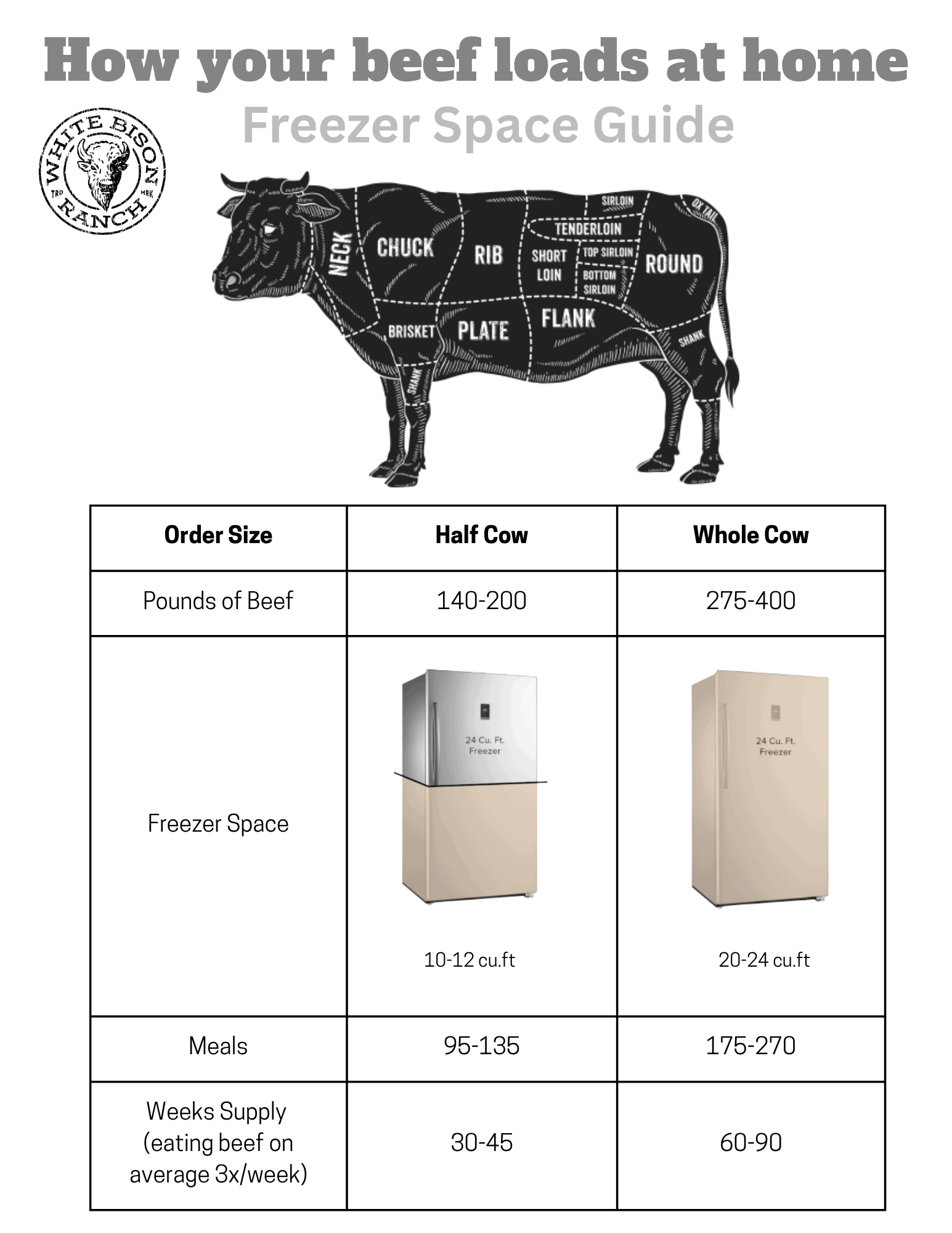
Half a cow requires about 20 to 30 cubic feet of freezer space. That’s roughly the size of a large chest freezer or a dedicated section in a garage freezer. Do you have this space available without compromising other frozen goods?
Storing half a cow means planning meals and thawing times in advance. It’s less convenient than grabbing a steak from the store on short notice. But if you value having control over your meat quality and cuts, this trade-off might be worth it.
Are you ready to commit freezer space and energy costs for long-term savings? Evaluating these factors helps you make an informed choice that fits your lifestyle.
Credit: www.snipershide.com
Credit: www.whitebison-ranch.com
Frequently Asked Questions
How Much Freezer Space Is Needed For Half A Cow?
Half a cow requires about 20 to 25 cubic feet of freezer space. This depends on the cut sizes and packaging. Properly wrapping meat helps save space and maintain freshness.
How Many Pounds Of Meat Come From Half A Cow?
Half a cow typically yields 200 to 250 pounds of meat. This includes steaks, roasts, ground beef, and other cuts. Weight varies based on the cow’s size and butchering style.
Can A Standard Home Freezer Store Half A Cow?
Most standard home freezers cannot store half a cow comfortably. You usually need a chest freezer with at least 20 cubic feet capacity. This ensures enough space and proper freezing conditions.
How Should Meat From Half A Cow Be Packaged?
Use vacuum-sealed bags or airtight freezer paper for packaging. This prevents freezer burn and preserves quality. Label packages clearly with cut type and date for easy organization.
Conclusion
Storing half a cow needs enough freezer space to keep meat fresh. Plan for about 20 to 30 cubic feet of freezer room. This space lets you organize cuts without crowding. Proper storage keeps your meat tasty and safe. Think about your freezer size before buying half a cow.
This helps avoid surprises and keeps your meat ready to cook. Remember, good planning saves time and money in the long run.