
Are you curious about how much power your induction cooktop uses? You’re not alone.
With energy costs rising and more people embracing energy-efficient appliances, understanding the power consumption of your kitchen gadgets is crucial. Induction cooktops are known for their speed and efficiency, but what does that mean for your electricity bill? By the end of this article, you’ll know exactly how much power your induction cooktop consumes and how it compares to other cooking methods.
Get ready to make informed decisions and possibly save on your energy costs. Let’s dive into the details and unravel the mystery of your induction cooktop’s power usage!
Induction Cooktop Basics
Induction cooktops offer a modern way to cook food quickly and efficiently. They use magnetic energy to heat pots and pans directly. This method saves energy and keeps the cooking surface cool. Understanding the basics helps to know how much power these cooktops use and why they work differently from traditional stoves.
How Induction Cooking Works
Induction cooking uses magnetic fields to create heat inside the cookware. The cooktop has a coil of copper wire under the glass surface. When electric current passes through the coil, it creates a magnetic field. This field induces an electric current in the metal pot. The pot itself becomes the heat source, warming the food inside.
This process heats the pot quickly without heating the cooktop surface. It also makes cooking more energy-efficient because little heat is lost to the air.
Key Components
- Induction Coil:A copper wire coil that creates a magnetic field.
- Glass-Ceramic Surface:A smooth surface that stays cool during cooking.
- Control Panel:Allows users to adjust temperature and power levels.
- Cookware:Must be made of ferromagnetic material like cast iron or stainless steel.
Power Consumption Factors
Understanding the power consumption of an induction cooktop means looking beyond the simple number on the box. Several factors influence how much electricity your cooktop actually uses during cooking. Knowing these details helps you manage energy better and save on your bills without sacrificing performance.
Wattage Ratings
Each induction cooktop has a wattage rating that shows its maximum power use. Most models range between 1,200 to 3,700 watts. Higher wattage means faster heating but also more energy drawn at peak times.
If you want to control your energy use, check the wattage before buying. Smaller units with lower wattage consume less power but might cook slower. Think about your cooking habits: Do you often need quick heat, or is slow simmering more your style?
Cookware Influence
The type of cookware you use affects power consumption significantly. Induction cooktops require magnetic materials like cast iron or stainless steel to work efficiently.
Cookware that matches your cooktop’s size and material heats faster and uses less energy. Using a pot too small or made of non-magnetic material wastes energy because the cooktop struggles to transfer heat.
Have you noticed how some pots get hot quickly while others take forever? That difference directly impacts your electricity use.
Cooking Modes And Settings
Induction cooktops come with various cooking modes and power levels. Higher settings use more electricity but reduce cooking time.
Many models feature energy-saving modes or temperature controls that help balance power use and cooking needs. Using the right setting for each dish can prevent unnecessary energy waste.
Think about your last meal: Did you use the highest setting the whole time, or did you adjust as the food cooked? Small changes like lowering heat after boiling can cut energy use without affecting taste.
Energy Efficiency Compared
Energy efficiency is a key factor in choosing a cooktop. It affects electricity bills and environmental impact. Induction cooktops use a unique heating method. They heat pots directly through magnetic fields, reducing wasted energy. Comparing induction with gas and traditional electric cooktops shows clear differences in power use and efficiency.
Induction Vs Gas
Gas cooktops burn fuel to create heat. Much of this heat escapes around the pan. This loss means gas stoves use more energy to cook food. Induction cooktops transfer energy directly to the pot. This process wastes less heat and cooks faster. Induction uses about 80-90% of the energy for cooking. Gas stoves only use about 40-55% efficiently.
- Induction heats pots quickly and evenly.
- Gas stoves lose heat to the air around them.
- Induction reduces cooking time and energy use.
- Gas flames waste more energy during cooking.
Induction Vs Traditional Electric
Traditional electric cooktops use heating coils. These coils heat the cooktop surface first. The heat then moves to the pot. This extra step causes energy loss. Induction cooktops heat pots directly. Induction typically uses 80-90% of energy efficiently. Traditional electric cooktops use about 65-75% of energy efficiently.
- Induction cooktops respond faster to temperature changes.
- Electric coils take longer to heat and cool down.
- Induction reduces wasted heat and power.
- Electric cooktops use more electricity for the same cooking task.
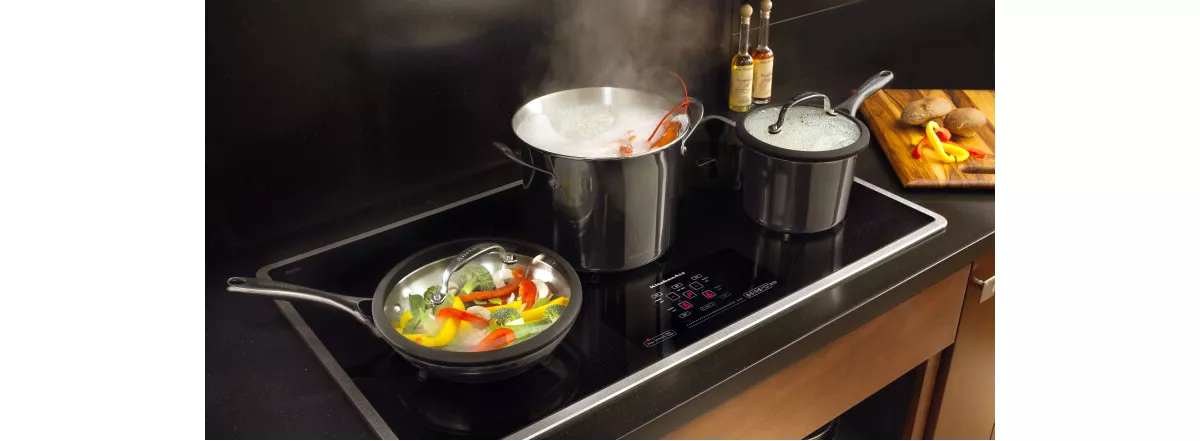
Credit: www.maytag.ca
Typical Power Usage
Understanding the typical power usage of an induction cooktop helps you manage your energy bills and kitchen efficiency better. Induction cooktops are known for their quick heating and energy-saving capabilities, but their power consumption varies depending on several factors. Let’s break down the typical power usage to give you a clearer picture.
Average Wattage Range
Most induction cooktops operate between 1,200 to 3,700 watts. Smaller single-burner models usually consume around 1,200 to 1,800 watts, perfect for simple cooking tasks. Larger, multi-burner units or high-performance models can reach up to 3,700 watts, which means faster cooking but higher energy use.
Think about your typical cooking habits—do you often simmer or boil quickly? This wattage range directly affects how fast your meals get ready and how much power your cooktop draws during those times.
Peak Power Draw
When you first turn on the cooktop or increase the heat, it hits its peak power draw. This surge can be as high as the maximum wattage rating, sometimes briefly spiking to around 3,700 watts or moreon high-end models.
This peak is short-lived, lasting only a few minutes until the temperature stabilizes. Have you noticed your electric meter spinning faster right when you start cooking? That’s the peak power in action.
Standby Power Consumption
Even when not actively cooking, induction cooktops consume some power in standby mode to keep controls and sensors ready. This standby power is typically very low, often below 5 watts.
While it seems negligible, over time, standby power adds up. Unplugging your cooktop or switching off the circuit can save a small but meaningful amount of energy if you don’t use it daily.
Impact On Electricity Bills
Understanding how an induction cooktop affects your electricity bill is crucial before making the switch. Although induction cooking is often touted as energy-efficient, the actual impact depends on how you use the appliance and your local electricity rates. Let’s break down how to calculate these costs and explore ways to keep your power usage in check.
Calculating Energy Costs
Start by knowing your cooktop’s wattage, usually between 1,200 to 3,700 watts. If you cook for 30 minutes daily on a 2,000-watt cooktop, that’s 1 kWh (kilowatt-hour) per day.
Check your electricity bill for the cost per kWh. If it’s $0.12, then your daily cost is:
| Usage (kWh) | Cost per kWh ($) | Daily Cost ($) | Monthly Cost ($) |
|---|---|---|---|
| 1 | 0.12 | 0.12 | 3.60 |
Multiplying daily usage by your monthly cooking days gives a clearer picture of your monthly expense. How often do you use your induction cooktop compared to other appliances? This can shift your electricity bill noticeably.
Tips To Reduce Power Usage
- Use the right cookware:Magnetic, flat-bottomed pots heat more efficiently on induction cooktops.
- Match pot size to burner size:Avoid wasting energy by using a smaller burner for small pots.
- Cover pots with lids:This traps heat and reduces cooking time.
- Turn off early:Induction cooktops cool down quickly, so you can switch off a few minutes before your food is fully cooked.
- Cook in batches:Preparing multiple meals at once saves energy compared to heating the cooktop multiple times.
When I started matching pot sizes to burners, I noticed my cooking times dropped, and my electricity bill reflected that change. Are you tracking your cooking habits enough to spot these savings?

Credit: www.amazon.ca
Safety And Power Management
Understanding how an induction cooktop handles safety and power management can change how you use it every day. These features not only protect your kitchen but also help control energy use efficiently. Let’s look at how these smart systems work behind the scenes to keep things running smoothly and safely.
Automatic Power Adjustments
Induction cooktops adjust their power automatically based on the cookware size and the cooking task. This means the cooktop won’t waste energy heating an empty spot or a small pot, saving you money on your electricity bill. Have you noticed how your cooktop heats faster when you use larger pans? That’s the automatic power adjustment in action, optimizing energy use without you lifting a finger.
By adapting power levels, the cooktop avoids overheating and maintains consistent cooking temperatures. This feature gives you more control, especially during delicate cooking tasks like simmering sauces or melting chocolate. It’s like having a built-in cooking assistant that manages energy smartly to get the best results.
Overload Protection
Overload protection is a vital safety feature that prevents electrical hazards. If your cooktop detects a power surge or too much current flowing through, it automatically shuts off to avoid damage or fire risks. Imagine you’ve got several kitchen appliances running; this feature keeps your cooktop safe even if the power supply gets strained.
Some models even alert you with a warning signal before shutting down, giving you time to adjust your setup. This means you won’t be left guessing why your cooktop stopped working. It’s reassuring to know your device looks out for itself and your home, especially during busy cooking sessions.
Future Trends In Induction Power
Induction cooktops are evolving with technology. The future holds promising changes that will make these appliances more energy-efficient and user-friendly. These trends aim to reduce power use while improving cooking performance. Understanding these changes helps buyers choose smart, efficient models.
Smart Energy Features
Smart energy features let cooktops adjust power automatically. Sensors detect pot size and heat needs. This stops wasting electricity on empty surfaces. Some models connect to apps for remote control and energy monitoring. Users can track energy use and set limits to save power. These features make cooking easier and more eco-friendly.
Improved Efficiency Technologies
New technology improves how induction cooktops use energy. Advanced coils create stronger, focused magnetic fields. This heats pots faster with less power. Better materials reduce heat loss and increase durability. Some cooktops offer multiple power levels for precise control. These improvements lower energy bills and reduce environmental impact.

Credit: www.amazon.ca
Frequently Asked Questions
How Much Power Does An Induction Cooktop Consume?
An induction cooktop typically uses between 1,200 to 3,700 watts. Power consumption depends on the model and cooking settings. Higher wattage means faster heating but more electricity use. Efficient cooking can reduce overall power usage.
Is Induction Cooking More Energy-efficient Than Gas?
Yes, induction cooktops convert around 85-90% of energy into heat, while gas stoves convert about 40%. This makes induction cooking more energy-efficient and cost-effective over time. It heats food faster and wastes less energy.
What Factors Affect An Induction Cooktop’s Power Usage?
Power usage varies by cooking temperature, cookware size, and cooking duration. Larger pots and higher heat settings consume more electricity. Using the right cookware and efficient cooking techniques reduces power consumption.
Can Induction Cooktops Save On Electricity Bills?
Induction cooktops can lower electricity bills by using less energy than traditional electric or gas stoves. Faster cooking times and precise heat control improve efficiency. However, actual savings depend on usage habits and energy rates.
Conclusion
An induction cooktop uses power efficiently and quickly. It heats food faster than many other cooktops. This means less energy waste and lower bills. Power use depends on the settings and cookware size. Knowing this helps you cook smarter and save money.
Choosing the right power level makes cooking easier and safer. Induction cooktops offer a good balance of speed and energy use. They fit well in modern kitchens focused on saving energy. Cooking with an induction cooktop can be both fast and cost-effective.