Have you ever wondered how a portable air conditioner cools down your room so quickly? If you’re looking for a simple way to beat the heat without installing a big, complicated system, understanding how these handy devices work can make all the difference.
By knowing what happens inside your portable air conditioner, you’ll not only use it more efficiently but also keep your space comfortable all summer long. Let’s dive in and uncover the cool science behind your portable air conditioner.
Basic Components
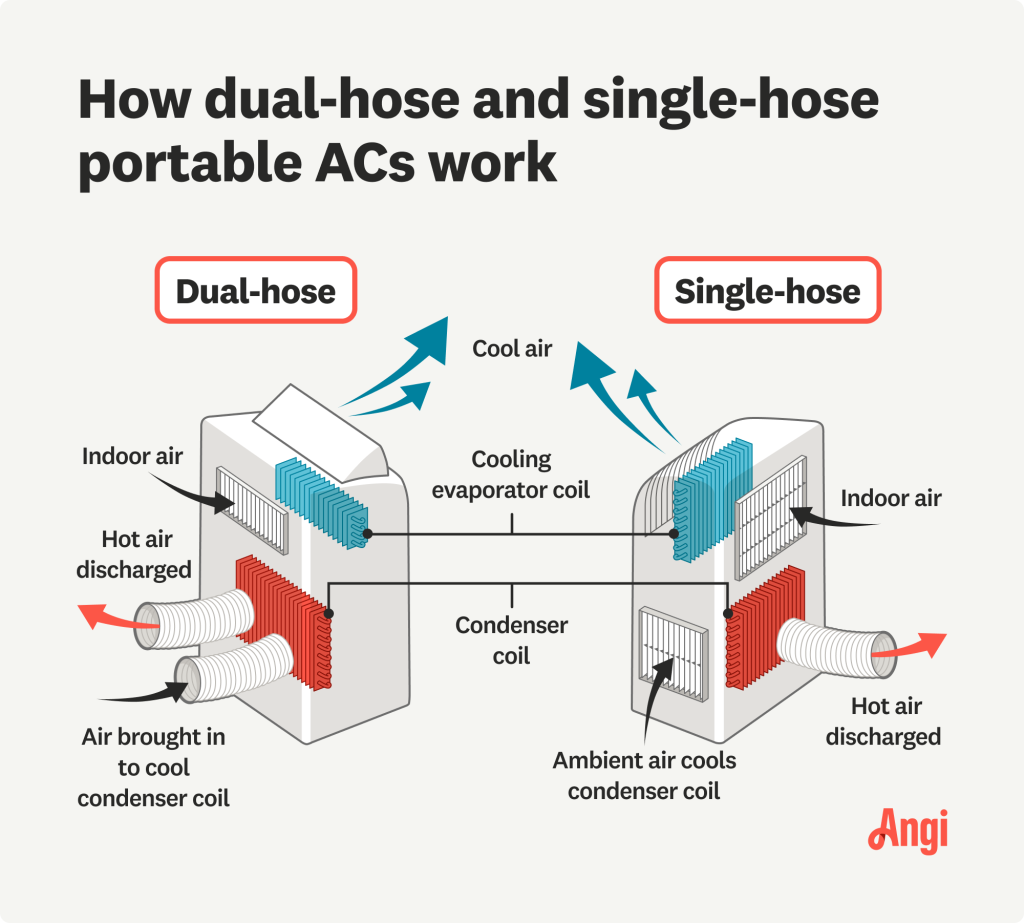
A compressorpushes refrigerant through the system. It changes refrigerant from gas to liquid by increasing pressure. This process helps to move heat out of the air.
The condensercools the hot refrigerant gas. It turns the gas back into liquid. The heat from the refrigerant moves outside, usually through a vent.
The evaporatorabsorbs heat from inside the room. It uses the cold liquid refrigerant to cool the air. The refrigerant turns back into gas here, ready to return to the compressor.
The fan and ventblow cooled air into the room. The fan also pushes hot air and moisture outside through the vent. This keeps the room dry and cool.
Credit: karinearappliances.com
Cooling Cycle
The refrigerantmoves through tubes inside the air conditioner. It changes from a liquid to a gasand back again. This flow is key to cooling the air.
During heat absorption, the refrigerant in gas form pulls heat from the inside air. This makes the room cooler. The warm air passes over cold coils, and heat moves into the refrigerant.
In the heat releasephase, the refrigerant travels outside. It releases the heat it absorbed inside. The heat leaves through the back of the unit, often with the help of a fan.
Air Intake And Exhaust
The portable air conditionerpulls warm air from the room inside. This air goes through a filter to remove dust and dirt. The cool air is then sent back into the room to lower the temperature.
Hot air from inside is moved outside through a vent hose. This hose connects the unit to a window or wall opening. It helps push the heat out so the room stays cool.
| Process | Description |
|---|---|
| Indoor Air Circulation | Air is pulled in, cleaned, cooled, and pushed back into the room. |
| Hot Air Exhaust | Warm air is sent outside through a vent hose connected to a window. |
| Vent Hose Role | Removes hot air from the room to keep it cool and comfortable. |
Moisture Removal
The dehumidification processremoves moisture from the air inside the room. Warm air is pulled into the portable air conditioner. It passes over cold evaporator coils. This causes water vapor in the air to condense into liquid water. The air becomes cooler and less humid.
This collected water must be dealt with properly. Some units have a built-in water tankthat collects the moisture. Users need to empty this tank regularly to prevent overflow.
Other models use a drain hoseto remove water continuously. This hose directs water outside or to a drain. Some advanced units evaporate the water automatically.
| Water Collection | Disposal Method |
|---|---|
| Internal water tank | Manual emptying by user |
| Drain hose | Continuous drainage to outside or drain |
| Automatic evaporation | Water evaporates and exits as vapor |
Energy Efficiency Factors
Power consumptionshows how much electricity the unit uses. Lower power use means better energy savings. Look for models with good energy ratings.
Cooling capacitytells how much heat the air conditioner can remove. It is measured in BTUs. Higher BTUs cool larger rooms faster but may use more power.
Good insulationkeeps cool air inside. It stops warm air from entering the room. Better insulation means the air conditioner works less and saves energy.

Credit: www.cnet.com
Installation Tips
Choose a spot near a window for best air flow. Avoid direct sunlight and tight spaces. Leave some room around the unit for air to move freely.
The vent hose must be connected firmly to the air conditioner and window kit. Make sure the hose is as straight as possible to let hot air escape easily.
- Use foam seals or weather stripping around the window.
- Close gaps to stop warm air from entering.
- Check that the vent hose is sealed tightly to the window.
Maintenance Essentials
Keeping the filter cleanhelps the air conditioner work well. Dust and dirt block airflow and reduce cooling power. Remove the filter and wash it with water. Let it dry before putting it back.
Drainage managementstops water from building up inside the unit. Check the drain pan and hose for clogs. Empty any water to avoid leaks or bad smells.
Regular inspections catch small problems early. Look for strange noises, leaks, or weak airflow. Fix issues quickly to keep the unit running smoothly. Clean the outside vents to stop dust build-up.

Credit: www.youtube.com
Frequently Asked Questions
How Does A Portable Air Conditioner Work?
A portable air conditioner pulls warm air from the room, cools it with a refrigerant, and expels the heat through an exhaust hose. The cool air is then recirculated back into the room. This cycle continues until the desired temperature is reached, providing efficient and localized cooling.
Do Portable Ac Units Need Venting?
Yes, portable AC units require venting to expel the hot air outside. They typically come with a window kit that fits most standard windows. Proper venting ensures efficient cooling and prevents the unit from overheating. Without venting, the unit cannot effectively cool the room.
Can A Portable Ac Cool Multiple Rooms?
Portable ACs are designed to cool single rooms. Their effectiveness in cooling multiple rooms is limited. To cool multiple rooms, you may need additional units. Proper placement and insulation can help, but air circulation between rooms is often insufficient for significant temperature drops.
How Much Electricity Does A Portable Ac Use?
The electricity usage of a portable AC varies based on its BTU rating and usage duration. On average, it uses between 1,000 to 2,000 watts per hour. Energy-efficient models consume less power. To save on electricity, choose a model with an Energy Efficiency Ratio (EER) of 10 or higher.
Conclusion
Portable air conditioners cool rooms by moving heat outside. They use fans and refrigerants to lower air temperature. These units are easy to move and install. They fit well in rooms without central air. Knowing how they work helps you choose the right one.
Stay comfortable during hot days with a portable unit. Simple, effective cooling for your space.